
California Zinfandel: The names to know
It’s a variety synonymous with Californian wine, but for years it was overlooked in favour of fashionable Bordeaux styles. Now, thanks to some of the state’s best winemakers, it’s the star of field blends and single-varietal bottlings alike. Jeff Cox shares his top producer picks.

Anyone who likes ‘the blood and sun of California’, as a European friend characterised his first taste of Zinfandel, should give recognition to the early Italian pioneers who settled the coasts of central and northern California.
The regions looked like northern Italy. They had Italy’s Mediterranean climate. And those Italian farmers brought with them more than 2,000 years of grape-growing and winemaking experience.
They didn’t have degrees in viticulture or oenology. They farmed by the seat of their pants. But they were savvy as hell.
The pioneers are long gone, though you can still taste that savvy in wines from their vineyards, many planted between 100-140 years ago. These vineyards are mostly Zinfandel, a variety that came to California just a few years before the Italian settlers, and which the Italians favoured almost immediately upon their arrival.
They planted a few other varieties along with the Zin: Carignan, Petite Sirah, Alicante Bouschet, Grenache, Mataro (their name for Mourvèdre) and even a few vines of white Chasselas, among others, to give diversity. These field blends were yielding wine grapes when Monet and Van Gogh were painting their masterpieces.
The head-trained vines in those vineyards are ancient, thick and gnarled now. They don’t yield much fruit, but they clutch the earth in a strong embrace and impart its essence, and the richness of their age, to their grapes.
Dismissed for years as not worth much – even torn out to be replaced by the new darlings of Bordeaux varieties, Chardonnay and Pinot Noir – the true nobility of these ancient vines is now being recognised. Historic Vineyard Society is a non-profit organisation devoted to their preservation.
Newer plantings of Zinfandel can certainly produce delicious, worthy wines. The variety goes easy on the tannins, but finds backbone in its acid profile and spiciness on the palate.
One of its glories is its ability to age, as was proven at a recent gathering of friends when a double magnum of 1987 Joseph Swan Vineyards’ old-vine Zinfandel had the crowd cheering. ‘I can smell that wine in here,’ yelled a cook from the kitchen.
It was an obscure and ancient Croatian variety called Crljenak Kaštelanski that emigrated to America in the early 19th century and became California’s signature variety, Zinfandel. Unlike the first waves of human immigrants to the United States, who have now all passed on, some of those first- generation vines are still with us, providing glorious drinking.
Dry Creek Valley: E&J Gallo
If any winemaking company knows a lot about Zinfandel, it’s the world’s largest, E&J Gallo. Founded in 1933, Julio Gallo made the wine and his brother Ernest sold it. They labelled the good stuff ‘Hearty Burgundy’, but it was less hearty than yummy and had absolutely nothing to do with Burgundy.
Times have changed. Gallo has become the 800-pound gorilla of the wine world. The company has many wineries, labels and price points, and makes some very sophisticated, high-quality wines. One of the latter is Gallo’s Signature Series Dry Creek Valley Zinfandel, and the winemaker’s signature on the label is that of Gina Gallo, Julio’s granddaughter. She’s dedicated to good wine, as is her husband, Jean-Charles Boisset.
‘Julio loved Zinfandel,’ says Gina. It’s a penchant among the Italian families who re-established winemaking after Prohibition, and her Signature Series showcases why. The fruit – 93% Zinfandel and 7% Petite Sirah – comes from some of the oldest (more than 130 years) and best vineyards in the Dry Creek Valley, and a portion of the Zin comes from the outstanding Monte Rosso vineyard in the Sonoma Valley appellation.
Russian River Valley: Carlisle
‘I was a software developer,’ says Carlisle’s Mike Officer. ‘This (he gestures at the buildings, silvery steel tanks and rolling hill with their marching rows of vines) is my second career.’ Recently, he and his wife Kendall made 1,000 cases of Papera Ranch Zinfandel 2017, but it wasn’t easy.
‘We had severe heat on 1 and 2 September [about 45°C] and we lost a lot of fruit because many of the pedicels that connect the grape berries to the clusters shrank and died, cutting off the fruit’s water supply.’ They had to haul sorting tables to the vineyards, then sort again in the winery to separate the unripe, high-acid raisins from the good fruit. It was worth it. ‘The 2017 is very high quality,’ he says.
The vineyard is about 96% Zinfandel and 4% Carignan, and was planted in 1934 by Italian immigrant Celestino Papera a few kilometres west of Santa Rosa. The Papera vineyard may be 86 years old, but Officer says he’s ‘never seen another old-vine vineyard as healthy and in such good shape’. He should know: he’s the president of the aforementioned Historic Vineyard Society.
Dry Creek Valley: Nalle Winery
Back in the mid-1980s, when many Zinfandel producers were making big, muscular trophy wines, Doug Nalle and his wife Lee started their winery with the intention of making elegant, lean and complex Zins in the European style of noble red wines. ‘We were following tradition,’ says Doug, ‘using French oak and making wines under 14% alcohol. We wanted the wine to be food-friendly.’
They had good fruit to work with. Their property included 0.6ha of old Zin vines planted in 1927 by Lee’s great-grandparents, Fred and Ruby Henderlong. Today that fruit is augmented with Zinfandel from the Bernier-Sibary vineyard, 8km north. Both sites are dry-farmed and the vines head-trained, with some Petite Sirah and Carignan in the field blends. Doug, and now his son Andrew and daughter-in-law April, the current winemakers and proprietors, achieved this elegant style by picking the fruit at its initial burst of ripeness.
‘We sort at the picking bins and again when we get the fruit into the winery, looking to discard any overripe berries,’ says Andrew. April adds: ‘Younger folks in the tasting room are looking for low-alcohol wines that are nicely balanced.’ It’s a trend other Zinfandel producers have noticed, too.
Sonoma Valley: Ridge
Pagani Ranch sits in the middle of a stretch of the Sonoma Valley so picturesque that cars are often parked along the highway, their occupants taking photos of the ranch’s Victorian farmhouse and barns, century-old vines and the mountains to the east.
Felice Pagani bought the property in the late 1880s and put in 12ha of the field blend – mostly Zinfandel – from 1896 to 1922. Another 2.4ha were planted to Zin and Petite Sirah in 2013. Pagani’s descendants still manage the vineyard. Several wineries purchase its fruit, but half of the harvest goes to winemaker John Olney at Ridge. Pagani Ranch has been a part of Ridge’s array of Zins since 1991.
The site is gravelly clay loam in a cool part of the valley that allows for slow ripening and a delayed harvest. ‘In 2017,’ says Olney, ‘we finished picking on 7 October.’ The next night, fire blazed through Kenwood, but the fruit had been safely trucked away. ‘Pagani Ranch shows character,’ says Olney, referring to a terroir best described as giving honest, focused red- and black-fruit flavours.
Dry Creek Valley: Seghesio Family Vineyards
The Seghesio winery and tasting room in Healdsburg, Sonoma County is a veritable temple of Zinfandel, with a dozen different labels of either single-vineyard wines or blends sourced from vineyards scattered around the county. The flagship wine is the Cortina Zinfandel, made from vines planted in 1972 by fourth-generation Ted Seghesio and his father Ed. The Cortina soils flank the streambed that gives Dry Creek Valley its name.
Winemaker Andy Robinson, who works with vineyard manager Ned Neumiller, calls the Cortina 2016 ‘perfection’. By that, he means it is a precise balance of acid, tamed tannins and bright red fruits that culminate in a long finish. ‘Zinfandel is best when there are three layers,’ says Robinson, referring to a grape cluster. ‘There are some underripe berries, most are perfectly ripe and a few are overripe.’ This is fairly typical of Zinfandel, especially in Dry Creek, where nights are chilly and often foggy, while days are warm or hot. And why do they focus on 100% Zinfandel? Didn’t pioneers like the Seghesios, who founded the winery in 1895, make field blends?
‘They did, but we intentionally kept more recent plantings to pure Zin because of the quality of our fruit,’ Robinson says. ‘There’s a certain elegance that doesn’t need any other varieties in the blend.’
Lodi: Klinker Brick Winery
Klinker Brick’s Old Ghost flagship bottling isn’t tied to any particular vineyard in the Mokelumne sub-appellation of the Lodi AVA, but is made from fruit selected as the highest quality from several vineyards. In fact, each vintage of Old Ghost may be from different vineyards. ‘It could be a different set of vineyards next year,’ says Steven Felten, who owns the winery with his wife Lori. ‘But we’re always looking for elegance and the best-quality fruit.’
The winery is named for the old, burnt-surfaced bricks that ring with a ‘klink’ when struck, characteristic of brick buildings in the area. What the chosen vineyards have in common is age – from 40 to more than 100 years old – and restricted yields of about 30hl/ha, lower than the average 50-60hl/ha typical of the Lodi AVA.
The result, says Felten, is ‘more like a fine wine’: ‘Elegant and smooth, not peppery or spicy. It tastes more like a Cabernet Sauvignon.’ The quality of Lodi’s old-vine Zinfandels made a leap forward at the end of the 1980s, when drip irrigation replaced flooding ditches between rows. Less water meant smaller berries, greater skin-to-juice ratio, and better wines. The Old Ghost is evidence of that.
Sonoma County: DeLoach Vineyards
While the winery is in the Russian River Valley AVA, the fruit used to make DeLoach’s Forgotten Vines bottling comes from vineyards in several Sonoma County appellations. Russian River Valley supplies 75% of the grapes in the blend, 10% is from the Monte Rosso vineyard in Sonoma Valley, 10% from Fountaingrove in Santa Rosa, and 5% from Knight’s Valley in far eastern Sonoma County.
Winemaker Brian Maloney, who came up with the name for the bottling, says the vines that contribute to Forgotten Vines have an average age of more than 100 years old. Jean-Charles Boisset, the owner of DeLoach and husband of Gina Gallo (see p70), says these old vines impart a notion of history. ‘There’s spirituality in the wine, and a deep terroir that gives you a sense of the time these vines have been alive.’ The components of Forgotten Vines are also sold as single-vineyard old-vine field blends by DeLoach. These vineyards include Fanucchi, Riebli, Rue and Saitone in Russian River Valley.
Maloney wants to emphasise the fresh fruit character in these grapes, so he lightly crushes them and gives them a four- to seven-day cold soak. He then ferments and presses them when the wine is dry. He uses native yeasts and finishes any laggard fermenters with commercial yeast if needed.
Sonoma Valley: Bucklin Old Hill Ranch
The 4.9ha of ancient vines at Will Bucklin’s Old Hill Ranch in Glen Ellen, Sonoma County, were planted in the 1880s, after phylloxera wiped out the original vines planted in 1852. At 140 years old, some of them cling to life on spindly trunks, while others are thick and massive. All of them carry history on their gnarled shoulders right into the glass, where you can taste it.
William McPherson Hill came west in 1849, but he didn’t toil for gold. Instead, he made his money selling food and equipment to the miners. With peaches sold at $2 each, he soon had enough money to buy extensive land in Sonoma Valley, and today’s ancient-vine field blend is a remnant of his land holding.
The Hill ranch was sold to Will’s grandfather Otto, an early environmentalist whose farming method was ‘benign neglect’. When deer would nibble the vines and fruit, Will says his grandfather’s response was: ‘A deer’s gotta eat, too.’ Thankfully, the vineyard survived. Ampelographers have identified between 28-35 different varieties mixed in with the 65% Zinfandel. ‘We even have an unknown vine,’ says Will. ‘It doesn’t show up in any other vineyard and no one has ever identified it.’ It adds a note of mystery to wine handed down to us from the century before last.
Dry Creek Valley: Dry Creek Vineyard
At a tasting set up by proprietor Kim Stare Wallace and winemaker Tim Bell, the surprises just kept coming. It seemed that this well-established Zinfandel winery’s Heritage Vine Zinfandel 2017 would be the hands-down star of the show, as the fruit comes from budwood taken from pre-Prohibition vines found in old field blends and grafted onto new, phylloxera-resistant rootstock. It is a fine and fruity Zin, and they made a lot of it in 2017: 15,000 cases.
That year, horrendous fires burned through large swathes of Sonoma County, but not Dry Creek Valley; luckily, the wine was safely in tanks as the fire blazed and the county was blanketed in smoke, so there’s no smoke taint in the wines.
But more impressive still was the Old Vine Zinfandel 2016, made with fruit from several vineyards in the valley with an average age of more than 95 years. Steady, moderate weather during ripening produced a perfect vintage. The biggest surprise came when the Four Clones vineyard’s 2017 blend of Zin, Petite Sirah and Alicante Bouschet was poured. This 1.78ha vineyard flanks the winery. It was planted in 2009, and the rootstocks were grafted to clones from four Dry Creek Valley vineyards. The wine shimmers with bramble fruits, allspice and leather.
Paso Robles: Turley Wine Cellars
Larry Turley is a fanatical Zinfandel maker, producing 47 bottlings from 50 vineyards, many old field blends that he nursed back to health. It figures – he was an emergency room physician for 25 years before starting Turley Wine Cellars in 1993. He and his director of winemaking, Tegan Passalacqua, make some of the world’s best Zinfandels.
A candidate for the best of the best is the Ueberroth Vineyard 2016, made from vines planted in 1885 in Paso Robles, near the sea. ‘You can smell the salt air from the top of the hill,’ says Turley. The hill is a knoll at 460m altitude, with 40° slopes and 6.5ha planted to 95% Zin, plus some Carignan and Grenache.
The soil is calcareous shale and seabed mudstone, with a strongly alkaline pH of 8.5-8.9 in some spots. ‘People said you can’t grow grapes in soil that alkaline,’ laughs Turley. Grow the vines did, counterintuitively yielding acidic wines of pH 3.3 with a deliciousness that prompted one taster to remark: ‘If you don’t like this wine, you don’t like wine.’
Next-gen Zin
While ancient field blends continue to enchant, producers report that among younger California Zinfandel wine lovers, the trend is toward lighter, lower-alcohol, fruit-forward wines – especially those showing the perfume of carbonic maceration. Some winemakers are taking advantage of this trend by making small-batch fermentations that contain whole berries and some whole clusters. Erik Miller at Kokomo and Greg La Follette at Alquimista are two who have climbed aboard this bandwagon.
California Zinfandel producers: Ones to watch
Alexander Valley: Zialena
Zialena’s roots go back to the early 1900s, when Italian immigrant Giuseppi Mazzoni joined the Italian Swiss Colony
and became a grape farmer and winemaker. His great-grandchildren, Mark and Lisa, now carry on the legacy at their 49ha estate. Mazzoni fruit is prime stuff for the family’s own-label Zialena, as well as for other local wineries.
Alexander Valley: Scherrer
Fred Scherrer worked for Pinot Noir pioneer Tom Dehlinger in Sebastopol for several years before he made his first vintage in 1991. He used fruit from his family’s old-vine Zinfandel, which was planted in 1912 and grown on benchland in the beautiful Alexander Valley. His style is meticulous, with a focus on balancing ‘the angles’ (tannin, acid and non-fruit elements) and ‘the rounds’ (glycerol and fruity elements). The Zinfandels are big and bold, and they dance with rich fruit flavours.
Dry Creek Valley: Kokomo
Why the name? Because owner Erik Miller is from Kokomo, Indiana. He has partnered with lifelong Dry Creek
grape-grower Randy Peters to source fruit from three prestigious Zinfandel vineyards, making for a wine with intriguing facets of flavour. All of Kokomo’s varietal wines have earned rave reviews from critics since the winery
started out in 2004.
Sonoma Valley: Bedrock Wine Co
Less than 2km south of Bucklin’s Old Hill Ranch is a vineyard planted 130 years ago by the father of publisher William Randolph Hearst – a field blend of 27 varieties, including 50% Zinfandel, plus Carignan, Mataro, Syrah and Alicante Bouschet, among others. Owners Morgan Twain-Peterson MW (the son of Ravenswood’s Zinfandel maven Joel Peterson) and Chris Cottrell bought the vineyard in 2004 and named it Bedrock.
Napa Valley: Mike & Molly Hendry
Napa Valley’s climate gets progressively cooler going south. At the far southern end is the Coombsville sub-appellation, influenced by the San Pablo bay’s cold waters. That’s where 10ha of a Zinfandel-based field blend were planted in 1905 (now known as RW Moore Vineyard). Today, Mike and Molly Hendry turn those grapes into a sturdy wine that changes its flavour profile depending on the vintage, but is always fresh and fruity.
Lodi: Alquimista Cellars
Long-time Pinot Noir superstar Greg La Follette and his business partner Patrick Dillon make wine from Jessie’s Grove Vineyard, planted in 1888 to Zinfandel, Carignan, Flame Tokay, Black Prince, Mission and Malvasia Bianca. After the Flame Tokay’s whole clusters are fermented, La Follette goes through the must and crushes them by hand. The wines are like the best Beaujolais you’ve ever had.
Lodi: Mccay Cellars
Owner and winemaker Mike McCay launched his label in 2007. He is widely respected for his terroir-driven single-vineyard bottlings, including his JupiternVineyard Zinfandel. The vineyard is 6ha, planted in the 1930s to 100% Zinfandel. Its wine crackles with acid bones and fruit flesh. McCay’s approach is ‘hands on in the vineyard, hands off in the winery’. He ferments using only native yeasts to enhance the nuances of terroir.
Lodi: St Amant
Step back in time by sampling the Mohr-Fry Ranch Old Vine Zinfandel produced by winemaker Stuart Spencer at St Amant in the heart of the Lodi AVA. These vineyards were planted between 1901 and 1945 on their own roots in sandy Sacramento delta soil, which faces less risk of phylloxera. Old Zin clones benefit from cool nights and warm days, and are picked ripe to create a rough-and-ready wine – like great-grandad used to drink.
Top California Zinfandel producers: Wines to try
Turley Wine Cellars, Ueberroth Vineyard, Paso Robles, California, USA, 2016
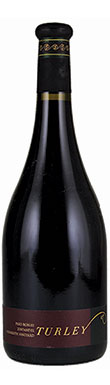

Beautifully pure, chewy, rich and sweet flavours of plums and cherries overlay hints of Christmas spices, a dark baritone note and wet-stone minerality. Ripe but...
2016
Turley Wine CellarsPaso Robles

Nalle, Zinfandel, Sonoma County, Dry Creek Valley, California, USA, 2016
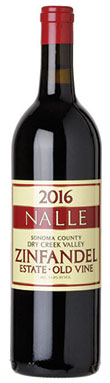
Nalle wines show Zinfandel’s nobility. The variety’s natural blackcurrant and raspberry fruit exuberance is tamed by early picking, yielding bright acidity for long ageing. Its...
2016
NalleSonoma County
Ridge Vineyards, Pagani Ranch, Sonoma County, Sonoma Valley, California, USA, 2017
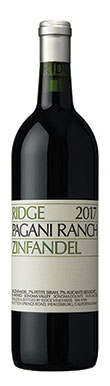
Winemaker John Olney says that the long hang-time of the grapes shifts the red-fruit notes towards sweet cherries and boysenberries, without any cloying overripeness. Pagani...
2017
Ridge VineyardsSonoma County
Bucklin Old Hill Ranch, Ancient Field Blend, Sonoma County, Sonoma Valley, California, USA, 2017
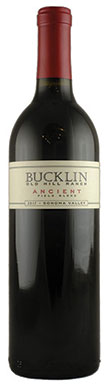
This Old Hill Ranch cuvée (about 65% Zinfandel, plus others including Grenache, Alicante Bouschet, Petite Sirah and Grand Noir) offers ethereal violet and crushed-pepper aromas,...
2017
Bucklin Old Hill RanchSonoma County
Bedrock Wine Co, The Bedrock Heritage Red, Sonoma County, Sonoma Valley, California, USA, 2018
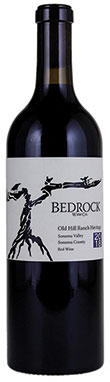
Remember how gobstoppers would change colour and flavour as you sucked them? This layered beauty is like that – first full of blackberries, then black...
2018
Bedrock Wine CoSonoma County
Kokomo, Zinfandel, Sonoma County, Dry Creek Valley, California, USA, 2018
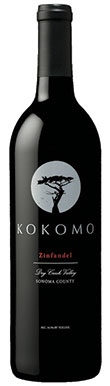
An almost-perfect growing season in 2018 produced a larger-than-average crop of beautifully balanced fruit. The wine spent 11 months in 20% new French oak and...
2018
KokomoSonoma County
Seghesio, Cortina Zinfandel, Sonoma County, Dry Creek Valley, California, USA, 2016
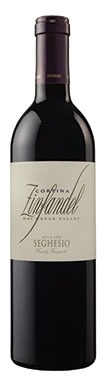
Sage, earth and dried herbs on the nose; then rich flavours of raspberries, cherries and blueberries. A core of acid and smooth tannins make this...
2016
SeghesioSonoma County
Zialena, Zinfandel, Sonoma County, Alexander Valley, California, USA, 2017
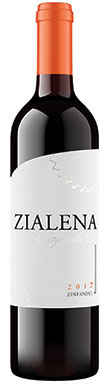
The second vintage from the estate’s new winery, which features concrete fermenting tanks. This beautifully crafted wine is 100% Mazzoni-clone Zinfandel, with black-cherry, plum, dark-chocolate,...
2017
ZialenaSonoma County
Carlisle, Papera Ranch Zinfandel, Sonoma County, Russian River Valley, California, USA, 2017
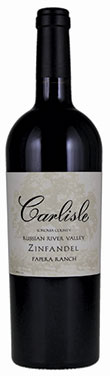
The flavour of red raspberries and blood oranges is Papera’s signature note. Also, ethereal hints of tobacco, spun sugar, redcurrant and macerated cherries. Zinfandel with...
2017
CarlisleSonoma County
Gallo, Signature Series Zinfandel, Sonoma County, Dry Creek Valley, California, USA, 2017
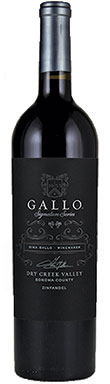
There’s a whiff of freshly baked bread on the nose leading to boysenberries, raspberries and blackberries on the palate, with hints of brown sugar, sweet...
2017
GalloSonoma County
Dry Creek Vineyard, Old Vine Zinfandel, Sonoma County, Dry Creek Valley, California, USA, 2017
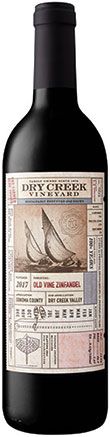
The spiciness of nutmeg, cardamom and cinnamon from these old vineyards is very apparent in the wine. As well as this, you get blackberry cobbler...
2017
Dry Creek VineyardSonoma County
Scherrer, Old & Mature Vines Zinfandel, Sonoma County, Alexander Valley, California, USA, 2014
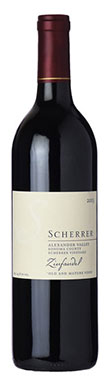
The vines endured drought-like conditions in 2014, which resulted in thick-skinned, intensely concentrated berries with fresh plum flavours and verve from plentiful and succulent acidic...
2014
ScherrerSonoma County
Klinker Brick, Old Ghost Zinfandel, Lodi, California, USA, 2016
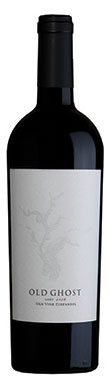
This wine carries its luscious flavours of brambles, vanilla, caramel, dried cherries and herbs from start to finish, accented by aromas of anise and cloves....
2016
Klinker BrickLodi
DeLoach, Forgotten Vines, Sonoma County, California, USA, 2016
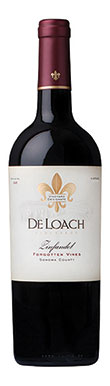
The aroma of this elegant organic wine, part of the Boisset Collection, features fresh red raspberries, tobacco leaf and chocolate. On the palate, its...
2016
DeLoachSonoma County
Hendry, RW Moore Vineyard Zinfandel, Napa Valley, California, USA, 2017
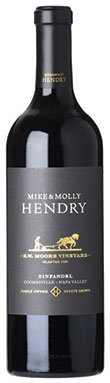
A blend of 95% Zinfandel and 1% each of Petite Sirah, Carignan and Mourvèdre as well as 2% of the rare Cabernet Pfeffer. In some...
2017
HendryNapa Valley
Alquimista, Jessie's Grove, Lodi, California, USA, 2018
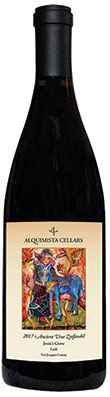
Whole-berry fermentation yields a wine that’s floral, estery, ebullient and ‘balletic’, says Greg La Follette, with bright cherry-berry red-fruit flavours and signature Zin spiciness. The...
2018
AlquimistaLodi
McCay Cellars, Jupiter Zinfandel, Lodi, California, USA, 2016
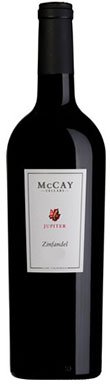
Cola, tobacco and exotic sandalwood perfume the nose, while a mix of black cherry, red raspberry, a hint of hazelnuts, plus the soft tannins typical...
2016
McCay CellarsLodi
St Amant Winery, Mohr-Fry Ranch Old Vine Zinfandel, Lodi, California, USA, 2017
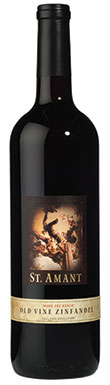
Here’s Zin in the old style: ripe, chewy, blustery, bold and packed with tarry, earthy flavours. A bit rough around the edges, but you might...
2017
St Amant WineryLodi
