
Carmignano: Making wine in Chianti’s shadow


This small, northerly corner of Tuscany has a long, noble history. But can its complex terroirs and the passion of its producers ever lift Carmignano’s DOCG wines above the clamour for Chianti? Stephen Brook visits the region…
Enrico Pierazzuoli, one of the brothers who own the Le Farnete estate in Tuscany, is standing among his vines shortly before harvest. ‘I’m not sitting at a computer or staring at analyses before harvest,’ he tells me.
‘I’m here in the vineyard. I’m not against technology. You can use GPS and drones and soil probes, but then you have to make a decision, and this you can only do if you are in the vines every day. Knowing about one element is not enough. You need to taste the berries, you need to observe the vines. Only then will you arrive at the correct decision.’
Scroll down for Stephen Brook’s top 10 Carmignano reds
I dare say any good grape farmer would agree with him. But Pierazzuoli has another concern: he has to assemble a wine that, by definition, must blend different varieties.
We’re in the Carmignano appellation, which has a majority of Sangiovese, and significant supporting roles for Cabernet Sauvignon and/ or Cabernet Franc, Merlot and perhaps Syrah or Petit Verdot too.
Where, you may wonder, is Carmignano?It’s a small region of 200 hectares that lies about 20km west of Florence along the base of the Montalbano mountain and overlooking the industrial town of Prato.
It became a delimited vineyard zone under the Medicis in 1716, and celebrated its 300th birthday last year. It was the Medicis who apparently imported Cabernet Sauvignon to be planted here and thus created the wine that still exists today.
The decree of 1716 makes no mention of grape varieties, though this does not mean the rule-makers of the time were ignorant of such things. Elsewhere, similar classifications of the top vineyards in Douro and Tokaj were also taking place.
Rounded personality
With the Chianti zones on its doorstep, it’s reasonable to wonder what gives Carmignano its identity.
Its terroir is distinctive, since its vines are sheltered by the Montalbano, a mountain that allows enough rain to sneak past to minimise hydric stress.
The clay soils in many parts of Carmignano are also water retentive and keep the vines green and flourishing during hot summers, although there are other sectors that have more sandstone, limestone or schist. There is a microclimate here but no uniform terroir.
The blend must be composed of between 50% and 90% Sangiovese, with no more than 20% of Canaiolo, no more than 20% of Cabernet Sauvignon or Franc, and up to 10% of other grapes (such as Merlot or Syrah).
I’m not sure how doggedly the producers actually adhere to these rules, which can be generally summarised as about two-thirds Sangiovese blended with French varieties. The wine must be aged for at least eight months in barrels, the riserva for 24 months, of which at least 12 must be in wood.
Decades ago the inclusion of French varieties was enough to give Carmignano its identity. But for 20 years or more, many wines from Chianti Classico have also been made from a very similar blend, and this inevitably means Carmignano is less distinctive than used to be the case.
Consultant winemaker Barbara Tamburini – who shares a passion for wine with one for flying daredevil feats in jet planes – notes that the vineyards here are generally at lower altitude than those in Chianti, so the grapes ripen earlier.
Fabrizio Pratesi of his eponymous winery believes that the style of Sangiovese from here is rounder.
Yet there can be vintages when Sangiovese can be tough here. In such years, argues Tamburini, a dose of Merlot is essential to balance the wine.
In contrast, leading winemaker Beppe Rigoli, of the Ambra estate, would love to make Carmignano from pure Sangiovese, though for the moment he adheres to the DOCG rules.
Tamburini defines the style as follows: ‘I find the wines midway between Chianti Rúfina and Chianti Classico. Rúfina has more elegance, Chianti Classico more complexity.’ For Rigoli, Carmignano is ‘an elegant wine with tense tannins and crunchy fruit’.
Embracing change
Two other wines are unique to the region.
- Barco Reale is a similar blend to Carmignano, but usually sourced from lesser sites or younger vines; it need not be oak-aged.
- The other is a delicious rosato, often labelled as ‘vin ruspo’.
Like other Tuscan wine regions, Carmignano also produces vin santo, usually made in a highly traditional style, with prolonged ageing in very small barrels.
Despite their heritage and recent 300th birthday celebrations, the producers of Carmignano – and there are only 12 or so – are frustrated by their obscurity.
With an annual production of a mere 600,000 bottles, the region is resigned to being a ‘niche product’ and lacks the means to invest in ardent promotion. The frustration is increased by the fact that overall quality is very high.
The historic estate here, with almost 100ha under vine, is Capezzana, which has been familiar to many British lovers of Tuscan wine for decades.
I first came here 30 years ago, and was easily won over by the procession of vintages from the 1930s that the owner, Conte Ugo Contini Bonacossi, dug out of his cellar – and by his wife’s splendid cooking.
Although they both died just a few years ago, the next generation is firmly in place, benefiting from the Cabernet cuttings brought here from Château Lafite.
The present director, Vittorio Contini Bonacossi, has made some changes during his tenure.
The famous riservas from Capezzana have been phased out since 1998 and replaced by a 5ha cru called Trefiano, which blends 80% Sangiovese with 10% each of Canaiolo and Cabernet Sauvignon.
This is aged for 18 months in tonneaux, of which 25% are new. He would like to plant more Cabernet Franc – as would many other Carmignano growers, who find the variety gives more finesse than Cabernet Sauvignon.
At Ambra, Rigoli produces at least three Carmignano wines, of which two are riservas. The finest bottling is Montalbiolo, and Rigoli pours vintages from 1986, 1990 and 1996, confirming what I already knew from the Capezzana wines, which is that Carmignano can age exceptionally well.
None of the wines was tiring, and the 1990 was still vivid, taut and appetising. Rigoli also makes the wines for Il Sassolo and Podere Allocco, both owned by retired textile magnates, who seem to be plentiful in the Prato region.
Business leaders
‘Carmignano is a far better wine than any Chianti Classico I have ever tasted,’ modestly declares Mauro Vannucci, yet another textile tycoon and the owner of the Piaggia estate that he runs with his daughter Sylvia.
Here too the riservas, from 2004, 2007 and 2013, were first-rate wines with spice and vigour, though with occasional heat from the alcohol.
Vannucci is another enthusiast for Cabernet Franc, even producing a single-varietal example, as well as including a dash of it in his Carmignano.
Fabrizio Pratesi bucks the trend. No textile factory for him, but a Lexus dealership in his earlier business life. I find his wines more modern in style, with smoky oak and polished tannins. The 2000, 2005 and 2010 were still going strong.
The most ambitious project in the region is the Artimino estate. Squatting imperiously across a hilltop is a vast Medici palace built in the 1590s. It’s famous for its 56 chimneys, each to a different sculptural design.
In 1989 the estate was bought by the Olmo family, who had made their fortune manufacturing foam for car seats. They transformed the property into a resort, with a hotel and restaurant, and the villa equipped to host 600 guests for the grandest of weddings.
Of the 85ha of vineyards here, 45ha are designated for Carmignano, and they produce a regular wine, a riserva and a cru wine called Grumarello. The grape mix includes Syrah and Petit Verdot, though in small quantities, and the wines are aged in large casks as well as in barriques.
There’s a slight blandness to the wines, as though they are still searching for their true style, but the presence of Filippo Paoletti suggests that quality will soon take a dramatic leap upwards.
Finding harmony
Paoletti has been the winemaker for Lisini in Montalcino, so he is an expert on Sangiovese in all its guises.
He doesn’t underestimate the difficulties involved in producing Carmignano with typicity. ‘Sangiovese is not easy, as everyone who works with it knows,’ he says.
‘You have to be its servant, not try to dominate it. However, Cabernet Sauvignon is not the ideal grape for blending with Sangiovese.’
You have to ‘respect the tannins of each’, he emphasises, and this usually means picking at exactly the right moment. ‘Cabernet can give a touch of greenness, which is part of the typicity, but not to excess,’ he adds.
‘You need to ferment the varieties separately and then age them differently. I’m always experimenting to find the best way to bring them together. You need a concept of how the two will harmonise to create a fine Carmignano.’
Paoletti goes on to explain that Sangiovese still has the ‘commanding role’ in Carmignano and must be top quality.
‘To avoid hard tannins you need excellent vineyard work and care during fermentation. You need to have the vineyard manager and the winemaker working together towards the same goal. And the maturation should do what it says: improve the wine and lead it to harmony and completeness, not using oak to cover any defects.’
Many wine producers are still struggling to achieve that balance, but the best estates have indeed learned to tame the tannins without eliminating them, and to bring the varietal components into harmony.
I doubt that Carmignano will ever have a totally unmistakable identity, since there are so many permutations on its varietal blend. This is compounded by its closeness in geography and style to Chianti, but, at its best, it has a grandeur and longevity that are certainly worth defending.
This article was originally published in Decanter magazine’s May 2017 issue and is now available online exclusively for Premium subscribers.
Stephen Brook’s top 10 Carmignano reds:
You may also like:
Tuscany vintage guide
Super Tuscan evolution: Comparing Tignanello and Solaia
Chianti Classico 2017: A first look
Great Brunello producers to know about
Colline San Biagio, Carmignano, Tuscany, Italy, 2011
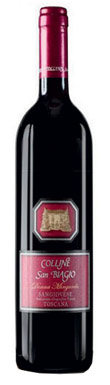

Subdued yet quite oaky, cherry nose. Sleek and concentrated, this has rich fruit on a palate that is elegant as well as intense, with good...
2011
Colline San BiagioCarmignano

Ambra, Montalbiolo, Carmignano, Tuscany, Italy, 2005
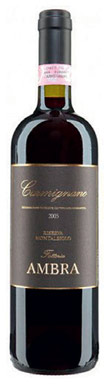
Bright, lean cherry nose, reflecting the 75% Sangiovese, but there’s a cool mintiness too. Medium-bodied yet graceful and sleek, showing poise and freshness. Fine length.
2005
AmbraCarmignano
Capezzana, Trefiano, Carmignano, Tuscany, Italy, 2010
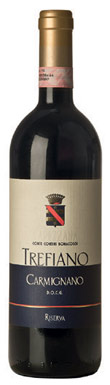
The cherry-scented nose is intense, ripe and elegant. Suave and concentrated, this is still youthful, its rich fruit supported by firm tannins. A slight austerity...
2010
CapezzanaCarmignano
Fabrizio Pratesi, Carmignano, Tuscany, Italy, 2010
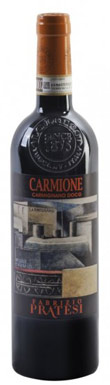
The nose is unusually aromatic, with smoky, cherry aromas. Medium-bodied but concentrated, this shows firm acidity and tannins on the palate. It’s assertive, spicy and...
2010
Fabrizio PratesiCarmignano
Piaggia, Carmignano, Tuscany, Italy, 2013
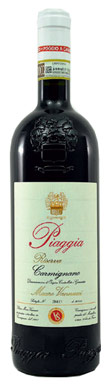
Intense and vibrant cherry and blackcurrant nose. Very concentrated palate, this is lavish but taut, and driven by good acidity. Assertive and a touch hot...
2013
PiaggiaCarmignano
Capezzana, Villa di Capezzana, Carmignano, Tuscany, Italy, 2013
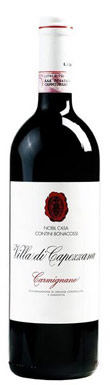
Fresh and lifted cherry nose with appealing elegance. Medium-bodied but quite concentrated, with ripe tannins and a spicy finish. It’s delicate rather than forceful. Well...
2013
CapezzanaCarmignano
Artimino, Grumarello, Carmignano, Tuscany, Italy, 2011
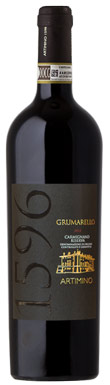
Complex nose with cherry aromas, as well as spicy, herbal, smoky tones. Suave and full-bodied, this is concentrated yet the tannins are supple and the...
2011
ArtiminoCarmignano
Il Sassolo, Carmignano, Tuscany, Italy, 2011
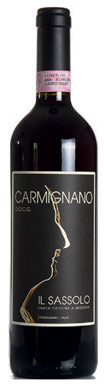
Perfumed cherry and herb notes and a waxy tone. Mid-bodied yet concentrated and quite fleshy, while good acidity keeps it perky and vibrant. Intense and...
2011
Il SassoloCarmignano
Artimino, Carmignano, Tuscany, Italy, 2013
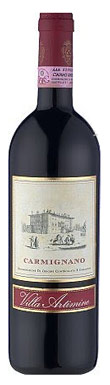
Lush black fruit nose with a touch of liquorice. Quite rich with supple tannins, this is juicy and quite concentrated. An undemanding style, with ample...
2013
ArtiminoCarmignano
Le Farnete, Carmignano, Tuscany, Italy, 2013
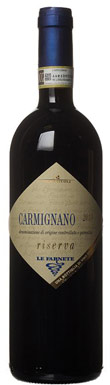
Lifted cherry and blackcurrant nose, and a supple and quite concentrated palate with good underlying acidity. It lacks some depth and drive, but has length...
2013
Le FarneteCarmignano
