
Ceretto: producer profile & 19 wines tasted
'Innovation has always been part of Ceretto’s DNA,' says Raffaele Mosca of this Barbaresco and Barolo producer, as he looks at their history, stylistic evolution and various projects.
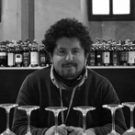

Tasting through Ceretto’s Barolo and Barbaresco portfolio is both a hedonistic and educational experience. Few wineries offer an equally varied line-up of excellent wines from some of Piedmont’s most famous vineyards.
Scroll down to see tasting notes & scores for Ceretto’s Barolo and Barbaresco wines
Owning over 160 hectares across three estates, Ceretto is a large producer by Langhe standards, but it doesn’t solely rely on economies of scale. The Cerettos – Bruno, Marcello, and their siblings Alessandro, Federico, Lisa and Roberta – are among the most energetic and forward-thinking entrepreneurs in the Italian wine industry.
Over the last 30 years, they have ventured beyond wine production, importing some of the finest French wines into Italy, acquiring luxury food brand, Relanghe, and managing the multi-award-winning Piazza Duomo restaurant (read more below).
The Ceretto family also financed the construction or renovation of some of the Langhe’s architectural landmarks, including the Brunate Chapel (painted by Sol Lewitt and David Tremlett in 1999), the oblique glass and steel Cubo at the top of the Bricco Rocche vineyard, and the Acino (grape-shaped) panoramic room in the Monsordo Berardina estate.

Ceretto fact box
Date founded 1937
Hectares under vine 160
Annual production Approximately 1.2 million bottles
Key vineyards Asili, Bernadot, and Gallina (Barbaresco); Bussia, Bricco Rocche, Brunate, Cannubi San Lorenzo, Prapò, and Rocche di Castiglione (Barolo).
From Blangè to Barolo
Innovation has always been part of Ceretto’s DNA. Not only were Bruno and Marcello Ceretto among the first to release single-vineyard Barolo and Barbaresco, in 1974, but they also launched Blangé, one of the most successful white wines in Italy in the 1980s and 1990s.
Made from Arneis grapes, Blangè was among the first Italian whites produced with the cold soaking technique, which boosted the aromatics while preserving the light and sour taste that appealed to consumers at that time. The French-sounding name derives from the Piedmontese distortion of the term ‘Boulanger’ (baker) and refers to the job of the previous owner of the original vineyards.
‘Blangè was first released in 1985 and quickly became a bestseller,’ explained Mattia Pagliasso, export manager at Ceretto. ‘In just ten years, the brothers had to increase vineyard size and production tenfold to satisfy booming demand’.
Blangè, which today accounts for roughly 50% of the estate’s production, generated a cash flow that funded the previously mentioned projects, as well as the expansion of family holdings in the Barolo and Barbaresco denominations.
In 1997, Bruno and Marcello added five hectares in the high-altitude Bernadot cru of Treiso to their vineyard portfolio, which already included several other vineyards in five different townships purchased between the 1960s and ‘70s. The acquisition of 0.4 hectares in the Cannubi San Lorenzo vineyard followed in 2002.
The long-term goal of making at least one single-vineyard wine from each of the denominations’ main villages was finally achieved in 2015, when they acquired a 0.3 ha plot in the Gallina vineyard in Neive (Barbaresco), and established a rental agreement to vinify fruit from the Bussia vineyard in Monforte d’ Alba.
The biodynamic revolution
The new generation improved the management of the 32 hectares in the Barolo and Barbaresco DOCGs. The revolution started in 2009, when Alessandro Ceretto, who has been the head winemaker since the early 2000s, hired renowned consultant Adriano Zago to convert the Nebbiolo vineyards to biodynamic agriculture. ‘We began with the best plots, as the small size facilitated experimentation,’ remarked Pagliasso.
Alessandro was deeply satisfied with the first results, so he expanded the project beyond Barolo and Barbaresco, and by 2015, all the vineyards owned by Ceretto were certified organic. ‘We work in the vines according to biodynamic principles, but we are not seeking the biodynamic certification, as we prefer to pursue our winemaking style instead of adapting to dictated standards,’ said Pagliasso.
In the cellar
In line with Zago’s influence in the vineyards, winemaking at Ceretto changed radically too. A transition took place from the modernist style of Barolo and Barbaresco that Marcello and Bruno had followed since the early 1990s towards a style that combined transparency and approachability, under the supervision of Alessandro.
2009 was the first vintage in which the single-vineyard wines underwent fermentation with ambient yeasts. Regular mechanical presses replaced roto-fermenters, and the percentage of new oak was reduced to around 5-8%.
Alessandro currently vinifies the different parcels within each vineyard separately and assembles them before bottling. Fermentation happens in stainless steel vessels at 25-26°C, and maceration normally lasts between 20 and 25 days. Malolactic fermentation takes place in barrique.
Ageing occurs for 10 to 12 months in barrique or tonneaux, and for either one or two years – depending on whether it is Barolo or Barbaresco – in French and Slavonian oak botti grandi. All the wines are bottled unfiltered and spend at least one more year in the cellar before hitting the market.
Over time, I have tasted old and new vintages of Ceretto’s single-vineyard collection, and I have found the stylistic shift quite remarkable. While the latest releases stand out for their purity, refinement and site-specific character, the wines from the 1990s and early 2000s are still lively, but in many cases the heavier extraction and stronger use of new oak resulted in darker profiles with drier tannins and less detail.
‘It is going to be interesting to see how the recent releases will perform in the long run,’ affirms Pagliasso. ‘Maybe they will have a slightly shorter drinking window than the wines made before 2009, but we believe they will evolve differently and more gently, showing greater complexity.’
Piazza Duomo
The joint venture between the Ceretto family and superstar chef, Enrico Crippa, Piazza Duomo is the only restaurant owned by a wine producer to hold three Michelin stars, and appears in the World’s 50 Best Restaurants list (#19 in 2022).
Enrico Crippa is a master of plant-based fine dining, using over 250 different vegetables sourced from the orchard and greenhouse within Ceretto’s Monsordo Berardina estate. His take on Piedmontese cuisine is groundbreaking, blending traditional ingredients with herbs, vegetables and spices to create dishes that combine freshness and lightness with mind-boggling aromatic persistence.
Standout courses from the current menus include potato cream, lapsang souchong, and white truffle; snails and polenta; Risotto Roiboos; and the Winegrower’s salad (with beef tongue and Piedmontese green sauce).
The restaurant also boasts an extensive wine list with a clear focus on Piedmont, Burgundy and Champagne, and offers a tasting menu dedicated to Barolo pairings.
Comparing the crus: Tasting Ceretto’s Barolos and Barbarescos
Related articles
- Barbaresco: panel tasting results
- Get to know Piedmont red wines in three steps
- Roagna: Producer profile & 11 wines tasted
Ceretto, Barolo, Piedmont, Italy, 2018
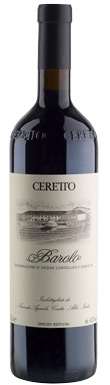

Made with fruit from Zonchera, Gabutti, and younger parcels in other vineyards, the 2018 Barolo displays inviting - if slightly simple - aromas of strawberries,...
2018
CerettoBarolo

Ceretto, San Lorenzo, Barolo Cannubi, Barolo, Piedmont, Italy, 2010
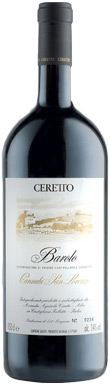
The rarest wine in Ceretto's collection - only 600 magnums produced - Cannubi San Lorenzo hits the market 10 years after harvest. The 2010 exudes...
2010
CerettoBarolo Cannubi
Ceretto, Brunate, Barolo, La Morra, Piedmont, Italy, 2013
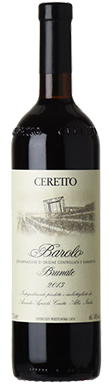
From an excellent - if slightly underrated - vintage, the 2013 Brunate bursts with exuberant aromas of pomegranate, raw cocoa and Piedmontese hazelnuts, all complicated...
2013
CerettoBarolo
Ceretto, Brunate, Barolo, La Morra, Piedmont, Italy, 2015
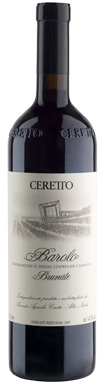
The 2015 Brunate offers high-toned aromas of cherry compote, cinnamon, menthol and a subtle hint of tar. You get the richness and creaminess of the...
2015
CerettoBarolo
Ceretto, Brunate, Barolo, La Morra, Piedmont, Italy, 2018
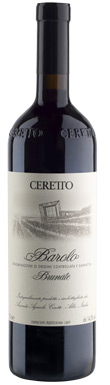
The largest production single-vineyard Barolo by Ceretto (around 8,000 bottles), Brunate displays an exuberant nose featuring cumin, sandalwood, blood orange, iron and a waft of...
2018
CerettoBarolo
Ceretto, Bricco Rocche, Barolo, Castiglione Falletto, Piedmont, Italy, 1989
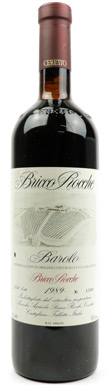
Predating the introduction of barriques in the winery, the 1989 Bricco Rocche underwent traditional ageing in big casks. It sports a luminous ruby colour with...
1989
CerettoBarolo
Ceretto, Bricco Rocche, Barolo, Castiglione Falletto, Piedmont, Italy, 2006
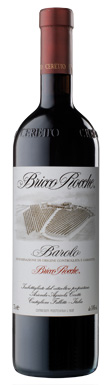
Dark and deep in the glass, the 2006 Bricco Rocche offers a beguiling array of kirsch, liquorice, oriental spice, dark chocolate and a hint of...
2006
CerettoBarolo
Ceretto, Bricco Rocche, Barolo, Castiglione Falletto, Piedmont, Italy, 2018
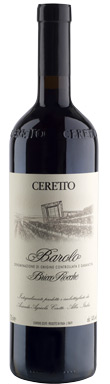
The 2018 Bricco Rocche has a dark and complex nose with nuances of sour cherries, cumin, incense and a hint of dark spice. It begins...
2018
CerettoBarolo
Ceretto, Rocche di Castiglione, Barolo, Castiglione Falletto, Piedmont, Italy, 2018
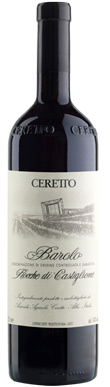
The new entry in Ceretto’s Barolo-Barbaresco portfolio, Rocche di Castiglione has the ripest nose in the 2018 lineup, with hints of cherry compote, scorched earth...
2018
CerettoBarolo
Ceretto, Bussia, Barolo, Monforte d’Alba, Piedmont, Italy, 2018
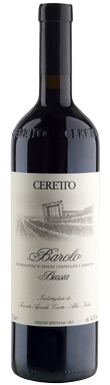
The 2018 Bussia sports lovely aromas of crunchy redcurrants, rose petals, animal musk and sandalwood. It's all about finesse and exotic charm, the slim silhouette...
2018
CerettoBarolo
Ceretto, Prapò, Barolo, Serralunga d’Alba, Piedmont, Italy, 2018
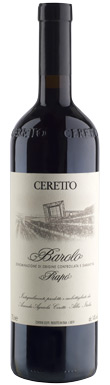
The 2018 Prapò comes across as surprisingly gracious. The floral verve that is typical of the 2018 vintage superimposes classic Serralunga aromas of forest floor...
2018
CerettoBarolo
Ceretto, Barbaresco, Piedmont, Italy, 2019
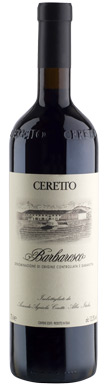
The 2019 Barbaresco displays high-toned aromas of sweet raspberries, rose petals and liquorice that anticipates an open-knit palate with clear-cut flavours of crunchy raspberries and...
2019
CerettoBarbaresco
Ceretto, Asili, Barbaresco, Barbaresco, Piedmont, Italy, 1999
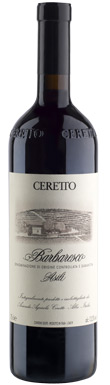
Deep garnet in color, the 1999 Barbaresco Asili boasts mature aromas of pipe tobacco, damp earth, blackberry preserve and white truffle. It's still vibrant, with...
1999
CerettoBarbaresco
Ceretto, Asili, Barbaresco, Barbaresco, Piedmont, Italy, 2016
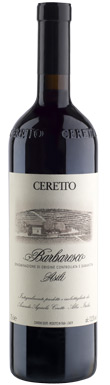
The 2016 Asili has an almost Burgundian nose - airy, with nuances of sour cherries, rose petals, balsamic oil, iron and animal musk. Pure, energetic...
2016
CerettoBarbaresco
Ceretto, Asili, Barbaresco, Barbaresco, Piedmont, Italy, 2019
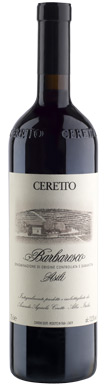
The 2019 Asili sports refined aromas of kirsch, cola and balsam herbs that mingle with darker nuances of scorched earth. It's both deep and vibrant,...
2019
CerettoBarbaresco
Ceretto, Gallina, Barbaresco, Neive, Piedmont, Italy, 2019
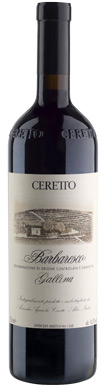
The second release from this highly regarded cru in Neive, the 2019 Gallina unveils alluring scents of sweet cherries and rose petals framed by a...
2019
CerettoBarbaresco
Ceretto, Barbaresco Bernadot, Treiso, Piedmont, Italy, 2010
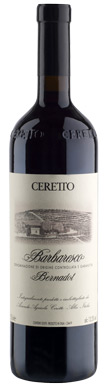
The 2010 Bernadot is earthy and muddy at first, but gains delineation with airing and develops beguiling aromas of balsam herbs and pot-pourri. Sharp and...
2010
CerettoBarbaresco Bernadot
Ceretto, Barbaresco Bernadot, Treiso, Piedmont, Italy, 2019
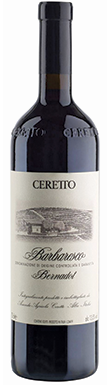
From a vineyard lying at 450 metres above sea level in the township of Treiso, the 2019 Bernadot offers restrained aromas of tart blackberries, grilled...
2019
CerettoBarbaresco Bernadot
Ceretto, Faset, Barbaresco, Barbaresco, Piedmont, Italy, 1996
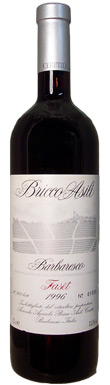
Coming from a single vineyard that the family used to rent, the 1996 Faset has a mushroomy nose with hints of espresso, tobacco and potpourri....
1996
CerettoBarbaresco
