
Chambolle’s Bonnes Mares & Musigny: Two grands crus compared
The village of Chambolle contains two of Burgundy's most renowned sites, Bonnes Mares and Musigny. Charles Curtis MW relates the tale of two crus.

The village of Chambolle starts with a grand cru in the north and finishes with another in the south. They are both highly regarded, yet very different.
The wines of Bonnes Mares are often seen as more massive, more structured, and more muscular, while those from Musigny are more elegant, more expressive, and more nuanced.
Scroll down to see notes and scores for old and new vintages of Bonnes Mares & Musigny
However, a closer look will likely prove these generalisations too broad, and a closer look at each will help us understand them more clearly.
Comparing the two calls to mind the antithesis of the opening lines in Charles Dickens’ ‘A Tale of Two Cities‘: ‘…there is a soil of terres blanches and a soil of terres rouges, on a base of oolitic limestone and a base of Comblanchien, under the influence of the Combe d’Orveau and the Combe Ambin…’
The Dickens trope, however, can only be carried so far, since drinking the greatest wines of Chambolle must surely be ‘the best of times’ and not ‘the worst of times’, whichever you choose.
Bonnes Mares
Bonnes Mares lies at the northern limit of Chambolle. In truth, this grand cru begins in Morey-St-Denis, where 1.5 hectares of the total 15ha are located. The northernmost portion is essentially a continuation of the Clos de Tart. In fact, until 1965, there were 0.2ha of Bonnes Mares within the Clos de Tart itself.
This sliver of Bonnes Mares was owned by the Mommessin family, who also owned the Clos de Tart and had these rows reclassified as Clos de Tart. The remainder of the appellation in the village of Morey is owned by Domaine Bruno Clair, who has an impressive 1.6ha altogether.
Clair is fond of saying that in Bonnes Mares, the closer one is to Morey, the more powerful the wines will be, and many observers note the difference between one end of the appellation and the other.
In addition to the differences between the Chambolle side and the Morey side, there are two soil types, commonly referred to as ‘terres blanches’ and ‘terres rouges’. The terres blanches are white marl, characterised by the remnants of oyster shells (Ostrea acuminata), while the terres rouges are richer in iron-bearing clay deposits.
The distribution of these soils is inconsistent throughout the appellation – the terres blanches start at the top of the slope in Morey but descend diagonally down to the mid-slope closer to the village of Chambolle, where it borders Les Fuées.
It is said that the terres blanches give more finesse and the terres rouges, more power, although some of this is also due to winemaking techniques as well. Despite the differences, some things are consistent: the entire vineyard faces directly east, with a slope that rises evenly near the top of the hill.
Bonnes Mares at a glance
AOC created: 1936
Permitted varieties: Pinot Noir only
Vineyard area: 15ha (14.6ha in production as of 2018)
1.5ha in Morey-St-Denis
13.5ha in Chambolle-Musigny
Average harvest: 509hl (roughly 67,500 bottles)
Musigny
Separated from Bonnes Mares by the Combe Ambin lies the renowned Musigny appellation. From its vantage point it overlooks Echézeaux, the Clos de Vougeot and Les Amoureuses.
Musigny is smaller than Bonnes Mares at a nudge over 10ha. While Bonnes Mares is roughly rectangular, Musigny is composed of three main parts: Les Musigny (5.9ha, formerly known as Grand Musigny), Les Petits Musigny (4.1ha), and a 0.7ha portion of lieu-dit La Combe d’Orveau.
Les Petits Musigny is a monopole of Domaine Comte Georges de Vogüé, and the part of Musigny in the Combe d’Orveau is the monopole of Domaine Jacques Prieur.
This section was added in 1929 before the declaration of the appellation, since Prieur had petitioned to have it included because they had always sold it as such; another 0.16ha was added as recently as 1989.
Combe d’Orveau is thus one of the few lieux-dits in Burgundy to have vines classified as grand cru, premier cru, village-level, and regional-level. There is also a contiguous lieu-dit called ‘En Orveaux’ in Flagey-Echézeaux, which is partly grand cru (forming part of Echézaux) and partly premier cru.
The upper slopes of Les Musigny are oolitic limestone, partly decomposed by glaciers to form what is known in French as grèzes litées (stratified slope deposits).
This soil of broken-up limestone gravel is particularly favoured. The slopes here are steeper and subject to erosion. The lower slopes are underpinned by harder Comblanchien limestone, separated from the former by a fault, but almost all of Les Petits Musigny is located on Comblanchien.
There are also two small plots owned by Domaine Tawse that are below the road leading from the Clos de Vougeot to the village.
Most of Grand Musigny and Petits Musigny rises slowly from the road and then more steeply to the treeline at the top of the slope, while the upper slopes of the Combe d’Orveau are not included as part of Musigny. The entire appellation is exposed east-southeast.
One village, two very different terroirs. Although the differences are great, there are sublime wines made in each. There are eight producers who make both; it is a fascinating exercise to compare the wines made from each vineyard.
Musigny at a glance
AOC created: 1936
Permitted varieties: Pinot Noir and Chardonnay
Vineyard area: 10.8ha (9.7ha of Pinot Noir in production as of 2018, 0.6ha of Chardonnay)
5.9ha in Les Musigny
4.1ha in Les Petits Musigny
0.7ha in La Combe d’Orveau
Average harvest: 270hl (roughly 36,000 bottles)
Bonnes Mares & Musigny: Eight estates to know
Domaine Comte Georges de Vogüé
Domaine Comte Georges de Vogüé is one of Burgundy’s legendary estates, dating to the 15th century. The domaine farms a total of 12.5ha of vines, all of it in the commune of Chambolle-Musigny, including a staggering two-thirds of the entire Musigny appellation: a total of 7.2ha.
This includes 0.6ha that are planted with Chardonnay, making Musigny the only grand cru in the Côte de Nuits authorised to make white wine. The domaine also owns 2.7ha of Bonnes Mares, located on the terres rouges of the lower slopes.
The commercial director is Jean-Luc Pepin; grape growing is directed by Eric Bourgogne along organic principles (although the domaine is not certified); and Jean Lupatelli replaced the retiring François Millet as winemaker in 2021.
Lupatelli has made some changes since taking over. Some have been small; others are more systemic. The grapes are now picked into small bins and refrigerated before sorting; the number of punch downs has been reduced, and up to 40% of the harvest is fermented as whole clusters.
Some collectors have felt that changes were overdue at de Vogüé, while others think Lupatelli still has much to prove on such a grand stage. For my part, I have always appreciated the traditional style at de Vogüé, although the wines often open very slowly.
However, I also have enormous hope for the future of this iconic estate, and I feel that Lupatelli’s changes are encouraging indeed.
Domaine Georges Roumier

This dynamic estate was founded in 1924 when Georges Roumier married local Chambolle girl Geneviève Quanquin, whose dowry included vineyard parcels in Bonnes Mares, ‘Les Amoureuses’, and ‘Les Fuées’.
Georges took on a sharecropping agreement for a small plot of Musigny, and since those early days, the domaine has been central to these appellations.
He further enlarged his holdings in Bonnes Mares by purchasing a portion of the Belorgey estate, which was split with the domaines Clair-Daü and Pierre Ponnelle. Georges retired in 1961, and his son Jean-Marie took over the winemaking.
In 1978, Jean-Marie purchased the 10 ares of Musigny his family had been leasing for over 50 years. The plot is located in Les Musigny at the top of the slope between the holdings of Jadot and Faiveley.
Jean-Marie was joined by his son Christophe (pictured) in 1982, and Christophe assumed full responsibility with the 1992 vintage.
Christophe conducts a maceration in the winery that can last up to two weeks, depending on the vintage. Different wines in the cellar are fermented with varying amounts of whole cluster fruit, which has been increasing over the years.
The Bonnes Mares is often fermented mainly in this way, and the Musigny (because of the size of the plot) almost exclusively so. Fermentation is done on native yeasts, and the temperature is seldom controlled unless it threatens to exceed 32°C.
The total length of the vatting is 20-25 days, including the cold maceration at the beginning. The length of cask ageing can vary, and it is usually done in one-third to one-half new barrels for the grand crus.
Domaine Leroy
The Musigny from Domaine Leroy is frequently among Burgundy’s most expensive wines. The three bottles of the 2014 vintage that traded at auction in 2023 averaged more than £33,000 per bottle.
The domaine owns 0.2ha spread over four parcels. Clive Coates MW tells us in his work Côte d’Or that there was a small holding at the Charles Noëllat estate that formed the original nucleus of Domaine Leroy (purchased in 1988), and that more Musigny was purchased from the Moine-Hudelot family in 1990.
Madame Leroy is also the proprietor of 0.2 ares of Bonnes Mares that she purchased in 1993 as she was expanding her Domaine d’Auvenay property in St-Romain.
Danish authority Steen Ohman speculates that the vines were from Hervé Roumier, the son of Jean-Marie’s brother Alain. By all accounts, the wines are made the same way as those of Domaine Leroy, although I have tasted them infrequently.
Domaine Leroy farms biodynamically; the vines are pruned very short, and once the shoots are set, the canopy is not trimmed in order to encourage photosynthesis.
The grapes are chilled, rigorously sorted, and placed intact in open-top wooden fermenters. Once the fermentation begins, they are trod by food two to three times daily. She relates that bottling is done in accordance with the phases of the moon – specifically, on ‘fruit’ days between Sagittarius and Leo.
Domaine Jacques-Frédéric Mugnier
Domaine Jacques-Frédéric Mugnier was founded in 1863. Although the domaine has fluctuated in size over the years, it is still owned by the Mugnier family, with fifth-generation Frédéric firmly in charge of the 14ha estate.
Frédéric makes the wine with an impressively light touch. He destems the grapes completely and does a cold maceration before fermentation on native yeasts in open-top fermenters. The wine is gently punched down, and is typically aged over two winters in cask with a relatively small proportion of new barrels – even the Musigny sees just 25%.
The jewel of the Mugnier estate is the 1.1ha parcel of Musigny on the top of the ridge at the northern limit of the appellation. The majority of the vines were planted in 1947 and 1962. A portion, replanted in 1997, is declassified into village-level Chambolle, resulting in a Musigny made exclusively from old vines.
The Bonnes Mares is from a narrow strip right under the treeline in the middle of the appellation, with half on the terres blanches and half on terres rouges; there are 0.3ha in total.
‘There are several Bonnes Mares – they’re not the same,’ according to Mugnier. ‘There is variation in the microclimates in Chambolle, with a northern identity and a southern identity. The north is warmer, and there is cooler air at night in Musigny than in Bonnes Mares.’
Domaine Drouhin-Laroze
The domaine was founded in 1863 by Jean-Baptiste Laroze, whose granddaughter Suzanne married Philippe Drouhin in 1919. Caroline and Nicolas, the children of fifth-generation Philippe Drouhin and his wife have largely taken over, with Nicolas making the wines.
He has been increasing the proportion of whole cluster fermentation since 2014 while decreasing the use of new oak, although the grand crus are still aged in nearly 80% new casks.
The principal coopers used are Billon, Cavin, Seguin-Moreau, and Remond. The parcel of Musigny was purchased by Philippe Drouhin in 1996 from the Moine-Hudelot family, who had retained a choice parcel for themselves following their earlier sale to Madame Leroy.
Caroline explains that the 0.1ha will yield two barrels of Musigny in a good year. In 2022, both barrels were new, but one was changed out for a used cask after racking. The fermentation is very gentle, using a bucket to moisten the cap by hand. The domaine also has a sizeable 1.5ha holding in Bonnes Mares spread over several plots in the centre of the vineyard above the premier cru Les Baudes.
Joseph Drouhin

Joseph Drouhin founded his négociant firm in the late 19th century and it remains family-owned; the four children (pictured) of Robert Drouhin oversee the operation today.
The domaine possesses 80ha of vines, including 38.5ha in the Côte d’Or. It achieved organic certification for all of these vineyards in 2009.
In the winery, oenologist Véronique Drouhin and her technical director Jérôme Faure-Brac use a relatively large percentage of whole clusters in the fermentation, and age the finished wine over two winters in cask, with a modest proportion of new oak.
The house owns four plots in Bonnes Mares that total 0.2ha; the vines are located in the centre of the vineyard above Les Baudes.
The Musigny holding is spectacular: 0.6ha in two plots near the northern end of the vineyard. The parcels were worked in a sharecropping arrangement from the end of the Second World War until they were purchased by Robert in 1961.
Maison Louis Jadot
Maison Louis Jadot was founded in 1859. It was run by three generations of the Jadot family until the death of Louis Auguste Jadot in 1962, after which André Gagey took charge.
In 1970, Gagey hired Jacques Lardière, who would be the technical director until his retirement in 2013. The firm now farms over 110ha, including the vines of the Jadot and Gagey families, which they lease.
The holdings also include the vineyards purchased by the firm itself, such as the impressive portion of the former Clair-Daü estate acquired in 1985. Pierre-Henry Gagey took over from his father as president in 1991, and technical director Frédéric Barnier joined in 2010.
The Musigny comes from their 0.1ha parcel at the top of the slope between the holdings of Roumier and Mugnier. The grapes are fermented with 25-30% whole clusters, extraction is mainly through punch downs, and the ageing is done in one-third new casks from Cadus, where Jadot is part owner.
The Bonnes Mares is sourced from one of the old Clair-Daü parcels; 0.2ha strip that runs from the bottom of the vineyard to the top in the centre of the appellation, between the holdings of François Berthaut and Domaine Arlaud.
Domaine de la Vougeraie

Domaine de la Vougeraie encompasses all of the vineyards owned by the Boisset family, proprietors of the Boisset collection, which is the third-largest wine company in France and the largest in Burgundy.
Boisset owns more than 25 labels. Among the most impressive vineyards were those acquired in the purchase of Domaine Pierre Ponnelle in 1993. The vineyards cover 42ha in total, all farmed biodynamically since it was founded.
The estate’s first director, Pascal Marchand, was succeeded in the role by Pierre Vincent in 2005, though he departed for Domaine Leflaive in 2017. Sylvie Poillot is now the general manager of the domaine.
In the winery, the reds receive a cold soak prior to fermentation with an inclusion of whole clusters that varies according to the wine.
The Musigny and the Bonnes Mares were both acquired in the Pierre Ponnelle purchase, and include 0.2ha of Musigny over four parcels located in different parts of the appellation.
The holdings in Bonnes Mares are more extensive and total 0.70ha. There are three parcels, two small ones on terres blanches and a much larger one on terrres rouges near the bottom of the vineyard.
Bonnes Mares & Musigny: Charles Curtis MW’s scores
Wines are listed in score order
Related articles
- Top Chambolle-Musigny 2022 wines
- A taste of Clos des Lambrays from 1926-2022
- Domaine de la Romanée-Conti 2021: A vintage against the odds
Domaine Leroy, Musigny Grand Cru, Burgundy, France, 2005
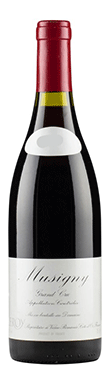

Tasted at the winery shortly after release, this is a 'peak experience' wine - dark and rich, with super-ripe cassis fruit character and hints of...
2005
Domaine LeroyMusigny Grand Cru

Domaine Georges Roumier, Bonnes-Mares Grand Cru, Burgundy, France, 1989
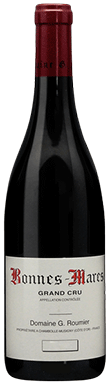
A bottle of 1989 Roumier Bonnes Mares drunk with friends at La Paulée showed super-ripe, accessible fruit that seemed explosively aromatic and still incredibly youthful,...
1989
Domaine Georges RoumierBonnes-Mares Grand Cru
Domaine Jacques-Frédéric Mugnier, Musigny Grand Cru, Burgundy, France, 2022
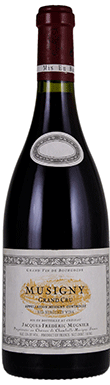
Mugnier's 2022 Musigny is a truly exceptional wine, with a superbly expressive bright pomegranate and black cherry fruit and abundant notes of flowers and spice...
2022
Domaine Jacques-Frédéric MugnierMusigny Grand Cru
Domaine Comte Georges de Vogüé, Musigny Grand Cru, Burgundy, France, 1988
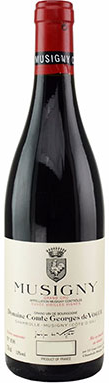
After more than a quarter century, the '88 de Vogüé we drank for lunch in Burgundy was just starting to hit its stride, with a...
1988
Domaine Comte Georges de VogüéMusigny Grand Cru
Domaine d’Auvenay, Bonnes-Mares Grand Cru, Burgundy, France, 1996
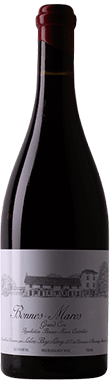
This wine has extraordinary concentration and power, with a deep, youthful aroma of plum and blackberry fruit overlaid with notes of mineral, peony, and leather...
1996
Domaine d’AuvenayBonnes-Mares Grand Cru
Domaine Faiveley, Musigny Grand Cru, Burgundy, France, 2022
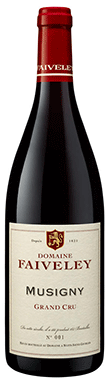
This exquisite wine has an intense expression of bright cherry fruit, rose petals, and earth on the initial attack, and the precise fruit character continues...
2022
Domaine FaiveleyMusigny Grand Cru
Domaine Comte Georges de Vogüé, Bonnes-Mares Grand Cru, Burgundy, France, 2022
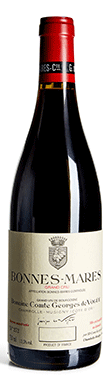
We tasted an assortment of barrels from the 2022 vintage: one from the southern end of Bonnes-Mares, one from the middle, and one from the...
2022
Domaine Comte Georges de VogüéBonnes-Mares Grand Cru
Domaine de la Vougeraie, Musigny Grand Cru, Burgundy, France, 2020
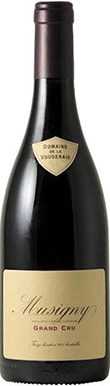
This superb rendition of Musigny has the edge over the Bonnes Mares with its lush, accessible black cherry and rose-scented fruit, along with a structure...
2020
Domaine de la VougeraieMusigny Grand Cru
Domaine Jacques-Frédéric Mugnier, Bonnes-Mares Grand Cru, Burgundy, France, 2022
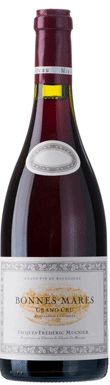
This lovely, exuberant Bonnes-Mares shows ripe dark fruit aromas of mulberry and plum and hints of violet, dark chocolate, and earth. The texture is...
2022
Domaine Jacques-Frédéric MugnierBonnes-Mares Grand Cru
Domaine Joseph Drouhin, Musigny Grand Cru, Burgundy, France, 2017
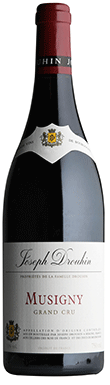
This doesn't quite hit the same heights as the 2015 or 2016 releases - few red Burgundies do - but it's still a very impressive...
2017
Domaine Joseph DrouhinMusigny Grand Cru
Domaine Robert Groffier, Bonnes-Mares Grand Cru, Burgundy, France, 2016
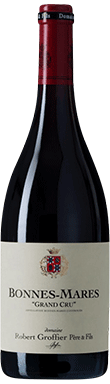
This intense, serious wine still has enough elegance to ensure that this will open with time and blossom into something truly profound. There are aromas...
2016
Domaine Robert GroffierBonnes-Mares Grand Cru
Louis Jadot, Musigny Grand Cru, Burgundy, France, 2018
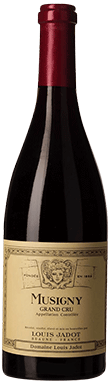
This charming bottle is still in the first blush of youth with its profuse aromas of ripe black cherry, violets, and a hint of earth....
2018
Louis JadotMusigny Grand Cru
Domaine Bruno Clair, Bonnes-Mares Grand Cru, Burgundy, France, 2022
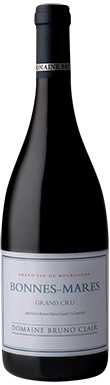
This impressive wine is everything that one expects from Bonnes-Mares: deep, dark black plum and mulberry fruit with hints of mineral, smoke, and ground coffee;...
2022
Domaine Bruno ClairBonnes-Mares Grand Cru
Domaine de la Vougeraie, Bonnes-Mares Grand Cru, Burgundy, France, 2020
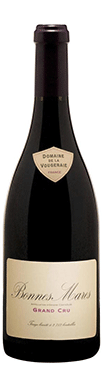
This delightful wine is among the best in the Domaine de la Vougeraie range, with an expressive plummy fruit aroma, a floral edge, and an...
2020
Domaine de la VougeraieBonnes-Mares Grand Cru
Domaine Drouhin-Laroze, Musigny Grand Cru, Burgundy, France, 2020
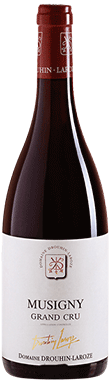
There is an appealing savoury quality to the Musigny from Drouhin-Laroze that has an almost gamey edge to it, accenting the ripe blackberry and black...
2020
Domaine Drouhin-LarozeMusigny Grand Cru
Domaine Georges Roumier, Musigny Grand Cru, Burgundy, France, 1993
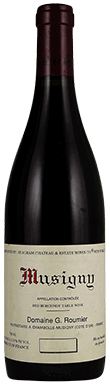
A bottle of Roumier Musigny shared by a generous host just shy of the 25-year mark was still remarkably youthful, with a reticent bouquet of...
1993
Domaine Georges RoumierMusigny Grand Cru
Domaine Jacques Prieur, Musigny Grand Cru, Burgundy, France, 2020
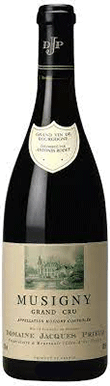
Ripe, high-toned pomegranate fruit aromas are touched with smoke, spice, and a bit of influence from the cask. The texture is firm, tannic, and...
2020
Domaine Jacques PrieurMusigny Grand Cru
Domaine Joseph Drouhin, Bonnes-Mares Grand Cru, Burgundy, France, 2017
Drouhin has delivered a 2017 Bonne-Mares that is ripe without excess. There is an enchantingly forward cherry fruit aroma with a floral edge and...
2017
Domaine Joseph DrouhinBonnes-Mares Grand Cru
Louis Jadot, Bonnes-Mares Grand Cru, Burgundy, France, 2018
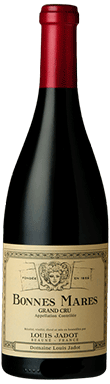
The Jadot winemaking style has delivered a classic Bonnes-Mares: dense, substantial, and concentrated. The nose is less expressive than some, but there is a solid...
2018
Louis JadotBonnes-Mares Grand Cru
Domaine Drouhin-Laroze, Bonnes-Mares Grand Cru, Burgundy, France, 2020
There is impressive concentration and depth to this Bonnes-Mares, with a lush, ripe plum fruit edged with smoke and spice. The texture is firmly tannic...
2020
Domaine Drouhin-LarozeBonnes-Mares Grand Cru
Domaine Bruno Clair, Bonnes-Mares Grand Cru, Burgundy, France, 2011
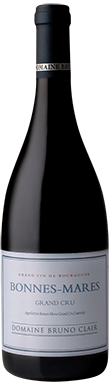
From the Morey side, just next to the Clos de Tart, the Bruno Clair parcel of Bonnes-Mares yields a wine with an expressive, elegant cherry...
2011
Domaine Bruno ClairBonnes-Mares Grand Cru