
Champagne AR Lenoble: Producer profile
Decanter’s Steven Spurrier was a fan of this dynamic Champagne house. Yohan Castaing traces its history, introduces the range and the philosophy behind it.

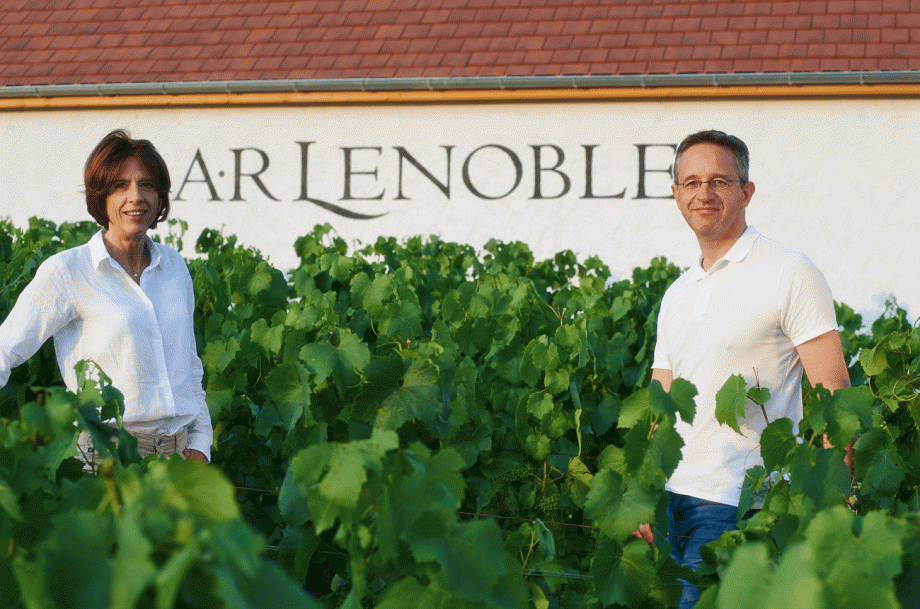
In his memoirs Wine, A Way of Life, the late Steven Spurrier, Decanter’s long-time consultant editor, reminisced about serving a Champagne from AR Lenoble at his wedding to wife Bella in 1968.
A couple of years previously, he recalls, he had been on a buying trip to Champagne and Alsace. ‘In Champagne we visited Lenoble, whose owner took us to the Reims Grand Prix. I liked the style of the Lenoble Champagne a lot, and it was served at my wedding a couple of years later.’
Fast forward to today, and Anne Malassagne, current owner with her brother Antoine of the small, family-owned Champagne house AR Lenoble, views the 100th anniversary of its founding last year in 2020 as ‘marking the end of a roadmap that I chose to follow when I arrived in 1993.’
Her firm intention from the outset, she added, was to restore the lustre of this house’s brand reputation.
Scroll down for Yohan Castaing’s Champagne AR Lenoble tasting notes and scores
The early days
The house’s origins go back to 1915 when Armand-Raphäel Graser, who had dreamed of becoming a doctor, began his activities in Champagne production as a broker. However, he soon founded his own house, initially named Champagne Graser, but quickly rebaptised as AR Lenoble (A R for his initials, Lenoble in homage to the noble character of Champagne).
Some time later, it was Anne Malassagne’s father, Jean-Marie, who followed in the path of his grandfather, Armand-Raphäel, to take charge of the family’s Champagne production while also pursuing a parallel vocation as a medical doctor.
The harvested grapes were sold during that period to other houses such as Jacquesson and Bruno Paillard.
Anne takes the reins
‘When I came back to work at AR Lenoble in 1993,’ explains Anne Malassagne, ‘it was after studying philosophy and finance and some time working for L’Oréal. My father owned and ran a medical clinic and so had very little time to devote to the family’s Champagne activities.
‘It was also the period of the Gulf War, during which the market had collapsed, and this had an impact on the inflationary price of grapes and led to a surplus of Champagne wine. It may have been a bit naïve on my part, but I wanted to return to the family enterprise to work alongside my father.’
Just six months after her return, Anne’s father fell ill and she was then on her own at the helm, totally inexperienced and without any indepth knowledge of Champagne production or markets.
‘At that time, wine sales were becoming closely linked to supermarkets, but I felt that this was definitely not the right path for us. As I needed to show force of character, as head of the family enterprise, I decided that we should produce Champagne with an affirmed personality, using mainly our own vineyards as a grape source.’
Focus on Chouilly and Bisseuil
Very quickly Anne Malassagne made the stylistic choice of producing Champagnes that major on grapes from the village of Chouilly in the Côte des Blancs, and from Bisseuil in the Grande Vallée de la Marne, aiming for a house style that reflects the place of origin with, in Anne’s words, ‘breadth and fullness, but also structured and vibrant verticality on the finish.’
Over the past 25 years, Anne has continued to search for, and then develop, the best techniques for making character-driven Champagnes.
Central to her strategy was the adoption of a viticultural regime that involves working the soil and cultivating a grass cover between the rows of vines to lower the yields, and also stopping the use of chemical treatments.
In 2012, the house gained the HVE 3 environmental certification.
Reducing dosage
When it comes to winemaking, Anne Malassagne has lowered the dosage in a bid to add brightness to Lenoble’s Champagnes: ‘Dosage has become a bit of an obsession for me!’ she says.
‘There is no such thing as too high or too low a dosage, it’s just a question of balance. I haven’t lowered the dosage in a dogmatic way, but in order to present the wines in a more natural – or naked if you will – state.’
In a similar manner, depending on the vintage of course, Anne will block the malolactic fermentation to preserve freshness and tension in the Champagnes.
In 2005, she decided to fine-tune the house’s strategy for its use of reserve wines.
AR Lenoble is now the only Champagne house to store all of its reserve wines in magnums under cork, so as to ‘highlight the minerality of Chouilly, which is more pronounced in magnum’.
Today, AR Lenoble sources the majority of grapes from its own vines. The house owns 10 hectares of Chardonnay in Chouilly in the Côtes de Blancs, 6ha of Pinot Noir in Bisseuil at the foot of the Montagne de Reims in the sector known as the Grande Vallée de la Marne, and 2.5ha of Pinot Meunier in Damery, on the right bank of the Marne Valley.
The wines of Chouilly typically have a mineral character with touches of candied lemon, while those of Bisseuil stand out for their fullness and structure, thanks to a terroir of limestone and clay.
As for the Pinot Meunier from Damery, it produces an exuberant wine, but with an airy finish.
Presenting the range
The A R Lenoble portfolio is organised into three thematic offerings:
The Classic Collection comprises a series of three ‘mag’ cuvées aged in magnum under cork.
This includes the Intense ‘mag’, in an appealing aperitif style; the Brut Nature Dosage Zéro ‘mag’, bottled with no dosage at all, and so offering a crisp, mouthwatering character, which Lenoble believes perfectly suits oysters and other shellfish, but also sushi-style fish preparations; and Riche ‘mag’, a demi-sec Champagne of well-balanced and discreet sweetness, perfect for pairing with cheese and spicy dishes.
This Champagne initially receives six years of cellaring and then two more before its commercial release after the dosage is added, and it provides a masterful demonstration of Lenoble’s deft touch for a subtle oxidative style.
The centerpiece of the Terroirs Collection is the Grand Cru Blancs de Blancs ‘mag’, aged in magnums under cork, a 100% Chardonnay from the grand cru terroir of Chouilly.
Lastly, the Parcellaire Collection is made with grapes selected from the best plots in Chouilly, a village that has grand cru ranking.
After celebrating the 100th anniversary of AR Lenoble last year, Anne Malassagne remains optimistic about the future, even during these troubled times. ‘The pandemic crisis will catalyse trends, and proximity will take on greater importance. Whether it’s on social networks or during visits, we must be responsive and reinvent ourselves.’
An ambitious programne for the years to come, during which this small but dynamic house will endeavour to continue its study of character.
See the Champagne AR Lenoble tasting notes and scores
The AR Lenoble Champagnes are distributed in the UK via Ellis Wines and Stannary Wine.
You may also like:
How Champagne 2020 wines are shaping up
Guide to Pinot Meunier Champagne
Champagne cocktails to make at home
AR Lenoble, Bisseuil Premier Cru, Blanc de Noirs, Champagne, France, 2013
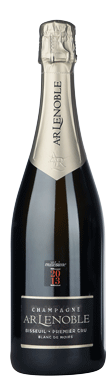

With pure and vibrant aromas, the bouquet shows ripe white fruits, mineral, spices, and noble oak aromas. Tense and firm, the palate is a real...
2013
AR Lenoble

AR Lenoble, Blanc de Blancs Brut Grand Cru Chouilly, Grand Cru, Champagne, France, 2008
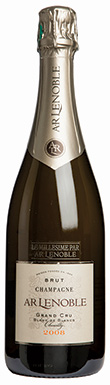
Lovely evolution on the nose, with rich tertiary mushroom and honeyed characters. Seductive, with acidity holding up well. Fine and fresh mousse- very classy.
2008
AR LenobleGrand Cru
AR Lenoble, Brut Nature, Dosage Zéro NV (Mag 15), Champagne, France
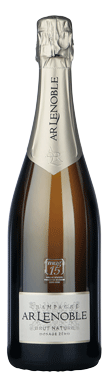
With a bouquet of white flowers, nectarine and lemon, this Champagne possesses a nervy, energetic and elegant personality. It has a tense and subtle palate...
AR Lenoble
AR Lenoble, Intense Mag 15, Champagne, France
91
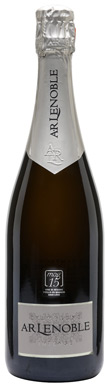
AR Lenoble stores most of its reserve wines in barrels and casks, but some are now kept in magnums under cork, which gives greater protection from oxidation. Mag 15 is a blend of 45% of these reserve wines with base wines from 2015. It has a saline nose with bright lemon and apple. It’s super-fresh, with razor-sharp saline acidity, green apple and richer hints of nougat and dough on the long finish
AR Lenoble
AR Lenoble, Rosé Terroirs NV (Mag 14), Champagne, France
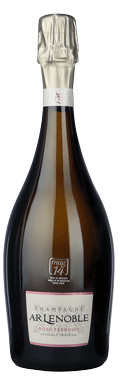
The bouquet is quite mature, fine and elegant, with pure aromas of strawberry, raspberry and spices. Vibrant and subtle on the palate, this is a...
AR Lenoble
AR Lenoble, Riche Demi-Sec NV (Mag 14), Champagne, France
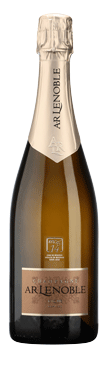
This Champagne possesses a complex bouquet with honey, candied citrus fruit, dry apricot and toasty lees. Round and vinous, it has a subtle, spicy palate...
AR Lenoble
