
Champagne De Venoge: producer profile
This long-established Champagne house is flying high after decades of turmoil, finds Yohan Castaing who also tasted five wines from the collection.


Founded in 1837 by Henri-Marc de Venoge, Maison de Venoge is once again worthy of attention. It has improved in quality and reputation after decades of ownership upheavals had grounded its ambitions.
Thanks especially to the efforts of its current CEO, Franco-American Gilles Morisson de la Bassetière, De Venoge has reaffirmed its aristocratic pedigree and panache, incarnated in the renewal of a bottle shape associated with the house, one cherished by royal families in the past.
In another move to assert its royal link, the Louis XV cuvée was launched with the 1995 vintage to symbolise the house’s renewed focus on the production of prestige Champagne.
Scroll down for Yohan Castaing’s notes and scores for the Champagne De Venoge collection
US legacy
The foundations of this Champagne house were laid after a Swiss entrepreneur from the canton of Vaud bought mines in France and settled in Épernay in 1823. Nearly 15 years later, he created the eponymous Champagne house.
His three sons worked alongside him from the start. Two of them, Léon and Marc, felt their own entrepreneurial itch and left for the US in 1842 to try their luck at producing sparkling wines in the region of Sullivan County in the state of New York, while developing sales of their family Champagne.
Dissatisfied with the quality of their local sparkler, the two brothers soon concentrated their efforts on their Champagne connection, but they certainly left their mark on this New York region, as there is now a lake there named after the family, as is a private community, also named Lake DeVenoge.
The eldest son, Joseph, who had remained in France to run the family Champagne house, was a pioneer in wine marketing and, with his father, was involved in the creation of the first illustrated label in 1838.
Joseph believed so strongly in the power of brands that in 1864 he registered some 5,000 different ones.
Challenging path
During the First World War, the family continued to develop its activities, as the town of Épernay was less affected by the war than Reims.
At that time, the house was run by the Marquis Adrien de Nun, married to Yvonne de Venoge. This couple had taken charge of the family enterprise after the death of Yvonne’s father, Gaëtan de Venoge, at the age of 55.
De Nun was not a shrewd businessman and things soured in the aftermath of the Russian revolution, the economic depression after the crash of 1929, and especially the Prohibition period lasting from 1920 to 1933 in the US, a major market for the De Venoge Champagnes.
See all Decanter’s De Venoge tasting notes and scores
It was only in 1958, however, that the family house was finally sold to the Trouillard family, which remained owners until 1981, when the house was acquired by the Charles Heidsieck group, then chaired by Joseph Henriot.
Multiple owners
Just a few years later, in 1983, Henriot sold De Venoge to the Société des Grandes Marques de Champagnes. One of the main shareholders of this entity was Paul Bergeot – future head of Salon and Besserat de Bellefon and, in time, president of the Union des Maisons de Champagne. With the help of Alain Thiénot, then a Champagne broker, Bergerot took over the running of De Venoge, at the prestigious address of 30 Avenue de Champagne in Épernay.
However, the De Venoge house was up for sale again just three years later and was acquired by an entity then named the Compagnie Française de Sucrerie, which belonged to Paribas before the latter merged with BNP.
By 1996 de Venoge had become part of the Remy-Cointreau group, which kept it for just two years before selling it to LVMH, which was so impatient to re-sell it that just two weeks went by before De Venoge became part of the Boizel Chanoine Champagne group, then chaired by Bruno Paillard.
LVMH, however, kept the building at its legendary address so the house of De Venoge moved to number 46 of the same thoroughfare, considered the ‘Champs-Elysées’ of the Champagne region.
Welcome stability
Inevitably, the successive changes of ownership were far from being a guarantee of serene management and brand stability for this small house.
Today, however, De Venoge is back on form as a reliable source of quality Champagne.
It no longer owns its own vines, since Rémy-Cointreau retained ownership of the vineyard holdings, but it managed to retain – and expand – its grape-sourcing contracts for fruit from mainly premier cru and grand cru villages.
Gilles Morisson de la Bassetière continues to grow the portfolio, and enthusiastically announces that ‘we are launching, later this year, the Grand Vin des Princes 2014, a blanc de blancs.’
As evidenced by the tasting of the Champagnes presented here, it is clear that the house of De Venoge has entered directly into a new Champagne era, one where global warming and an aesthetic revolution are putting traditional players back at the centre of the game, with, in the words of Morisson de la Bassetière, ‘the winds of change bringing freshness and dynamism’.
Top 5: The Champagne De Venoge collection
You may also like:
How Champagne 2020 wines are shaping up
Guide to Pinot Meunier Champagne
Champagne cocktails to make at home
De Venoge, Princes Blanc de Blancs, Champagne, France
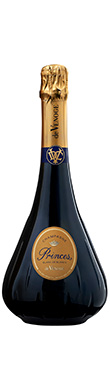

The grapes come from Mesnil-sur-Oger and Trépail, two villages of the Côtes de Blancs sector ranked respectively as grand cru and premier cru. The bouquet...
De Venoge

De Venoge, Louis XV, Champagne, France, 2008
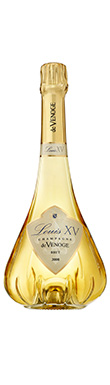
Louis XV presents a pure, delicate and fresh bouquet of white orchard fruits, white blossoms and hazelnuts. The palate has both crisp purity and roundness...
2008
De Venoge
De Venoge, Princes Blanc de Noirs, Champagne, France
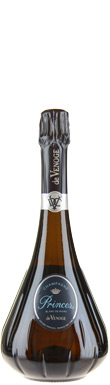
93
The NV Princes Blanc de Noirs is sourced only from village ranked as premier cru or grand cru located in the sector of Montagne de Reims, with the exception of a single vineyard from Riceys in the Aube department to the south. Fine and intense bouquet of red berries, almond, herbs and spices. The palate is undergirded by lively acidity that provides freshness and vivacity. Exquisite equilibrium in this wine, which will shine even more in 3-5 years. Dosage: 6g/L.
De Venoge
De Venoge, Princes Extra-Brut, Champagne, France
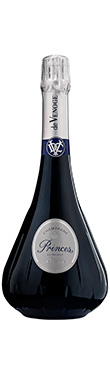
This has a fresh, elegant and delicate bouquet with citrussy, herbal and spring flower aromas. It has a vibrant, energetic palate expressing elegant and fresh...
De Venoge
De Venoge, Princes Rosé, Champagne, France
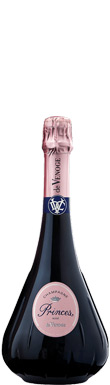
92
Sourced from Montagne de Reims and Les Riceys, the Princes Rosé has a delicate and fresh bouquet. The aromatics are compelling with notes of raspberry, gooseberry and lime. The dynamic palate is outstanding, with a fine bead of bubbles energizing its tense texture, climaxing with a citrusy flourish to its long finish. Dosage: 6 g/L.
De Venoge
