
Champagne’s star winemakers of tomorrow
Beyond its familiar big-name houses, Champagne is home to smaller-scale grower-producers making a wide range of lovingly crafted wines that offer high quality and true local individuality.


Champagne is in flux; it is also booming. This is true across the board. Prestige cuvées sell on allocation, prices of leading high street brands climb steadily, and certain coveted grower Champagnes from the likes of Jérôme Prévost or Guillaume Selosse cannot be had for love nor money – even if you could afford the stratospheric prices that they command. Land prices in Champagne have quintupled over the past 30 years, according to Statista 2023 data. Clearly demand outstrips supply.
A global army of fizz fans willing to shell out for top bottlings of big names and micro-cuvées from cultish growers fires this boom, which enables fascinating start-ups looking to fill the gap – from the Massif de Saint-Thierry just above the city of Reims all the way south to the Côte des Bar. Some of these are the star winemakers of tomorrow.
Scroll down to see Anne Krebiehl’s selection of grower Champagnes to seek out
Refreshingly, the newcomers are a mixed bunch. There are locals and outsiders, old hands and fresh-faced youngsters. Some have only just launched their first wines; others have operated below the radar for a while. Most of them come from families who own vineyards and have previously sold their grapes – giving them the opportunity to start making wine from part of the harvest while selling the rest, thereby financing their own venture.
Family ties

Margot Laurent, 32, of Oudiette X Filles in Epernay, launched her first Champagne in 2021. It was from the 2017 harvest, made in rented cellar space, and there were just 3,214 bottles of it. Previously a graphic designer, she started a new domaine, named after her grandmother Oudiette, along with her mother Florence and sister Charlotte after Florence inherited 2.5ha of vines in Beaunay in the Val du Petit Morin, an extension of the Côte des Blancs to its southwest. The grandparents had sold grapes and Laurent insisted: ‘If I come back to the family vineyard, we bottle our own wine.’ That was in 2015, so she took evening classes in oenology, selling the grapes until she felt confident enough to make the estate’s first wine. Her smile tells all. She’s found her calling in making mono-cru (from one village) Champagne. She has also bottled a single-parcel wine and explores polyculture and agroforestry.
Perrine Fresne, also 32, is based on the northwestern edge of the Montagne de Reims, in Sermiers, a premier cru village known for Pinot Meunier on clay and sand soils. Fresne started in 2019 with 3ha when her father retired, and launched her first Champagne in October 2022. Each harvest she selects the best third of her grapes and sells the remaining two-thirds, hoping in time to highlight the singularity of her village.
Sermiers is also home to Emilien Feneuil, 40. Walking in his vineyards is like walking on a cloud, so spongy and healthy are his soils. His family owned vineyards but had never made wine. His first vintage from his 2.37ha was in 2015.
‘Perhaps the better question is why did I not make wine before,’ he answers when asked what prompted him to start. It turns out that two acclaimed ‘growers’ bought his grapes and made single-parcel Champagnes from them.
Feneuil had returned home from making wine in Reims and Corsica when his father retired in 2006, and two years later he stopped using any agrochemicals. ‘Then I opened my consciousness,’ he says in almost childlike fashion. His barrels are housed in an old, cold barn and none of the wines had finished fermenting at the time of my visit back in February. While his name is a cult, Feneuil remains totally grounded.
Youth & experience

Marine Vincey-Zabarino started Domaine Vincey in Oger with her husband Quentin Vincey (both 35) at his 7ha family estate in 2014 with just 4,000 bottles. Previously all fruit had gone to a cooperative. They launched their first wines in 2020, increasing production year by year and financing their well-thought-out plan by selling grapes. By 2022, they were producing 30,000 bottles. They invested in a press and cellar, but mainly in ‘human resources’ for the vineyards – and a few sheep – and now aim to turn their farm into a beacon of biodynamic farming. Marine describes their style as ‘oxido-reductive terroir Champagne’. Their focus is total, they question everything; watch them, they are on to greatness.
But not all newcomers are youngsters. Hervé Brisson in Vert-Toulon is 52 years old. He joined his family domaine in 1997, working with his father until he retired in 2001. He tried to ‘understand his land’, converting to organic farming. He started experimenting with vinification in 2016, making his first Champagne in 2019, released in 2021. His wife and business partner Odile reveals that this is Hervé’s ‘dream’. By now they have stoneware spheres in addition to the oak pièces and demi-muids in which the wines ferment. His watchword is ‘equilibrium’.
For some other newcomers, cellars and winemaking facilities were already in place. In 2017, Clémence and Adrien Bertrand-Delespierre in Chamery took over their parents’ winery, founded in 1980. The parents gave them a completely free hand. Being an already established business allows the siblings, now aged 33 and 29 respectively, to keep their Champagnes on lees for an extended period: a clear benefit for these precise wines.
Likewise, after a childhood in Nice, Ophélie Lapie-Lamiable (below), 40, joined her father at their domaine in Tours-sur-Marne where her grandfather had started making wine in the 1960s. ‘I felt my roots,’ she says about her return in 2003. She took the reins in 2006 and has since honed her style, making effortlessly elegant wines, keenly priced; she deserves much more attention. As does 47-year-old Vincent Couche in Buxeuil, in the Côte des Bar – with his 15ha planted in 1996 – whose flock of Shropshire sheep help keep his biodynamic vineyards, complete with fruit trees, weed free.
Growers, farmer, négociants: The unique Champagne business model
According to the Comité Champagne, 16,200 growers tend 90% of Champagne’s 34,200ha, but just 370 Champagne houses ship 70% of the volume produced. Neither can do without the other in this highly regulated appellation, one of the few regions in the world where farmers are recompensed fairly. The picture is completed by 130 cooperatives.
The idea of ‘grower Champagnes’ emerged in the mid-1990s – in contrast to the grandes marques who then held and still hold sway. Visionaries such as Anselme Selosse, Francis Egly, Pascal Agrapart and many more led the way in returning the focus of Champagne to the land: in the words of awarded author Peter Liem in his book Champagne (Octopus, 2017), from a ‘wine of process to a wine of place’. This movement continues apace and has informed the entire region. Today, distinguishing only between big houses and growers is too simplistic, as the picture is complex.
Currently, the average price of 1kg of Champagne grapes is €7, trade insiders tell me, and for well-farmed grands crus this can rise to €11/kg. Selling grapes is thus a profitable business, without having to bear any of the cost or delayed cash flow that comes with making Champagne.
Inward flux

But there are complete newcomers, too, such as Benoît Doussot, also in the Côte des Bar. Hailing from Burgundy and just 27 years old, he trained in Beaune and worked in Meursault before encountering Bertrand Gautherot of Champagne Vouette & Sorbée fame, who helped to get him established. He bought his first fruit in 2015 from two growers, making wine under the name Champagne Clandestin. He is now a micro-négociant with an impressive barrel cellar, vinifying grapes from 12ha of vineyard from nine growers in the Kimmeridgian soils of the Aube. ‘In people’s minds, the term négociant is a bad word,’ Doussot says, ‘but you can make good wine that way.’ He sees Clandestin as ‘an incubator that allows growers to discover each plot’.
At the northern extreme of Champagne, in the Massif de St-Thierry at Hermonville, another outsider has established himself: Maxime Ullens of Domaine de Marzilly, a 38-year-old former architect from Belgium who fell in love with a crumbling château, complete with forest, before he got into winemaking. He arrived in 2012 to renovate Château de Marzilly. A wine lover already, he was soon seduced, moving his life to Champagne, selling his old business, changing careers, going back to school and starting to make wine in 2016. He and his wife Anne have since taken to building their brand with aplomb and vigour, now vocal champions for this northerly outpost. ‘I changed from being an entrepreneur to being a farmer,’ he says – but the entrepreneur is certainly still present. They own almost 1ha of vineyards, lease more and also buy fruit and make wine from a total of 3.8ha – mostly of Pinot Meunier. They are buzzing with ideas for their vineyard, cellar and forest.
At the vanguard

Champagne is alive with new talents, choosing the harder route of making their own wine, taking the risks, honing their styles, putting lesser-known villages on the map with their mono-crus and pixelating the landscape ever further with their sélections parcellaires. It allows us drinkers to taste the difference between, say, Chardonnay from the Val du Petit Morin and Montgueux. Happy days.
Experimentation is rife. These newcomers’ wines will only get better once they have built up more reserves and can afford longer ageing on lees. The world is hungry for their wines, with many of them exporting their tiny productions far afield – we will hear from a lot more of them.
Exciting prospects: Krebiehl’s grower Champagnes to seek out
Related articles
- Champagne Telmont pushes ahead with lightest-ever Champagne bottle
- Independent Champagne producers: Top trends & names to look out for
- Great restaurant Champagne lists
Champagne Lamiable, Souffle d’Etoiles Grand Cru Extra Brut, Champagne, France
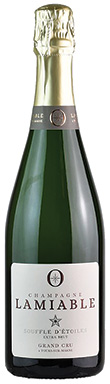

From plots in Tours-sur-Marne and Bouzy, this comes with 40% of reserve wine from a perpetual reserve started in 2004: 60% Pinot Noir, 40% Chardonnay,...
Champagne Lamiable

Champagne Legrand-Latour, Yprésien Brut Nature, Vallée de la Marne, Champagne, France, 2017
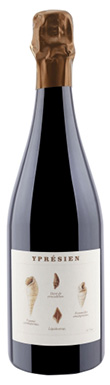
A Pinot-based wine masquerading as Chardonnay, its 70% Pinot Noir and 30% Meunier fermented and matured in oak for 11 months before tirage, the second...
2017
Champagne Legrand-LatourVallée de la Marne
Champagne Stroebel, Timothée Stroebel Triptyque Brut Nature, Montagne de Reims, Champagne, France
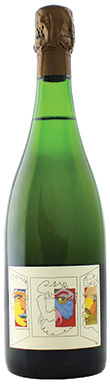
Equal parts Pinot Noir, Meunier and Chardonnay, the name Triptyque signifying a wine from three vintages (2014, 2016, 2017), three grapes and three soil types:...
Champagne StroebelMontagne de Reims
Domaine Vincey, Oger, Côte des Blancs, Champagne, France, 2018
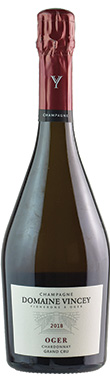
Fermented spontaneously in oak, this spent 12 months on its gross lees before tirage, then 36 months on lees under cork in what Marine Zabarino...
2018
Domaine VinceyCôte des Blancs
Emilien Feneuil, Les Ruisseaux Brut Nature, Montagne de Reims, Champagne, France, 2018
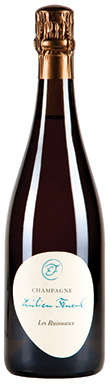
100% Pinot Meunier from a single parcel in Sermiers, organic, from tiny yields, made with a single, minimal sulphur addition during pressing. An unusual and...
2018
Emilien FeneuilMontagne de Reims
Vincent Couche, Elégance Extra Brut, Côte des Bar, Champagne, France
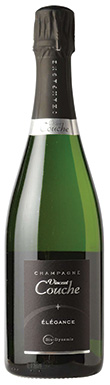
A biodynamic blend of 80% Pinot Noir from Buxeuil and 20% Chardonnay from Montgueux, with 20% of the base wines fermented in used 228L oak...
Vincent CoucheCôte des Bar
Champagne Clandestin, Boréal Zéro Dosage, Côte des Bar, Champagne, France, 2020
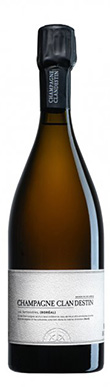
100% Pinot Noir, a white wine with the palest shimmer of pink. Crunchy red and green apple on the nose, hints of pepper and cinnamon...
2020
Champagne ClandestinCôte des Bar
Champagne Ullens - Domaine de Marzilly, LPM Extra Brut, Montagne de Reims, Champagne, France
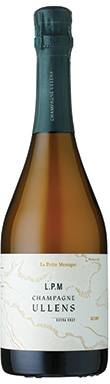
Ripe lemon and pear flesh aromas backed by subtle cornmeal and fresh cream. Smooth texture with sprightly bubbles that highlight this pure Pinot Meunier’s smoky...
Champagne Ullens - Domaine de MarzillyMontagne de Reims
Champagne Oudiette X Filles, UniTerre II, Val du Petit Morin, Champagne, France
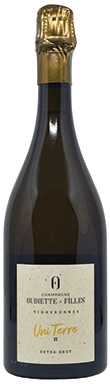
Only the second release, a product of the 2018 harvest, made by third-generation Margot Laurent from this all-female estate. 100% Chardonnay fermented in used oak,...
Champagne Oudiette X FillesVal du Petit Morin
Hervé Brisson, Les Aulnes Extra Brut, Val du Petit Morin, Champagne, France
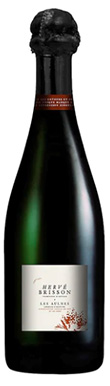
This estate’s inaugural wine was fermented completely in oak pièce and demi-muid, the 100% Chardonnay base wines all from the 2019 harvest, but it is...
Hervé BrissonVal du Petit Morin
Champagne Perrine Fresne, Sarmate I Extra Brut, Montagne de Reims, Champagne, France
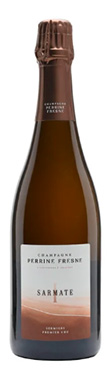
The debut vintage made by Fresne, with all three varieties – 37% each of Pinot Noir and Chardonnay with 26% Meunier – harvested in Sermiers;...
Champagne Perrine FresneMontagne de Reims
Champagne Bertrand-Delespierre, Saignée des Terres Amoureuses Extra Brut, Montagne de Reims, Champagne, France, 2014
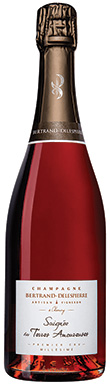
A deeply coloured rosé made from Pinot Noir from Chamery, Ecueil and Ville-Dommange, macerated for 36 hours, vinified and matured in 600L demi-muids without malolactic...
2014
Champagne Bertrand-DelespierreMontagne de Reims
