
Château Bellefont-Belcier: A new dawn & 10 vintages tasted
A recent vertical of Château Bellefont-Belcier demonstrated that new ownership equals new methodologies and a striking renaissance for this previously underperforming St-Emilion property.
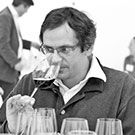

Repeated applause from 300 dinner guests greeted Peter Kwok and his family, as he hosted a belated, Covid-delayed celebration this past April for the recently renovated cellars at Château Bellefont-Belcier, a grand cru classé in St-Émilion that the Chinese billionaire acquired in 2017.
Scroll down for tasting notes and scores of 10 vintages from Château Bellefont-Belcier
Under a massive tent to protect against rain falling on elaborate table settings, the dinner also feted Kwok’s 25th vintage in Bordeaux: in 1997 he acquired Château Haut-Brisson St-Émilion Grand Cru, the first of seven properties under his company name Vignobles K.
Winemaking director Jean-Christophe Meyrou said a third reason to celebrate was for another Vignobles K property, Château Tour Saint Christophe, which was promoted last year from St-Émilion grand cru to grand cru classé in the appellation’s 10-year revisable classification.
But the jewel of the Vignobles K crown is Château Bellefont-Belcier. Created in the late 18th century, the estate is located on south-facing slopes in Saint-Laurent-des-Combes, neighbouring two premiers grands crus classés – Château Pavie, rated ‘A’, and Château Larcis-Ducasse – and the iconoclastic, non-classified Château Tertre Rôteboeuf.

Bellefont-Belcier extends over 13.5ha in one piece, but divided into three areas: the limestone plateau, the south clay-limestone slope and clayey-sandy parcels.
While the terroir is excellent, heavy-handed viticulture and winemaking had obscured potential fruit freshness and wet stone character, but since Peter Kwok acquired the estate in 2017, the wine has improved: ‘A lot’, says US wine merchant Jeff Zacharia of Zachys Wine in New York. ‘The wines are showing more fruit purity and freshness,’ he says.
In 2017, Kwok initiated a transition from what had been overly oaked wine with overripe fruit to a more classical style. Recent renovations – including cellar temperature controls and adding 40-hectolitre, egg-shaped wooden vats for ageing – have improved finesse, according to Meyrou.
Towards brightness and verve
For former Château Bellefont-Belcier technical director, Jérôme Aguirre, a close friend of Meyrou and who since 2022 works for Baron Philippe de Rothschild in the Médoc, 2018 marks ‘the real change in style for the estate’.
While Michel Rolland, known for later harvesting and new oak for ageing, still consults at Vignobles K, he left Château Bellefont-Belcier in 2016 to be later replaced by Thomas Duclos, who has a diametrically opposed style.
‘With Thomas, we focused more on freshness, on harvesting ripe grapes, but retaining a fresher profile, which meant picking certain parcels earlier,’ Aguirre says. ‘From then on, it has been a progression to greater balance.’

Château Bellefont-Belcier was hardly alone in reflecting what critics called ‘Parkerised’ wines in St-Emilion earlier this century. Indeed, many châteaux – from humble estates to some premier grands crus classés – often crafted more oaky, ultra-ripe wines.
The definition of maturity for Duclos is ‘quite different from that of our predecessors, but also our viticulture is more precise’, he says. ‘We taste each grape in different vine plots to harvest at the right time – and not one day beyond that.’
Fermentations are carried out without adding sulphur, while a minimum dose is added at the end of ageing.
With vinification in concrete tanks, extractions are adapted vat-by-vat to obtain desired profiles, Meyrou says. ‘The origin of the grapes (plateau, hillside, foot of hill) influences extraction work and the percentage of new barrels has been greatly reduced to meet the needs of the wine, and not to dominate it,’ he adds.
Attracting talent and motivation
One sign of this estate’s success is how it attracts talent: Emmanuelle Fulchi d’Aligny joined Vignobles K last year to replace the gifted Aguirre. She had worked no less than 25 years with Château Angélus (and Michel Rolland) in St-Emilion.
Fulchi d’Aligny was on hand last year as Champagne flowed to celebrate the promotion of Château Tour Saint Christophe. There was a true sense of camaraderie, with Meyrou stressing the virtues of teamwork: ‘I strongly believe in human value, having the “right gesture” and know-how in the vineyards,’ he told me during that celebration.
‘Team loyalty and support is a priority for us and not just a figment of the imagination.’ Indeed, after having known Meyrou these past few years and members of his talented team, the quality of personnel is impeccable.
Future perspectives
St-Emilion is unique for its revisable classification. Every 10 years, châteaux vie for promotion, submitting dossiers to argue how their wines have improved enough to merit higher ranking – and having their wines judged in blind tastings by an independent jury.
While Château Tour Saint Christophe succeeded last year, Château Bellefont-Belcier did not. ‘We tried to get a promotion (to premier grand cru classé) Meyrou told me, but ‘without success’.
The vertical tasting which spanned 2010-2020 clearly shows how a major stylistic change might have given an incoherent image to a tasting jury, but the estate seems on the right path for next time around.
At a glance
Created Late 18th century
Owner Peter Kwok and family / Vignobles K
Director Jean-Christophe Meyrou
Technical director Emmanuelle Fulchi d’Aligny
Consultant Thomas Duclos
Vineyards 13.5ha
Density 8,000 vines per hectare
Average vine age 35 years
Grape varieties 72% Merlot, 17% Cabernet Franc, 11% Cabernet Sauvignon
Winemaking Gentle extraction, low temperature fermentation
Ageing 12-14 months in 20%-30% new oak, and with 40-hectolitre containers since 2018
Some decry the controversial classification as meaningless, because few end-buyers know what is ‘classé’ and what is not. It has been encumbered by lawsuits over conflict of interest and the departure of top estates Châteaux Cheval Blanc and Ausone, followed by Angélus as well as La Gaffelière.
‘But it keeps us alert,’ Meyrou says. ‘This is the spirit of the ranking, having positive pressure that forces us to do better all the time,’ he explains. ‘We will do our best to represent our dossier in the next ranking, and we still have a few years to improve.’
Partly because one ranking criterion is how well estates welcome visitors, St-Emilion has engendered a flourishing wine tourism industry, which Vignobles K embraces: ‘It is not just a box to tick for the ranking,’ Meyrou stresses, ‘but rather to create a sustainable economic activity – and to make our estate known to wine lovers worldwide.’
The over one million people who visit St-Emilion annually expect châteaux to fulfil visits. Château Bellefont-Belcier does so seven days a week and throughout the year.
To date, the estate employs six full-time people for wine tourism, which represents 20% of its turnover. ‘Our offer is complete,’ says Meyrou. ‘It starts with a simple tasting visit, up to a stay at the estate, all enhanced by the possibility of joining our wine club.’
While its embrace of wine tourism is another nod to the overarching regeneration of the estate, it’s the wines, quite appropriately, where one can note a distinct line in the sand.
Tasting a vertical of Château Bellefont-Belcier from 2010 to 2020, the difference is dramatic. While ‘star’ vintages like 2010, 2015 and 2016 display excessive new oak tannin and tired fruit, vintages from 2018 to the present 2022 are brighter and more vibrant.
I detected positive change with the 2017 vintage, when Kwok’s team took charge of ageing: A key difference was 14 months in 40% new oak barrels as opposed to the previous habit of up to 20 months in 80% new oak.
The sum of all these parts add up to a château which has finally found its feet and is beginning to realise its full potential.
Château Bellefont-Belcier vertical: 10 vintages tasted and rated
Related articles
St-Emilion GCC 2016: Panel tasting results
Best St-Emilion 2022 wines tasted en primeur
Why do we keep coming back to Bordeaux
Château Bellefont-Belcier, St-Émilion, Grand Cru, Bordeaux, France, 2020
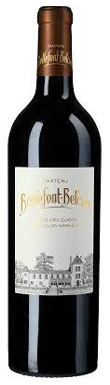

Crushed herb and tobacco leaf along with red berry fruit enchant. Very pure and fresh, indeed gaining in coolness, with more cool blue fruit than...
2020
Château Bellefont-BelcierSt-Émilion

Château Bellefont-Belcier, St-Émilion, Grand Cru, Bordeaux, France, 2019
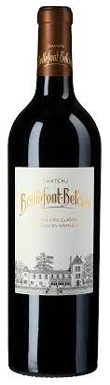
Excellent vibrancy here, with just a bit more mid-palate density than in 2018. Exciting tension, power and ripe red fruit leading to a salivating and...
2019
Château Bellefont-BelcierSt-Émilion
Château Bellefont-Belcier, St-Émilion, Grand Cru, Bordeaux, France, 2018
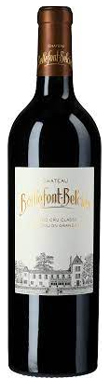
Impressive linearity and salinity. For once, I notice the winemaking, with greater fruit purity such as juicy plum and ripe blackberry. Gone is the drying...
2018
Château Bellefont-BelcierSt-Émilion
Château Bellefont-Belcier, St-Émilion, Grand Cru, Bordeaux, France, 2017
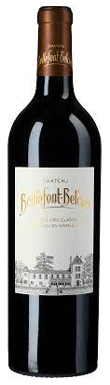
Ripe fruit aromas reflect more harmony than the 2015 and, for once, some genuine salinity on the palate. A pleasure to drink on its own,...
2017
Château Bellefont-BelcierSt-Émilion
Château Bellefont-Belcier, St-Émilion, Grand Cru, Bordeaux, France, 2014
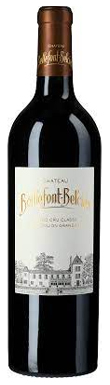
Somewhat lower alcohol (14%) compared to 2010 reflects a cooler, fresher aspect. Fine length, with finer tannins than in 2011. A pleasingly cool, chopped mint...
2014
Château Bellefont-BelcierSt-Émilion
Château Bellefont-Belcier, St-Émilion, Grand Cru, Bordeaux, France, 2016
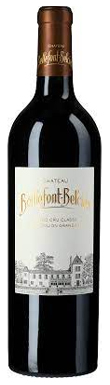
A savoury vintage with dark plum and blackberry, and with more energy than the 2015, but overripe fruit with drying, oak-derived tannins slightly detract.
2016
Château Bellefont-BelcierSt-Émilion
Château Bellefont-Belcier, St-Émilion, Grand Cru, Bordeaux, France, 2012
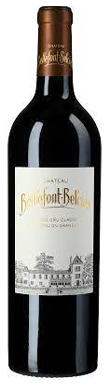
Similar to the 2010, but with more roasted fruit and bacon-like Syrah. The estate picked earlier because of botrytis risk towards harvest, which may have...
2012
Château Bellefont-BelcierSt-Émilion
Château Bellefont-Belcier, St-Émilion, Grand Cru, Bordeaux, France, 2015
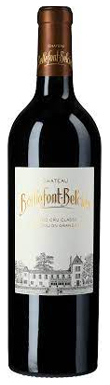
Clocking in at 15% alcohol, this wine has density and breadth, but also feels burly and awkward. Not as interesting as the 2014. Caramel and...
2015
Château Bellefont-BelcierSt-Émilion
Château Bellefont-Belcier, St-Émilion, Grand Cru, Bordeaux, France, 2011
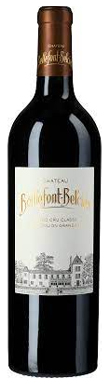
Higher vintage acidity lends superior freshness, albeit with somewhat harder tannins. As with the 2010, overripe fruit and caramel aspects detract, but some verve shines...
2011
Château Bellefont-BelcierSt-Émilion
Château Bellefont-Belcier, St-Émilion, Grand Cru, Bordeaux, France, 2010
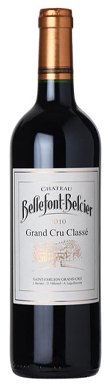
The wine shows tension and freshness typical of the vintage, but late picking – harvested between 5-19 October – and heavy-handed winemaking trumps the vintage....
2010
Château Bellefont-BelcierSt-Émilion
