
Château Latour: 1990-2010 vertical tasting
A spectacular vertical tasting of Château Latour provided Charles Curtis MW with the ideal opportunity to reflect on the nature of this momentous first growth.

The wine of Château Latour is almost eternal, it is a wine of brooding power, density, substance and structure. There is nothing heavy about it, but it is perhaps the most muscular of all Bordeaux wines.
It does not lack the more refined characteristics of top claret – it has fruit, elegance, balance and finesse; however, it has typically a foundational density that sets it apart from all other Bordeaux wines.
Of all the Bordeaux I have tasted, the oldest wines holding well were those of Château Latour. In my experience, the wines are well nigh indestructible, and I have had many older vintages from private cellars holding well above 80 years of age.
Scroll down to see tasting notes and scores for a 12-vintage Château Latour vertical
A rich history
Unlike much of the Médoc, Latour has a serious (and well-documented) history. A tower was constructed along the Gironde in 1331 as a bulwark against marauding pirates. Jean Froissart refers to the Tour de St-Maubert already in his Chronicles of 1378, telling the story of the English siege of the French owners. St-Maubert became St-Mambert and then St-Lambert, which still exists.
At the time of the Hundred Years’ War, the area surrounding the tower was farmed by many small sharecroppers. By the late 1500s, the de Mullet family had consolidated the property. The land was acquired by Alexandre de Ségur in the early 18th century, who passed it to his son Nicolas-Alexandre, dubbed the ‘Prince des Vignes’ by Louis XV since Ségur at the time also owned Lafite, Calon and Mouton.

Unlike many other top Bordeaux properties, Latour managed to stay – barely – in the Ségur family through the Revolution. Shares had been lost and then regained, and the many heirs, led by the branch known as the de Beaumont family, formed a non-trading corporation called a ‘société civile’ to safeguard its independence in 1842.
The de Beaumont family continued as majority holders until most of the shares were purchased in 1963 by the English conglomerate the Pearson Group, controlled by Viscount Cowdray; Harveys of Bristol also owned a portion. Pearson and Harveys brought on Henri Martin from Château Gloria and Jean-Paul Gardère to run Latour in 1964. The pair replanted the vineyards, installed drainage, and expanded the holdings of the château.
Modern-day Latour
Harveys was owned by Allied Lyons (later Allied Domecq and then Pernod Ricard). Allied Lyons purchased the Pearson share of Château Latour in 1989 for £58m and eventually consolidated 93% ownership. Comte Philippe de Beaumont, the last of the Beaumont family, passed away in 1992, and Allied Lyons was sold to French billionaire François Pinault in 1993 for 735m francs, nearly £85m at the time.
In 1995, Pinault brought in Frédéric Engerer to run the estate as general manager. He was made president in 1998 and now runs the holding company Artémis Domaines, which owns all of Pinault’s wine properties: Château Latour, Domaine d’Eugenie and the Clos de Tart in Burgundy, Eisele Vineyard in California, and Château Grillet in the Rhône Valley.

Engerer has charted his own course throughout his tenure – in 2012 he famously withdrew Château Latour from the en primeur system so that Latour could bring the wine to market when he felt it was ready. Although this was seen as a radical move, Engerer pointed out that when Gardère established the second wine Les Forts de Latour with the 1966 vintage, the wine was sold seven years after the harvest.
Engerer has assembled an able team, including technical director Hélène Génin, who took over from Frédéric Ardouin in 2007. Ardouin had been in place since 1999 when he replaced Christian Le Sommer, who had, in turn, replaced Gardère in 1986. Pierre-Henri Chabot is the maître de chai; he follows former cellarmaster Denis Malbec, born at the château, whose father and grandfather had been cellarmasters as well. Eric Boissenot is the consulting oenologist.
The revered terroir
The vineyards of Château Latour extend over 92ha. The heart of the property is the 47ha known as l’Enclos, surrounding the château. These vines are planted close to the Gironde on gravel over clay that rises to 12-16m above the estuary. This location, well-drained but near the water, means grapes ripen earlier here than the rest of the estate – sometimes a week or more in advance. Grapes from old vines in l’Enclos are the primary constituent of the grand vin of Latour, where the rule is no vines under 25 years and an average vine age of 60 years.

Latour also owns parcels further inland such as Petit Batailley and Pinada that are used for Les Forts de Latour, and other parcels include Gravettes, Sarmentier, and Pièce de Château. The overall grape blend in the vineyards is 76% Cabernet Sauvignon, 22% Merlot, and 2% a mix of Cabernet Franc and Petit Verdot.
The estate was certified organic in 2018, and biodynamic methods are used over much of the vineyard. The grapes are sorted, destemmed and then sorted again, before being fermented in stainless steel tanks which are calibrated to the size of the parcels so that each lot can be individually handled. The wine spends between 18 months and two years in cask before being fined with egg whites and bottled without filtering.
A legendary style
Château Latour in the glass has a style that suits best the stout-hearted. It is a powerful, commanding style. Michael Broadbent MW famously described the 1982 vintage as ‘a mouth and fork wine, so big and chewy’.
Noted expert Edmund Penning-Rowsell commented: ‘So powerful and strong, almost coarse, is Latour in youth that it is difficult to taste and even not very agreeable, particularly in fine years.’
Penning-Rowsell, Broadbent and nearly every other commentator all concede, however, that Latour makes very fine wine in lesser years due to the unique microclimate of the Enclos. There can scarcely be a better model than Château Latour for those of us who love best a Bordeaux of substance and depth.
Charles Curtis MW’s tasting notes and scores for an extraordinary 12-vintage Château Latour vertical
Related content:
Bordeaux 2021 En Primeur: first impressions
Château Latour 2014 released for first time
Château Smith Haut Lafitte: 2008-2018 vertical tasting
Château Latour, Pauillac, 1er Cru Classé, Bordeaux, France, 2010
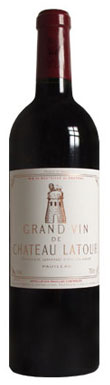

Just over a third of the harvest made it into the grand vin to give a wine of startling concentration and purity, with lovely, forward...
2010
Château LatourPauillac

Château Latour, Pauillac, 1er Cru Classé, Bordeaux, France, 2009
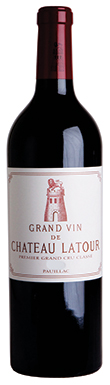
The hot, dry summer of 2009 produced a somewhat burly wine that seems riper and almost sweeter than the 2010 vintage, although it lacks a...
2009
Château LatourPauillac
Château Latour, Pauillac, 1er Cru Classé, Bordeaux, France, 2007
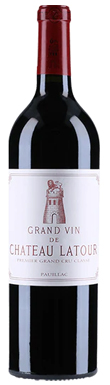
Shows more red fruit than black with a hint of smoke, leather and game. The texture is lively and fresh. It is somewhat shorter than...
2007
Château LatourPauillac
Château Latour, Pauillac, 1er Cru Classé, Bordeaux, France, 2006
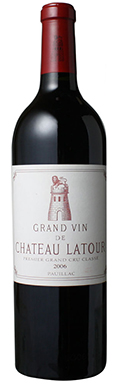
The 2006 Latour stood out even amidst a surprisingly good field of wines from 2006 with pronounced aromas of blackcurrant, cedar, smoke, and a hint...
2006
Château LatourPauillac
Château Latour, Pauillac, 1er Cru Classé, Bordeaux, France, 2004
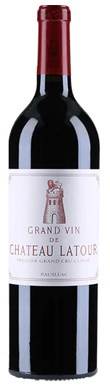
The dark garnet colour of the 2004 Latour contrasted with the bright, plummy fruit aroma. It was perhaps less forward than the Mouton, yet it was...
2004
Château LatourPauillac
Château Latour, Pauillac, 1er Cru Classé, Bordeaux, France, 2002
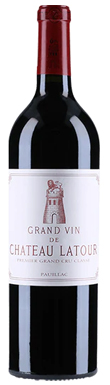
Uncharacteristically un-Latour-ish, this wine is soft and unassuming, yet there is charm here as well. Drinking well now but does not seem to have the...
2002
Château LatourPauillac
Château Latour, Pauillac, 1er Cru Classé, Bordeaux, France, 2001
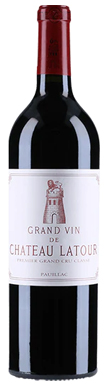
Classic Latour, with a savoury, meaty note to the ripe plummy fruit and a hint of leather at the end. Although August was hot, there...
2001
Château LatourPauillac
Château Latour, Pauillac, 1er Cru Classé, Bordeaux, France, 2000
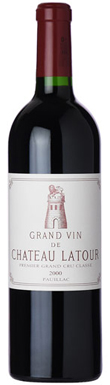
Dense and complex, this shows layers of dark fruit with aromas of plum, fig and blackcurrant overlaid with spice, leather and earth. It is not...
2000
Château LatourPauillac
Château Latour, Pauillac, 1er Cru Classé, Bordeaux, France, 1998
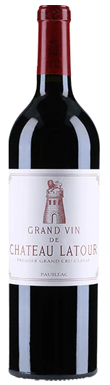
As with many of the wines from 1998 that I have tasted recently, the Latour was surprisingly open and approachable. Today the wine has a...
1998
Château LatourPauillac
Château Latour, Pauillac, 1er Cru Classé, Bordeaux, France, 1996
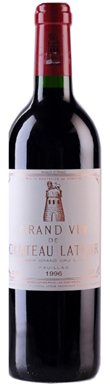
This highly anticipated bottle was a bit of a disappointment. One of the two bottles was oxidised, and the other seemed a bit more mature...
1996
Château LatourPauillac
Château Latour, Pauillac, 1er Cru Classé, Bordeaux, France, 1995
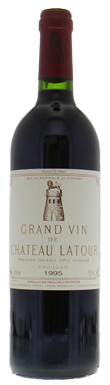
The nose showed warm and sunny, baked black and red fruit on the nose and a supple but dense texture. The impressive level of tannin...
1995
Château LatourPauillac
Château Latour, Pauillac, 1er Cru Classé, Bordeaux, France, 1990
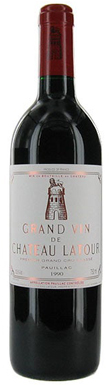
A superb wine, aging well, the 1990 Latour still seems deceptively youthful, with plenty of ripe mulberry and blackcurrant fruit aromas and a graceful evolution,...
1990
Château LatourPauillac