
Producer profile: Château Montrose
A series of dedicated individuals have brought innovation and visionary thinking to this St-Estèphe property during its 200-year history, and today its green credentials are setting a new standard in Bordeaux. Elin McCoy finds out more...


At midnight on 18 June 2015, 1,600 guests at La Fête de La Fleur streamed out from dinner in Château Montrose’s 11m-high barrel cellar to watch blue and silver fireworks shoot up into the sky like sparkling fountains. The lavish finale to the Vinexpo wine show felt like a celebration for the latest chapter in this St-Estèphe second growth’s 200-year story.
Scroll down for McCoy’s top picks from Château Montrose
The new era began in 2006, when billionaires Martin Bouygues and his brother Olivier purchased Montrose for €140m and began pouring in more millions on a seven-year renovation that elevated both the wine’s quality and Bordeaux’s eco-consciousness.

When I meet Martin in an elegant office at the estate the morning after the event, he is still basking in the party’s glow. ‘My father always wanted to own a great Bordeaux estate,’ he explains. ‘I fell in love with 1989 Montrose at a California dinner party. I always thought that if the château ever came up for sale, I would immediately go for it.’
He bought at the right time, when Montrose was ripe for the kind of visionary updating underway at St-Estèphe’s other second growth, Château Cos d’Estournel. After multimillionaire Michel Reybier purchased Cos in late 2000, he quickly set about trying to bring it up to ‘first growth level’. Third growth Château Calon Ségur followed suit when a French insurance company bought it in 2012.
All this has helped upgrade the profile of St-Estèphe’s fiercely tannic, sometimes rustic wines. Montrose’s gravelly terroir always produced dense, powerful, muscular examples that took decades to mature, but ambitious neighbour Cos d’Estournel’s recent vintages had more flash and luxury buzz. Now, Montrose’s top vintages – such as 2009, 2010, 2015 and 2016 – also show more flesh, polish, purity and sophisticated elegance, but retain their trademark depth and richness.

Yet St-Estèphe, the northernmost appellation in the Médoc, still feels a bit like the middle of nowhere. It has fewer crus classés than any other commune, and no first growths. Besides Montrose, Cos and Calon Ségur, there’s only fourth growth Lafon-Rochet and fifth growth Cos Labory.
Where Montrose tops them all – and the rest of Bordeaux – today is in its commitment to the environment. The Bouygues’ vision of a sustainable wine estate is a model to follow in this age of climate change.
In the beginning
The Bouygues brothers like to frame Montrose’s history before they arrived as the individual stories of three separate families – a good way to describe its past 200 years. At the beginning, it was a huge parcel of land covered with pink heather (Montrose means pink hill) within the Calon Ségur estate, which the wealthy Dumoulin family bought in 1778. When it passed to younger son Etienne Théodore Dumoulin in 1812 he saw the hill’s terroir potential, so he planted vineyards, built a modest château and, in 1824, sold off the rest of Calon Ségur. He made Montrose one of the Médoc’s finest estates, gaining second-growth status in the 1855 classification.
Mathieu Dollfus, an industrialist from Alsace with a surprising social conscience, acquired it in 1866. He turned to technology to solve problems, installing a wind turbine and flooding vineyards to fight phylloxera, as well as providing his staff with free healthcare and profit-sharing.
Last came three generations of the Charmolüe family, who weathered economic depression, a major cellar fire, and occupation by German forces during their 110 years of ownership. From the 1990s, the wine became one of the best wines in St-Estèphe, but it lagged behind other top Bordeaux second growths in elegance.
New ambitions
The Bouygues’ $4.2bn fortune comes from their international construction and telecom companies. To me, the family has a lot in common with Montrose’s previous owners. They, too, are builders and believers in technology and research, ready to dedicate decades to improving Montrose.
Their wine ambitions were evident in one of their first decisions: hiring first-growth big-name Jean-Bernard Delmas, who spent his 47-year career perfecting first-growth Château Haut-Brion before retiring. The sounds of construction were all around us when I spent a day with him in 2009. Bouygues Renovation Privée, a division of Bouygues Construction, tapped the latest technology to make the buildings energy self-sufficient through solar, water and wind power. Delmas made changes in the vineyard – cutting yields, picking plots by ripeness (instead of all at once, as Charmolüe did) – and started replanting.
Another big name, Hervé Berland, the energetic managing director at first-growth Château Mouton Rothschild, succeeded him in 2012. There was a lot to work with. ‘What makes Montrose’s vineyard so unique,’ says Berland during my recent March visit, ‘is that it’s a single rectangular block, with the same boundaries as when it was classified. This gives the wines an authenticity that many other crus classés – with added land – don’t have.’ (In 2010, the Bouygues brothers bought 22ha of vines from neighbouring Château Phélan Ségur that had been part of Montrose in the 19th century.)

You feel a constant cool wind when you stand on the stone terrace and look out over the vines sloping down to the Gironde river, the largest estuary in Europe. The water’s moderating influence means Montrose has always escaped frost and remains cooler than other parts of Bordeaux on even the hottest days, keeping the wines fresh.
‘The terroir has first-growth potential,’ Berland insists, pointing out that it has the same type of gravelly terraces as Château Latour. In-depth studies of the vineyard’s 26 diverse soil units allow picking at the right moment. ‘Precision in the vineyard,’ he says, ‘is the key to the style of the wine.’ Organic viticulture and changes in vinification have helped. Slower, gentler extractions at lower temperatures and shortened maceration times have made the wines silkier and more approachable. With global warming, he intends to shift to the more late-ripening Cabernet Sauvignon, which used to be hard to ripen in some years.
Château Montrose at a glance
Owners Martin and Olivier Bouygues
CEO Hervé Berland
Appellation St-Estèphe
Classification Second growth
Vineyard area 95ha
Soils Well-drained gravelly plateau, clay-rich subsoil
Plantings 60% Cabernet Sauvignon, 32% Merlot, 6% Cabernet Franc, 2% Petit Verdot
Wines Château Montrose, La Damede Montrose,Le St-Estèphe de Montrose
Other estates Château Tronquoy- Lalande (St- Estèphe), Clos Rougeard (Loire), Domaine Henri Rebourseau (Burgundy)
Château Montrose: a timeline
1778: Etienne Théodore Dumoulin purchases Château Calon Ségur, which includes land that becomes Montrose
1824: Dumoulin’s son sells Calon Ségur, but keeps Montrose
1855: Montrose ranked second growth in the 1855 classification
1866: Dumoulin’s children sell to businessman Matthieu Dollfus
1887: Jean-Jules Hostein, co-owner of Château Cos d’Estournel, buys the estate
1896: Montrose passes to Hostein’s son-in-law, Louis Victor Charmolüe
1942: RAF flyer mistakenly bombs the vineyards, destroying large sections
1984: Introduction of the second wine, La Dame de Montrose
2006: Martin and Olivier Bouygues purchase the estate and hire Jean-Bernard Delmas
2007: Renovation and replanting of the property begins
2010: Montrose purchases 22ha of neighbour Château Phélan Ségur’s vines, which were formerly part of Montrose in the 19th century. A third wine, Le St-Estèphe de Montrose, is introduced
2012: Hervé Berland becomes CEO
2014: The new winery and cellars open after seven years of renovation
2016: The first organic crop is harvested
2019: The mass clonal selection process for historic plots of Merlot begins
Going green
The most striking changes since the Bouygues family took over are things that you don’t immediately spot. Building exteriors have been spruced up and interiors have been transformed in order to reduce the estate’s carbon footprint and become completely energy self-sufficient.
The list of eco-friendly accomplishments at Montrose is long: there are 3,000m2 of solar panels on roofs that are invisible from the ground, a geothermal facility to produce energy for heat and air conditioning, and a waste-water treatment plant.

A local winery architect and specialist in historic monuments ensured that 10,000m2 of extra insulation behind walls, with pipes and cables hidden in pillars, didn’t disturb the 18th-century design. The cost of energy at the estate is now zero.
One of the latest innovations is recovering the carbon dioxide from fermentation, turning it into bicarbonate of soda and using it to develop a detergent for cleaning tanks and barrels. Sheep graze between the vine rows to provide weed control. By 2020, 100% of the vineyard will be organic, and composting vine shoots and grape skins for later use is the norm. Berland explains that they are also transitioning to lighter electric tractors.
Recently, he’s been obsessed with biodiversity. An inventory of the estate’s natural resources turned up 21 butterfly species and 31 bird species, inspiring actions to conserve the natural areas surrounding the vineyard. He has also addressed concerns for employees (such as using ergonomic tools to prevent injuries).
The scope of it all leaves you a little breathless, wondering just how much all this will eventually cost.
‘We have built for future generations,’ Bouygues once assured me. Montrose’s 19th-century owner Dollfus would surely have approved.

What’s next?
Over lunch (and a delicious Montrose 2005) in an elegant new dining room where Charmolüe used to keep his collection of historic carriages, Berland outlines the next leap into the future. ‘We are trying to get as close as possible to the DNA of Montrose,’ he confides. ‘We are defining its identity.’ What that means is a study programme to preserve the gene pool of Montrose’s 60-year-old vines, selecting the best and, from 2025, using them to renew the vineyard. ‘That way we can produce wine that is the archetype of Montrose.’ It seems as if they are going way beyond that, aiming for the equivalent of first-growth status.
For now, the brothers are using their experience at Château Montrose to feed the other ‘small gem’ properties they’ve recently acquired: Clos Rougeard in the Loire Valley, and a majority share of Domaine Henri Rebourseau in Burgundy. Berland admits he’s looking in the Napa Valley too.
‘A lot of people are coming to visit us, to see what we’re doing,’ he explains. ‘We’re prepared to take every risk to keep Montrose in the firmament of the world’s great wines.’
Elin McCoy is an award-winning journalist and author who writes for Bloomberg News
See McCoy’s top picks from Château Montrose
You may also like
Best Bordeaux 2018 wines: Top scoresTop St-Estèphe 2018 wines: ‘A year for hedonists’Bordeaux drinking windows – Ask DecanterThe Bordeaux Château wine quiz
Château Montrose, St-Estèphe, 2ème Cru Classé, Bordeaux, France, 2016
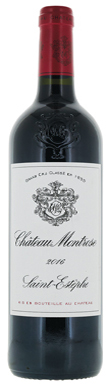

Founded in 1815, Château Montrose is a St-Estèphe icon revered for ageworthy reds. Under the Bouygues family's ownership since 2006, major investments in the 95ha...
2016
Château MontroseSt-Estèphe

Château Montrose, St-Estèphe, 2ème Cru Classé, Bordeaux, France, 2009
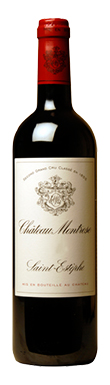
A brilliant Montrose, and a great window into what St Estèphe can deliver. This is fresh and concentrated, with ripe cassis fruits, sweet vanilla bean...
2009
Château MontroseSt-Estèphe
Château Montrose, St-Estèphe, 2ème Cru Classé, Bordeaux, France, 2005
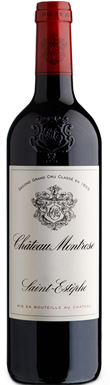
This is the pick of St-Estèphe in 2005. A beautiful strawberry, blackcurrant and mineral nose that intertwines with a medley of forest fruits, nicely...
2005
Château MontroseSt-Estèphe
Château Montrose, St-Estèphe, 2ème Cru Classé, Bordeaux, France, 2010
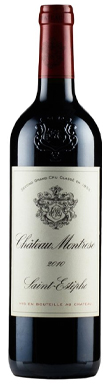
Softly fragrant and inviting, with cool, fresh blue fruit. Juicy and intense. Broad and big shouldered tannin-wise, but with a sleek, focused, precise centre. A...
2010
Château MontroseSt-Estèphe
Château Montrose, St-Estèphe, 2ème Cru Classé, Bordeaux, France, 1998
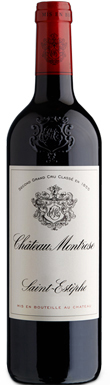
Not a great vintage (very hot August, rain in the last half of September), but the Merlot was luscious and wines made from the best...
1998
Château MontroseSt-Estèphe
Château Montrose, La Dame de Montrose, St-Estèphe, Bordeaux, France, 2016
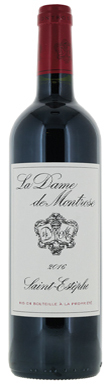
A gorgeous second wine in this vintage. It’s almost seductive, with deep, rich spice and fruit flavours on the palate, along with plenty of vibrancy...
2016
Château MontroseSt-Estèphe
