
Château Pontet-Canet: Tasting 10 years of biodynamics
How have Château Pontet-Canet's wines evolved since the estate became the first Médoc classified growth to achieve both organic and biodynamic certification back in 2010? Panos Kakaviatos attends a special tasting, and learns more about the winery's approach.
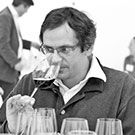

A pastoral outdoor lunch at the Château Pontet-Canet belied determination as Alfred Tesseron urged guests to taste all white wines before seating for the reds.
Twelve certified organic and biodynamic wines from beyond the estate, including Nicolas Joly Clos de la Coulée de Serrant 2018 and Block 3 Pinot Noir Felton Road Central Otago 2013, proved a clever way to stress the family’s green passion as universal, extending further than Bordeaux.
Scroll down to see scores and tasting notes for Château Pontet-Canet wines
Earlier that late summer morning, the Pauillac fifth growth had invited French television to the estate’s herbal tearoom, where staff prepare organic treatments.
As the Bordeaux 2021 vintage faced mildew, technical director Mathieu Bessonnet described how the tree bark Bourdaine fights fungal diseases and reduces treatments of Bouillie Bordelaise, the so-called ‘Bordeaux mixture’ of copper sulphate and quicklime sprayed as a fungicide.
Bouillie Bordelaise is authorised organic, but the estate stresses its biodynamic infusions, beyond basic certification requirements, for naturally boosting vine defences.
These include including yarrow, dandelion, wicker, rosemary and chamomile, which, for example, improves flowering and can fight the dangerous powdery mildew oidium.
Pontet-Canet director Justine Tesseron showed how estate well water ‘dynamises’ such ingredients in tanks before workers spray infusions in the vineyard.
She and brother Noé Tesseron posed with cow horns, which will be packed later this autumn with cow manure – the biodynamic (BD) 500 preparation – and buried underground for about six months before being ‘dynamised’ with water and sprayed to naturally help root development in the spring of 2022.
And, unlike tractors, 12 estate horses currently on-site do not aggressively compact the soil, helping to avoid vine root development becoming constrained, Noé Tesseron said.
After winter pruning, horses pull tools with biodynamic treatments to treat the cut wood. No time is set to replace all tractors with horses, but that is the goal.
Biodynamic debate: A snapshot
Some describe biodynamic winemaking as involving a lot of mysticism and marketing. Founder Rudolf Steiner, Austrian scientist and philosopher, described life forces that link the universe to living things, as related to cosmic and lunar rhythms.
But Paz Levinson, Groupe Pic head sommelier present at the Pontet-Canet event, explained the practical side. ‘Organic and biodynamic means producers care more for the vineyard, which wasn’t the case before,’ she said. ‘Fruit is better when the plant is more comfortable.’
Levinson took part in a recent blind tasting of wines and found ‘greater fruit purity and palate tension’ from those certified organic and biodynamic.
Some green-minded estates craft excellent wines without seeking certification commitments, which they consider too constraining in challenging vintages. ‘The mildew this year (2021) will cut about 30% of our potential harvest,’ said Nicolas de Bailliencourt, of Château Gazin in Pomerol, which has no certification. ‘I cannot imagine not having that flexibility.’
Pontet Canet lost two-thirds of its potential 2018 crop because of especially virulent mildew attacks, but Noé Tesseron counts that as a costly lesson learned.
‘We did not react quickly enough,’ he said. ‘This year is different because the organic and biodynamic methods work, as long as we are on constant guard.’
How this tasting worked
The Tesseron family organised a vertical of all bottled wines since the dual certification (see tasting notes below) to showcase changes over time.
Its 2012 vintage marked an essential change as the first that saw 35% of the wine aged in concrete amphorae, whose walls also included estate soils like gravel and limestone. A brochure says the strategy was ‘extending terroir into cellars’.
Bordeaux oenologist and barrel expert Nicolas Vivas says that the reduction of new oak (accounting now for 50%) plus the use of amphorae for ageing have ‘improved fruit purity, noticeably’ at Pontet-Canet.
The evening before, the Tesserons poured older vintages – including a 1945 in magnum and an amazing 1961, from a 75cl bottle – to reflect inherent excellence of the 81-hectare estate, planted to more than 60% Cabernet Sauvignon. A key ingredient in this success is its well-drained outcrop of Günz gravel over limestone.
The cosy dinner ambiance reinforced family ownership, rare today among Médoc châteaux.
Since its founding in the 18th century, only three families have owned the estate: the original Pontet owners, who witnessed the birth of the 1855 Classification, followed by the Cruses from 1865 and the Tesserons from 1975. And unlike many other classified estates, Château Pontet-Canet has not changed very much, stresses technical director Bessonnet, who found an 1818 map of the vineyard that is similar to today.
Almost immediately after taking over from his father in 1994, Alfred Tesseron embarked on a green voyage, with substantial assistance over 30 years with technical director Jean-Michel Comme.
Pontet-Canet’s going ‘green’ timeline
2004 – Following test on 14 hectares, decision made to convert entire vineyard to biodynamic
2007 – Biodynamic conversion set back when chemical spraying used to protect crop from rot
2008 – Draft horses first used to avoid soil compaction
2010 – Pontet Canet wines certified organic by Ecocert and biodynamic by Biodyvin
2012 – Concrete amphorae made from estate soils introduced for ageing wine
2014 – Pontet Canet wines certified biodynamic by Demeter
2015 – First year that no second wine is produced
2018 – Despite devastating mildew attack, the estate stays green
2020 – Mathieu Bessonnet replaces technical director Jean-Michel Comme, whose 30 years at the estate contributed enormously to the biodynamic vision
How the wines showed themselves
The vertical on-show here proved that vintages since the dual certification can display more focus, fruit purity and tension.
Pontet-Canet 2010, for example, has more depth, clarity and nuance than the excellent but more traditionally styled 2000. The 2016, meanwhile, surpasses the 2010.
And extra vineyard (and winemaking) care contributed to a fine performance for the very difficult 2013 vintage.
Vintage quality still matters, whether certified or not. The 2017, for example, engaged most tasters less than the superlative 2010, the fantastic 2016 or the flamboyant 2018.
Jeff Zacharia, president of US-based Zachys Fine Wine, acknowledges organic and biodynamic as important factors for Pontet-Canet having become ‘more interesting since 2010’, but he added that ‘buyers need to keep a closer eye on vintage variation in terms of both quantity and quality’.
The magical 1961 vintage tasted over dinner at the château reflects the superb Cabernet-driven terroir. ‘Chemical treatments did not really come into the picture in Bordeaux until the mid-1960s,’ remarked Bessonnet. Although the estate used more Bouillie Bordelaise back then, farm animals were used in the immediate post-war years, he added.
In some ways, the movement towards organic and biodynamic winemaking is a return to a simpler era of less intervention, but more enlightened, with greater knowledge of viticulture and vinification. Many of the latter vintages illustrate this.
Château Pontet-Canet at a glance
Appellation: Pauillac
1855 Classification: 5th Growth
Vineyard surface: 81 hectares
Owners: The Tesseron Family (since 1975)
General Manager: Justine Tesseron
Technical Director: Mathieu Bessonnet
Certified: Organic (Ecocert, 2010) and Biodynamic (Biodyvin, 2010 & Demeter, 2014)
Average vine age: 50 years
Planting density: 9,600 vines per hectare
Vinification: Manual sorting and de-stemming, indigenous yeasts for fermentation, soft extractions, and malolactic fermentation in vats
Ageing: 16-18 months: 50% new oak, 35% concrete amphorae, 15% in one year old oak barrels
A note on biodynamic vs organic
Organic and biodynamic have overlapping qualities but are not interchangeable. Organic wine is made from certified organic grapes. The use of pesticides or synthetic fertilisers is not allowed in organic winemaking. European standards allow for added sulphites during winemaking, but with limits.
Biodynamic certification requires biodiversity and ecosystem preservation, soil husbandry, livestock integration, prohibition of genetically engineered organisms and viewing the vineyard as a living ‘holistic organism’.
Demeter certification, for example, requires specific preventive plant protection measures, a good knowledge of microclimate and reducing interference during vinification. Biodynamic wines employ organic practices, as they avoid pesticides and depend on compost, rather than chemical fertiliser. The majority of these wines are thus also organic in practice.
See scores and tasting notes for Château Pontet-Canet wines
Wines are shown by vintage, in ascending order.
Related content
Our Bordeaux 2020 en primeur verdict
Bordeaux sees sharp growth in organic vineyards
Behind the label: Château Palmer 2011 re-release (September 2021)
Château Pontet-Canet, Pauillac, 5ème Cru Classé, Bordeaux, France, 1961
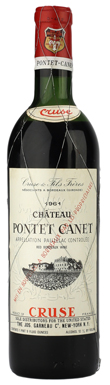

Served over dinner at the château, this gets 100 points because such gorgeous complexity only comes from a great terroir after many years (nearly 60)...
1961
Château Pontet-CanetPauillac

Château Pontet-Canet, Pauillac, Bordeaux, France, 2000
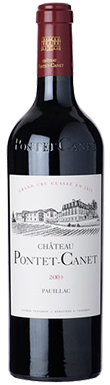
From magnum, a youthful colour, reflecting slow evolution. Aromas of cedar, lead pencil, roasted and primary fruit. Fine grained, noticeable tannin. Excellent balance of power...
2000
Château Pontet-CanetPauillac
Château Pontet-Canet, Pauillac, Bordeaux, France, 2010
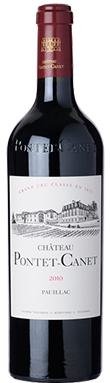
Class in glass. Deep ruby, youthful tone. Such sumptuous red berry, cassis and tobacco aromas. Juicy and full bodied, with smoothly textured tannins. The creamy...
2010
Château Pontet-CanetPauillac
Château Pontet-Canet, Pauillac, Bordeaux, France, 2011
Looking more evolved than the 2010, with higher-toned red berry fruit and blackberry and cassis. Cedar and smoke accentuate the aromatics alongside chopper herbs. Not...
2011
Château Pontet-CanetPauillac
Château Pontet-Canet, Pauillac, Bordeaux, France, 2012
What an expressive nose! Plump, fruit driven, juicy cherry, blackberry, ripe cassis and rose stem. The opposite of the 2011, this is round and suave,...
2012
Château Pontet-CanetPauillac
Château Pontet-Canet, Pauillac, Bordeaux, France, 2013
When tasted from barrel, it counted among the best of this challenging vintage. Not as intense a nose as the preceding wines, looking more evolved...
2013
Château Pontet-CanetPauillac
Château Pontet-Canet, Pauillac, Bordeaux, France, 2014
Similar to the 2011, the 2014 has added aromatic steeliness, especially compared with the 2012. However, the 2014 displays lovely fruit purity of cassis, red...
2014
Château Pontet-CanetPauillac
Château Pontet-Canet, Pauillac, Bordeaux, France, 2015
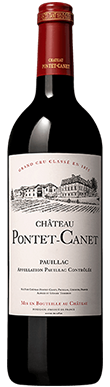
Ruby with a purple rim, no second wine made starting with this vintage. More expressive and opulent aromatics than in 2014, with ripe red and...
2015
Château Pontet-CanetPauillac
Château Pontet-Canet, Pauillac, Bordeaux, France, 2016
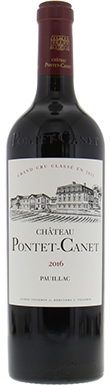
Top wine of the vertical. Deep, violet hue. Even if the nose is slightly closed, initially, what pure fruit! A degree higher in alcohol than...
2016
Château Pontet-CanetPauillac
Château Pontet-Canet, Pauillac, Bordeaux, France, 2017
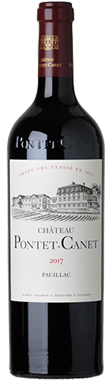
Compared to the flamboyant 2018 and the fantastic 2016, this comes in a lower gear, with less potential complexity. I like the ripe cassis, red...
2017
Château Pontet-CanetPauillac
Château Pontet-Canet, Pauillac, Bordeaux, France, 2018
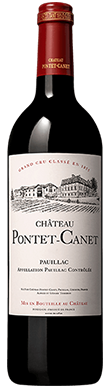
An impressive nose, as Justine Tesseron remarked 'éclatant'. Indeed, ripe cassis with some glossy fruit. The 2018 stands out for its unique expression among all...
2018
Château Pontet-CanetPauillac
Château Pontet-Canet, Pauillac, 5ème Cru Classé, Bordeaux, France, 2019
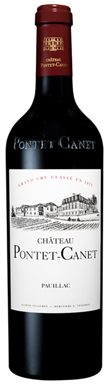
<p>With more classic balance, the 2019 reminds me of the 2016 but perhaps in a lower key. It is vinous, opulent and very nicely structured....
2019
Château Pontet-CanetPauillac
Château Pontet-Canet, Pauillac, 5ème Cru Classé, Bordeaux, France, 2020
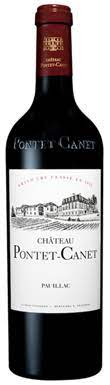
Dark chocolate, bramble tones, not overly floral or fruity with some cedar and cinnamon notes. Lovely high acidity straight away, forward, bright and energetic...
2020
Château Pontet-CanetPauillac
