Château Rayas: The enduring winemaking mysteries behind this Rhône icon
Matt Walls explores the universe of highly regarded Rhône estate Château Rayas and its enigmatic steward Emmanuel Reynaud, whose passing in November 2025 prompted tributes to his life and work around the world.


When researching articles, I’m often surprised that winemakers are so willing to share their professional secrets. Even my cheekier questions are usually answered with candour.
There is one estate that has always remained inscrutable, however: Château Rayas.
Scroll down for notes and scores for 12 incredible wines from Rayas and Fonsalette
On 18 November 2025, I hosted a tasting of Rayas and its sister property Château de Fonsalette at London private members’ club 67 Pall Mall. We tasted the 1998, 1999 and 2000 red from both estates, and the same vintages of Pignan and Fonsalette Cuvée Syrah.
One week later, I received sad news. The owner, Emmanuel Reynaud, had passed away, at the age of just 61. Social media continues to bear witness to bottles being opened all around the world to toast his life and work.
Emmanuel was kind enough to let me taste from barrel every year. He didn’t have to; the wines all sold out on allocation so he didn’t need to spend time with journalists.
Yet despite his willingness to answer questions, I never cracked the code – the secret to this estate’s unique style. I’m not sure anyone has.
But over the years I’ve gleaned some insights into Reynaud’s way of working, and got to know the different styles from his three estates.
An estate apart
Despite its arcane reputation, Château Rayas is not an old estate in the context of Châteauneuf-du-Pape. It was founded in 1880 by Albert Reynaud after he went deaf, changing careers from notary to winemaker.
The two subsequent generations to manage the estate, his son Louis Reynaud and grandson Jacques Reynaud, were eccentric characters, and they rarely welcomed visitors. Jacques died suddenly and without children in 1997, so his nephew Emmanuel Reynaud took the reins.
Unlike Bordeaux and Burgundy, Châteauneuf has no official classification system. This didn’t stop Louis from printing ‘Premier Grand Cru’ on labels for Château Rayas, much to the exasperation of local authorities.
But he had a point. Château Rayas is indeed a Châteauneuf, but it bears little resemblance to other wines made in the appellation. It is a different breed.
The Rayas style

Rayas is pure Grenache – unusual in Châteauneuf – and is immediately recognisable by its perfume alone.
It’s highly aromatic, with notes of crushed strawberries, blood orange and Provençal herbs. Scents of Turkish delight, rose, mint, violets, strawberry jam and cocoa nibs are also characteristic.
With time in bottle comes fresh mushroom, forest floor and smoke. (And it’s not just Rayas; similar aromatic markers are found across all his red wines).
Rayas is never dark in colour; it’s a transparent strawberry-red.
Its shape and presence in the mouth are moulded by the vintage. Cooler years such as 2008 are refreshing, acid-driven, clear and herbal. Warmer years like 2012 and 2005 are generous, opulent, luxurious in texture.
Rayas can be powerful, but it’s rarely tannic. The wines strongly reflect the growing conditions experienced – and they always find something positive to say, even in difficult years.
Making of a marvel

So where does this style – pale, aromatic, delicate but ageworthy – come from? There are certain things we know for sure.
The 23ha Rayas estate, which takes its name from lieu-dit Le Rayas, has just as much land planted with trees as vines. It feels cooler and shadier than neighbouring vineyards. The vines are planted in sand, which often gives wines with a pale tint and very fine tannins.
The estate is divided into three parts according to their exposure to the sun: Le Levant (the rising); Le Coeur (the heart); and Le Couchant (the setting). They give slightly different expressions which together build a complex whole.
The other Châteauneuf produced here, Pignan, is made from a small parcel of vines in the lieu-dit of the same name just to the north of Rayas. It’s about one third the size of the Rayas vineyard, and is also pure Grenache.
They are made the same way. Yields are very low, typically 15hl/ha, and Emmanuel was always among the last to harvest; he would wait for the first rains of autumn before picking. The bunches are fermented whole, with stems contributing texture and aromatic complexity.
In the cellar, extraction is very gentle, making for a light tannic weave. Also, the wines are only sold when deemed ready to drink, usually around 10 years old, giving time for any stem tannins to limber up. Large oak barrels – never new – are used to age the wine for 16 months before bottling.
Mystery remains

None of these factors, except the site itself of course, is unique to Rayas. So just what is it that makes these wines so distinctive?
Could it be using semi-carbonic maceration, or even a touch of botrytis? Emmanuel says no.
Could it be a unique strain of indigenous yeast, or the selection of plant material? Perhaps.
Though Pignan can offer immense drinking pleasure in a similar stylistic vein, it rarely benefits from a side-by-side comparison with Rayas, which is a superior terroir. Only certain vintages, such as 2011, can stand proudly beside the grand vin.
Rayas, Pignan and Château de Fonsalette are all made at Rayas; any barrels deemed unsuitable for these cuvées are blended together to make La Pialade. It displays the same compelling house style, if rarely the refinement or concentration, of the other reds made here.
There are whites too. Château Rayas makes a richly textured white Châteauneuf from 50% Clairette, 50% Grenache Blanc. Château de Fonsalette’s fresher white uses these two grapes and a little Marsanne. They have even made sweet wines in the distant past.
Perfecting the blend: Château de Fonsalette

Louis Reynaud acquired Château de Fonsalette in 1945. It’s located near the village of Lagarde-Paréol, 20km due north of Châteauneuf-du-Pape. These 12ha are spread across a similarly sandy terroir to Rayas, though here it’s scattered with small pebbles.
It could theoretically be labelled Côtes du Rhône Villages Massif d’Uchaux, as it lies within that Named Village appellation, but the wines are labelled simply Côtes du Rhône.
The methods of production are the same, but what marks out Fonsalette is Reynaud’s mastery of not just Grenache, but also of Cinsault and Syrah.
Tasting the pure Cinsault component with Emmanuel has long been a highlight of my year – it’s by far the purest, most beautiful example of this underrated variety I’ve ever encountered.
The Syrah component is highly aromatic, brimming with smoke, black pepper and bacon fat. It makes for a darker wine than Rayas or Pignan, and one with a more chiselled tannic structure. It can happily age for 30 years and more, becoming increasingly complex with time.
When the Syrah is productive enough, they make a separate mono-variety bottling. Compared to most southern Syrahs it’s more savoury, bony and leafy – you could be forgiven for guessing northern Rhône.
The Vacqueyras cornucopia: Château des Tours
The third of the Reynaud properties, bought by Louis in 1935, is near Sarrians in the far west of Vacqueyras. This is where Emmanuel cut his teeth; it was originally owned by his father Bertrand. At 40ha, it’s by far the family’s largest estate. Yet again, the soils are primarily sand.
Due to its size, the range is broader here, with the Vacqueyras and Côtes du Rhône wines under the Château des Tours label and a range of IGP wines called Domaine des Tours.
There are many curiosities to explore – a pure Clairette offers aromas of fresh vegetables as well as fruits, and a pure Merlot – often released with around 15 years in bottle – is miles better than anyone might reasonably expect a Rhône Merlot to be.
Wines produced at Château des Tours:
- Château des Tours Vacqueyras Rouge
- Château des Tours Vacqueyras Blanc
- Château des Tours Côtes du Rhône Grande Réserve Rouge
- Château des Tours Côtes du Rhône Grande Réserve Blanc
- Château des Tours Côtes du Rhône Rouge
- Château des Tours Côtes du Rhône Blanc
- Les Tours IGP Vaucluse Grenache Blanc
- Domaine des Tours IGP Vaucluse Rouge
- Domaine des Tours IGP Vaucluse Merlot
- Domaine des Tours IGP Vaucluse Merlot Syrah
- Domaine des Tours IGP Vaucluse Clairette
- Parisy Vin de France Rosé
A great magician…
The wines from this estate can offer great value compared to Rayas and Fonsalette, still displaying all the classic markers of Reynaud’s winemaking, but at a much lower price tag. That said, speculation has pushed up the prices of all of Reynaud’s wines dramatically on the secondary market – much to his dismay.
The three estates have now passed into the hands of Emmanuel’s children. I wonder what changes we will see, and whether they’ll ever reveal what makes these wines so unique.
To be honest, I hope they don’t. Of course in some ways I’d love to know the secret. But sometimes the spectacle is all the more thrilling when the magicians don’t reveal how it’s done.
Tasting Reynaud’s legacy:
Related articles
- Matt Walls: Reflections on 2025 and his favourite Rhône wines of the year
- Rhône 2024 en primeur: Full report and the vintage’s top-scoring wines
- ‘Vieille Julienne’s Réservé is Grenache in excelsis’: Matt Walls on a Châteauneuf stand out
Château Rayas, Châteauneuf-du-Pape, Rhône, France, 2000
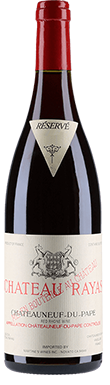

A swoon-inducing floral nose, of potpourri and cinnamon. The first taste shows a touch of dustiness and decay, but this drifts away with air to reveal a long, sweet finish. Surprisingly excellent for a 2000.
2000
Château RayasChâteauneuf-du-Pape

Château Rayas, Châteauneuf-du-Pape, Rhône, France, 1999
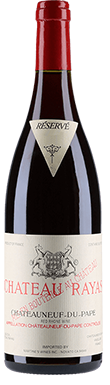
An ethereal, perplexing wine – truly unique and alluring – and unusually for Châteauneuf-Du-Pape, this is cited as containing 100% Grenache. Can it really be only Grenache grapes from a small 10ha vineyard on poor sandy soil in the heart of the woods that produces such unusual gamey complexity and piercing candied notes? The answer remains cloaked in intrigue, though there’s no arguing that the site delivers something idiosyncratic and quite bewitching.
1999
Château RayasChâteauneuf-du-Pape
Château Rayas, Châteauneuf-du-Pape, Rhône, France, 1998
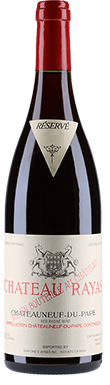
A wine with perfect balance and harmony. It's so generous, giving and fresh, with orange peel and mint aromas. It's ripe but with no excess alcohol, and extremely long, with strawberry jam notes to finish. A really wonderful, classic Rayas.
1998
Château RayasChâteauneuf-du-Pape
Château Rayas, Pignan, Châteauneuf-du-Pape, Rhône, France, 2000
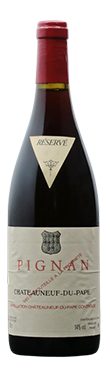
Aromas of sweet spices, honey and quince that lead to autumn leaves and nutmeg. This is soft and generous, with herbal strawberry notes into the length. There's a savoury finish, with a touch of decay, and notes of veal stock and wood smoke. Warming alcohol on the finish.
2000
Château RayasChâteauneuf-du-Pape
Château Rayas, Pignan, Châteauneuf-du-Pape, Rhône, France, 1999
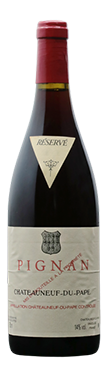
Floral aromas, potpourri, then spices and honey with air. Lean and spicy palate with good acidity. There are subtle noble bitters on the finish, and a touch of ginger.
1999
Château RayasChâteauneuf-du-Pape
Château Rayas, Pignan, Châteauneuf-du-Pape, Rhône, France, 1998
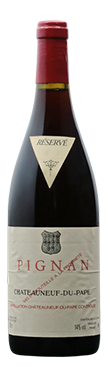
A very rich and generous Pignan, silky textured, with good acidity. Yet the tannins aren't as elegant as some vintages, and there's a touch of warming alcohol. Bitter orange and star anise on the finish.
1998
Château RayasChâteauneuf-du-Pape
Château de Fonsalette, Côtes du Rhône, Rhône, France, 2000
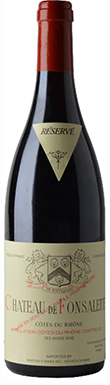
Grippy and smoky, with blackberry and strawberry fruits. A touch dilute compared to some vintages, but this has good acidity, and a medium- to -full body. A touch of warming alcohol on the long, tapered, smoky finish.
2000
Château de FonsaletteCôtes du Rhône
Château de Fonsalette, Côtes du Rhône, Rhône, France, 1999
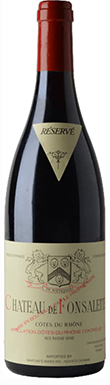
Candied raspberries and strawberries mix with hints of spearmint. This is so well defined and focussed still. It's full-bodied, with crisp acidity and a long, salty, mineral finish. A wonderful vintage of Fonsalette.
1999
Château de FonsaletteCôtes du Rhône
Château de Fonsalette, Côtes du Rhône, Rhône, France, 1998
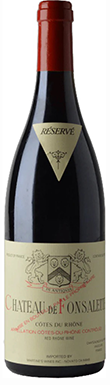
The 1998 Fonsalette is all about the florals on the nose, with rose, violet and potpourri. Some clay or putty notes too. It's not as clear and defined aromatically as the 1999, but it's so good. Full and rich, harmonious and balanced.
1998
Château de FonsaletteCôtes du Rhône
Château de Fonsalette, Cuvée Syrah, Côtes du Rhône, Rhône, France, 2000
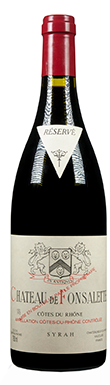
A touch muddy on the nose, this might have been better drunk earlier than now. Blackberry and strawberry notes. A touch dilute. A soft landing, with fresh raspberries.
2000
Château de FonsaletteCôtes du Rhône
Château de Fonsalette, Cuvée Syrah, Côtes du Rhône, Rhône, France, 1999
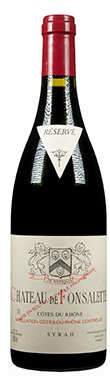
Intense woodsmoke and smoked duck aromas lead to a palate of great freshness and grip, so expressive and precise. It has serious length, with notes of oregano and tomato stalk, and a lingering sweetness. It has an endless finish. A great vintage of Fonsalette Syrah. Just magical.
1999
Château de FonsaletteCôtes du Rhône
Château de Fonsalette, Cuvée Syrah, Côtes du Rhône, Rhône, France, 1998
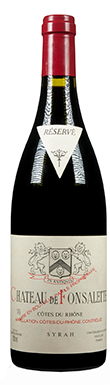
Strawberry, thyme, oregano aromas then candied blackberry and blackcurrant on the palate. Balanced acidity, very fresh still, but the tannins aren't as refined as the 1999, for example. Long and powerful, with a saline, mineral finish.
1998
Château de FonsaletteCôtes du Rhône
