
Château Vignelaure’s Provence reds: Special 50th anniversary tasting
Having achieved cult status over 40 years ago, Château Vignelaure has forged a reputation for quality red wines in Provence. Elizabeth Gabay MW recently attended a special 50th-anniversary tasting looking at the estate's history and sampling back vintages over five decades...


In the 1960s George Brunet, owner of Château La Lagune, 3éme Cru Classé from Haut-Médoc in Bordeaux, set out to find a new property in Provence.
Bordeaux at this time had variable vintages: only 1961, 1962 and 1966 had produced good-to-great wines, making the appeal of southern France with its hot dry summers and guaranteed ripening so attractive.
Scroll down for Elizabeth Gabay’s Château Vignelaure tasting notes and scores
However, it was within this hotter region, that cooler zones offered the chance of freshness and elegance. Vignelaure, on clay and limestone at 350-400m, is in one of the coolest spots in Provence. Situated on the northern edge of the then VDQS (Vin Délimité de Qualité Supérieure) Coteaux d’Aix, the hills are protected from the warm Mediterranean by the high mountains of the Massif Ste Baume and Ste Victoire.
Vision
Brunet hoped to be able to make ripe, but fresh, Cabernet Sauvignon and bought with him vines from La Lagune – along with Bordeaux bottles, know-how and a strong affinity with red wine.
In total 60 hectares were replanted, a task that took nearly 10 years and replaced all the original vines. The Cabernet grapes were the first ever to be planted at the estate and the first in over a century for the region as a whole. They joined a focus on the traditional varieties Grenache and Syrah.
Brunet’s initial wines, starting with the 1970 vintage, were 70% plus Cabernet and 30% Syrah and Grenache to add in supple softness and fruit concentration.
Although this sounds radical there are records of this blend dating back to descriptions from the 18th century. However, the estate remains atypical in its use of Cabernet Sauvignon, representing around 35-40% of red grape plantings compared to 5-10% for all vines in Provence.

During these early years, the talented Eloi Durrbach apprenticed at Vignelaure before moving to Domaine Trevallon – an estate bought by his father René Dürrbach in 1995, located in nearby Les Baux, to make his own iconic Cabernet Sauvignon-Syrah blend.
At a time when Provence was only just gaining its appellation status, the elegant, fresh reds of Vignelaure were regarded as outstanding, taking on cult status.
Changing hands
In 1985 the appellation was upgraded from VDQS to full AOC appellation status, which meant the wines were required to have less Cabernet and more Syrah and/or Grenache. In the following year, Brunet sold the estate.
The next owners also owned St Jean de Villecroze in Coteaux Varois, also with a high percentage of Cabernet Sauvignon, and Château du Galoupet, a Cru Classé Cotes de Provence on the coast.
They stayed a short time but the estate passed on to two other owners before being bought, in 1994, by Irishman David O’Brien.
O’Brien worked extensively in the vineyards and moved from the traditional old foudres to barriques. In 2007 O’Brien sold the estate to the Danish-Swedish couple, Mette and Bengt Sundstrom.
New era
The Sundstrom’s brought in Philippe Bru in 2008, previously a winemaker in Rasteau, to oversee their vision of returning Vignelaure to its preeminent status with a fresh, modern style.
Bru implemented a change to:
- organic viticulture, which he claims has increased the salinity in the resulting wines
- small fermentation tanks for precise vinification
- 100% destalking
- 400l used Burgundy barrels instead of barriques

Since 1992, rosé wines were made as part of the red winemaking process, concentrating the reds, but from 2010 Bru started to use fresher fruit from cooler sites, and fruit from younger vines for his rosé. Today 40% of production is rosé.
Brunet had tried a white wine with Grenache Blanc and Semillon, but early on and grafted on Cabernet Sauvignon. Bru was keen to try again, and realising Cabernet on cooler sites was struggling to ripen, he grubbed up these marginal plots in 2009 and replanted with Sauvignon Blanc and Roussanne, and later Viognier, making the first white wine in 2013. Today 20% of production is white wine.
Results
The impact of these changes on the red wines has been less unripe fruit plus the fruit from older vines is less green and vegetal. The precise proportions of varieties changes with every vintage but Cabernet always dominates, and since 2008 there has been no Grenache in the blend.
The grapes are harvested and vinified parcel by parcel and blended later. Due to the cooler climate, compared to the rest of Provence, there is more vintage variation with a greater emphasis on Cabernet in cooler vintages.
To celebrate the 50th vintage, the estate hosted a tasting of wines dating back to the first, made in 1970. Vignelaure has always had a policy of cellaring old vintages for their select clients and the tasting provided an opportunity for lively discussion leading some to compare the wines to Bordeaux, others to the Rhône.
Clear vintage variations were evident, with greater or lesser amounts of Cabernet. While many wines had a deep fruity richness (more red berry notes in the older wines with Grenache), all have fresh acidity and some displayed a beautiful delicate florality, namely the 2013, 2008, 2001, 1990, 1985, 1982 and 1975.
See Elizabeth Gabay’s Château Vignelaure tasting notes and scores
You may also like
Idyllic Provence vineyard estates for saleAnson: Inside the French Foreign Legion’s Provence vineyardProvence rosé: Panel tasting results
Château Vignelaure, Coteaux d'Aix-en-Provence, Provence, France, 2016
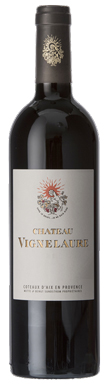

This was the first vintage aged 100% in used Burgundy 400l barrels, so it has a slightly less pronounced oak character. Despite having equal percentages...
2016
Château VignelaureCoteaux d'Aix-en-Provence

Château Vignelaure, Coteaux d'Aix-en-Provence, Provence, France, 2015
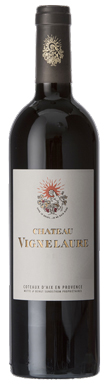
Just 5% more Cabernet in the blend gives the juicy voluptuous mulberry fruit an extra fresh green leafiness. With maturity, the Syrah is starting to...
2015
Château VignelaureCoteaux d'Aix-en-Provence
Château Vignelaure, Coteaux d'Aix-en-Provence, Provence, France, 2014
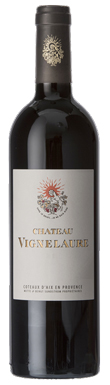
A cooler vintage with a higher percentage of Cabernet which marries well with the hints of oak on the nose. On the palate there are...
2014
Château VignelaureCoteaux d'Aix-en-Provence
Château Vignelaure, Coteaux d'Aix-en-Provence, Provence, France, 2013
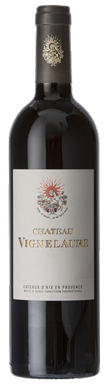
A small vintage with a lighter character across the region, which needed care to produce quality wine. This is a fine example of the beauty...
2013
Château VignelaureCoteaux d'Aix-en-Provence
Château Vignelaure, Coteaux d'Aix-en-Provence, Provence, France, 2012
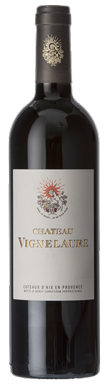
A mixed quality vintage with hot summer months and rain resulting in more restrained wines. Higher Cabernet in this blend gives power and acidity. This...
2012
Château VignelaureCoteaux d'Aix-en-Provence
Château Vignelaure, Coteaux d'Aix-en-Provence, Provence, France, 2010
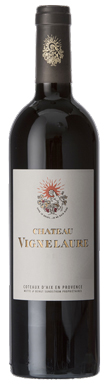
One of the highest percentages of Cabernet in the more recent vintages. A cool wet start to the season followed by a long growing season...
2010
Château VignelaureCoteaux d'Aix-en-Provence
Château Vignelaure, Coteaux d'Aix-en-Provence, Provence, France, 2008
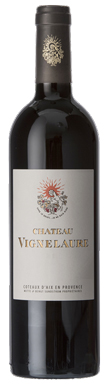
A difficult vintage, with a cool wet summer, and winemaker Philippe Bru’s first but the result is balanced and beautiful. The combination of Cabernet and...
2008
Château VignelaureCoteaux d'Aix-en-Provence
Château Vignelaure, Coteaux d'Aix-en-Provence, Provence, France, 1999
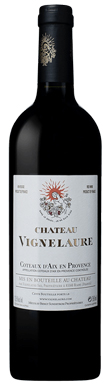
With a higher percentage of Cabernet, nearing 70%, and aged in barrique, this wine inspired the most vocal comparison to Bordeaux with its abundant and...
1999
Château VignelaureCoteaux d'Aix-en-Provence
Château Vignelaure, Coteaux d'Aix-en-Provence, Provence, France, 1995
The first vintage of the new appellation, which asked for lower percentages of Cabernet, came from a hot ripe summer. While this wine is...
1995
Château VignelaureCoteaux d'Aix-en-Provence
Château Vignelaure, Coteaux d'Aix-en-Provence, Provence, France, 1970
Still full of life, this first vintage with a high percentage of Cabernet aged in foudres, has slightly smoky aromas. On the palate, the initial...
1970
Château VignelaureCoteaux d'Aix-en-Provence
Château Vignelaure, Vignelaure, Méditerranée IGP, Provence, France, 2018
<p>No one variety leaps out of the glass for this wine, but the finely-knot blend of the three varieties results in long vibrant acidity and...
2018
Château VignelaureMéditerranée IGP
Château Vignelaure, l'Or de Vignelaure, Vin de France, Provence, France, 2018
Late harvest Sauvignon Blanc fermented in barrique. Not sticky sweet, but with a balance of high residual sugar and ripe acidity. This has lovely orange...
2018
Château VignelaureVin de France
