
Rising stars: Winemakers to watch in Chile and Argentina


Meet 10 young men and women who are changing the face of winemaking in Chile and Argentina, and read tasting notes for some of their best wines.
10 young winemakers changing the face of South American wine:
Agustín Lombroni
Bodega del Río Elorza, Argentina
You know a winemaker is serious about his job when he turns up for a tasting with his own decanters as well as his own glasses!
Agustín Lombroni is one focused hombre, determined to make some of the best wines in Patagonia. Since he arrived at Bodega del Río Elorza in 2012, he has been honing his craft, learning from local consultant Hans Vinding-Diers and from a spell in Bordeaux at Château Le Pin with Jacques Thienpont.
‘The best thing about this job,’ he says, ‘is that you learn from each vintage, both as a winemaker and as a person.’
In what is a cool climate for Argentina, Lombroni is doing exciting things with Pinot Noir and Chardonnay, as well as Malbec, but he thinks the best wine he’s made to date is the soon-to-be-released 2017 Verum Cabernet Franc:
‘We picked it at just the right time and the vintage was perfect for the variety.’Argentina, he believes, should focus on selling wines like this rather than the mass market. ‘We need to prove to consumers that we can make wines that rival the best in the world. That should be our goal over the next decade.’
Julia Halupzcok
Finca Sophenia, Argentina
The French-owned Alta Vista winery has played a significant role in Julia Halupzcok’s career. She worked there for three years during her studies and went back seven years later after spells in California and at O Fournier in the Uco Valley. But it was her move from Alta Vista to Finca Sophenia in 2016 that has propelled her into the spotlight.
Sophenia is best known for its Sauvignon Blanc, a wine that Halupzcok makes with white-wine guru Matías Michelini. But the reds that she created in 2016 and 2017 – most notably the Antisynthesis blend of Malbec and Cabernet Sauvignon – are even more exciting. Ever modest, she plays down her influence, citing the quality of owner Roberto Luka’s grapes and the uniqueness of the Gaultallary terroir. ‘Oenology is like make-up: if there’s too much it can be a disaster, but a little can enhance beauty. That’s what I try to do.’
Halupczok cites two consultant winemakers, Frenchman Didier Debono and Argentinian Rubén Sfragara, as her mentors, both from her Alta Vista days, but says that it’s important to discover your own path as an oenologist. ‘Mistakes help you to learn and grow.’
Fernando Buscema
Bodegas Caro, Argentina
Talk to anyone about Fernando Buscema and the first thing they mention is the size of his brain. ‘Scarily intelligent’, is the consensus about this high-achieving, UC Davis-educated winemaker. He wrote a thesis on the phenolic composition of Malbec and now runs the research-based Catena Institute of Wine in his native Mendoza. I don’t think I’ve ever met a winemaker who’s won so many scholarships.
Buscema is much more than an academic, however; he’s also a brilliant and sensitive winemaker. Since 2012 he has been running Bodegas Caro, the joint venture between Domaines Barons de Rothschild (Lafite) and Catena, drawing on experience he acquired at Harlan Estate and under Alejandro Vigil, Pepe Galante and Colo Sejanovich at Catena Zapata. Under his guidance, Caro’s three reds have improved dramatically. ‘I’m as hands-off as possible in the winery,’ he says. ‘Each parcel that we use for Caro gives something different and I try to express those differences as elegantly as possible, avoiding excesses of oak, extraction and over-ripeness.’ The 2015 Caro is one of the best Argentinian wines I’ve ever tasted, but Buscema reckons the still-in-barrel 2017 is even better. Who could doubt him?
Cristóbal ‘Toti’ Undurraga
Koyle Family Vineyards, Chile
Not many winemakers have also been international sports stars, but Toti Undurraga spent four years on the Chilean athletics team during his studies at the Universidad Católica. He’s since swapped the 110m hurdles for a challenge of a different sort: making distinctive biodynamic wines in Colchagua.
After vintages in Bordeaux, Napa and the Hunter Valley, he worked for Kaiken in Argentina before joining his father, Alfonso Undurraga, three brothers and sister to set up Koyle. The aim was always to make wines with a sense of place from 80ha in Los Lingues, now supplemented with grapes from cooler, coastal Colchagua and the Itata Valley. Working with the French terroir specialists Claude and Lydia Bourguignon has enabled him to focus even more on site-specific wines. ‘My challenge is to understand what the vines give me and express that in the bottle,’ he explains. ‘Winemaking is just fine-tuning.’
Undurraga names the late Paul Pontallier of Château Margaux among his winemaking heroes, but his best reds are made not with Cabernet, but from a cuvée of Mourvèdre, Carignan, Syrah and Grenache (Cerro Basalto) and Carmenere with a little Cabernet Franc (the mould-breaking Cerro Basalto Cuartel G2).
Pablo Morandé Jr
Bodegas RE, Chile
It’s not always easy having a famous parent in the same business, but Pablo Morandé Jr is more than living up to the example of his father, also Pablo, one of the Chilean wine industry’s most influential figures and the man who planted the first vines in the Casablanca Valley. Morandé cites his dad as his winemaking hero and worked alongside him at Viña Morandé before setting up his own winery, Bodegas RE, in 2011. The two clearly inspire one another.
In a country that is still comparatively conservative, Morandé stands out as a maverick spirit, specialising in off-the-wall blends, co-fermentations such as Cabergnan, Syragnan and Chardonnoir, and the use of a range of amphorae and clay pots. (Bodegas RE looks like Ali Baba’s cave, all dark corners and potential hiding places.) Morandé is also one of the leading lights of the natural wine movement in Chile, favouring little or no intervention on some wines. What he picked up on a study tour to France in 2014 informs his approach: freshness, elegance and the desire to reflect vintage differences. ‘Chilean wine is starting to regain its respect for old vines, old traditions and old places,’ he says.
Matías Cruzat
San Pedro, Chile
‘My whole life has revolved around wine,’ says the frighteningly youthful Matías Cruzat, who has brought energy, creativity and new ideas to the premium wines at San Pedro, one of Chile’s largest bodegas. Like many of the country’s best young talents, he worked overseas, in California, and more significantly South Africa, before coming home. In fact, he lists the Swartland Independent Producers’ group (SIP), whose members include Chris and Andrea Mullineux, Adi Badenhorst and Eben Sadie, as some of his winemaking heroes, alongside the late Didier Dagueneau from the Loire Valley and the Spaniard Raul Pérez. The Syrah he’s making in the Elqui Valley would surely impress the Mullineux pair.
Cruzat joined San Pedro in 2013, but his route into the business tested his patience. ‘I waited three years to get a permanent job in wine so I got frustrated, but that gave me strength and conviction,’ he says. He also thinks that university doesn’t prepare you for the realities of the profession. ‘You learn how to make wine and manage a vine, but not how to manage a team and communicate.’ True to his words, he has launched Hellowine, a digital tool for a mail order wine club as a personal project on the side.
Emily Faulconer
Viña Carmen, Chile
She’s only 33, but Emily Faulconer had already managed to work at several of Chile’s best wineries, including Maquis and Viñedos de Alcohuaz, as well as overseas at Cakebread Cellars in California, Trinity Hill in New Zealand and Château Canon in Bordeaux before taking up her position as chief winemaker at Viña Carmen last year. She lists running as one of her hobbies and is on a fast track through her native industry, ‘burning the candle at both ends’, as she puts it in perfect English, to achieve her goals.
So far, she’s only blended and aged wines made by her equally talented predecessor at Carmen, Sebastián Labbé, but she’s already making her influence felt, reducing the time in oak for the icon Cabernet Sauvignon, Gold Reserve. She has exciting plans for the 2018 vintage too. Faulconer’s time at Alcohuaz, where she worked with the influential Marcelo Retamal, also speaks for itself, helping to make some of Chile’s most exciting reds.
‘Wines tell stories for me,’ she says. ‘At our three properties in Alto Maipo, Apalta and Pumanque, we have a huge opportunity with different soils, exposures, clones, altitudes and varieties to make wines that identify the specific potential of each site.’
Thibault Lepoutre
Piedra Negra, Argentina
A semester at university in Mendoza inspired Frenchman Thibault Lepoutre to return to the country six years later to work for François Lurton’s Piedra Negra winery. In the meantime, he’d finished his studies in Bordeaux and Montpellier, and worked in Portugal and the Ukraine, picking up two more languages along the way. He also plays the guitar and clarinet and flies small planes.
This impressive polyglot makes a number of impressive wines at Piedra Negra in Los Chacayes (as well as for his own micro-project, Mundo Revès) – none more so than the Gran Lurton Corte Friulano white blend, which has always been one of Argentina’s best and most ageworthy wines, but has reached new levels of complexity on his watch since 2012, blending Tocai Friulano, Sauvignon Blanc, Viognier and Chardonnay to brilliant effect. He also has a hand in another stellar white wine, Blanchard y Lurton, François Lurton’s joint venture with Andrés Blanchard. Are these works of art? Lepoutre doesn’t think so. ‘Winemakers are artisans or craftsmen if you prefer, not artists, but through our wines we can provoke emotions in people, maybe even encourage them to dream a little.’
Natalia Poblete
Casa Bauzá, Chile
Natalia Poblete is another brilliant young winemaker who cites Marcelo Retamal of De Martino as a formative influence, having worked alongside the Chilean guru for a few months in 2008. Spells at Terrandina and William Cole in Chile and Shaw + Smith in Australia followed, before she landed her current job at boutique producer Casa Bauzá in 2014. ‘Marcelo is continually reinventing himself and questioning what he does,’ she says. ‘That’s something I really admire.’
Like Retamal, her taste is for fresh wines with vibrant acidity, where elegance triumphs over concentration. Working for a winery that’s part of the dynamic MOVI (Movimiento de Viñateros Independientes) group, she’s a passionate believer in the future of smaller bodegas and what they bring to the party. ‘They’re showing another side of Chilean wine,’ she says. ‘Right now, we’re at a crucial stage in the development of the image of our industry.’
Poblete is something of a red wine specialist, making three impressive blends based on much-maligned Carmenere. Presumido benefits from the addition of Syrah and Carignan, Ensamblaje from Syrah, Petit Verdot and Cabernet Sauvignon and (best of all) Isabel has 3% Carignan from Maule.
Santiago Mayorga Jr
Nieto Senetiner and Cadus, Argentina
‘Keeping the vines happy’ sounds like a simple approach to viticulture, but it makes a lot of sense. It also sums up Santi Mayorga’s approach to life: do everything with a smile on your face. As someone who was almost born in a vineyard – his father, also Santiago, is an equally talented oenologist – he radiates contentment and fulfilment. ‘Wine is passion, love, friendship, team work, trial and error, long hours – and I love it!’ he says. ‘We change, wine styles change and it’s up to us to find our personal path in life.’
After a spell at Mendel working under the brilliant Roberto de la Mota, Mayorga moved to Nieto Senetiner and Cadus in 2013, where he has radically changed the style of the two bodegas’ wines towards ‘purity, terroir identification and balance’. Despite his modesty, many people recognise him as one of the leading winemakers of his generation. Malbec is his main focus – his Cadus Finca Viña Vida is a triumph – but he’s also passionate about Argentina’s historic varieties, Criolla and Semillon, and is now making outstanding examples of both grapes. His 2017 Signature Series Criolla is the outstanding interpretation of Argentina’s most planted red cultivar.
Tim Atkin MW is an award-winning wine writer and photographer and regular contributor to Decanter.
The wines to look for:
You may also like:
Treating Malbec like ‘Pinot Noir’: The new terroir approach
Bordeaux: The next generation
More articles from Decanter magazine’s October 2018 issue
Bodega del Río Elorza, Verum Pinot Noir, Río Negro, Patagonia, Argentina, 2017
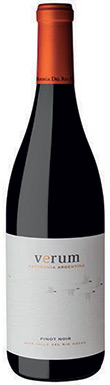

Made with 50% whole bunches, from the 777 clone of Pinot Noir, this wine is very delicately oaked, allowing the subtle, spicy, fresh tobacco and...
2017
Bodega del Río ElorzaRío Negro

Finca Sophenia, Synthesis Sauvignon Blanc, Uco Valley, Tupungato, Mendoza, Argentina, 2017
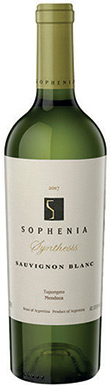
One of Argentina’s best Sauvignon Blancs, which ages very well in bottle too, this stylish and focused white is leesy, herbal and crunchy with capsicum...
2017
Finca SopheniaUco Valley
Bodegas Caro, Aruma Malbec, Mendoza, Argentina, 2015
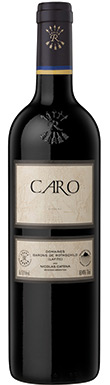
The best release yet from this joint venture between Château Lafite and the Catena family, which was launched in 2000. It combines the power of...
2015
Bodegas Caro
Koyle, Cerro Basalto, Los Lingues, Colchagua Valley, Chile, 2015
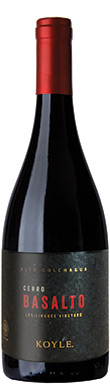
Cuvée of four Rhône grapes (Mourvèdre, Grenache, Carignan and Syrah) now in its third vintage. Wonderful focus, grip, spicy intensity, all supported by a stony...
2015
KoyleLos Lingues
Bodegas Re, Enredo Gewurztraminer, Casablanca Valley, Chile, 2017
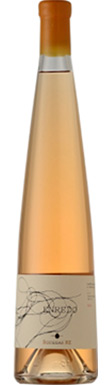
This wonderfully leftfield blend of Gewürztraminer and 30% Riesling spends four months on skins in amphorae before moving to old wood. Floral, beeswaxy and complex,...
2017
Bodegas Re
San Pedro, 1865 Limited Edition Syrah, Elqui Valley, Chile, 2015
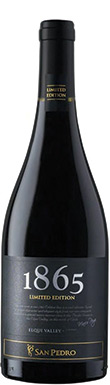
Sourced from a block of vines planted in 1998 (old for the Elqui Valley), this sensitively oaked Syrah is a brilliant new release, with dense,...
2015
San Pedro
Carmen, Gold Reserve Cabernet Sauvignon, Alto Maipo, Maipo Valley, Chile, 2015
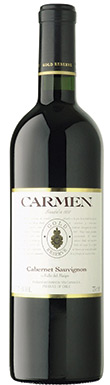
Emily Faulconer only blended this wine, but her gentle touch is apparent in the quality of the tannins. An example of old-vine Maipo Cabernet at...
2015
CarmenAlto Maipo
Bodega Piedra Negra, Gran Lurton Corte Friulano, Uco Valley, Los Chacayes, Mendoza, Argentina, 2017
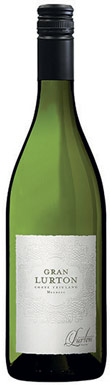
Now a five-way blend of Tocai Friulano, Sauvignon Blanc and Viognier with a little Chardonnay and Pinot Gris, this complex and ageworthy cuvée is one...
2017
Bodega Piedra NegraUco Valley
Casa Bauzá, Isabel Carménère, Maipo Valley, Chile, 2015
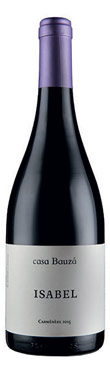
Named after the mother of the winery’s owner, Rodrigo Bauzá, this small production Carménère is made from just two rows of vines. Restrained for the...
2015
Casa Bauzá
Cadus, Signature Series Criolla, Uco Valley, Mendoza, Argentina, 2017
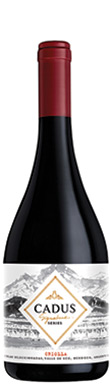
Made for the first time in 2017 from a pergola vineyard planted in 1946, this thrilling Criolla is spicy, peppery and scented with rose petals,...
2017
CadusUco Valley
