
What’s hot in Chile?
In a country marked by change, winemakers are pushing boundaries to uncover the potential of their wines. Peter Richards MW shines a light on the latest developments in both vineyard and winery, profiling some of the exciting projects driving current trends...


The only thing that is constant, Greek philosopher Heraclitus reminds us, is change. The Chilean wine industry seems to be taking this maxim to extremes – a wine scene seemingly stuck on fast-forward, buckled into a thrilling rollercoaster ride of discovery, exploration, reinvention and experimentation.
So when Gillmore winemaker Andrés Sánchez tells me that ‘the idea is to change the Chilean wine scene completely in the next 30 years’, it doesn’t sound far-fetched. It sounds exciting.
The younger generation, who never knew military rule under Pinochet, are starting to make their voices heard in what is a largely conservative society. Earthquakes in Chile come in both geological and metaphorical form, and the appetite for change is also spurring winemakers on to new heights.
On a recent trip to Chile – one of many over the past three decades – I did things I’d never imagined. Like sitting down with an indigenous Mapuche leader to discuss the progress of his Pinot Noir. Viewing a new vineyard on the slopes of an ominously smoking volcano. Mulling a project to establish commercial wine-growing on Easter Island (it’s still early days, but you never know). Taking a boat to a tiny island off Chiloé, in Chile’s deep south, to visit a pioneering vineyard planted with the likes of Albarino, Pinot Gris and Riesling. Tasting a wine grown in a prison (thank you, Viña Capitán Pastene). Earnestly discussing sake yeast, flor, skin contact, field blends, carbonic fermentation for Chardonnay, and ‘Chilean Chartreuse’.
Enough, in short, to make anyone’s head spin. The sheer enthusiasm and ambition, though, is infectious. ‘We’re not Bordeaux,’ smiles Aurelio Montes Jr. ‘We’re not stuck with tradition. We need to innovate and take risks.’

Social project
One producer taking a notable step outside its comfort zone is Viña San Pedro Tarapacá (VSPT). One of Chile’s winemaking behemoths, also owner of Viña Leyda, the group has been slowly but surely shifting its trajectory in recent years. Sustainability has been a focus – and this has led to one particular initiative that could be a game-changer in Chile.
Buchahueico is a place deep in the Malleco region in southern Chile. It’s also a Mapuche community that, thanks to VSPT and government grants, is now growing 15ha of impeccable Pinot Noir vineyards and making the striking Tayu brand.
Historically, the indigenous Mapuche people were largely disenfranchised by the Chilean state in the 19th century, after fiercely (and successfully) resisting incursions into their lands in southern Chile for several centuries. Ongoing social unrest has ensued, aimed largely at the Carabineros (police force) and big forestry companies, while many younger Mapuche have left their homelands for city life.
VSPT’s Buchahueico project is an attempt to set a precedent for change. ‘Our mission is to use wine as a tool to help the country understand the richness and potential of the Mapuche culture,’ enthuses experienced viticulturist Pedro Izquierdo, who is leading the project along with VSPT’s Juan Cury, Viña Leyda winemaker Viviana Navarrete, and Buchahueico family member Juan Curín.
‘It’s using wine as a tool for social disruption,’ Izquierdo continues. ‘We Chileans are proud of our culture. And we’re all very aware of our historic debt: we want to right the wrongs. We wanted to do something with real social impact.’
The aim of the project is to partner the local community in establishing a viable wine-growing and, ultimately, winemaking operation that can stand alone without external input or aid. To this end, establishment costs are loans to be repaid as VSPT buys the fruit, which is contracted for 10 years. The vines are planted in 2.5ha blocks, each managed by an individual family within the Buchahueico community – ‘to keep things on a human scale’, says Navarrete.
‘This was a land of conflict,’ says a quietly spoken Juan Curín, whose family were the first to establish a vineyard in the community. ‘The sense of struggle and resentment was strong. But now this project is helping relieve the pain.’ His father, Juan Daniel, adds: ‘This is helping heal our wounds – it’s like a reparation for the sufferings of the past.’
It was a moving moment sitting with several families, in an impeccably tended vineyard, tasting the fruit of such a significant initiative. Navarrete commented on the lessons she and the VSPT have learned from the Mapuche, including an emphasis on caring for the natural environment and the significant role of women in work. Of course, long-term success is not a given and much will depend on how the project beds in over time and the traction it generates. But, as Izquierdo comments: ‘This is sustainability in action.’

Southern scene
What also bodes well for the Buchaheico project is the momentum building behind the south of Chile as a credible winemaking force. In Chile, the simplistic generalisation is that north means hot and dry, while south means cool and wet (the country’s feet rest in icy Antarctic territory). As the climate slowly warms up, and the nation struggles with a protracted water shortage, producers are increasingly looking south. The process has been slow because the country’s historic wine heartlands are in central Chile, easily accessible from the capital Santiago (home to about 40% of the population, including many winemakers and owners). The south is a long way away. But an increasing number of pioneers are making the move, to excellent effect.
Perhaps the most striking recent project in the south has been that of Montes. In recent years, this hitherto stalwart of the traditional, Colchagua-based Chilean winemaking scene has edged increasingly into marginal territory (its Outer Limits line being one example). Then, in 2018, Montes took its biggest leap yet – planting a vineyard on the tiny island of Añihue, off the eastern coast of Chiloé, well to the south of most existing vineyard sites and previously known principally for its potatoes, moveable houses and colourful mythology.
‘This isn’t outer limits, it’s beyond the limits,’ grins Aurelio Montes Jr, as we survey the spindly vines with crushed shells at their base, lying just a few metres from the Añihue shoreline. He explains how others have tried to make wine work here, but Montes studied climate, exposure, water temperature, wind and soils in detail before planting 2ha in a sheltered site with warm exposure. There are plans to install winemaking operations on the island, though Montes is taking things slowly. He’s currently dependent on one local tractor, available only sporadically given it’s based on the adjacent island and the tide is only low enough for crossing once every three weeks.
Montes thinks Riesling and sparkling wine styles have the best potential on Añihue. ‘This is a project that demands patience,’ he says. ‘It may work or it may not. But we have to try, and the plants look healthy. This is an adventure, it’s magical. The south is the future of Chile.’
Special place
Further endorsement of this assertion comes in the form of Sebastián and Marco De Martino’s new vineyard on the slope of the active Villarrica volcano near Pucón. After buying the property in 2014 and establishing experimental plantings, the brothers now have more than 2ha planted to Pinot Noir, Chardonnay and Riesling. They view this ‘cool- climate Etna’ as a ‘long-term, life project’.
Trapi del Bueno is making exciting Sauvignon Blanc, Chardonnay, Riesling and Pinot Noir from its steep hillsides (including some handmade terraces) at La Unión, near Osorno. ‘It’s another world here,’ comments winemaker Rodrigo Romero. ‘We don’t believe in signature wines; we want to make wines of the place. It’s a special place.’ He explains how ‘the south has the potential to democratise Chilean wine’, given that set-up costs make it accessible to new entrants and smaller players.
Francisco Baettig, long-time winemaker at Errázuriz, has set up his own exciting venture in Traiguén, Malleco. ‘My idea is to do Burgundy in Traiguén – wines that are Chilean but with a tension and finesse,’ he tells me as we stroll through his neat Chardonnay and Pinot Noir vines, planted in lands first settled by his ancestors after emigrating from Switzerland in 1884. To say these wines are hotly anticipated is an understatement. Baettig has form with crafting superb Chilean Pinot and Chardonnay (the Las Pizarras brand from Errázuriz is a case in point). What’s more, the likes of Viña Aquitania’s Sol de Sol and Alto las Gredas have already shown the potential of this area for making serious, structured styles of Chardonnay. Baettig’s first wines are testament to his skill and the region’s potential, and are already setting a new standard for Burgundian styles in Chile.
There is much else of note in southern Chile, including Casa Silva’s beautiful Lago Ranco project with its finely etched Riesling and characterful Fervor fizz. Sparkling wine seems to have the potential to be one of the south’s signature styles, given the quality evident in the likes of Trapi del Bueno, Ribera Pellín and La Ronciere’s promising Selva Oscura brand.

Experimental winemaking
The development of Chile’s sparkling scene ties in with a wider trend of experimental, new-wave winemaking, which the country is embracing enthusiastically. Tasting Ribera del Lago’s Arcillas de Laberinto Riesling 2019, aged under flor in amphora in pre-Andean Maule, is a breathtaking experience; the wine thick with salty, apple-rind complexity, piercing woodsmoke and vivid citric flavours. ‘Like chewing on quartz’ was the best metaphor I could muster. But it’s not an outlier in terms of experimental winemaking in the country.
From an altogether more establishment player, Carmen’s Florillón Semillon is also an impressive wine aged under a yeast veil ‘that does liposuction on the wine’, according to its maker Emily Faulconer, meaning it is ‘leaner and sharper’. Viña Marty, meanwhile, is using sake yeast to enable cool ferments and longer lees ageing, for extra structure. Whites using skin contact are now common in Chile. Witness Luis Felipe Edwards, Massoc, Morandé, Santa Rita, TerraNoble, Viña Capitán Pastene, Zaranda, along with pioneers in the modern era, De Martino. Santa Carolina is even making a superb ‘carbonic maceration skin-contact’ Chardonnay – labelled vinificación no tradicional and only sold locally.
The use of large clay amphorae (known as tinajas) is also commonplace, alongside the now seeming omnipresence of concrete eggs and large wooden vats or foudres. Atacalco matures its impressive Cárabe Pinot Grigio in amphora, while VIK goes one step further, making its tinajas from clay sourced on its own estate, to reinforce ‘the taste of our terroir’, as winemaker Cristián Vallejo puts it. Even raulí, the beech wood traditionally used for Chilean winemaking vats, is being revived by Piedra Nativa, Pisador and Viña Mardones.
A new elegance
Perhaps one of the most heartening trends, though, is the ongoing reinvention and refinement of Chilean classics. In the past, too many Chilean Cabernets, Carmenères, Chardonnays and Sauvignon Blancs have been identikit, recipe-led, often overly mature, impressive but ultimately bland concoctions that have done the country little service. It started with just a few of the hitherto more conservative Chilean companies, but what began as a trickle is now a torrent of infinitely more refreshing, elegant, nuanced wines.
They don’t come bigger in Chile than Concha y Toro but, tasting the Marqués de Casa Concha Cabernet Sauvignon 2018 or the Terrunyo Carmenère 2018 is like discovering a new world of elegance and precision, where before the accent was on power and heft. ‘We’re trying to be more honest with Carmenère,’ comments head winemaker Marcelo Papa. ‘If it has some greenness, that’s OK, we’re more relaxed as winemakers now.’
It’s a similar story with Santa Rita’s 2018 Carmenères from Floresta to Pewën, or its Casa Real Cabernet Sauvignon 2017. Santa Carolina is broaching ‘new frontiers with Cabernet’, according to winemaker Andrés Caballero, with its Dolmen, grown on a Cachapoal hillside. Montes’ Purple Angel Carmenère 2017 is its first year with deleafing during flowering, no bleeding [of free-run juice] and less oak, all aimed at promoting freshness and elegance – to excellent effect. Others including Altaïr, Odfjell, Viu Manent and many more are all working to the same commendable ends.
A standout project in this regard is La Ronciere’s Idahue Estate in Licantén. Built on rocky soils in the cooler reaches of the coastal hills in Curicó, this site is making the kind of new-breed, elegant reds to which Chile should be aspiring. Its Malbec, Cabernet Sauvignon, Petit Verdot and Carmenère are particularly impressive: ageworthy, finely etched reds that are immensely classy and exciting. ‘We’re opening up a new Chile, broadening the horizons,’ smiles winemaker Juan Muñoz.
Chile is becoming a wine nation less ready to make compromises to suit the market, and more assertive of its own identity. As Bouchon winemaker Christian Sepúlveda says: ‘We’re trying to express the place. If you like it, great. If you don’t, we’re not going to change it.’
The wines are relentlessly intriguing as a result. VIK’s Vallejo sums it up well: ‘A good wine asks you questions. When I make a wine, I write it like a story. Each glass should be a chapter, each sip a page. It has to keep changing, capturing your attention and entertaining you.’ The book of Chilean wine is well worth a read.
Chilean trailblazers: Peter Richards’ dozen
You may also like:
Patagonia: South America’s new frontier
Vinos Baettig, Selección de Parcelas Chardonnay, Traiguén, Malleco Valley, Chile, 2018
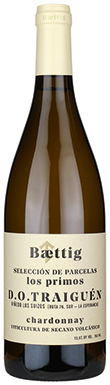

Francisco Baettig's new wines are taking Chilean Chardonnay and Pinot to a new level. Subtle aromatics lead into a sumptuous yet tense, ageworthy palate profile....
2018
Vinos Baettig

La Ronciere, Licantén Idahue Estate Malbec, Curicó Valley, Chile, 2017
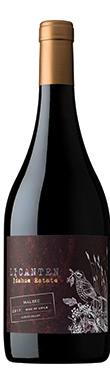
The Idahue estate is a special place, carved out of rugged hillsides in Curicò's coastal hills. The Pacific Ocean influence tempers the climate, making for...
2017
La Ronciere
Lapostolle, VIGNO Carignan, Maule Valley, Chile, 2018
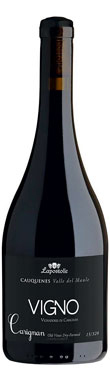
The challenge with old-vine Chilean Carignan is prioritising elegance over power. Yet winemaker Andrea Leon has worked her customary magic on this beautifully perfumed, juicy,...
2018
Lapostolle
Carmen, DO Matorral Chileno Mezcla Tinta, Maule Valley, Chile, 2019
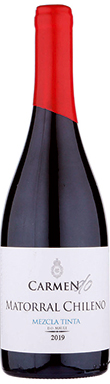
Emily Faulconer is doing brilliant things at Carmen. This is an arresting, vivid blend of Carignan, Grenache and País from old vines in the Melozal...
2019
Carmen
Carter Mollenhauer, VIGNO Carignan, Maule Valley, Chile, 2018
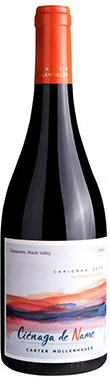
Edgard Carter and Karine Mollenhauer are married winemakers who launched their eponymous operation in 2014. The accent is very much on winemaking in a natural,...
2018
Carter Mollenhauer
De Martino, Las Olvidadas, Itata Valley, Chile, 2018
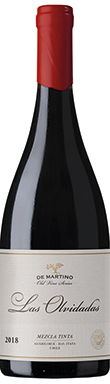
De Martino has been making brilliant wines in Itata for some time now but this is perhaps the finest wine it's produced to date in...
2018
De Martino
Garage Wine Co, Isidore Vineyard Semillon Lot #F1, Maule Valley, Chile, 2018
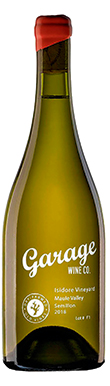
Semillon has been seriously under-rated in Chile over the years but now we're belatedly seeing a renaissance as producers learn to prize and nurture what...
2018
Garage Wine Co
Viña Marty, Goutte d'Argent Chardonnay, Leyda Valley, San Antonio, Chile, 2019
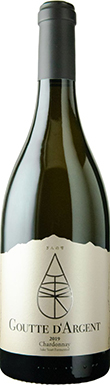
The reason for using sake yeast is to enable a very cold and long fermentation, with protracted lees contact, to give the wine subtle aromas...
2019
Viña Marty
Casa Marín, Cartagena Coastal Red, Lo Abarca, San Antonio, Chile, 2017
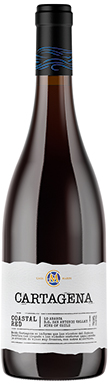
If you're planting one of the coolest, most extreme vineyard sites in coastal Chile, you wouldn't automatically think of Grenache and Syrah. But then Mariluz...
2017
Casa Marín
San Pedro, Tayu 1865 Pinot Noir, Malleco Valley, Chile, 2019
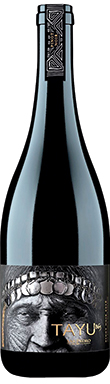
Attractive nose displaying graceful aromas of raspberry, cranberry, liquorice, ginger, mint and chocolate. On the palate it is ripe and juicy with some savoury notes.
2019
San Pedro
Dagaz, Itatino Cinsault, Secano Interior, Maule Valley, Chile, 2019
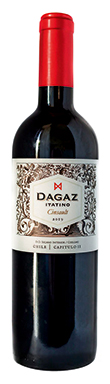
Former San Pedro head winemaker Marco Puyo makes wine under the Dagaz brand from both Colchagua and Itata. Cinsault is the focus in the latter,...
2019
DagazSecano Interior
Las Niñas, Amante Gran Reserva Cabernet Sauvignon-Merlot, Colchagua Valley, Chile, 2017
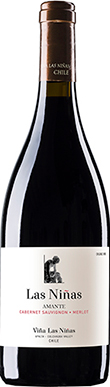
Forget the ongoing ownership issues – Las Niñas has never made better wines than now. Winemaker Eugenio Lira is trying to be different: 'Wines from...
2017
Las Niñas
