
Cornell Vineyards: producer profile
After more than a decade of experimentation, planting and zeroing in on their distinct Sonoma style, Henry and Vanessa Cornell released their first commercial wine in 2013. Today, their classically styled Spring Mountain Cabernets are firmly ensconced in California's top tier. Jonathan Cristaldi meets the Cornell Vineyards team and tastes a vertical of all the wines released to date.
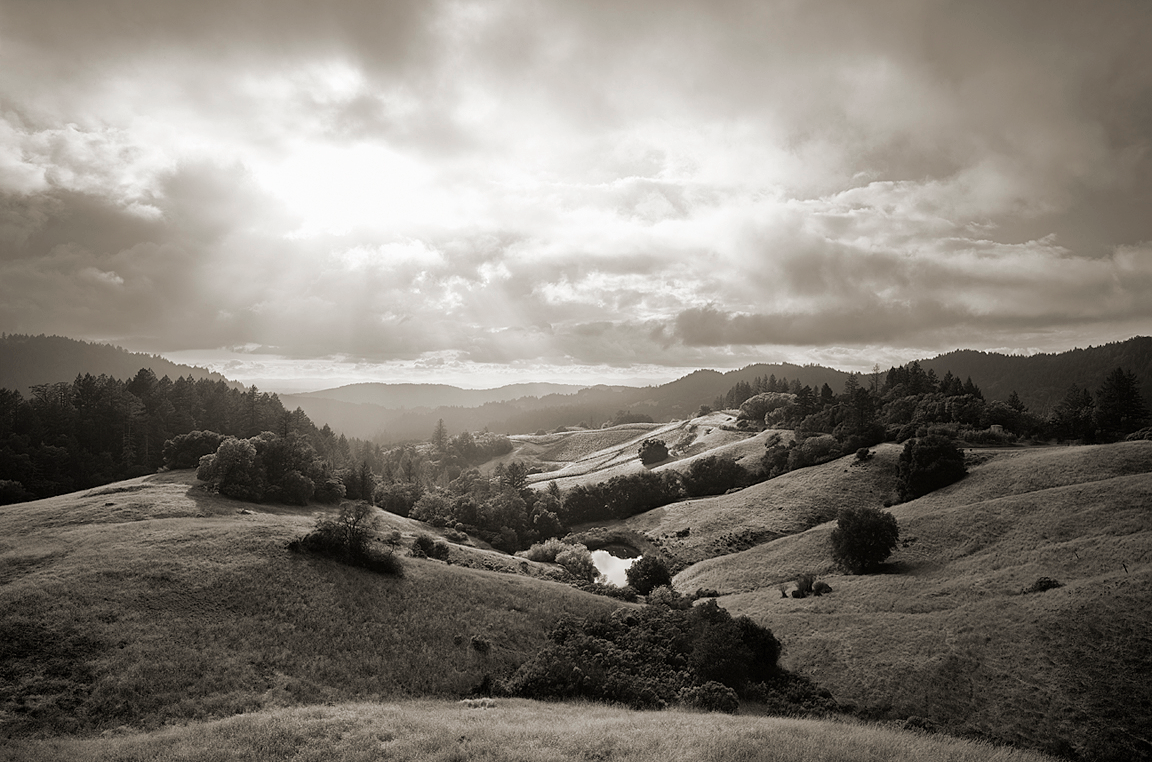
On the western flank of Spring Mountain, on the Sonoma County side, amid the rugged terrain of the Mayacamas range sits a 97-hectare ranch. Vineyards were first cultivated here in the 1850s, then torn out in the 1920s during Prohibition.
The site lay fallow for 80 years, until Henry Cornell purchased it in 2000 and established Cornell Vineyards.
Originally, the ranch comprised 46.5ha of varying slopes and aspects in Sonoma’s sub-AVA of Fountaingrove District but had no vineyards to speak of. It was bookended, however, by Fisher Vineyards and Pride Mountain Vineyards, and is in the same neighbourhood as Terra Valentine and Immortal.
Scroll down for tasting notes and scores of a full vertical of Cornell Vineyards wines
Keen to have some vines of his own, Cornell hired a local winemaker and viticulturist to plant Cabernet, Merlot, Malbec, Cabernet Franc and Petit Verdot. He planted about 4ha in 2001, then another 4ha in 2003.
Meanwhile, Cornell added another 50.5ha of neighbouring land parcels and renovated six homes on the ranch, including one for his own family. As of 2015, he had moved a full-time vineyard crew, along with their families, into the other five.
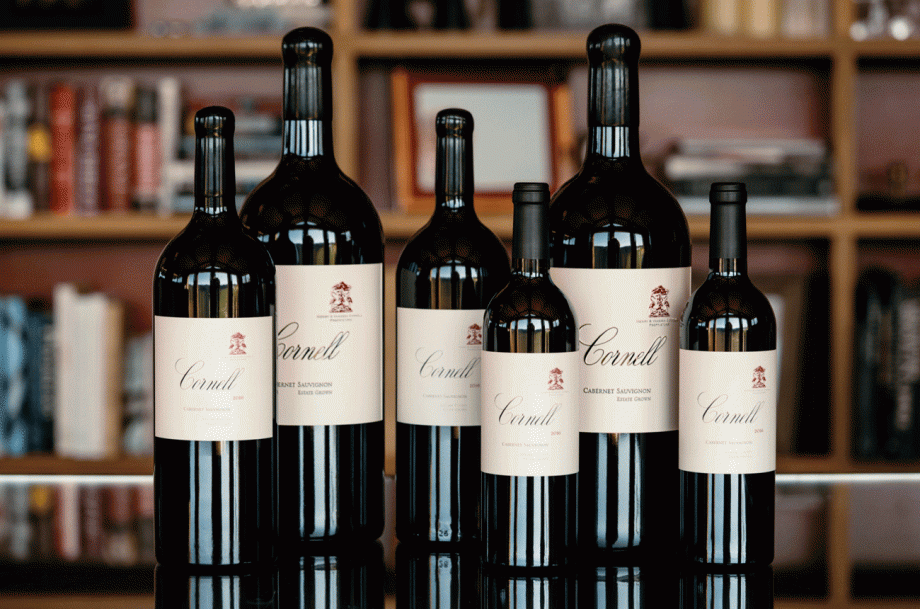
Cornell Vineyards produces a flagship Cabernet ($185), a second wine called Courtship ($85), and a Chardonnay ($75). The wines are currently produced at Arkenstone on Howell Mountain, and most are sold through a mailing list, with some wine in the US wholesale market – mostly in high-end bars and restaurants. The total production is less than 2,000 cases.
The journey from vine to bottle has been an unusually long one for a California winery. After 21 years of ownership, Henry and his wife Vanessa Cornell – longtime New Yorkers with backgrounds in finance and wellness – have only released six commercial vintages, starting with the 2013.
From 2001 to 2012 they made wine but didn’t release any. ‘We were experimenting,’ explains Cornell. ‘And to be honest, we didn’t love the wine back then.
‘All the farming and winemaking needed to be rebooted, which is what happened. Now I reach for my own wine, which to be honest, I did not do in our first decade.’
Replanting and rebooting
In 2011, the reboot began with an introduction to Françoise Peschon. Peschon had apprenticed at Château Haut-Brion in Bordeaux and later worked at Stag’s Leap Wine Cellars, Viader, Vine Hill Ranch, Kelly Fleming Wines and Araujo Estate. She currently works at Drinkward Peschon, Matt Morris, Heimark, Almacerro and Accendo.
Peschon met the Cornells in November 2011. Driving up the road to the property, ‘all I could think of was, why?’ she recalls. ‘It seemed very Fitzcarraldo to me,’ she added, referencing the 1982 film about an eccentric dreamer wanting to build an opera house in the Peruvian jungle.
The Cornells felt Peschon could tame the rich, ripe style of their early vintages. But she felt their vineyard was the issue. ‘There were some blocks that had viruses, were poorly planted with row directions that didn’t make sense, and low yields,’ recalls Peschon. She suggested a full replant; the Cornells began almost immediately.
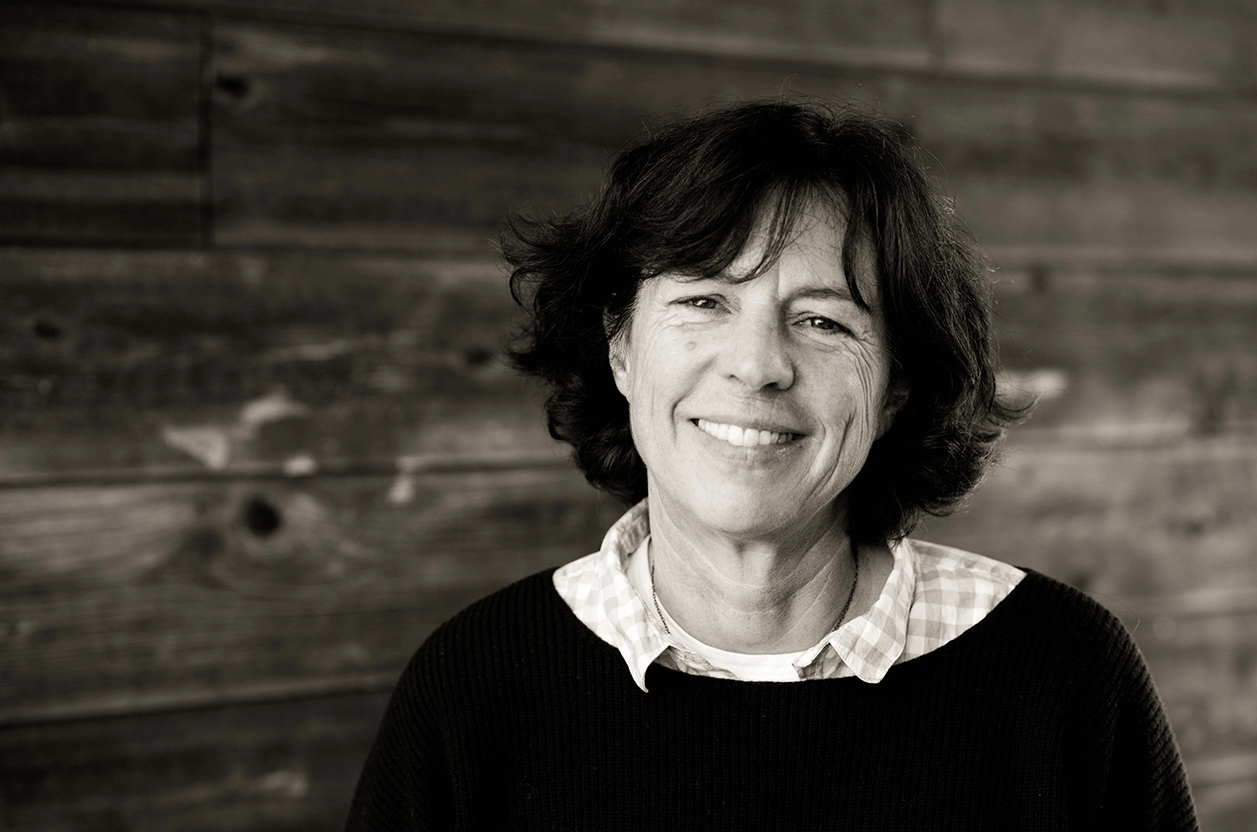
By 2013, Peschon had officially joined Cornell Vineyards as consultant winemaker, bringing Graham Wehmeier along as winemaker. ‘It has had its fair share of challenges, but the reward is evident,’ she says. ‘The wines reflect the environment. And being mountain fruit, the challenge has always been to rein in those rustic tannins and make something elegant and kind of mystical.’
Wehmeier left in 2017 and the following year Peschon recruited Elizabeth Tangney to oversee farming and winemaking. Today Tangney – formerly of Saint Helena Winery – is director of viticulture and winemaking, and Peschon is consultant winemaker. Their combined efforts have seen the Cornell Vineyards’ Cabernet style come into focus.
The wines are longer ripe and rich but linear. They centre around fine-grained, ageworthy mountain tannins, gentle but firm acidity and layers of refined dark berry flavours interlaced by deep, savoury earthy notes.
A common passion
Raised by his mother Rose, Henry Cornell grew up in a two-room apartment in the Bronx in New York City, and recalls wine always present at Sunday dinners: ‘It was usually Mateus rosé because that’s what mother could afford.’ When Cornell began practicing law at Davis-Polk, he traded up. The first bottle that really ignited the wine spark was a 1966 Cos d’Estournel.
Cornell spent 30 years at Goldman Sachs (mostly in Asia) rising to vice-chairman of its merchant banking division. In 2013 he founded Cornell Capital, and today is the acting senior partner. But it was in 2000, while at Goldman, that he first met his future wife.
Vanessa Hoermann was born in Egypt to a Chinese Malaysian mother and German father who worked at the Nile Hilton. He had an obsession for first-growth Bordeaux and would challenge his teenage daughter to give her impression of those wines. When she met Cornell (she was 23, he was 44) they immediately bonded over their shared passion for fine wine.
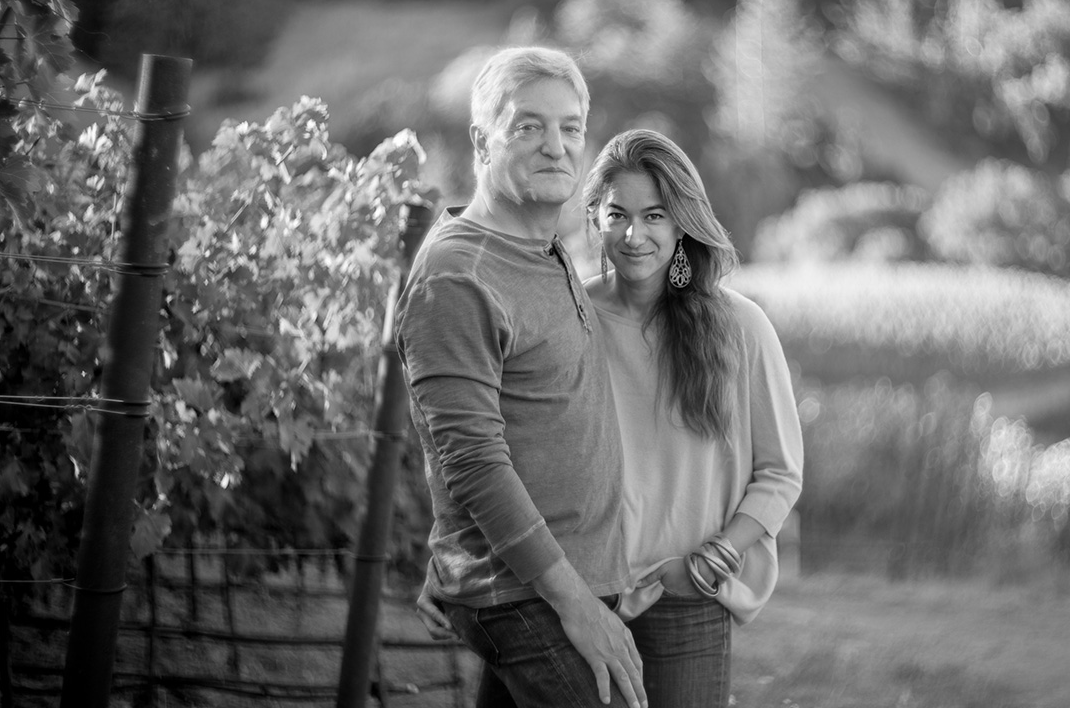
Between work, travel and their philanthropic activities (they support a range of charities) the Cornells don’t have much downtime. Especially when also raising five children aged eight to 15.
But when they do, they let loose. On Spring Mountain, Cornell careens around the property on an all-terrain quad bike, handling it like a family minivan in Manhattan rush hour traffic.
And it’s in this relaxed environment he’ll offer up some stories. As a boy, he says he would skip school in the hopes of obtaining an autograph from New York Yankees all-star Mickey Mantle. As an adult, he got to meet and spend time with with legendary Yankees owner George Steinbrenner – ‘Mr Steinbrenner’– as Cornell deferentially refers to the late businessman.
The Glass Fire
On my first visit to the estate, Cornell pulled the quad bike to an abrupt stop under an oak tree, then reenacted the day in 2005 when, underneath its branches, he asked Vanessa to marry him. Their love for each other and the land is intertwined. Which made the phone call from Tangney in autumn 2020 one that will forever weigh heavy in their hearts.
Henry and Vanessa Cornell were at their Manhattan home on 27 September 2020 when the Glass Fire erupted. Tangney was the first to the property that afternoon and called them immediately.
When the Cornells came out to survey the damage, it was gut-wrenching. Three of the six homes on the ranch, including their residence, along with half of the vineyard had burned.
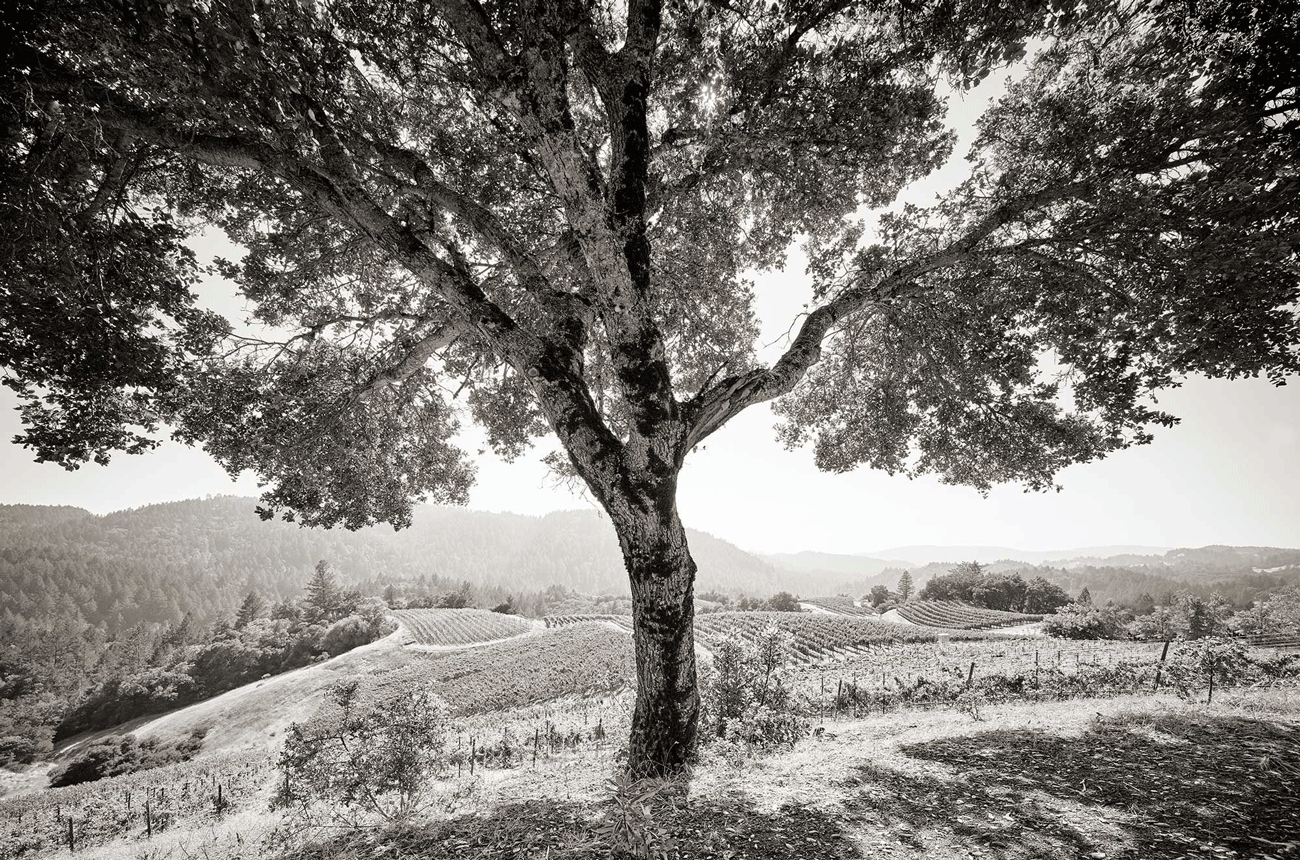
Miraculously, the oak tree under which Henry had proposed was still standing. ‘I had an abnormally large emotional reaction to that,’ recalls Vanessa. ‘It survived; it was symbolic.’
‘Whether it’s fire, hail, locusts or rain, this property is part of our family history now. So we don’t give up easily,’ says Henry. ‘The neighbourhood has been particularly damaged, but the core of the vineyard actually acted as a fire break. We were hit but did not succumb.’
Within a few weeks, work was being done around the clock to rehabilitate the land. Felled trees were being helmed into lumber and used to rebuild the lost structures. New vines are now in the ground, and life goes on.
Cornell Vineyards: looking forward
From the Cornell property, the Pacific Ocean is about 50km as the crow flies, and its western exposure provides a direct maritime influence. By early evening, temperatures fall up to 6°C, the wind picks up and the vines shut down, leading to a longer growing season.
Vines rooted in sandy, loam and volcanic soils from 426m to 579m in elevation require a lot of micro-farming, says Tangney. The estate is at the fog line, typically bathed in many hours of sunlight but not at the expense of heat, ‘which allows us to harvest at lower Brix [potential alcohol] levels to achieve more restraint’, explains Peschon. Farming has been certified organic since 2014, and grapes are harvested at optimal ripeness by hand.
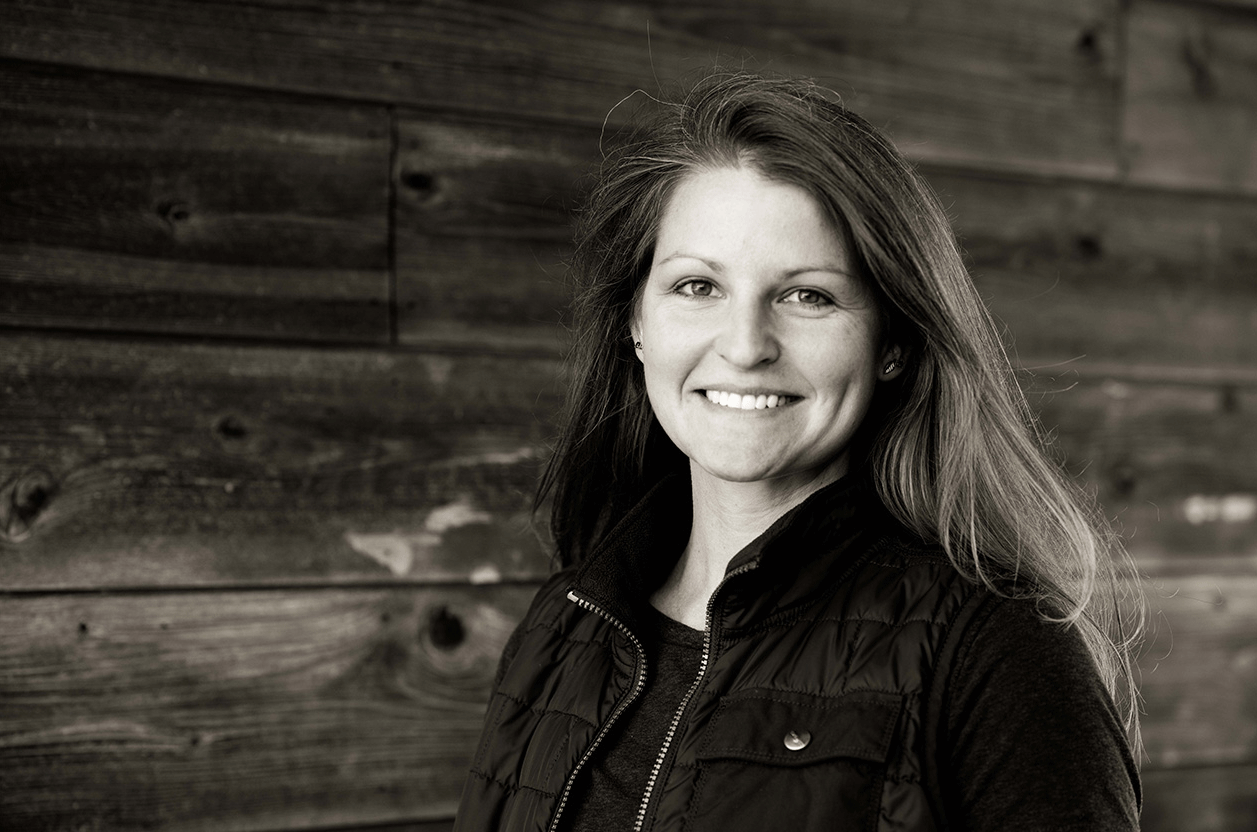
The vineyard crews are slowly returning, which ‘has brought life and vibrancy back since the fires’, says Tangney. Bees are aiding in pollination, and chicken and sheep will soon roam the property again, naturally fertilising in their wake.
‘It’s about creating a space that works with nature, rather than trying to eliminate all these variables and just farm grapes,’ says Tangney. ‘We’re inviting everything in so that everything can flourish.’
The fire may have altered life at Cornell Vineyards temporarily, but it hasn’t slowed any ambitions. With all the necessary permits in place, the Cornells are wasting no time breaking ground on 929sqm of cellars and a 464sqm winery.
They want it all completed by the spring of 2022. Like the indomitable spirit of Fitzcarraldo, If anyone can, they can.
Cornell Vineyards: a complete vertical, from 2013 to 2018
Related content
Duckhorn Portfolio: the billion-dollar empire
California Pinot Noir: panel tasting results
California family farming: succession and progression
Cornell Vineyards, Chardonnay, Sonoma County, California, USA, 2019

Only the second release of this 100% Chardonnay. Though proprietors Henry and Vanessa Cornell have fashioned their estate after a Bordeaux model, they realise their...
2019
Cornell VineyardsSonoma County

Cornell Vineyards, Cabernet Sauvignon, Sonoma County, California, USA, 2018
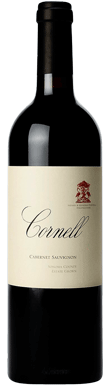
With this vintage, the sixth release, Françoise Peschon is now consultant winemaker. She first met Henry and Vanessa Cornell in 2011 and officially joined them...
2018
Cornell VineyardsSonoma County
Cornell Vineyards, Cabernet Sauvignon, Sonoma County, California, USA, 2017
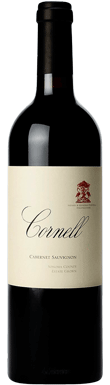
<p>Consultant winemaker Françoise Peschon had all the grapes in the cellar by 8 October, just before the Atlas Peak fire ignited that same day on...
2017
Cornell VineyardsSonoma County
Cornell Vineyards, Cabernet Sauvignon, Sonoma County, California, USA, 2016
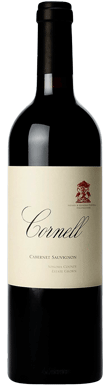
After four years of drought, winter rains replenished the vines and the growing season was mild, with many days of refreshingly cool Pacific breezes. Here...
2016
Cornell VineyardsSonoma County
Cornell Vineyards, Cabernet Sauvignon, Sonoma County, California, USA, 2015
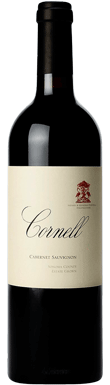
Powerful oak leads the way, but this 75% Cabernet Sauvignon blended with 7% Petit Verdot, 7% Merlot, and 11% Cabernet Franc gracefully opens to reveal...
2015
Cornell VineyardsSonoma County
Cornell Vineyards, Cabernet Sauvignon, Sonoma County, California, USA, 2014
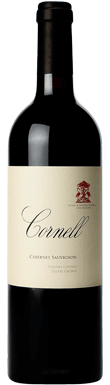
<p>In this second release of Cornell’s flagship wine, consultant winemaker Françoise Peschon blended 87% Cabernet Sauvignon with 10% Merlot and 3% Cabernet Franc, and aged...
2014
Cornell VineyardsSonoma County
Cornell Vineyards, Cabernet Sauvignon, Sonoma County, California, USA, 2013
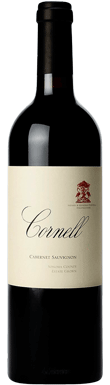
<p>After experimenting for nine vintages, Henry and Vanessa Cornell decided their 49ha estate on the western flank of Spring Mountain in Sonoma was ready for...
2013
Cornell VineyardsSonoma County
Cornell Vineyards, Courtship, Sonoma County, California, USA, 2018
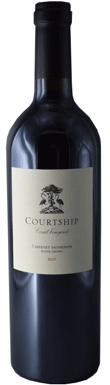
This second release of Cornell's 'entry-level' label offers beguiling aromas of graphite, cassis and blackberry, along with redcurrant, volcanic minerals and dark chocolate. The near-perfect...
2018
Cornell VineyardsSonoma County
Cornell Vineyards, Courtship, Sonoma County, California, USA, 2017
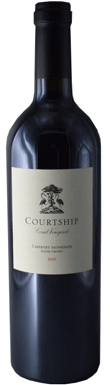
The second label in Cornell Vineyards portfolio, this inaugural release of just 313 cases was made by Elizabeth Tangney and consultant winemaker Françoise Peschon. It...
2017
Cornell VineyardsSonoma County
