
Damilano Raviole Cru Grinzane Cavour
The Raviole cru is situated in the Grinzane Cavour commune of Barolo, which is dominated by its medieval castle.
(Image credit: Peter Adams Photography Ltd / Alamy Stock Photo)

The discovery of a ‘new’ Barolo cru released for the first time is great news for lovers of Nebbiolo.

Raviole is located within the Grinzane Cavour village at the northern end of the appellation, and was formerly approved by the local consorzio as one of Barolo’s many Menzione Geografica Aggiuntiva (MGA) in 2010.

Wine from Raviole had never been bottled as an individual vineyard expression before Damilano released their 2015 vintage on 13 June this year in Milan – although historically, Bruna Grimaldi produced her Barolo Camilla with grapes selected from Raviole, but without any official recognition.


Scroll down for Aldo’s Damilano Raviole tasting note, plus the estate’s other 2015 Barolos


According to cartographer Alessandro Masnaghetti’s seminal work in his two books, another small winery, La Carlina, will also release a Barolo Raviole, but for now, Damilano is the sole producer of the cru.

Damilano: A brief history

The history of the Damilano family dates back to 1890, when Giuseppe Borgogno started making wine in Barolo. It wasn’t until the following generation, though, that Giacomo Damilano, the founder’s son-in-law, gave the current name to the winery.

Since 1997, the family business has been run by Guido, Mario, and Paolo Damilano, Giacomo’s three nephews. In 2008, they bought 1.3 hectares in Raviole for ‘just’ €600,000 per hectare.

‘Today you would need at least €5 million to buy one hectare in Cannubi,’ Paolo Damilano states, ‘yet prices are most likely not completely aligned with the real value.’

Last year, Damilano invested in an additional 20 hectares in Casorzo, Asti, from the Gancia family, increasing their overall holdings to 40 hectares – including some rented sites. Of these, 10 hectares lie in the precious Cannubi zone. The winery’s annual production is currently 380,000 bottles.

Changing styles

Despite heavy concentration in the US market (50% of their business), the winery shifted in 2008 to a more classic style, negating new French barriques for more neutral – and untoasted – large oak casks.

The winemaking style today is still mostly traditional: wild yeasts are used for fermentation, with balanced extractions (extended to 30-60 days of maceration after fermentation in the case of Cannubi) and ageing in large oak.

Given these uniform standards, understanding the differences between Cerequio, Brunate, Raviole and Cannubi is much easier. Revealing the new cru of Raviole will not only be of interest to Barolo enthusiasts, but also to Nebbiolo beginners.

The Raviole cru

Raviole is situated on Sant’Agata marl, which also dominates the soil composition of the ‘Tortonian West’, comprising the communes of Barolo and La Morra. The wine produced here is less brick in colour and less austere, with a leafy lightness and plenty of fruit.

Alessandro Bonelli, Damilano’s winemaker, explains that this new Raviole bottling ‘comes from a younger alluvial soil of a southwest exposition, being intensely fruit-scented and, despite typical tannic structure for ageing, is more approachable.’

Yes, enthusiasts will probably continue to fight for Cannubi, Damilano’s most esteemed wine, but Raviole is a good example of the constantly improving knowledge regarding the Grinzane Cavour village, not to mention a delightful new option for those preferring more accessible, easy drinking styles of Barolo, with enough elegance to enjoy without the need for food.


Damilano’s Raviole cru and other 2015s:


You may also like:

Jefford: Secrets of the Quilt

Barolo 2015: Vintage report and 89 wines rated

Top Barolo 2008 wines: Panel tasting results

Damilano, Raviole, Barolo, Grinzane Cavour, Piedmont, Italy, 2015

My wines
Locked score

The first release since this cru was approved as an MGA within the Grinzane Cavour village almost a decade ago, this wine is sourced from...

2015

PiedmontItaly

DamilanoBarolo

Decanter Premium logo

Join Decanter Premium to unlock all our wines tastings and notes

Join Now

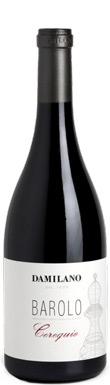
Damilano, Cerequio, Barolo, La Morra, Piedmont, Italy, 2015
My wines
Locked score

Damilano produces just one 30hl oak barrel of Cerequio. Rightly considered quite feminine with its typical leafy lightness, in this warm and generous 2015 vintage...

2015

PiedmontItaly

DamilanoBarolo

Decanter Premium logo

Join Decanter Premium to unlock all our wines tastings and notes

Join Now

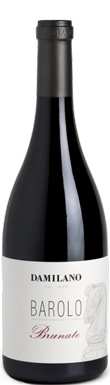
Damilano, Brunate, Barolo, La Morra, Piedmont, Italy, 2015
My wines
Locked score

Fewer than 3,000 bottles are produced of this cru in La Morra. Here, Barolo is less brick in colour and less austere compared to the...

2015

PiedmontItaly

DamilanoBarolo

Decanter Premium logo

Join Decanter Premium to unlock all our wines tastings and notes

Join Now

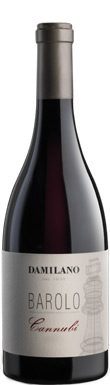
Damilano, Cannubi, Barolo, Barolo, Piedmont, Italy, 2015
My wines
Locked score

Produced since 1945 by the winery, Cannubi is one the best crus from the village of Barolo. It tends to be more approachable and elegant...

2015

PiedmontItaly

DamilanoBarolo

Decanter Premium logo

Join Decanter Premium to unlock all our wines tastings and notes

Join Now

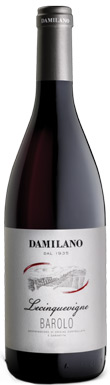
Damilano, Lecinquevigne, Barolo, Piedmont, Italy, 2015
My wines
Locked score

From five different vineyards within four villages (Barolo, Grinzane, Monforte and Novello), Le Cinque Vigne perfectly represents the tradition in Barolo of focussing on blends...

2015

PiedmontItaly

DamilanoBarolo

Decanter Premium logo

Join Decanter Premium to unlock all our wines tastings and notes

Join Now
Aldo Fiordelli
Decanter Magazine, Italian Expert and DWWA Judge

Aldo Fiordelli is an Italian wine critic, journalist and wine writer.  He has published four books about food, wine and art and is a regular Decanter contributor.

In Italy he is an editorial board member of L’Espresso restaurant and wine guide (one of Italy’s most prominent) since 2004.  He also writes for Corriere della sera in Florence, as well as Civiltà del Bere (Italy’s oldest Italian wine magazine).

A certified sommelier since 2003, he is currently a 2nd stage student at the Institute of the Masters of Wine.

In 2017 he was named Chevalier de l’Ordre des Coteaux de Champagne.

Aldo joined DWWA for the first time as a judge in 2019.