
Decanter at Home masterclass: Nine expressions of Barolo
Michaela Morris reports on a special Decanter at Home masterclass focusing on nine top Barolo wines from three producers; GD Vajra, Ceretto and Oddero across three decades.


The Barolo Masterclass in the first Decanter at Home event was quick to sell out. Delving into the diversity of the region through the lenses of producer, vintage and site, the tasting seminar featured three family-owned properties with deep roots in Barolo: GD Vajra, Aziende Vitivinicole Ceretto and Poderi e Cantina Oddero.
Scroll down to see the Barolo masterclass tasting notes and scores
For the masterclass, each estate selected three wines from vintages approachable now.
Flighted from oldest to youngest, the tasting spanned years ranging from the cool and unsettled 1995 to the hot and arid 2017, bridged by 1999, 2008, 2012 and 2015.
GD Vajra
Ambassador and spokesperson, Francesca Vaira kicked off by leading us through GD Vajra’s flagship Bricco delle Viole Barolo. The family owns five of this MGA’s 45 hectares and has evidence of farming the land as long ago as 1654. Atop of the village of Barolo, ‘it is constantly caressed by the breeze coming in the morning from the Alps and then from the Alba valley in the afternoon,’ as Francesca described. These winds help bring in healthy grapes, especially in rainy years like 2008.
The late-ripening site is Vajra’s last to be picked and benefits from significant temperature differences between day and night leading up to harvest, enhancing ‘above all the aromatics,’ she continued.
In this area of Barolo, the soil, known as laminated Sant’Agata Fossil Marl, dates back eight million years to the Tortonian era. These marine origin marls impact the wine’s backbone: ‘We tend to get these super-silky tannins, yet the structure shows impressive strength.’
Since the GD Vajra estate was established in 1972, the wines have been made by Francesca’s father Aldo, now with Francesca’s brother Giuseppe alongside. Little has changed in approach, which favours long macerations followed by long ageing in large casks. As such, the wines make for a patent study of vintage. Bricco delle Viole stands out for its consistency, performing well in both warm and cool years.
For drinking now, 2008 is in a truly beautiful place, while the 2012 is just starting to unfold.
As for 2017, it demonstrates the advantage of a cooler site in a hot year.
Ceretto
Moving onto the wines of Ceretto, CEO Federico Ceretto selected Brunate, one of the first crus purchased by his father Bruno and uncle Marcello, in 1970. He describes it as a very hot, south-facing site with well-draining white sandy soil that retains the heat.
Associated predominantly with the township of La Morra, Brunate ranges significantly in elevation. ‘It is a little bit like Burgundy, where the best is in the middle,’ asserts Federico. ‘The heart of our Brunate property is at about 350 metres.’
Starting with the 1995 vintage, the wines chart the evolution at Ceretto. At that time, Marcello was still making the wines. ‘The early 1990s were the last cold or fresh vintages,’ recalls Federico, explaining that grapes were harvested late and gave aggressively tannic wines that required long ageing in big casks as well as time in the bottle. At 26 years old, the 1995 has softened somewhat but still provides an evocative connection to the past.
Skipping to the 2008 vintage, Federico acknowledges a period of transition in the preceding years.
From 1996 to 2007, the estate embraced the trend of ageing in new French barriques. However, as the third generation took over with Federico’s cousin Alessandro assuming the role of winemaker, there was a return to large barrels. He also started experimenting with spontaneous fermentations and led the conversion to organic viticulture and biodynamic practices. The culmination of all this work is especially felt in the success of the estate’s 2017 Brunate. ‘From austerity we came to delicacy and finesse,’ states Federico.
Oddero
The closing flight showcased Poderi e Cantina Oddero. Despite being based in La Morra, proprietor and winemaker Maria Cristina Oddero took us on a tour beyond. Her father Giacomo and uncle Luigi started acquiring vineyards in top crus throughout the region in the late 1960s. ‘This changed the history of our family,’ says Maria Cristina. ‘We are lucky to grow different parcels and have different Barolo.’
The three wines, all made during Maria Cristina’s tenure, hailed from distinct sites. Commencing in the village of Castiglione Falletto with the 1999 Rocche di Castiglione, Oddero’s plot is east facing. ‘It is a sori del mattino – the sun of the morning,’ she says. While fully developed, it continues to demonstrate the elegance of the cru with austerity of the house style.
Pressing on 10 years to 2009, Vignarionda is undoubtedly Serralunga d’Alba’s most renowned MGA. ‘The microclimate is perfect,’ declares Maria Cristina of the site’s southerly exposure. ‘It is protected from spring frost and northwest winds.’
Since 2006, Oddero’s Vignarionda is bottled as a Riserva and released only after 10 years of ageing to mollify its relentless tannins. This was the wine of the tasting for me and is in its prime drinking window now.
Finally, in the township of Monforte d’Alba, Bussia is a large cru. Oddero’s bottling comes specifically from Vigna Mondoca, a 1.1ha plot solely owned by the family. 2015 is probably the most ‘forward’ vintage I have tried from the estate to date. But this is all relative – Oddero’s wines need time in both the cellar and in the glass.
These nine different expressions are indicative of countless more and prove yet again that Barolo warrants a significant spot in every connoisseur’s cellar.
Decanter at Home: Barolo masterclass tasting notes and scores
Related content
Decanter at Home: Vérité masterclass 2008 and 2018Decanter at Home: Château Angélus masterclass – a philosophy of excellenceDecanter at Home masterclass: Symington Family Estates – Pioneers of Portuguese winemaking
GD Vajra, Bricco delle Viole, Barolo, Barolo, Piedmont, Italy, 2008
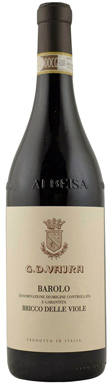

After a rainy growing season, cool yet sunny conditions led to harvest in late October. When I last tried this in 2017, it was just...
2008
GD VajraBarolo

GD Vajra, Bricco delle Viole, Barolo, Barolo, Piedmont, Italy, 2012
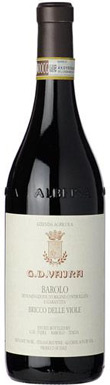
Following a rather warm summer, the autumn nights cooled off, slowing down ripening and allowing for development of complex flavours. This is just starting to...
2012
GD VajraBarolo
GD Vajra, Bricco delle Viole, Barolo, Barolo, Piedmont, Italy, 2017
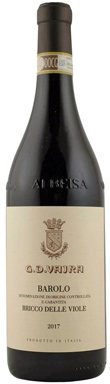
The backbone of Vajra’s Bricco delle Viole comes from a parcel established in 1949. As of 2017, it sees a new addition of plantings from...
2017
GD VajraBarolo
Ceretto, Brunate, Barolo, La Morra, Piedmont, Italy, 1995
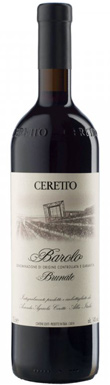
After a difficult start to the 1990s, Federico Ceretto considers 1995 to be very good. Early frost reduced quantities, allowing the smaller load of grapes...
1995
CerettoBarolo
Ceretto, Brunate, Barolo, La Morra, Piedmont, Italy, 2008
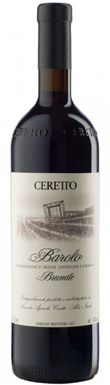
Third-generation winemaker, Alessandro Ceretto has been at the helm since 2003, converting the vineyards to organic viticulture, experimenting with spontaneous fermentations and easing up on...
2008
CerettoBarolo
Ceretto, Brunate, Barolo, La Morra, Piedmont, Italy, 2017
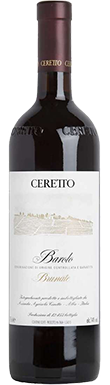
Despite significant challenges of heat and drought in 2017, Federico Ceretto reports that two-thirds of the estate's Brunate parcels reached satisfactory phenolic ripeness. These were...
2017
CerettoBarolo
Oddero, Rocche di Castiglione, Barolo, Castiglione Falletto, Piedmont, Italy, 1999
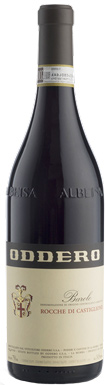
Oddero’s first foray outside the township of La Morra, the family’s 0.68-hectare parcel in Rocche di Castiglione - on sandy soil rich in calcareous and...
1999
OdderoBarolo
Oddero, Vignarionda Riserva, Barolo, Serralunga d’Alba, Piedmont, Italy, 2009
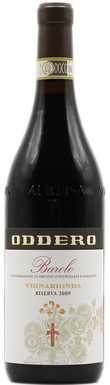
Oddero owns a precious 0.80 hectares at the pinnacle of this famed cru: 360 metres above sea level with a full south exposure. The 2009...
2009
OdderoBarolo
Oddero, Bussia Vigna Mondoca Riserva, Barolo Bussia, Monforte d’Alba, Piedmont, Italy, 2015
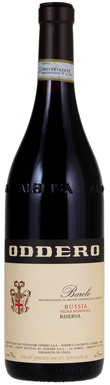
The 2015 growing season was very warm but not as hot as 2009, according to Maria Cristina Oddero. Winter snow and spring rain helped curb...
2015
OdderoBarolo Bussia
