
Decanter buyer’s guide: Australian Chardonnay
Australia helped to reshape the wine world with its ‘liquid gold’ styles of the 1980s – but tastes and winemaking trends change. Sarah Ahmed takes an in-depth look at how the country’s headline white grape has developed over the decades and selects 20 of the very best Chardonnays from wine regions around Australia...


Appearances can be deceptive. by reputation, Australian winemakers are laid back, but let me bust the first of a cork hatful of stereotypes. I have yet to encounter their ilk when it comes to resilience and drive. How else to explain Australian Chardonnay’s enduring appeal but a willingness to leave behind yesterday’s practices, embracing new regions, techniques, clones and closures?
Scroll down for Sarah Ahmed’s top 20 Australian Chardonnays
The road to success has had its twists and turns since Australia’s first Chardonnays trickled onto the market in the early 1970s. back then, the planting area was so insignificant it was not recorded in official statistics. Convinced that this newfangled grape ‘would always be perceived by the public as a fad wine’, in 1983, Murray Tyrrell (who created one of Australia’s first Chardonnays, Tyrrell’s Vat 47, in 1971) pronounced that Chardonnay would never be a commercial success. How very wrong he was.
A flexible friend
By 1990, Chardonnay had become (and remains) Australia’s most-planted white grape. Unfettered by ‘Old World’ regulation, it is found at every point of Australia’s winemaking compass. From Margaret River in the west, to the Hunter Valley 4,000km away in the east, and from Queensland’s Granite belt in the north, to Australia’s southernmost state Tasmania, 2,000km away. Unsurprisingly, vintage differences can be considerable, especially between Western Australia and the southeastern states, while the relatively humid Hunter Valley marches to the beat of its own (weather) drum. Elevation is influential too, with some coastal vineyards just above sea level while, inland, hillier, continental vineyards rise to 1,000m above sea level.
Australia’s large, flat, warm and dry irrigation areas – the Riverland, Murray Darling-swan Hill and Riverina – account for some 80% of Chardonnay production. At the forefront of wine industry technology, these innovative regions are the bedrock of value- driven, super-consistent volume brands labelled south Eastern Australia Chardonnay.
Of greater interest to Decanter readers are those cool to temperate regions producing terroir-driven (as opposed to technology- driven) Chardonnays that can rival the world’s best for complexity, structure and longevity. Australian terroir is under the microscope like never before and winemakers are having a ball teasing out differences between regions, sub-regions, vineyards and blocks.
Still, being the so-called ‘winemakers’ grape’, Chardonnay’s malleability makes it difficult to generalise about style. Body is influenced by picking date (as is fruit overtness), plus the use of wild ferments, solids, lees-stirring and malolactic fermentation (which also impart texture and savouriness). Type and age of oak and time in barrel bring the spice and toast racks into play, as well as building structure. So how best to navigate this dynamic, wide-ranging category. How has it changed? Where are Australia’s go-to Chardonnay regions? Which players excel, what can you expect from them – and what’s next?
Australian Chardonnay: the facts
Area planted: 21,442ha – 16% of total Australian plantings, 44% of white varieties (ABS National Vineyard Survey 2015)
Production: 407,940 tonnes – 22.7% of total Australian crush, 47.3% of white crush (National Vintage Survey 2018)
Top five regions: (Percentage of national Chardonnay crush) Riverland 35%, Murray Darling-Swan Hill 27%, Riverina 19%, Padthaway 2%, Adelaide Hills 2%
Leading premium Chardonnay regions: (Percentage of total regional crush 2018) Yarra Valley 34.4% Mornington Peninsula 28.9% Tasmania 26.8% Adelaide Hills 25.7% Orange 19% Great Southern 16.5% Margaret River 14.9% Hunter Valley 25.6%
Fallen icon
The ignominious fate of one of Australia’s most famous Chardonnay vineyards tells you all you need to know about the reinvention of Australian Chardonnay. Revered in the 1980s and 1990s, Roxburgh Chardonnay – Rosemount’s corpulent, highly accessible, prestige bottling from the Upper Hunter Valley – boldly went where no other Chardonnay had gone before. Pushing the flavour boundaries of rich, ripe fruit, new oak and buttery malolactic fermentation to the limit, it was the antithesis of Burgundy – almost a caricature of the sunshine-in-a-glass style that catapulted Australian Chardonnay onto the world stage.
For Andrew Caillard MW, who co-founded Langton’s auction house and Langton’s Classification of Australian wine (the renowned form guide), ‘the wines aged too quickly’. He says: ‘While Rosemount Roxburgh performed reasonably well on the primary markets, it did less well at auction. By 2000, when I joined the wine trade, fine wine customers especially started to tire of forward, “full fat” styles of Australian Chardonnay.’ The ABC (Anything But Chardonnay) backlash soon followed and, in 2009, the Roxburgh vineyard, once the jewel in both Rosemount’s and the Upper Hunter Valley’s Chardonnay crown, was sold to BHP, the world’s second- largest mining company, to serve as a buffer zone for Mount Arthur North coal mine.
From torpid to trim
Although Roxburgh fell from grace, other pioneering Australian Chardonnays have stood the test of time, including Tyrrell’s Vat 47 from the Lower Hunter Valley, Giaconda from Beechworth and Margaret River’s Leeuwin Estate Art Series (which enjoys crème de la crème ‘Heritage Five’ status in Langton’s Classification). These Australian classics’ proven track record for ageing is principally rooted in growing conditions which build structure and freshness. Afternoon sea breezes (and higher rainfall) explain why Chardonnays of the Lower Hunter – with a lower heat summation than the Upper Hunter – are less opulent. Surrounded by ocean on three sides, Margaret River enjoys enviably consistent, temperate conditions, while elevation (about 430m) and the low pH of Beechworth’s wines (which Giaconda’s Rick Kinzbrunner attributes to granite soils) accounts for this continental, inland region’s powerful but structured Chardonnays.
The ongoing success of iconic multi- regional Chardonnays like Penfolds Yattarna and Hardys’ Eileen Hardy reflects the biggest influence on contemporary Australian Chardonnay – the inexorable rise of cooler- climate regions. In the late 1990s, fruit sourcing for Eileen Hardy switched from Padthaway in South Australia’s Limestone Coast region (once regarded as cool) to the cooler Yarra Valley, Adelaide Hills, Tumbarumba and Tasmania. Speaking at a vertical tasting in 2016, chief winemaker Tom Newton explained: ‘We were making big, flavoursome wines, but you couldn’t drink more than a glass – so we started thinking about drinkability and it evolved into a cool[er]-climate Chardonnay.’
While sheer heft of ripe fruit and new oak provided the ballast for the stolid 1980s’ Eileen Hardys, to borrow from Red Bull, leavening cool-climate acidity (and reining back on oak) has given it wings – the natural, perfectly integrated backbone around which to build and extend layers of flavour and texture. For Newton, the shift to now ubiquitous, subtler shape-shifting Burgundian techniques (barrel ferments, natural yeast, lees ageing and batonnage) was ‘a natural progression’ of sourcing from cooler-climate regions since, ‘if you don’t build up texture and interest, you will make simple wines’.
At a crossroads
Invariably sealed under freshness-preserving screwcaps – the icing on the cake – today’s trimmer, tauter Chardonnays rarely yield to the torpor of old. Conversely, due to a double whammy of picking cooler-climate fruit earlier, pioneering examples were criticised for being too lean and pushing acid levels and the boundaries of flavour (un)ripeness the other way. In fairness, the speed of change did not help – drinking habits barely kept pace with developments, failing to recognise that these tightly coiled wines (which dialled back or eschewed techniques like batonnage and malolactic fermentation) benefited from bottle age. Take Ocean Eight’s Verve and Yabby Lake’s Block 1 Mornington Peninsula 2012 Chardonnays, respectively made by Mike Aylward and Tom Carson – two whip-crackers of early-picked styles. I tasted these complex, persistent wines last September, when Aylward observed: ‘It’s important to show how the wines are ageing – still young and in the zone of where you want to drink it.’
In the last decade, fermenting very turbid, high ‘solids’ juice (a reductive Burgundian technique, which ‘tightens the corset’ and produces sulphides) has, like wild ferments and lees ageing, enhanced savouriness and texture, specifically ‘struck match’ and funkier notes (lamb fat or, as one punter memorably put it, ‘a French rugby player’s sweaty sock’). Having been the darling of Australia’s wine show circuit (like new oak in the 1980s and 1990s), producers have become more circumspect about this technique. Still, as Margaret River winemaker Cliff Royle observes: ‘If sulphides are now a wine fault, then the greatest wines I’ve ever drunk are faulty – RIP Leflaive, Coche-Dury, Roulot…’ He makes Flametree’s flagship SRS, a compellingly aromatic, tightly wound Chardonnay with pronounced struck match.
Coming of age
Margaret River’s best-known funky example of this reductive style, Vasse Felix Heytesbury, is one of three new Chardonnay additions to the 2018 edition of Langton’s Classification.
Acknowledging the rise of ageworthy, prestige examples, the other two are Cullen’s Kevin John and Oakridge Estate’s 864 – a trio that highlights Australian Chardonnay’s growing stylistic diversity. Vanya Cullen makes her Margaret River Chardonnay in a classic style, showcasing her biodynamic vineyard’s intensely concentrated fruit. At Oakridge, Dave Bicknell’s range of single-vineyard Chardonnays articulates the cooler reaches of the (Upper) Yarra Valley, epitomising Australia’s tightly wound, flinty, early-picked style. Prioritising acid over grape sugars (where fruit is virtually a given in Australia’s intense sunlight), Oakridge’s winery team have truck licences to ensure grapes are picked at precisely the right moment since, says Bicknell: ‘Pick for floral notes [his goal] and you’ll get citrus flavours, pick for citrus flavours and you’ll get [sweeter] stone fruits.’
His fastidiousness underscores the devotion to craft which has seen Australian Chardonnay come of age within 50 years of the first releases. Fine-tuning of grape sourcing, harvest dates and winemaking techniques means, across price spectrum and region, Australia produces many well-made Chardonnays and balance largely prevails. But, to set the pulse racing, my best advice is to focus on those cool to temperate regions and producers who specialise in Chardonnay. And, where stylistic differences (terroir- and/or technique-driven) abound, do your homework about individual house style.
A matter of taste
Broadly speaking, temperate regions produce suppler, broader-shouldered Chardonnays with powerful fruit. Beechworth’s highly regarded Chardonnays, the best-known being Giaconda, are a case in point. Tempered by elevation, the continental climate produces wines with structure and girth. Plantings of Chardonnay remain small, but other names to watch out for include Sorrenberg, Savaterre and Brokenwood.
Contrastingly, since the first (1980) Leeuwin Estate Art Series Chardonnay revealed Margaret River’s world-class potential (it was top-scorer in a Decanter international blind tasting), the number of top-notch examples from this temperate, coastal region has mushroomed. The region led the way at a recent Western Australian Decanter panel tasting, with three wines rated Exceptional and four Outstanding.
Western Australia’s predominant Gin Gin clone is key to Margaret River’s classic fruit-driven but well focused, ageworthy style. Prone to poor fruit set, ‘hen and chicken’ (a mix of normal and small-sized) berries the clone imbues wines with high natural acidity and an al dente phenolic backbone. Depending on picking date and location (cooler southern regions such as Wallcliffe tend to produce more linear wines), expect tropical rock melon and pineapple at the riper end of the spectrum, which is usually the preserve of entry-level, broad appeal wines – though Xanadu’s lipsmacking, zesty house style makes for refreshing drinking across the range.
Premium wines range from cooler orchard fruits (pear and white peach) to zesty lime and firmer grapefruit, when earlier picked. For more savoury, mineral (struck match) styles like Flametree SRS, Royle explains: ‘I try harnessing the region’s natural fruit power and adding subtle elements to make the wine a little more savoury and drier, rather than powerful and sweet-fruited.’ Still, he adds: ‘I’ve never heard wine critics say, “Margaret River wines just lack a little fruit for my liking”.’
Also strong on supple (typically melon, fig, peach) fruit, Hunter Valley Chardonnays are differentiated by softer acid and signature cashew notes. Like other Australian classics, Tyrrell’s poised Vat 47 is picked a little earlier these days (for Kinzbrunner, as much a reflection of climate change as fashion) and the oak more restrained, while wild yeast and lees ageing impart textural interest. Of the new guard, Liz and Shaun Silkman fashion elegant, contemporary Chardonnays with delicate struck-match nuances under their eponymous and First Creek Reserve labels.
Being Australia’s only cool-climate state, most of Tasmania’s Chardonnay (68% in 2018) is vinified for sparkling wine and the island seems relatively insulated from recent mainland trends. A long growing season makes for wines with excellent varietal definition, fruit purity and intensity, with lively acidity. Wines from northern sub- regions (Tamar Valley and especially Pipers River) tend to be more aromatic and finer framed. The warmer, drier south (Derwent Valley, Coal River Valley) and east coast can produce weightier examples, with tensile acidity. Thrillingly, sites which have long been the source of ‘A-grade’ Chardonnay for Eileen Hardy (Tolpuddle) and Penfolds Yattarna (Derwent Estate) now produce among Tasmania’s best single-vineyard wines. In a similar vein, vigneron-owned estates are crafting wines of great detail and precision. Leading lights include Holyman (Tamar Valley), Sinapius (Pipers River), Stefano Lubiana (Derwent Valley), Pooley Estate (Coal River Valley) and Freycinet (East Coast).

Country-wide choice
Across the Bass Strait in Victoria, the Yarra Valley and Mornington Peninsula in Melbourne’s dress circle have driven Australia’s Chardonnay renaissance and are home to the country’s biggest boundary pushers of early picking and sulphides, so be aware of house style. Being intensely focused on Burgundian varieties, it is here that you find many specialists who produce fascinating ranges of single-site Chardonnays. Look for Oakridge, Giant Steps, Mac Forbes and Coldstream Hills in the Yarra Valley; and Ten Minutes by Tractor, Yabby Lake and Kooyong in Mornington Peninsula. Winemakers clamour over great sites like Willowlake in Gladysdale, Upper Yarra – Oakridge, Bird on a Wire and Goodman Wines showcase its structured Chardonnays brilliantly.
Broader differences can be found in both regions depending on elevation. More aromatic styles with fine acidity come from the Upper Yarra Valley and uphill in Mornington Peninsula, though the latter’s maritime climate wine tends to produce suppler fruit. Styles from lower sites in both regions tend to be either firm, mineral, citric earlier-picked styles (Ocean Eight in Mornington Peninsula or De Bortoli in the Yarra Valley) or more classic muscular wines, with concentrated stone fruit (Moorooduc in Mornington or Wantirna in the Yarra).
In the Adelaide Hills – South Australia’s flagship Chardonnay region – elevation produces wines with great fruit clarity, concentration and structure. Classic examples, such as Petaluma and Tapanappa’s Chardonnays from the Tiers vineyard in Piccadilly Valley, deliver muscular fruit, while new modern classics such as Shaw & Smith’s rapier-like Lenswood Chardonnay are finely honed. Shaw & Smith’s M3 Chardonnay has become much more savoury and textural, while retaining the Hills’ signature white peach fruit and citric backbone. Penfolds Reserve Bin A has pared back the struck match notes, but remains a classy example of the genre. Meanwhile, iconoclastic Basket Range producers such as Ochota Barrels and BK Wines push new boundaries with skin contact and unfined and unfiltered Chardonnays.
Elsewhere, there are some excellent, lesser known cool-climate Chardonnay outposts. Though Melbourne dress circle regions Geelong and Macedon Ranges have relatively few producers, their number includes among Australia’s best – By Farr and Lethbridge Estate (savoury, rich Geelong Chardonnays), as well as Bindi and Curly Flat (intense, well- structured Chardonnays from the higher reaches of the Macedon Ranges).
Across in the Great Southern region of Western Australia, some 300km due south of Margaret River, latitude and proximity to the chilly Southern Ocean guarantee Chardonnays with freshness. Singlefile, Castelli, Marchand & Burch and Harewood Estate are worth seeking out. In New South Wales, spine-tingling acidity comes courtesy of altitude in Tumbarumba (Eden Road leading the way) and Orange, where Rosemount Roxburgh’s creator Philip Shaw produces restrained wines from his vineyard which, rising to 900m, has a homoclime comparable to Burgundy.
Delving deeper
Despite the false dawn, Australian Chardonnay has bounced back stronger and better thanks to its winemakers’ spirit of openness and collaboration. Given the range of styles, I see little prospect of Australian Chardonnay becoming a caricature of itself again, whether that be the antithesis of Burgundy or wannabe Burgundy (even if Burgundian winemaking techniques and clones are now commonplace). Rather, for premium wines, individuality – especially site expression – is increasingly prized.
Acknowledging a watershed moment, Vanya Cullen reduced the number of international Chardonnays at the Cullen Wines’ 33rd International Chardonnay Tasting, focusing mostly on single-vineyard Margaret River Chardonnays. She reasons that much as Burgundy, in particular, was a lodestar in the past: ‘With time, Australia, particularly Margaret River, is doing very well, so it’s a shift towards acknowledging a story of evolution of our own place and delving deeper into that story.’
Australian Chardonnay: know your vintages
2018
All the hallmarks of an exceptional year for quality and production in Tasmania, Western Australia and Victoria’s leading Chardonnay regions. Temperatures warmer than average, but not extreme – outstanding fruit quality and structure. January and February were warmer and drier in South Australia and New South Wales; high quality in cooler, elevated sites.
2017
Intricate, intense, aromatic wines with racy acidity showcase the growing season’s cool start and mild summer. Best performing regions enjoyed a dry, warm end to the season and wines will be long-lived. Rain events impacted on flavour ripeness and concentration in Great Southern and Coonawarra.
2016
January rain followed by a cool February gave great fruit purity and definition in Margaret River. Elsewhere, warmer than average, dry conditions led to a very early, compressed vintage; but shorter hang times and advanced flavour ripeness preserved freshness. Punchy, well-structured Chardonnays; more savoury than 2015 or 2017. One of the driest Februarys recorded rescued the Hunter Valley; though wines lack the charisma of top years.
2015
Countrywide, a long, mild to warm growing season produced terrific fruit concentration and purity with beautifully integrated, balancing acidity. Charming but ageworthy, lithe wines. In the Hunter, rain at vintage meant selection was key; top wines are well-structured.
Sarah Ahmed is an awarded wine writer, educator and judge specialising in Portugal and Australia. She also publishes www.the winedetective.co.uk.
See Sarah Ahmed’s top 20 Australian Chardonnays
You may also like
Time to try cool-climate Australian Shiraz
Apsley Gorge: Brian Franklin’s Burgundian odyssey in Tasmania
Pewsey Vale: The original Eden Valley Riesling
Western Australian Chardonnay: panel tasting results
Tolpuddle Vineyard, Chardonnay, Coal River Valley, Tasmania, Australia, 2017
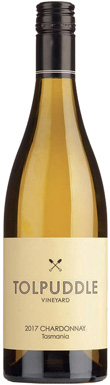

More sharply honed and clearly defined than its predecessors, this wine’s high notes of pithy grapefruit are underpinned by rich undertones of roasted cashew, which...
2017
Tolpuddle VineyardCoal River Valley

By Farr, GC Côte Vineyard Chardonnay, Geelong, Victoria, Australia, 2017
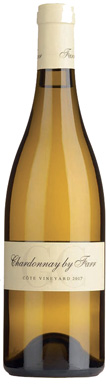
GC references founder Gary Charles Farr – but it could stand for grand cru! Vines planted on exposed slopes with loam, limestone, volcanic, clay and...
2017
By FarrGeelong
Shaw & Smith, Lenswood Vineyard Chardonnay, Adelaide Hills, South Australia, Australia, 2016
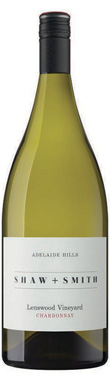
Located in the cool Lenswood sub-region, this vineyard, originally planted for fizz, produces a pale, precise Chardonnay. Gentle lees-stirring sheathes the rapier- like palate of...
2016
Shaw & SmithAdelaide Hills
Deep Woods, Reserve Chardonnay, Margaret River, Western Australia, Australia, 2017
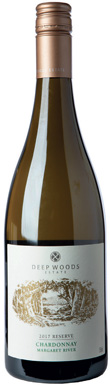
Located in the Yallingup Hills of Margaret River, this 32ha estate was established in 1987 and subsequently acquired by the Fogarty family in 2005. Chief...
2017
Deep WoodsMargaret River
Leeuwin Estate, Art Series Chardonnay, Margaret River, Western Australia, Australia, 2015
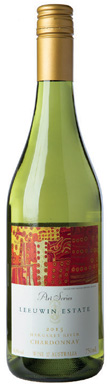
Potent primary fruit, perfume and poise are the hallmarks of this long-lived classic – though thanks to earlier picking, less new oak and no malolactic,...
2015
Leeuwin EstateMargaret River
Oakridge, Vineyard Series Willowlake Chardonnay, Yarra Valley, Victoria, Australia, 2017
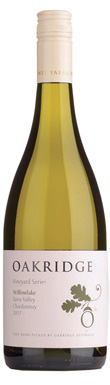
Sourced from one of the Upper Yarra’s oldest, most prestigious sites: the 300m Gladysdale vineyard. Whole-bunch pressed directly to French oak puncheons and naturally fermented,...
2017
OakridgeYarra Valley
Penfolds, Bin 144 Yattarna Chardonnay, Cross-Regional Blend, Australia, 2016
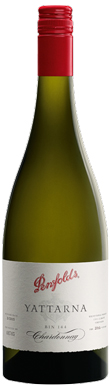
Penfolds’ white winemaker Kym Schroeter ranks among Australia’s top Chardonnay makers. This incisive Chardonnay – a multi-regional blend from Tasmania, Henty, Adelaide Hills and Tumbarumba...
2016
Penfolds
Singlefile, The Vivienne Chardonnay, Great Southern, Western Australia, Australia, 2016
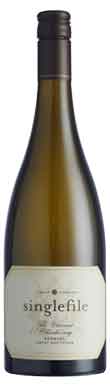
Named after co-founder Viv Snowden, this top cuvée is only made in exceptional years. The family’s late-ripening Denmark vineyard was harvested in three passes, making...
2016
SinglefileGreat Southern
Cullen, Kevin John Chardonnay, Margaret River, Western Australia, Australia, 2017
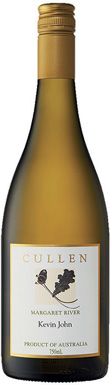
With cooler than average spring and summer temperatures, the harvest took place between 8 February and 6 March. This wine was naturally fermented (including malol)...
2017
CullenMargaret River
Hardys, Eileen Hardy Chardonnay, Victoria, Australia, 2016
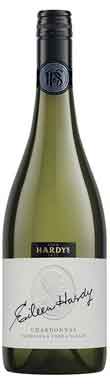
This beautifully tailored, cool climate, multi-regional blend is very complete already. Terrific flavour and body. Nougat, cashew, struck match and whetstone notes surround a powerful...
2016
Hardys
Stonier, KBS Vineyard Chardonnay, Mornington Peninsula, Victoria, Australia, 2016
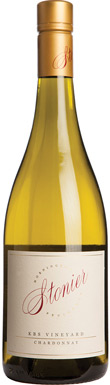
From the east-facing Merricks vineyard. Tightly wound, savoury style with lifted camomile and nutty, funky bacon fat and struck match. An exacting streak of acidity...
2016
StonierMornington Peninsula
Ten Minutes By Tractor, Wallis Chardonnay, Mornington Peninsula, Victoria, Australia, 2017
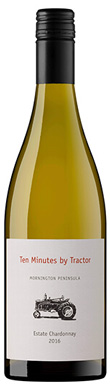
A lower (142m) site than sister cuvées Judd and McCutcheon produces greater flavour intensity and texture. Silky white peach and orchard fruit salad with matcha,...
2017
Ten Minutes By TractorMornington Peninsula
Windows Estate, Petit Lot Chardonnay, Margaret River, Western Australia, Australia, 2016
The Davies family’s flagship Chardonnay is a textural blend of 75% Gin Gin and 25% Dijon clone 95. Naturally fermented and aged in classy oak,...
2016
Windows EstateMargaret River
Bird On A Wire, Chardonnay, Yarra Valley, Victoria, Australia, 2015
A warmer year and Caroline Mooney’s preference for more flesh on the bones makes for a riper (fruit and acid) style with white peach, lime...
2015
Bird On A WireYarra Valley
First Creek, Winemaker’s Reserve Chardonnay, Hunter Valley, New South Wales, Australia, 2017
A contemporary Hunter Chardonnay, with tension and surprising levity. A touch of creamy lees and cashew gives seamless textural interest. Zippy acidity gives a long,...
2017
First CreekHunter Valley
Lethbridge, Allegra Chardonnay, Geelong, Victoria, Australia, 2010
Rebenberg vineyard (planted in 1968 on gravel and quartz) gives dynamic phenolic grip, with compelling zest and heft of citrus and stone fruit. Whole-bunch pressed,...
2010
LethbridgeGeelong
Sinapius, Home Vineyard Chardonnay, Pipers River, Tasmania, Australia, 2016
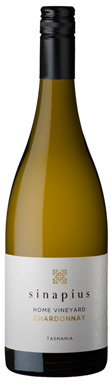
Younger high-density plantings produce small bunches with great intensity of flavour and structure. In cool Pipers Brook, it makes for one of Australia’s more Chablis-esque...
2016
SinapiusPipers River
Tyrrell’s, Vat 47 Chardonnay, Hunter Valley, New South Wales, Australia, 2015
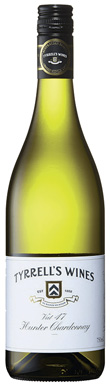
Typical Hunter character, melon and cashew; but, though muscular, its fruit weight and oak are dialled down and texture dialled up. Sleek, with frangipane, almond,...
2015
Tyrrell’sHunter Valley
Xanadu, Estate Chardonnay, Margaret River, Western Australia, Australia, 2017
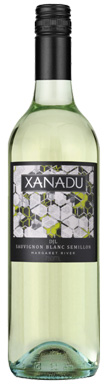
Glenn Goodall favours an energetic style and this packs a punch. Vibrant pink grapefruit, a core of green apple and pear; racy and intense with...
2017
XanaduMargaret River
Curly Flat, Macedon Ranges Chardonnay, Victoria, Australia, 2015
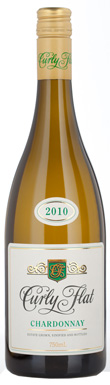
Former bankers Jenifer Kolkka and Phillip Moraghan founded Curly Flat in 1989, with Burgundy as the inspiration. Savoury sourdough and earth notes balance ripe lemon...
2015
Curly Flat
