
Discover Spain’s Off-Beat Grape Varieties
Spain has a wealth of native grapes to explore. David Williams highlights 10 varieties that are enjoying a renaissance at the hands of the country’s talented and enthusiastic winemakers.


Spain’s vineyard is vast. According to the International Organisation of Vine and Wine (OIV), the country has about one million hectares under vine, an area only slightly smaller than the entire county of Yorkshire (God’s Own County covers 1.1m ha). That’s more land under vine than any other country.
But if the vineyard’s scale has long been world-beating, its varietal composition hasn’t always matched its southern European peers for diversity. Or at least, any diversity has, until recently, remained hidden somewhat by the dominance of a handful of grape varieties: a mere 20 varieties take up a huge 80% of the land under vine.
The most famous – and, for the past decade, the most widely planted – Spanish grape variety is at least worthy of its position at the top. Tempranillo, the dominant or exclusive player in the great red wines of Rioja, Ribera del Duero (where it goes by Tinto del País) and Toro (Tinta de Toro), eclipsed the rather less exalted white Airén in the early 2010s, plantings having increased rapidly across the country in the preceding couple of decades.
Tempranillo is not the only varietal star to have made a name for itself in the 40 years or so since the modern, post-Franco Spanish wine industry really began to take shape in the 1980s. The fragrant, salty-peachy Albariño of Galicia’s Rías Baixas and the pungently tropical, aromatic Verdejo from Rueda in Valladolid province, a couple of hours northwest of Madrid, were both instrumental in establishing a new era of crisp, fresh, unoaked Spanish whites.
In red wine, Mencía – a variety that offers a floral-edged, crunchy-fruited character that has seen it compared to Cabernet Franc – has established itself as the base of some of northern Spain’s most attractive and elegant wines and is well represented on international wine lists and supermarket shelves. Look for examples from Ribeira Sacra in Galicia and Bierzo in Castilla y León. And, despite being better known outside the Spanish-speaking world by its French synonym Grenache, Garnacha in all its forms (including the many excellent Blanca wines of Catalonia), has been re-established as a fine-wine grape (or family of grapes) in a range of styles.
Garnacha/Grenache’s frequent blending partner across the Mediterranean, Mourvèdre has also been enjoying a similar renaissance. Single-varietal Monastrell, as the grape is known in southeastern Spanish DOs such as Jumilla and Yecla, can be magnificently brooding and intense.
‘Fragrant Albariño and tropical Verdejo were instrumental in establishing a new era of Spanish whites’
All of these grape varieties have had their share of attention. But the purpose of this article is to shine a light on the next wave – the native varieties that have been re-discovered by the latest, adventurous generation of Spanish winemakers.
This new breed has made the revival of indigenous varieties an important part of a credo that also includes a focus on terroir, and a breakdown of the once rigid and widespread distinction between grower and producer.
I’ve selected 10 of my personal favourites here, the idea being to show as broad a geographical and stylistic spread as possible. However this is by no means an exhaustive colour chart of Spain’s increasingly diverse varietal palette.
Albillo Real
Very few wine regions in Spain – or, indeed, anywhere – have captured the imagination in the way that the Sierra de Gredos has in recent years. Remote; long-forgotten; high-altitude; varied terroirs; old, old vines in small plots; young, energetic, risk-taking, low-intervention producers… It ticks off every item on a hipster wine checklist.
The region, which markets its wines in three DOs – Cebreros, Méntrida and Vinos de Madrid – plus the regional Vinos de la Tierra de Castilla y León, is best known for its fascinatingly pale and distinctive Garnacha. However the wines made from ultra-rare white variety Albillo Real are, in my opinion, every bit as interesting and original.
In some respects they have something of the best of Roussillon – wines that rely more on mouthfeel and layers of textural interest than immediate fruit flavour, and being somehow tensile and energetic without being particularly high in acidity. They can be strong too – early picking (in August) is essential to avoid mounting sugar and potential alcohol.
At any rate, the best – from the likes of Daniel Ramos and Bodega Marañones – are very suggestive of sun-baked hillsides. And with textures of good olive oil and notes of wild thyme, plus a sense of the skins and pith of lemon rather than the juice, these are serious, gastronomic wines that deserve all the acclaim coming their way.
Bobal
The reappraisal of supposedly workhorse grape varieties has been an important feature of the 21st-century wine world. But when it comes to finding quality that’s hiding in plain sight, not even the likes of Chilean País, South African Cinsault or southern French Carignan can compete with Bobal.
The second-most planted red variety in Spain has, as they say, been on a journey in recent years. Not so much geographically: its home is still very much in the classically Mediterranean conditions of Levantine Spain, and the DOs of Alicante, Murcia, Manchuela, Valencia and Utiel-Requena.
But Bobal has travelled far in qualitative and reputational terms, as growers have come to realise that it is capable of being much more than just another easy-to-grow makeweight for industrial-scale blending.
A thick-skinned grape capable of producing deeply coloured, full-flavoured, concentrated wines with a pleasing nip of tannin, for me Bobal’s key asset is its ability to retain a certain freshness and rosehippy or plum-skin tanginess in what are often very hot growing seasons. Indeed, that latter talent, helped along by the cooler nighttime temperatures at the higher altitudes where it works best, is very much to the fore in the recent wave of natural-minded expressions.
Several producers deserve credit for the revival, among them Toni Sarrión of Bodegas Mustiguillo, an early Bobal pioneer with his single-estate or ‘vino de pago’ expressions in Utiel-Requena; former Ritz sommelier Bruno Murciano (also in Utiel-Requena); and Juan Antonio Ponce in Manchuela.
Callet
Although there are increasingly interesting wines being made in Menorca and Ibiza, it’s Mallorca that leads the way in modern winemaking in the Balearics. As with many other parts of Spain, the latter-day revival of the island’s winemaking scene initially relied a great deal on international varieties.
In recent years, however, local producers have begun to focus on their once-maligned local varieties – Prensal Blanc, Fogoneu and Manto Negro are all producing interesting bottles, both as single varietals and in blends. But the breakout star of the ongoing Mallorcan renaissance is arguably Callet.
A native of Felanitx in the southeast of the island, Callet was originally favoured for its productivity, and was widely planted in the early 20th century. Much of the credit for changing perceptions should be directed at Pere Obrador and Miquel Angel Cerdà, who co-founded of the island’s first internationally acclaimed producer, Anima Negra. They saw the potential of Callet, and sought out parcels of old vines, often planted with fruit trees.
Miquel Gelabert, 4 Kilos, Toni Gelabert and Bàrbara Mesquida-Mora are among those consolidating Callet’s progress. Their wines are relatively low in alcohol and colour, showing fragrant red-berry and herb notes, plus a thirst-quenching briskness of feel.
Graciano
If Graciano were an actor, it would be one that has spent years honing its talents away from the spotlight. Despite being an essential part of any film in which it was involved, when awards season came round, it would only ever get nods in the best supporting actor category. Casting agents would never let it carry a film on its own. Not when Tempranillo or Garnacha were around to take top billing.
As it turns out, however, the things that Graciano brings in small amounts to a blended Tempranillo-led production are qualities that work beautifully when given a chance to shine on their own. This is a grape of grand structure: high acidity, architectural tannins, rich, inky colour, bright dark and curranty fruit, and a certain leafiness or mintiness. It likes limestone soils, and it needs at least some nighttime coolness so it doesn’t become overblown.
Indeed, there’s something of Cabernet Sauvignon about Graciano, although the Bordeaux grape is no relation of this northwestern Spanish native. Like Cabernet Sauvignon, it requires a long growing season for phenolic and sugar ripeness to coincide. But when the timing is right, the vibrant, ageworthy wines that Graciano produces are increasingly some of the best in Rioja, where plantings have increased significantly in recent years, and, to a lesser extent, Navarra. Look for names such as Bodegas Ontañon’s new project Dominio de Queirón, Contino, Montecillo, and, in Navarra, Zorzal.
Hondarrabi Zuri
There’s something wonderfully uncompromising about traditional Txakolí, the emblematic, silvery-green white wine of the Spanish Basque Country. Spritzy, lean, tinglingly tart- sour and lemony, with a refreshing charge of tasty, bicarbonate of soda-like minerals, it leaves the mouth whistle-clean no matter how pungent the tapas (or pintxo) you may have just eaten alongside it.
The electric charge of Txakolí is down to the combination of Atlantic-influenced growing conditions in this corner of ‘Green Spain’ – which is a considerably greener, wetter and cooler place than the continental and Mediterranean climates to the south – and the dominant grape variety that thrives in them, Hondarrabi Zuri.
Traditionally blended with a little of its red sibling, Hondarrabi Beltza, Hondarrabi Zuri is small of berry and bunch, and is not really found outside the three Txakolí DOs: Bizkaiko Txakolina, Getariako Txakolina and Txakolí de Alava. For years, most Txakolí was bottled and sold as soon after harvest as possible. But recently, producers such as Astobiza, Bodegas Itsasmendi, Doniene Gorrondona, Gaintza and Gorka Izagirre have been experimenting with extended lees ageing, barrel fermentation and late harvesting, showing a new, more serious side of both the variety and the region.
Listán Negro
Winemaking on the Canary Islands has moved at its own sweet pace, evolving in different ways to wines on mainland Spain. The vineyards look different – the snaking, low-to-ground vines of Valle de la Orotava in Tenerife; the volcanic ash vine pits of Lanzarote. And the mix of vine varieties is like nowhere else.
Among such curios as Vijariego Blanco and Negro, Negramoll (Madeira’s Tinta Negra Mole), Malvasia, Baboso Negro and Tintilla, you’ll find the variety behind many of the modern-day Canary Islands scene’s most celebrated bottles: Listán Negro.
It’s a vine that most likely came to the Canary Islands from Castile with the early Spanish settlers in the 16th century. Today it’s all but disappeared from the mainland, however it seems to thrive in the volcanic terroirs and the sub-tropical climate and moderating Atlantic trade winds.
In blends and as a single varietal, it can make pleasantly drinkable, simply fruited carbonically macerated Atlantic ‘Beaujolais’. In the hands of more serious producers, working with very old vines such as Envínate, Suertes del Marqués, Tajinaste and Viñátigo, it can produce superbly distinctive wines marked by an island wildness of acidity, and notes of smoke, earth, liquorice and berry fruit.
Prieto Picudo
Another formerly unsung supporting hero, the Prieto Picudo grape is a native of León, where it had, in recent years, been overshadowed by the emergence of blending partner Mencía from Bierzo.
But this dark, intensely coloured variety is at last tiptoeing into the limelight, its ability to thrive in intensely hot, dry conditions becoming increasingly useful after a series of record-breaking hot summers in Spain. The grapes emerge at harvest time to make red wines of generously deep, inky colour matched by rich mulberry fruit, surprisingly sprightly acidity and satisfyingly grippy tannin. They are also frequently used to produce deep, strawberry-scented rosés.
Prieto Picudo’s progress towards the mainstream has undoubtedly been helped by the development of projects such as Dominio Dostares, a winery devoted to the variety from Bierzo producer Domino de Tares. Also making waves is the star Bierzo and Ribeira Sacra winemaker Raúl Pérez, who oversees the winemaking at Bodegas Margón. With 19ha divided into 75 small, high-altitude plots of 90- to 120-year-old vines, his Prieto Picudo is reminiscent of the wiry fruit, complexity and sinew of northern Rhône Syrah.
Sumoll
If global warming continues on its current trajectory, red winemakers in Catalonia will be very grateful for the revival of Sumoll. It’s a variety with a long track record: before phylloxera had its way with the Catalan vineyard in the late 19th and early 20th century, it was widely planted across the region, but particularly in Penedès. The louse put paid to that dominance, and, until recently, it was all but extinct. However concerted efforts by local growers to find and revive the variety have taken total plantings to about 100ha today.
What Sumoll offers producers is freshness in even the hottest and driest conditions: wines with a natural lightness of hue and vibrant, lip-smacking raspberry fruitiness, tanginess and zest. It is not, by all accounts, easy to grow. And if it’s picked too soon it can be raspingly tart and lacking in fruit.
For growers such as Torres and MontRubí, however – both key figures in Sumoll’s revival – it’s being seen as at least part of a future for a region that had developed a reputation for fine Bordeaux varieties; a reputation that may no longer be sustainable in its current form due to climate change.
Treixadura
The wines of Galicia have been a huge hit in the UK in the 21st century. But interest in the Atlantic-cooled, far northwestern corner of the Iberian peninsula has largely been confined to one grape-region combination: Albariño from Rías Baixas.
Both Godello from Valdeorras and Mencía from Ribeira Sacra now have an international following too. But the wines of Ribeiro, along the valley of the Miño river (or Minho on the Portuguese side) have yet to make a significant breakthrough.
That seems set to change, however, since the much-improved whites of this region are every bit as aromatically charming and lively as their peers in neighbouring Galician and Portuguese regions. Indeed, the main white variety here, Treixadura, is one of the principal varieties of Vinho Verde, where it’s known as Trajadura. On both sides of the border, Treixadura is able to bring a little more weight and texture to blends with friskier varieties such as Loureiro.
On its own, provided it has been picked sufficiently early to retain zip and freshness, it makes for some aromatically fascinating, gloriously exotic-fruited, aromatic whites, such as those from Casal de Armán, Coto de Gomariz and Viña Martin.
Xarel.lo
Most wine lovers will be familiar with Xarel.lo as one-third of the traditional trio of grape varieties that are used to make Cava (Parellada and Macabeo being the other two). Xarel.lo’s status as the base of some of the best dry white wines in Spain is, however, somewhat less widely known outside the variety’s home region of Catalonia.
Is that because of some residual feeling that Cava is a poor man’s Champagne, which can’t even compete with Prosecco for cheap fizzy thrills? Possibly. Although anyone who has tried the Xarel.lo-dominated sparkling wines (some labelled as Cava, some as Corpinnat) of, among others, Alta Alella, Gramona, Juvé y Camps and Recaredo will know how to separate the best Catalan sparkling wine from the mass-produced rest.
Maybe the name puts people off – I mean, how do you pronounce that X? It’s a ‘ch’ sound, a nod to the Italian name Chiarello apparently, although the grape is thought to be thoroughly Catalan, or at least eastern Spanish in origin.
It goes by the synonym Pansa Blanca in the vineyards near Barcelona, and Premsal Blanco in Mallorca, but its homeland is up in the Penedès. Here, producers such as Can Sumoi, Celler Credo and Loxarel, among many others, are using old vines to reveal a variety that can be gracefully floral, light in alcohol and delicately fruited when young, or intensely mineral with notes of Mediterranean herbs and flowers, when aged on lees.
David Williams’ 10 off-beat Spanish wines
Anima Negra, An, Mallorca, Mallorca, Spain, 2018
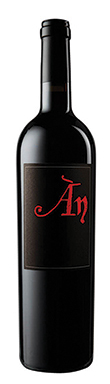

Deep in flavour, polished in texture, and intensely evocative, Anima Negra’s exceptional cuvée spends 18 months in new French oak, but the character of the...
2018
Anima NegraMallorca

Suertes del Marques, La Solana, Valle de la Orotava, Tenerife, Spain, 2018
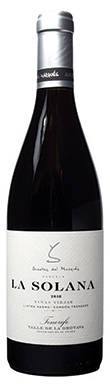
Organic, enchantingly fragrant, 100% old-vine Listán Negro from a single vineyard of volcanic and clay soils. Like all the Suertes del Marqués wines, this has...
2018
Suertes del MarquesValle de la Orotava
4 Monos, Albillo Real, Vinos de Madrid, Gredos, Spain, 2017
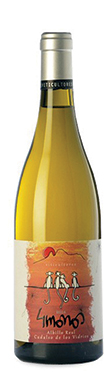
An already-small production was reduced further in 2017 thanks to frost, but the nearly 900 bottles that were made are a wonder of Albillo texture...
2017
4 MonosVinos de Madrid
Bodegas Gratias, Tinaja, Manchuela, Castilla-La Mancha, Spain, 2018
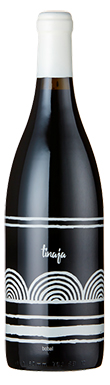
Bobal responds well to ageing in traditional tinaja clay pots, a process which seems to accentuate its earthy and rosehip-like qualities, along with just-off-the-bus blackberry,...
2018
Bodegas GratiasManchuela
Credo, Miranius Xarel.lo, Penedès, Spain, 2018
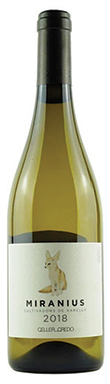
This is classic old-vine Xarel-lo from the excellent still wine project of top Catalan fizz producer Recaredo, where the aroma is all about subtlety (just...
2018
Credo
Bodegas Montecillo, Viña Monty Graciano Reserva, Rioja, Rioja, Spain, 2015
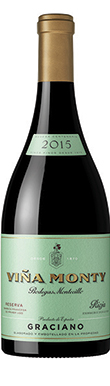
Bodegas Montecillo has revived its classic Viña Monty brand, complete with a pleasingly vintage label and featuring three wines, one of which is this lustrous...
2015
Bodegas MontecilloRioja
Doniene Gorrondona, Gorrondona Blanco, Txakolí, de Bizkaia, Northern Spain, Spain, 2019
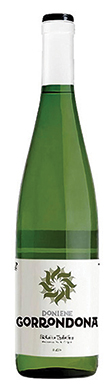
Organic farming, low yields, old vines, native yeasts and stainless steel fermentation with a little extra lees contact all add up to a superior take...
2019
Doniene GorrondonaTxakolí
Heretat Mont Rubi, Gaintus Radical Sumoll, Penedès, Spain, 2018
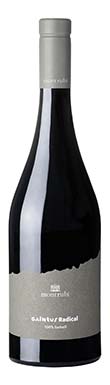
Translucent bright ruby in the glass, this opens with a shock of fresh cranberry juiciness, with just a touch of aniseed and then expanding to...
2018
Heretat Mont Rubi
Coto de Gomariz, The Flower and the Bee, Ribeiro, Galicia, Spain, 2019
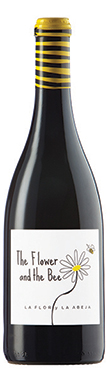
A well-run biodynamic estate overlooking the Avia River, Coto de Gomariz makes some of the best modern Ribeiro around. This 100% Treixadura mixes up Alsace-like...
2019
Coto de GomarizRibeiro
Dominio Dostares, Estay, Tierra de León, Castilla y Léon, Spain, 2016
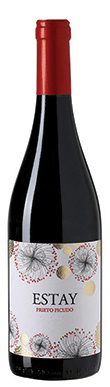
A good-value introduction to the exuberant joys of Prieto Picudo, this is not a million miles away from Mencía with its floral-edged dark, finger-staining succulence....
2016
Dominio DostaresTierra de León
