
Discovering white Beaujolais: 10 wines to try
In a red sea of Gamay, Beaujolais hides a white gem waiting to be discovered. Victoria Daskal explores why Chardonnay is the star and suggests 10 wines to try.


Beaujolais is inextricably linked with the red Gamay grape, so it may be surprising to learn that the region is also home to Chardonnay. This white grape accounts for a mere 4% of the vineyard area, but there have been recent increases in planting.
Traditionally, most Chardonnay grown in Beaujolais has gone into Crémant de Bourgogne or white Bourgogne wines. Reasonable choices, given that a wine labelled as Burgundy can fetch higher prices.
Of the nearly 3,000 estates in Beaujolais, around 600 produce a white wine, amounting to 2.75 million bottles per year.
Scroll down to see notes and scores for 10 wonderful white Beaujolais to seek out
White Beaujolais vs white Burgundy
Several Mâconnais appellations overlap the white Beaujolais territory: Mâcon, Mâcon-Villages, Mâcon-Chaintré, Saint-Véran and Pouilly-Fuissé. Many white wines made in northern Beaujolais are therefore sold under the better-known Mâcon appellations.
By law, white Beaujolais must be 100% Chardonnay and can be labelled as Beaujolais or Beaujolais Villages. There no white crus, although murmurs of potentially creating a Brouilly Blanc have surfaced due to successful plantings around Mount Brouilly where there are lighter clay-limestone soils at around 200m.

Château des Jacques, situated less than 20km south of the town of Mâcon, produces two different white wines from the same nine-hectare walled parcel of Chardonnay, the Clos de Loyse: a white Beaujolais and a white Bourgogne. ‘The difference is in the oak,’ says Geneviève Bonifacio, sales manager at Château des Jacques. ‘The wine labelled as Beaujolais is fermented in stainless steel and aged on lees until spring. The wine labelled as Bourgogne is barrel fermented and aged on lees in Burgundy barrels. People expect oak from a Bourgogne.’
Bonifacio explains that both soil and winemaking are key elements in their labelling choices. ‘Our Chardonnay used to be classified as Mâcon-Villages, however it was re-assessed by INAO (the National Institute of Origin and Quality) in the 1990s considering the geological aspect of its specific parcel. As the parcel mainly consisted of a sub-soil of granite, and a top-soil of marl and clay, it was declassified from Mâcon and had to be declared as either Bourgogne or Beaujolais.’
The limestone effect
Most producers say the south of Beaujolais is better suited to Chardonnay due to the predominantly clay-limestone soils, while Gamay thrives in the north in the granite-dominant soils (though it must be noted that there are over 300 soil types found throughout the region).
Jean-Paul Brun is a leading producer of white wine in the Beaujolais region, and claims that the limestone soils in the south are the reason for Chardonnay’s success. His Terres Dorées range comes from the Pierres Dorées vineyard area. Translating to ‘golden stones’, reflecting the warm-coloured stone buildings and limestone-based soils, this is an area between the villages of Bully, Oingt and Liergues. It is nicknamed ‘little Tuscany’ due to its resemblance to Tuscany’s Val d’Orcia.
Producers here are aiming for Pierres Dorées to become a specific geographical denomination within the Beaujolais appellation.

‘Previously, where the soils were not good enough for Gamay we used them for Chardonnay,’ explains Bonifacio. ‘Gamay doesn’t like clay-limestone or marl soils. It’s a high-yielding grape variety, it needs very poor soils to perform better.’
‘But if we’re going to create a cru for white Beaujolais, it needs to be on very specific soil – not simply where Gamay doesn’t work. You need clay-limestone soil and south or southeast-facing aspects. The south of Beaujolais where there are high altitudes is ideal, like in the Pierres Dorées area. Or further south, where the Monts du Lyonnais area is also interesting for Chardonnay,’ says Bonifacio.
Tasting white Beaujolais
A specific, identifiable style for white Beaujolais is yet to be defined. ‘It’s a very recent thing, with tiny production,’ explains Sonja Geoffray, owner and winemaker of Château Thivin, who produces two different styles of white Beaujolais: Marguerite which is a Beaujolais Villages from the Brouilly region, and Clos de Rochebonne from Chardonnay planted in the village of Theizé within the Pierres Dorées area.
‘The vines in the Brouilly region are planted at 200m on lighter soils with less iron,’ explains Geoffray. ‘These grapes are picked three weeks earlier than the grapes growing in southern Beaujolais. It’s not about latitude here, it’s about altitude.’
‘The Chardonnay planted at 500m in the Pierres Dorrées has a longer growing season, higher acidity and tension, making for a perfect foundation for ageworthy whites. This wine is aged in barrel and is more complex,’ says Geoffray.

As a general rule, most white Beaujolais wines undergo full or at least partial malolactic fermentation, are aged on fine lees and use old oak for maturation, if any at all. The majority, thus far, also undergo a cool fermentation in stainless steel.
Otherwise, the wines vary from one producer to the next. Some display lean, linear, savoury flavours and mineral intensity, while others are fragrant, peachy, sometimes veering on tropical with a fat, rounded mouthfeel. A pleasing jolt of acidity, when grown at altitude, is the perfect combination.
The organic or sustainable farming and low-intervention winemaking for which Beaujolais is increasingly known extends to Chardonnay production too.
Vines range from over 80 years old, like those of Arnaud Aucoeur and Jean-Paul Brun, to young and newly planted vines as found at Domaine Mee Godard and Domaine des Marrans.
‘Because of the terroir and the limestone, I find it really interesting to make Chardonnay in Beaujolais,’ says Mee Godard. ‘We have to continue to plant and experiment with Chardonnay in sandy soil as well.’
Considering the relatively small quantities currently produced, curious drinkers will need to actively seek out these wines. However, one thing everyone in the region agrees on is that the thirst for white wine is growing, and with its terroir potential, white Beaujolais has a bright future.
Tasting notes and scores for 10 wonderful white Beaujolais:
Related articles
- Mâconnais: Value heroes of Burgundy plus the 20 wines to seek out
- Beaujolais: Fleurie premier cru plan backed by winemakers
- Discovering Domaine Chanson’s Beaune Premier Crus
Château de Grand Pré, Beaujolais, Burgundy, France, 2021
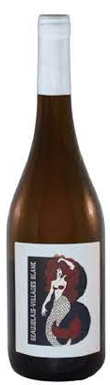

Exuberant honeysuckle, apricot, quince and star fruit aromas. An alive and kicking kind of wine with a creamy, rounded mouthfeel and an electric jolt of...
2021
Château de Grand PréBeaujolais

Château Thivin, Clos de Rochebonne, Beaujolais, Burgundy, France, 2020
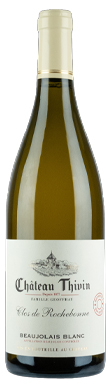
Complex layers of cedar, toast and fragrant lemon tart. Gorgeous plunge into a rounded, silky mouthfeel with a pleasing jolt of high acidity and a...
2020
Château ThivinBeaujolais
Jean-Paul Brun, Terres Dorées, Beaujolais, Burgundy, France, 2021
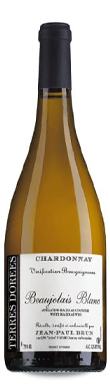
Succulent nectarine and juicy red delicious apple flavours with each sip. A rich and ripe mouthfeel bursting with fruit intensity, balanced with a lively citrus...
2021
Jean-Paul BrunBeaujolais
Domaine des Marrans, Beaujolais, Burgundy, France, 2020
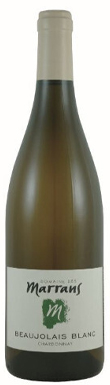
Bright tropical notes of passionfruit and pineapple surprise and delight. Rounded mouthfeel with lemon meringue flavours punctuated by zesty acidity and mineral undertones. A standout...
2020
Domaine des MarransBeaujolais
Domaine Mee Godard, Beaujolais, Burgundy, France, 2022
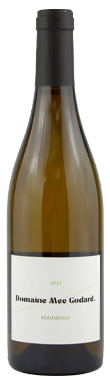
A chiselled and mineral expression reminiscent of seashells and light greengage. Light in body, very pure and with a slightly saline finish.
2022
Domaine Mee GodardBeaujolais
Arnaud Aucoeur, Vieilles Vignes, Beaujolais, Villages, Burgundy, France, 2020
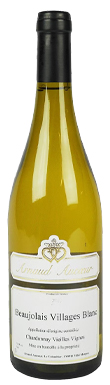
Soft blossom aromas mingling with juicy pêche de vigne on the nose. Light, taut and zesty in style. Apple and stone fruit concentration on the...
2020
Arnaud AucoeurBeaujolais
Château Cambon, Beaujolais, Burgundy, France, 2021
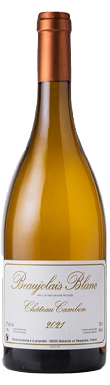
Layers of lemon pith, almond and delicate blossom with each swirl of the glass. The palate is positively energetic, with racy acidity, bright citrus and...
2021
Château CambonBeaujolais
Château des Jacques, Beaujolais, Burgundy, France, 2022
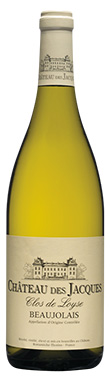
A soft, mellow style of Chardonnay from Clos de Loyse, a single plot in the north of Beaujolais. Savoury, stony and laced with peach and...
2022
Château des JacquesBeaujolais
Domaine Romy, Bourgogne, Burgundy, France, 2020
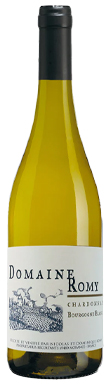
Labelled as a Bourgogne Blanc, but these Chardonnay grapes are all grown on Morancé hill in Beaujolais, within the prized Pierres Dorrées region. Exquisite peach...
2020
Domaine RomyBourgogne
Clos du Vieux Bourg, Beaujolais, Burgundy, France, 2020
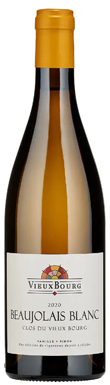
Subtle stone and orchard fruit on the nose. A soft and pleasing mouthfeel, more peachy flesh on the palate which displays a strong mineral backbone....
2020
Clos du Vieux BourgBeaujolais
