
Producer profile: Dom Pérignon Champagne

Read our profile on Dom Pérignon and see tasting notes and scores from Decanter's experts...
Dom Pérignon is named after a 17th century Benedictine monk, Dom Pierre Pérignon (1638-1715), who is said to have invented sparkling wine during his tenure as cellarmaster at the Abbey of Hautvillers, near the town of Épernay.
In truth, his task at the abbey was the polar opposite to the myth – to find a way to prevent a second fermentation in the bottle because so much stock was being lost from exploding bottles.
Sparkling wine was already in production in France, made by bottling wine while it was still fermenting. This method, known as pétillant-naturel or simply ‘pét nat’, is still used today in parts of France and even in the USA.
It was an English scientist, Christopher Merret, who first recorded the method used in Champagne today – adding sugar to an already fermented wine to cause a second fermentation. He was able to achieve this thanks to the superior strength of English glass bottles, compared to the French equivalents.
View all of Decanter’s Dom Pérignon tasting notes
What is believed, however, is that Dom Pierre Pérignon pioneered viticultural and winemaking methods that transformed the wines of Champagne – not only did he import the stronger bottles from England, but he also sought to improve the quality of the wine he made.
A document published three years after his death attributed several pioneering winemaking methods to the monk, including :
- Pruning to reduce yields but improve concentration
- Careful treatment of the grapes to avoid breaking the skins and exposing the juice to the air
- Multiple gentle pressings to minimise skin contact and extraction of tannins
Region Champagne
Village Hautvillers
Grape varieties Chardonnay, Pinot Noir
Moët & Chandon bought the brand name for their prestige cuvée in 1937. Today, Dom Pérignon is part of the Moët Hennessy Louis Vuitton (LVMH) empire owned by France’s richest man, Bernard Arnault. It has been the Champagne of choice for numerous celebrities and royalty over the years. Memorably it was chosen for the wedding of Lady Diana Spencer and Prince Charles in 1981.
In 1959, Dom Pérignon added a Rosé Champagne to its range.
Changeover
Dom Pérignon’s chef de cave since 1990, Richard Geoffroy, is handing over the reins in 2019 to Vincent Chaperon. They have worked together for 13 harvests.
What happens when a new chef de cave takes over?
The Champagne
Dom Pérignon is a vintage Champagne made using an approximate blend of 50% Pinot Noir and 50% Chardonnay. Although numbers are never officially published, it is thought that upwards of a million bottles are produced per vintage. Despite this scale, it remains one of the highest-rated and most desirable Champagnes on the market.
Long-aged versions of Dom Pérignon vintages are kept on their lees in the cellars until such a time as the chef de cave deems them ready to release. The P2 1998 marked both the end of the Oenothèque range and the first in its new ‘plenitude’ series. The plenitude concept captures three different stages of a wine’s development – different expressions of the same wine through its lifetime.
P1 comes approximately eight years after the vintage, while P2 takes roughly 15 years, 12 of which are spent on its lees. P3 takes place between 30 and 40 years after the vintage, with no less than 20 years on its lees.
In his masterclass at the Decanter Fine Wine Encounter 2018, Geoffroy described P2 as ‘beyond Champagne.’
Which is the best Dom Pérignon?
See our top-scoring vintages, as rated by our experts:
You might also like:
Best Champagnes of 2018 tasted by our experts
How does English sparkling wine compare to Champagne?
Krug Grande Cuvée: New reviews on latest releases
How good is Jay Z’s ‘Ace of Spades’ Champagne?
Dom Pérignon, Champagne, France, 2010
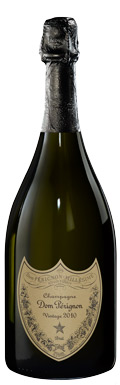

Soft gold, with a gentle green luminescence and a paler rim. A fine bead and immediately reassuring nose…. classic DP this, citric fruit, slate, sourdough,...
2010
Dom Pérignon

Dom Pérignon, Champagne, France, 2009
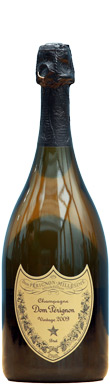
After the magnificent austerity of 2008, 2009 is riper and fuller, ‘solaire’ by temperament and generous of figure. Some '09s, according to Geoffroy, are ‘too...
2009
Dom Pérignon
Dom Pérignon, Champagne, France, 2008
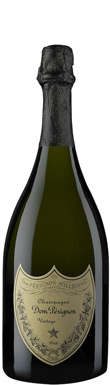
<p>Dom Pérignon is named after 17th-century Benedictine monk Dom Pierre Pérignon (1638-1715), who is said to have invented sparkling wine while cellarmaster at the Abbey...
2008
Dom Pérignon
Dom Pérignon, Legacy Edition, Champagne, France, 2008
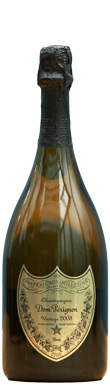
2008 is described as a ‘miracle’ year by Vincent Chaperon: everything looked set to go wrong and yet it all ended up flirting with perfection....
2008
Dom Pérignon
Dom Pérignon, (Magnum), Champagne, France, 2008
98
Pure gold of colour, temperament and inclination; resinous, rich and complex beyond peradventure; silky with a spicy backdrop, honied and taut, a wonderful weave of spellbinding contradiction. Chapeau, Messieurs!
2008
Dom Pérignon
Dom Pérignon, Champagne, France, 2006
Stylish glittering pale gold with tiny flowing bubbles. Chardonnay scents lead into citrus fruits with floral lilac and snow drop aromas. The Pinot Noir is...
2006
Dom Pérignon
Dom Pérignon, Champagne, France, 2005
2005 was a tricky vintage, with rain and botrytis punctuating the sleep patterns of the vigneron. It was harvested at great speed, quite the opposite...
2005
Dom Pérignon
Dom Pérignon, Champagne, France, 2003
A famously hot year, with partial shutdown of the photosynthetic process resulted in low yields of 20 hl/ha - 2003 was far from typical and...
2003
Dom Pérignon
Dom Pérignon, Champagne, France, 2004
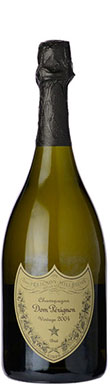
In 2004, quality and quantity were happy bedfellows, especially in the vineyards of the Côte des Blancs. Geoffroy said that by now he had the...
2004
Dom Pérignon
Dom Pérignon, Champagne, France, 2002
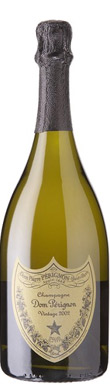
Wonderfully caressing and typical. The silkiness and balance impress most, along with a fluffy, creamy tone and stylish nuttiness. A great Dom Pérignon that charms...
2002
Dom Pérignon
Dom Pérignon, Champagne, France, 1999
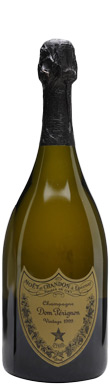
1999 was a warmer vintage in the mould of 2009, producing a large crop after a slightly rainy end of season. Picking time, as always,...
1999
Dom Pérignon
Dom Pérignon, Champagne, France, 1996
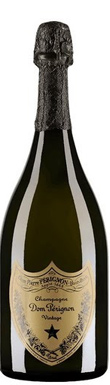
Real concentration, yet with better balance than many ’96s. A big wine, quite vinous, and in that sense not a typically fragrant Dom Pérignon of...
1996
Dom Pérignon
Dom Pérignon, P2, Champagne, France, 2002
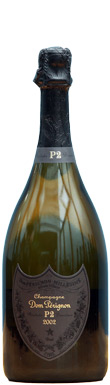
And so from P1 methuselah to P2, which for Geoffroy ‘goes beyond Champagne’. P2, he continues, must be ‘deeper, richer, longer…better than P1' - otherwise...
2002
Dom Pérignon
Dom Pérignon, P2, Champagne, France, 2000
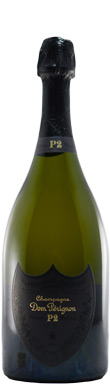
2000 is described as a year of transition in the DP story, a child of a slightly temperamental year, bolstered by its pivotal millennial identity....
2000
Dom Pérignon
Dom Pérignon, P2, Champagne, France, 1998
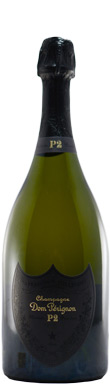
Geoffroy advises that in 1998 too many growers picked early after a very hot August, worried by the rain that had been forecast. The rain...
1998
Dom Pérignon
Dom Pérignon, P2, Champagne, France, 1996
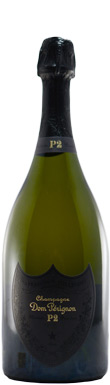
Geoffroy pulls no punches in his description of 1996 as ‘insolent’, its profile informed above all by the northeast wind which provoked dehydration in the...
1996
Dom Pérignon
Dom Pérignon, Oenothèque, Champagne, France, 1996
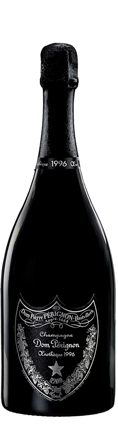
I tasted this at a friend’s 50th birthday, where we drank several incredible 1966 Bordeaux (the standout being Cheval Blanc 1966 that could easily have...
1996
Dom Pérignon
Dom Pérignon, P3, Champagne, France, 1990
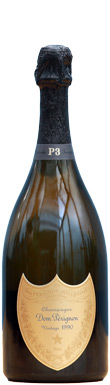
P3 is all about texture and complexity, and Geoffroy uses the French word épure to sum up what he hopes to achieve: all elements seamlessly...
1990
Dom Pérignon
Dom Pérignon, P2 Rosé, Champagne, France, 1993
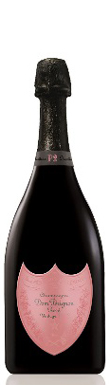
This could be called the forgotten vintage, as it arrived after the Gulf War of 1992 when Champagne was in recession. It also rained at...
1993
Dom Pérignon
Dom Pérignon, Rosé, Champagne, France, 2006
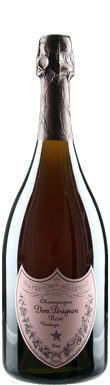
2006, with its 20% addition of red wine, has always been one of the most boomingly intense renditions of Dom Pérignon Rosé, and today the...
2006
Dom Pérignon
Dom Pérignon, P2 Rosé, Champagne, France, 1996
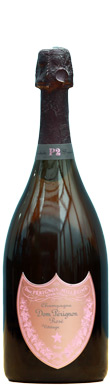
The 1996 rosé is a touch unresolved, its tension hitherto dominated by the acidity and its shape less at ease with itself than with the...
1996
Dom Pérignon
Dom Pérignon, P2 Rosé, Champagne, France, 1995
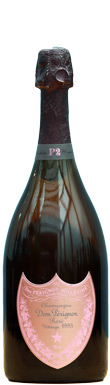
The familial trait handed down by 1995 finds its focus in generous and extrovert fruit. The wine is pleasingly different to the 1996, showing raspberry...
1995
Dom Pérignon
Dom Pérignon, Rosé, Champagne, France, 2005
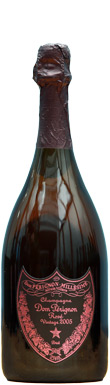
And so to the rosés. Red grapes are sourced from 10ha, all specific sites, located from Hautvillers down to Cumières and then in Ay and...
2005
Dom Pérignon
Dom Pérignon, Rosé, Champagne, France, 2004
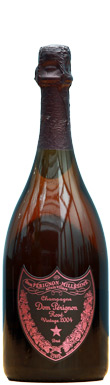
Next to the explosive 2006 and steely 2008, 2004 is a quieter vintage for Dom Pérignon rosé (despite the formidable 28% red wine addition), although...
2004
Dom Pérignon
Dom Pérignon, Rosé, Champagne, France, 2003
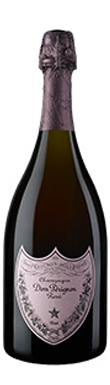
In a year as warm and punishing as 2003, it was vital to get the reds right. The vineyards in question are planted at high...
2003
Dom Pérignon
Dom Pérignon, Rosé, Champagne, France, 2002
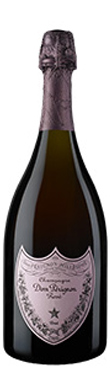
Extraordinarily powerful yet astonishingly beautifully constructed, the 2002 rosé is subtly different to its siblings, yet still seamless of architecture and impressive of length. Beyond...
2002
Dom Pérignon
Dom Pérignon, Rosé, Champagne, France, 2000
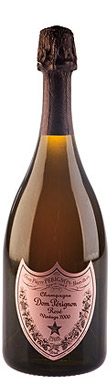
As we’ve come to expect from DP over the last 10 years or so, this is yet another curve ball. Not that this was immediately...
2000
Dom Pérignon