
Domaine de Trévallon: The new generation takes charge
Founded on an artistic whim in the 1970s, Domaine de Trévallon has risen to become one of Provence's leading fine wine estates. Liz Gabay MW charts its progress down the decades.


Some producers become part of the history of their region. Their romantic story, their innovative ideas, the quality of their wine.
Many of these iconic estates shine for only a couple of years and burn out, few last for decades and even fewer continue to flourish with the next generation.
Domaine de Trévallon is one of the success stories.
Scroll down for tasting notes and scores for Domaine de Trévallon
In the early 1950s, artists René Dürrbach and Jacqueline de la Baume moved to the rural idyll of Mas Chabert near St-Rémy de Provence. They had many connections with other leading artists of the era, many of whom were either residents or frequent visitors to the French Riviera.
Pablo Picasso was even godfather to their son, Eloi. In 1955 they bought the neighbouring farm of Domaine de Trévallon, both estates nestling on the wooded slopes of the northwestern flank of Les Alpilles, facing market gardens and orchards sloping down to the Rhône Valley.
René Dürrbach was interested in planting vines, so after training as an architect and returning home in 1973, Eloi sought work experience in the area with producers.
He found it at Château Vignelaur, an estate created by Georges Brunet, former owner of Château La Lagune in the Haut-Médoc, whose first harvest in 1970 had garnered acclaim.
First vintage
Inspired by Brunet’s planting of Cabernet Sauvignon (from original cuttings from Bordeaux) and Syrah, Eloi obtained cuttings from Vignelaure and started planting the Trévallon vineyard, following the small valleys running down from the Alpilles limestone hills.
The red wines have been made the same way since the beginning. Varieties are fermented separately in open-topped wooden tonneaux without destemming, the addition of SO2 or cultured yeasts.
After fermenting for three weeks, each variety is matured in foudres (80%) and barriques for almost two years, with just one racking.
A small portion of press wine is added to the final blend, which is fined with egg whites but not filtered.
Trévallon’s first vintage, 1976, was sold locally, including at the restaurant Oustau de Baumanière.

Discovery
It was here, in 1978, a young Aubert de Villaine, recently appointed director of Domaine de la Romanée Conti, came across Trévallon, He was so impressed, he introduced his American importer Kermit Lynch to the estate.
In 1984, Robert Parker raved about the wine, creating a buzz in the US.
With success the 1990s saw further changes. Two hectares of Marsanne and Roussanne, from cuttings from Château de Beaucastel in Châteauneuf-du-Pape, were planted for a new white wine.
Trévallon’s reputation also attracted ambitious young winemakers who came to learn, including Laurent Vaillé, who went on to create his own famous vineyard, Grange des Pères.
New appellation rules in 1993 meant that Trévallon’s Cabernet-dominant wines were no longer accepted, so Trévallon began labelling its wines IGP Bouches du Rhône, and the series of labels designed by René were created for the 1996 vintage.
But Eloi was unhappy with the growing cult status and uneasy with the high prices reached on resale of older vintages.
He argued with his importers and cancelled agency contracts, counting on a loyal customer base, largely based in France.
During the early 2000s, although the quality remained constant, sales decreased and, with the cellars filling up with unsold stock, the business was flagging.
The new generation

Turnaround came when Eloi’s youngest daughter Ostiane, then aged 24, joined in 2009. She streamlined sales and administration, abandoning the former exchange of wine for works of art, vines and services, and focused on regular, premium customers.
Sales are on allocation, with over 60% in France. Ostiane has introduced a second release for collectors, holding back up to 15% of each vintage and then releasing this around 10 years later; 2012 is the current library vintage.
Since 2015 the bottles are all numbered and production sits between 45,000 and 60,000 bottles of red wine, and 7,000 to 10,000 of white, from 15ha of red vineyards and 2ha of white.
With the more buoyant business, a new winery was built in 2013. By 2015, with a more carefully organised office, Ostiane was able to work more out in the vineyards and cellar.
She and cellar master Aimeric Gaubert, who joined in 2007, convinced Eloi to reduce the proportion of new wood, moving from barriques to demi-muids, and reducing battonage to restrain the richer, buttery notes and to experiment with terracotta amphorae.
Vineyard manager Pascal Febvre, who retired in 2020 after 30 years at the estate, worked with passion and precision, aiming to spot any disease on first appearance and to produce healthy grapes so that sorting at harvest is unnecessary.
It is a philosophy his successor, Jean-Luc Aubert (who has worked at the estate since 1989) has continued.
As for other external influences, after wild boar devastated the 2016 Syrah, Ostiane installed 2km of anti-boar fencing.
Taking the reins
Crisis hit in November 2021 when Eloi suddenly died, aged 71. An initial flurry of collectors bought wine, fearing this was the end of an era. But, having worked closely with her father for 13 years, Ostiane and her brother Antoine took the reins, maintaining his philosophy. As she says, many decisions now taken come from their conversations.
Climate change is an increasing challenge. 2021 had low yields, especially for whites, due to spring frosts and summer drought, and the 2023 vintage was made two weeks earlier than usual, to preserve freshness.
To retain quality, small changes in the varieties used have been made. Eloi had already planted a small amount of Muscat to contribute greater spice and fruit.
Despite greater canopy management the Syrah has become increasingly alcoholic. So Ostiane is slowly increasing the percentage of Cabernet, returning to its historic, pre-1992 level of 60%, thereby keeping elegance and freshness.
Ostiane is also trialling other ways of dealing with climate change. On the stony Les Graviers plot where the stones radiate heat, Ostiane is mulching with straw and hemp under the vines to reduce the temperature.
With wine only available on allocation, Ostiane has considered, and dismissed, the idea of expansion.
Planting more vineyards would eat into their valuable natural woodland which moderates the microclimate.
For now, Trévallon is doing what it has always done, with small changes in field and cellar. The quality and integrity of the wine is the guiding force of Ostiane’s vision.
She has taken control with confidence and the estate is going from strength to strength.
Domaine de Trévallon
Wines are listed white, then red, in score order
Related articles
- Rediscovering Provence: 18 top-quality reds and whites
- A guide to the cru classé wines of Provence
- Discovering the ‘micro-crus’ of Provence
Domaine de Trévallon, Blanc, Alpilles, Provence, France, 2022
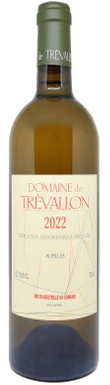

Aromas of cream and white pepper are still restrained, while on the palate there are notes of sweet white peach, perfumed florals, spice, ginger, crunchy...
2022
Domaine de TrévallonAlpilles

Domaine de Trévallon, Vin de Pays des Bouches du Rhône, Provence, France, 1995
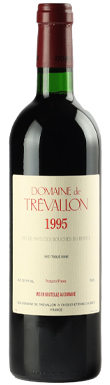
An elegant, mature wine which still has the magic to wow. Mahogany red, with aromas of garrigue and red fruit gives this southern vibes. Very...
1995
Domaine de TrévallonVin de Pays des Bouches du Rhône
Domaine de Trévallon, Alpilles, Provence, France, 2021
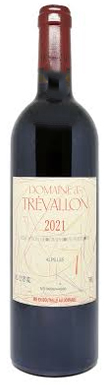
From a marginally cooler, damper year, the Syrah and Cabernet are already beginning to meld together. Tightly youthful and closed, this needs either advance decanting...
2021
Domaine de TrévallonAlpilles
Domaine de Trévallon, Alpilles, Provence, France, 2012
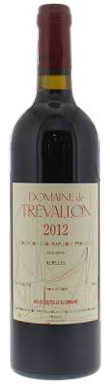
The dark floral and rich black fruit aromas spell ripe charm, while on the palate more scented violets, opulent cassis, raspberries and wild strawberries are...
2012
Domaine de TrévallonAlpilles
Domaine de Trévallon, Alpilles, Provence, France, 2009
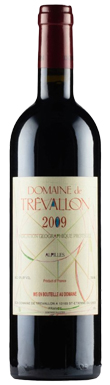
A warm, classic vintage with rain at the last moment boosting the fruit resulted in this rich wine. Aromas of cocoa and scented blue violets...
2009
Domaine de TrévallonAlpilles
Domaine de Trévallon, Vin de Pays des Bouches du Rhône, Provence, France, 2001
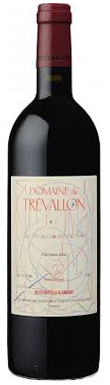
Aromas of rich black chocolate and sweet tobacco. On the palate the fruit is charmingly soft and rounded, with supporting saline notes, dark, bitter cocoa,...
2001
Domaine de TrévallonVin de Pays des Bouches du Rhône
Domaine de Trévallon, Vin de Pays des Bouches du Rhône, Provence, France, 2004
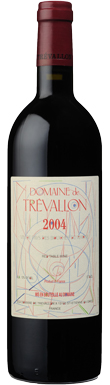
A very fresh year with the harvest extending into October, resulting in a classic vintage with more evident Cabernet fruit. Blue floral perfumed aromas with...
2004
Domaine de TrévallonVin de Pays des Bouches du Rhône
