
Elgin wine region: Names to know and wines to try
One of South Africa’s newer wine regions and its coolest, Elgin is already noted for its fine Chardonnays and has great potential to grow and make even better wines, as Christian Eedes reports...

It’s early morning on a clear but chilly day in May and the air above Elgin is filled with all sorts of helicopters and fixed-wing aircraft spraying for fruit fly. In terms of plantings, this is apple and pear country first and wine country a distant second.
The valley, situated some 75km southeast of Cape Town and surrounded by mountains, has more than 6,400ha of apples, nearly 1,500ha of pears and less than 750ha of planted vineyard (down from perhaps 1,000ha a decade ago).
It’s not difficult to understand the focus on deciduous fruit rather than wine grapes. One hectare of vineyard yields 5-15 tonnes of grapes, while the equivalent of apples yields 100 tonnes. Revenue accruing from a hectare of vineyard is in the vicinity of R70,000- R120,000, whereas it starts at R300,000 for apples and goes all the way up to R700,000.
The first commercial apple orchards date from the early 1900s, whereas the modern era of wine farming only really began in 1986 when Paul Cluver Wine Estate planted Riesling vineyards (part of a joint venture with what was then Stellenbosch Farmers’ Winery, later to be subsumed under South Africa’s largest liquor company, Distell).
Neil Ellis, meanwhile, was busy exploring a negociant model, acquiring grapes from across the winelands in order to make the best possible wines, and the area caught his eye. He was the first to release a wine officially demarcated as ‘Elgin’ in 1990.
The apple industry was to suffer a major decline in the 1990s as global production outstripped demand, due in large part to China entering the market, and this prompted a wave of new vineyard plantings. Apple prices soon recovered, however, somewhat retarding the development of the Elgin wine scene since then. Those who persist with wine farming still believe that they are on to a good thing. Elgin lays claim to being the coolest wine-growing area in South Africa, and in the most basic terms the wines do have a particular elegance about them.
Elgin wine region at a glance
Founded First vineyards of modern era planted in 1986; declared a ward of the greater Overberg district in 1990; declared a district in its own right in 2011
Growing conditions Higher altitude with vineyards planted at about 300m-500m above sea level, ocean proximity, specific cloud cover sequencing and a large diurnal range – cool nights allow the vines to resuscitate themselves, prolonging grape maturation
Annual rainfall 800mm-1,200mm septemb
Vineyard area 739ha septem
Structure 53 growers, 12 cellars
Main grapes Sauvignon Blanc 37%, Chardonnay 15%, Pinot Noir 14.5%, Syrah 8%
Scroll down for Christian’s top reds and whites to try from Elgin
Small beginnings
Does size really matter, though? Paul Cluver Jr, managing director of a major family farming business, its 1,600ha estate including some 82ha of vineyard, is not too worried at this point in the area’s history. ‘Elgin is 10,000ha in its entirety. The Côte de Nuits must be all of 1,000ha – you don’t necessarily need a lot of vineyard to make a big impression.’
The Cluver portfolio consists of Riesling, Chardonnay, Sauvignon Blanc and Pinot Noir in various guises, but the focus is on the two Burgundian varieties. ‘Our USP is fine Chardonnay and Pinot Noir at a fraction of the price of Burgundy,’ he says. ‘The identifying character of Elgin is higher acidities and lower pHs – because of our cooler climate, we get phenolic ripeness without losing freshness.’
Cluver would like to see more producers make Chardonnay and Pinot Noir their focus because he feels that this would send a strong collective message to the world, but he concedes that it’s early days for the district in terms of being certain about what its strongest suit might be. Vineyards are scattered far and wide and differ significantly in terms of soils, aspect and proximity to the ocean. For all the critical acclaim that Chardonnay has gained in recent times, it does seem that Elgin can produce outstanding examples of just about any variety – bar perhaps late-ripening Cabernet Sauvignon, some examples tending to look a bit thin and weedy.
Another attraction of Chardonnay and Pinot Noir to many growers is that theoretically neither has a price ceiling. The most-planted variety, white or red, in the valley is Sauvignon Blanc, and while the overall quality is high, there is a resignation that it will never command much of a premium, at least when made in an unwooded style. A few cellars are experimenting with Blanc Fumé and Sauvignon Blanc-Semillon blends with impressive results, but all reports are that such wines don’t have much of a popular following.
Healthy competition
If vineyards are to compete with apple orchards, then Elgin is compelled to position itself as a premium growing area and here the age of vines becomes important. More mature vines provide more complete grapes, resulting in wines of greater depth and detail. Unfortunately, however, in the rush to plant that occurred in the early 2000s, plenty of sub-standard material went into the ground, and a variety of viticultural problems are now manifesting themselves precisely when these vines should be coming into their own.
Elgin wine producers are also subject to significant non-agricultural pressures. For one thing, the district has become something of a social unrest hotspot as the ongoing process of rural to urban migration plays out, and there are regular labour disputes. For another, wildfires are becoming a more regular occurrence, often damaging vineyards. Happily, climate change is seen as having less impact in the immediate future than it might in other wine-growing areas.
So what are the prospects for Elgin going forward? Paul Wallace, long-serving consultant viticulturist in the area, is not inclined to become disconsolate.
‘We’re still scratching the surface in Elgin,’ he says. ‘We’ve already found out that we’re good at Chardonnay, but there are other varieties that can do very, very well. I’ve been at this for 20 years and I’m still learning – why this and why not that.’
You feel Wallace has a point: in a relatively short space of time, and from a very small base, this district is already producing some of South Africa’s most compelling wines. The future is bright. Probably quite chilly, but bright.
The best Elgin whites and reds to try:
Elgin: 10 names to know
Almenkerk
Owned by the Belgian/Dutch family van Almenkerk. Patriarch Joep retired to South Africa in the early 2000s and convinced son Joris and his partner Natalie to undertake wine farming. They acquired an apple farm, converting it to vineyards and building a 300-tonne capacity cellar. This facility is also used by smaller producers in the area.
Elgin Ridge
Brian and Marion Smith sold their IT business based in southwest London at the end of 2006 and bought a small property in Elgin in April 2007. Today their 6.5ha of vineyard are certified biodynamic – a compost preparation programme ensures high humus levels in the soils, while the resident ducks take care of pest control.
Highlands Road
Port Elizabeth attorney Michael White acquired this property in 2004, appointing the talented Vanessa Simkiss as winemaker in 2015. Some 9ha of vineyard are planted to Chardonnay, Sauvignon Blanc, Semillon, Pinot Noir and Shiraz, but it is the Sauvignon Blanc-Semillon blend known as Sine Cera that has most impressed to date. A small restaurant boasts views across the dam.
Iona
Back in 1997, when the Elgin wine scene was comparatively underdeveloped, former engineer Andrew Gunn acquired a run-down apple farm surrounded by the Kogelberg Biosphere Reserve and forestry plantations and converted it to vineyard. Today, Iona has one of the most accomplished portfolios of wines in the district, a recent addition being two so-called Monopole Series Chardonnays.
Oak Valley
Founded in 1898 by Sir Antonie Viljoen, a medical doctor who graduated from Edinburgh University in Scotland, the 1,600ha property is currently run by his great-great-grandson Christopher, with wine a small but important part of a high-quality agribusiness that also includes cut flowers, cattle and pigs.
Paul Cluver Estate Wines
A 2,200ha property in the Cluver family since 1896, wine currently forming part of a farming business that incorporates apple and pear orchards, a Hereford stud and eco-tourism activities, including amphitheatre concerts and mountain biking trails. The Chardonnay and Pinot Noir under the top-end Seven Flags label are South African benchmarks.
Richard Kershaw Wines
British-born Richard Kershaw MW has been active as a winemaker in South Africa for some 20 years, establishing his own label in 2012. The focus is mostly is on Elgin, due to its cool climate. Kershaw is nothing if not academically minded and his approach to winemaking is fastidious as he seeks to understand how site and clone combine to best effect.
Shannon Vineyards
In addition to apples and pears, James Downes also farms some 12ha of vineyard on this family-owned property on the banks of the Palmiet River. Downes is known for his meticulous viticulture, and Shannon Vineyards sells grapes to a number of leading producers, but its own-label wines made since 2007 by Gordon and Nadia Newton Johnson in Hemel-en-Aarde are also highly acclaimed.
Spioenkop
Koen Roose imported South African wine into Belgium, but he always had his heart set on winemaking and learned on the job before acquiring a property in Elgin in the mid-2000s. Something of a maverick, Roose works with unirrigated vineyards – this is unusual for the area, but he feels it gives a more authentic expression of site. He also champions Chenin Blanc and Pinotage, also not common to Elgin.
Vrede en Lust
Dana Buys, highly successful in IT, first bought this property in Paarl in the 1990s, but realising the potential of Elgin to provide high-quality grapes, he acquired a farm called Casey’s Ridge in that district in 2005. Some 60ha are now under vine, much of the fruit going into experimental bottlings under the Artisan Range label.
Christian Eedes is a wine journalist, writer and judge, as well as editor of www.winemag.co.za
You may also like:
Top South African white wines
The Chenin Blanc renaissance? Loire vs South Africa
Must-try Sauvignon Blanc wines
Elgin Ridge, Chaos White, Elgin, South Africa, 2018
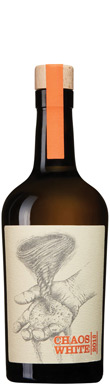

Some skin contact before maturation in older oak. A super-complex nose with top notes of elderflower and dried herbs before lemon, orange and ginger. The...
2018
Elgin Ridge

Richard Kershaw, Clonal Selection Chardonnay, Elgin, South Africa, 2017
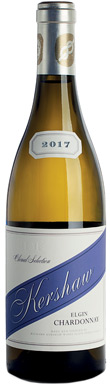
Grapes from four clones grown across nine parcels of land. Maturation lasted 11 months in mainly French oak but also breathable egg. Pear, white peach...
2017
Richard Kershaw
Boschendal, Appelation Series Sauvignon Blanc, Elgin, South Africa, 2018
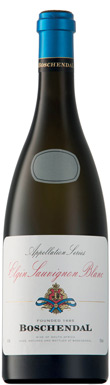
15% matured for two months in oak and including 10% Semillon. The nose shows pear, white peach and a touch of hay while the...
2018
Boschendal
Highlands Road, Sine Cera, Elgin, South Africa, 2015
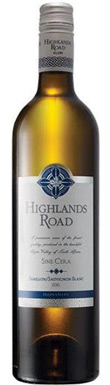
50% Sauvignon Blanc, 50% Semillon, blending occurring after six months on the lees, 10% of the Sauvignon Blanc component matured in barrel. A note of...
2015
Highlands Road
Iona, Wild Ferment Sauvignon Blanc, Elgin, South Africa, 2017
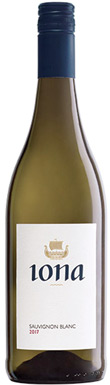
100% Sauvignon Blanc. Matured for 11 months in older oak before two months in tank. Lime, blackcurrant and fresh herbs on the nose. The palate...
2017
Iona
Neil Ellis, Whitehall Chardonnay, Elgin, South Africa, 2017
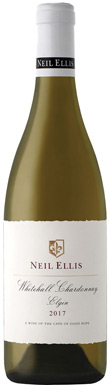
Pear, citrus and green apple plus some struck match and a little vanilla on the nose. Lean and tightly wound on the palate, the finish...
2017
Neil Ellis
Paul Cluver, Estate Chardonnay, Elgin, South Africa, 2017
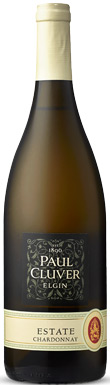
White peach and lemon, some leesy complexity plus vanilla and oak spice. Good weight and texture, tangy acidity nicely coated by plenty of fruit, the...
2017
Paul Cluver
Sutherland, Chardonnay, Elgin, South Africa, 2018
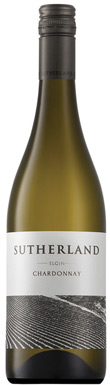
A hint of smoky reduction before lime and lemon on the nose. Medium bodied with just the right amount of texture, nicely integrated acidity and...
2018
Sutherland
Spioenkop, Elgin Pinotage, Elgin, South Africa, 2018
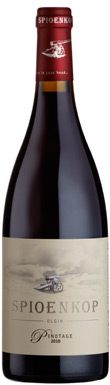
Violets and herbs before red and black cherry, cinnamon and clove. Massively dense on the palate but not at all short of freshness, the tannins...
2018
Spioenkop
Iona, Solace Syrah, Elgin, South Africa, 2016
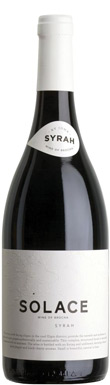
On the nose, red and black fruit, a hint of fynbos, pepper, and spice as well as just a little reductive smokiness. The palate exhibits...
2016
Iona
Richard Kershaw, Clonal Selection Pinot Noir, Elgin, South Africa, 2017
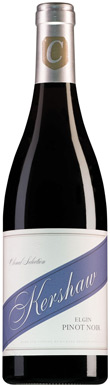
From five different clones. Matured for 11 months in French oak barrels of different sizes, 12% new. Very primary on the nose with notes of...
2017
Richard Kershaw
Shannon Vineyards, Mount Bullet, Elgin, South Africa, 2016
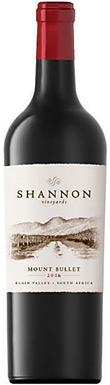
Matured for 20 months in French oak, 25% new. A complex nose of red and black berries, dried herbs, earth and a little boot polish....
2016
Shannon Vineyards