
Emilio Moro: producer profile and latest releases tasted
Top Ribera del Duero winery Emilio Moro makes one of Spain’s most expensive wines. Sarah Jane Evans MW tastes and rates the latest vintages.


Ribera del Duero is the extreme member of Spain’s top wine family: very hot in summer, freezing cold in winter, yielding continental wines grown on a high plateau.
For almost a century, the Moro family has been growing vines here, at the self-titled Bodegas Emilio Moro.
See tasting notes and scores for the latest Emilio Moro wines
Behind the name is a real Emilio Moro, born in 1932 – the year that his family started vine growing in the region. Its Finca Resalso vineyard was planted that same year. Fast-forward to 1982, and the launch of the Ribera del Duero DO, which was created with fewer than a dozen wineries.
Six years later, Emilio – with his sons José and Javier – decided to join the pioneers and transform from growers into winery owners. They launched their first wine under the fledgling DO in 1989. At the time, they were working with just 5ha of vines that their grandfather had planted around Pesquera del Duero.
Originally, the family vineyards were more extensive but, as in so many places, vines had been widely uprooted in Spain’s economic downturn. Oddly, this had one great advantage: when it came to expanding once more: they were able to use the best clonal material of Tinto Fino (Tempranillo) from their oldest plots.
Today, the winery emphasises the special heritage of Tinto Fino, with its smaller berries.
New generation
Emilio died in 2008, and the third generation – lead by José Moro Espinosa – is now driving change. They describe their work as a blend of tradition, innovation and social responsibility, emphasising the use of technology to promote sustainability in the vineyard and manage the winemaking process.
Theirs are big, bold, forthright wines, expressing the equally forthright character of the land and its people. Typically, the wines are fermented in stainless steel and aged in mostly French oak, with some American wood.
The wine known as Emilio Moro 2018 (their largest production) typifies the house style, offering power and plentiful black fruits.
It’s made from younger vines, grown on a blend of different soil types at around 750m, and aged in a blend of French and American oak. Each of the bottles has a small disc above the label, illustrating an aspect of family history – in this case, Emilio harvesting with his father.
The next step up in the series is Malleolus, derived from majuelo – the local word for a small plot of vines. These are older vines (25-75 years), including some that were rescued from the widespread vine pull during the latter part of the 20th century. With the launch of Malleolus in the late 1990s, the winery decided to step back from the traditional categories of crianza and reserva. Instead, it prefers simply to label its wines with the vintage – like so many producers nowadays.
Singular wines
The winery’s single vineyards form the basis for its top wines. Malleolus de Valderramiro is from the family’s oldest vineyard (4.2ha), planted in 1924 on clay soils with limestone, while the vineyard for Malleolus de Sanchomartin (0.7ha) was planted in 1944 at a higher altitude, and in soils with a greater limestone content.
As a result, Sanchomartin has greater freshness, whereas Valderramiro is more powerful and structured. The ‘regular’ Malleolus takes grapes from some of these old vineyards, together with the plantings of selected clones from the 1980s.
The most recent launch among Moro’s top wines is the Clon de la Familia – one of Spain’s most expensive treasures. As the name suggests, this is a homage to the best clone of Tempranillo, as well as to the family who preserved it. The wine is intended to reflect the three soil types in the Moro vineyards: limestone, clay, and sand.
Launched in 2007, the family also has a separate winery in Ribera del Duero, named Cepa 21. Stylistically, the wines are modern and expressive, and Cepa also has a strong focus on wine tourism. In 2016, the family launched a third outpost, this time in Bierzo to the northwest of Castilla y Leon.
White wines (made from the Albillo grape) are now permitted in the Ribera del Duero DO. However, José Moro preferred to go to Bierzo, regarding the Godello grape as the best of Spain’s white varieties.
At present, Moro produces three whites: the young Polvorete; El Zarzal, lees-aged in foudres; and La Revelía, lees-aged in French oak barrels.
Sarah Jane Evans MW tastes and rates the latest Emilio Moro wines
You may also like
Ribera del Duero: eight producers to watch
Ribera del Duero: top wines to buy now
Emilio Moro, Malleolus de Sanchomartin, Ribera del Duero, Ribera del Duero, Spain, 2016
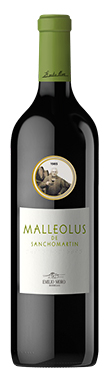

This vineyard has been grafted with clones from the oldest vineyards. While it is more tannic and has more acidity than the other Emilio Moro...
2016
Emilio MoroRibera del Duero

Emilio Moro, Malleolus de Valderramiro, Ribera del Duero, Ribera del Duero, Spain, 2016
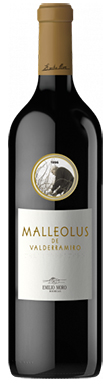
From a single vineyard planted in 1924. Exceptionally deep colour. Powerful intense aromas of dark cherries, fine cedar, even stones. Plush palate with plenty...
2016
Emilio MoroRibera del Duero
Emilio Moro, Malleolus, Ribera del Duero, Ribera del Duero, Spain, 2018
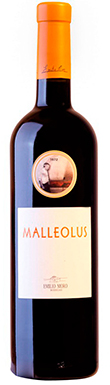
From a mix of old bush vines and some trellised vines. Very aromatic, alluring cherry aromas and vanilla oak notes. Full of dark plum flavours,...
2018
Emilio MoroRibera del Duero
Emilio Moro, Clon de la Familia, Ribera del Duero, Ribera del Duero, Spain, 2015
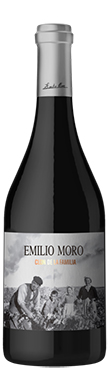
As the name suggests this is a homage to the best clone of Tempranillo as well as to the family who preserved it. The wine...
2015
Emilio MoroRibera del Duero
Emilio Moro, Ribera del Duero, Ribera del Duero, Spain, 2018
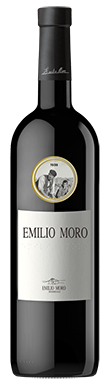
Deep, dense colour. Aromas of smoky oak and roasted black cherries. In the mouth it’s supple with abundant ripe dark fruit on the palate. There’s...
2018
Emilio MoroRibera del Duero
