
Etna: A rising force
Life on the slopes of Europe’s most active volcano is never going to be easy. But an influx of established Italian producers from beyond Sicily has sparked a leap forward in quality and global interest in these island wines, reports Stephen Brook...


When I last reported on the wines of Etna, back in 2010, the boom had just begun. The Benanti family had been the pioneers of high-quality wine, but had been joined by outsiders such as Andrea Franchetti at Passopisciaro, Marc de Grazia at Terre Nere, and Frank Cornelissen.
Their interest was often sparked by an encounter with an exceptionally intriguing Etna wine. A fine bottle would have stood out against many dire wines that were still being made in the past by some traditional wineries that paid little attention to hygiene. At the same time other established wineries, such as Cottanera, moved dramatically to improve quality.
Scroll down for Stephen Brook’s top 20: best of Etna’s volcanic whites and reds
It’s not hard to see where the appeal of Etna lies. First, the landscape. Frequent eruptions have left huge bands of knobbly lava on various slopes of the volcano. It may not sound like the most promising terroir, yet lava does give the wines a mineral bite.
Passopisciaro’s genial manager Vincenzo Lo Mauro showed me an immense lava field that in 1981 stopped just short of the town of Randazzo. ‘I saw it coming down the mountain, glowing red and turning, and I’ll never forget the strong sulphurous smell.’
It can be sunny in the port town of Catania just to the south, yet pouring with rain on Etna – but the lumpen lava beds also have the advantage of being well drained. Wind too can help keep rot at bay.
Then there are the grape varieties: Nerello Mascalese and Nerello Cappuccio for the reds, and Carricante for the whites. Nerello Cappuccio is not that important and is most often found as a component in blends. The few purely varietal versions I’ve tried have not been persuasive.
But Nerello Mascalese is a wonderful variety, at least on Etna. It can be very perfumed, and reminiscent of Pinot Noir in its aromas, although its complexity and structure are more akin, perhaps, to Nebbiolo. It has muscle and strength too, and alcohols are generally around 14%. Its growing season is long, often stretching into November, making it a variety that strongly displays vintage character. But it’s not easy to vinifiy. Patricia Tóth at Planeta, who has helped to develop the company’s vineyards, observes: ‘It’s a blood-chilling variety. It starts very tannic and only gains body with maceration.’
Carricante delivers racy, taut whites. It’s occasionally blended with Catarratto, though it stands up perfectly well on its own.

High principles
Etna has, it may be obvious to point out, elevation. Vineyards lie at 600m-1,000m. At above 800m vineyards are, absurdly, not considered worthy of inclusion in the DOC. The elevation ensures that however scorching the summer days, temperatures can plummet at night, helping to preserve acidity in the grapes and slowing their maturation. Moreover, there are significant parcels of old vines, some centenarian, and even some pre-phylloxera plantings.
It has helped that producers are for the most part quality-conscious. The poorly made wines I was still tasting in 2010 seem to have vanished. The newcomers either had the financial resources or the determination (often both) to produce wines that would make their mark on the international stage. Etna, in short, has been a huge success, and other Italian wineries such as Cusumano, Firriato, Piccini, Planeta, Sette Ponti and Tasca, although late arrivals at the party, are now well established here. Planeta operates under its own name, while Firriato’s Etna label is Cavanera, Cusumano’s is Alta Mora, Piccini’s is Torre Mora, and Tasca d’Almerita has more modestly gone for Tascante. And Angelo Gaja is now striding onto this stage, with his first wines due to be released by early 2020.
Those who spearheaded the Etna revival in the 1990s and early 2000s are very much still in place. It was possible to fault wineries such as Passopisciaro and Terre Nere for excessive alcohol in the past, but recent vintages have been more restrained and better balanced. Even Frank Cornelissen has mellowed. Once the poster boy for natural winemaking on Etna, the Belgian winemaker still adheres to the fundamental principles of low-interference vinification, but he prefers to talk of authentic or territorial wines rather than of ‘natural wines’. Contrary to popular belief, he has never farmed biodynamically, and only a few top wines are aged in amphorae. Low doses of sulphur dioxide and routine if light filtration are now practised.
Other, established properties are less well known than the newcomers (once scornfully derided by the locals as ‘colonists’) but continue to produce wines of consistently high quality – producers such as Calcagno, Fessina, Girolamo Russo (founded by Giuseppe Russo, a classical pianist turned winemaker in 2006), Pietradolce and Setteporte. Their wines can be bought with confidence.
Dynamic scene
Etna’s growing reputation has inevitably fuelled expansion, but it’s limited. Lo Mauro observes: ‘In 2009 you could buy vineyards for €40,000 per hectare. Today you’ll be paying €150,000 – if you can find any. Look around you, it’s just lava and scrub here. It’s still possible to find very old vineyards, but often there’s a crumbling farmhouse attached that nobody wants. That’s why new investors such as Gaja have been buying in the southern and slightly lower part of Etna.’
In Italy new wineries often try to make an architectural statement so as to validate the enterprise. Here on Etna, Pietradolce has built a dark horizontal slab on a hillside to house its cellars, and the Cusumano brothers at Alta Mora have lavished money on a handsome new winery. Costanzo, another new producer, has adapted an existing gravity-fed winery called locally a palmento, harnessing the modern to the traditional.
Although Etna has become the favourite viticultural playground for successful Sicilian entrepreneurs as well as for outside wineries, not all new ventures are well heeled and sophisticated. SRC Vini is a small 8ha family operation, which produced its first vintage in 2013. Rori and Cinzia Parasiliti produce no fewer than two white wines and three red, farming organically, and all from traditional varieties. These are wines of finesse and character: Rivaggi is from 80-year-old vines grown at 950m, with 20% Grenache in the blend; Alberello is pure Nerello Mascalese from centenarian vines, aged in cement tanks.
Even more recent is Buscemi, a small estate at 980m owned by Mirella Buscemi, wife of the well-known Alberto Graci. Apparently the vineyards were once owned by Admiral Nelson. She trumps the Parasiliti by bottling a wine that’s a field blend with 30% Grenache. And here comes Giodo, a mere 1ha, but owned and vinified by none other than Carlo Ferrini, one of Italy’s most skilled consultant oenologists. His new release, the Alberelli di Giodo 2016, is of exceptional quality.
Positive vibes
Clearly, Etna continues to fizz with activity and new enterprises. I don’t find this particularly mysterious. Compared to most wine regions, it has a distinct identity and homogeneity that derive from its volcanic soils and an elevation that delivers a balanced and harmonious climate. True, the northern slopes are more highly rated than the southern side, but the latter is still home to excellent vineyards worked by Benanti, Biondi, Nicosia and others. Etna is also endowed with splendid indigenous varieties in the red Nerello Mascalese and the white Carricante. Granted, Carricante is not universally admired, and neither Cornelissen nor Franchetti can work up much enthusiasm for it. But they are in a distinct minority. Tóth explains: ‘Carricante’s aromas are neutral until just before ripeness, so they can be lost if it’s picked too early just for acidity.’
Moreover, the slopes are studded with a plethora of old vines, which naturally reduces yields, even if the gigantic yields of the past are no longer tolerated anyway. Local viticulturists such as Salvo Foti, who spent almost 20 years at Benanti before branching out on his own, have spread the word about the best sites and the mountain’s long vine-growing history. Etna has been fortunate in its propagandists too. Franchetti is almost an impresario here, organising public tasting events such as the annual Contrade; during the 2019 event he blithely invited some 200 participants back to Passopisciaro for an informal lunch, even though he himself wasn’t there.
Cornelissen has captured the affections of natural-wine aficionados, although in recent years he has become less pure-minded and extreme, and the wines are all the better for it. Marc de Grazia of Terre Nere, with his roots in the US as a wine merchant, has opened American eyes and palates to the singularity of Etna’s wines.
All bodes well, then; it’s no surprise that the Etna bandwagon continues to roll. Errors of the past – over-extraction, very high alcohol – have been largely corrected. The best wines are magnificent, and even the more everyday wines can be delicious and full of character. Inevitably there is some hype mixed into the brew of Etna’s increasingly chic status, but the truth remains that worldwide enthusiasm for these wines is richly deserved.
Stephen Brook has been a contributing editor to Decanter since 1996
See Stephen Brook’s top 20: best of Etna’s volcanic whites and reds
You may also like
Expert’s Choice: Sicily’s native whitesDiscover Sicily: 20 great buysTop volcanic winesItaly’s best white wines with food
Alta Mora - Cusumano, Bianco, Etna, Sicily, Italy, 2017
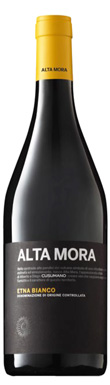

Pure Carricante, aged in steel tanks. A waxy but bracing nose, with apricot, apple and a mineral tang. Full-bodied and creamy, yet has a fine...
2017
Alta Mora - CusumanoEtna

Pietradolce, Archineri, Etna, Sicily, Italy, 2018
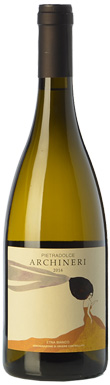
Splendid wine, produced from pre-phylloxera vines at 850m on Etna’s eastern slopes. Lively lime nose, the attack fresh and intense. Ripe citrus flavours dominate; very...
2018
PietradolceEtna
Planeta, Eruzione 1614, Etna, Sicily, Italy, 2017
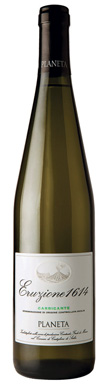
Grown at 980m, this unusual blend includes a little Riesling, just in case Carricante’s naturally high acidity isn’t sufficient! Tart and mineral nose, lime and...
2017
PlanetaEtna
Torre Mora, Scalunera, Etna, Sicily, Italy, 2018
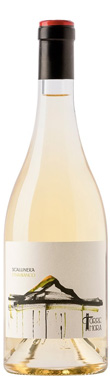
Piccini has recently acquired some fine vineyards on Etna at an elevation of about 700m. This shows a herbal nose, with aromas of cut grass...
2018
Torre MoraEtna
Pietradolce, Barbagalli, Etna, Sicily, Italy, 2015
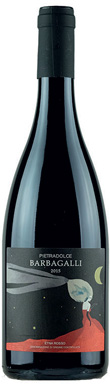
These pre-phylloxera vines are up to 100 years old and grown at 900m. Raspberry aromas infuse the nose, which is rich yet lifted and elegant,...
2015
PietradolceEtna
Benanti, Rovittello, Etna, Sicily, Italy, 2014
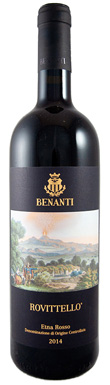
The well-established Benanti estate produces a wide range of wines, but this single-vineyard red is one of the best. The mostly centenarian vines lie on...
2014
BenantiEtna
Passopisciaro, Contrada R, Terre Siciliane, Sicily, Italy, 2017
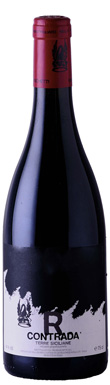
Andrea Franchetti has been seeking out very old vineyards on Etna since the early 2000s. In the past his wines could be too burly, and...
2017
PassopisciaroTerre Siciliane
Girolamo Russo, San Lorenzo, Etna, Sicily, Italy, 2015
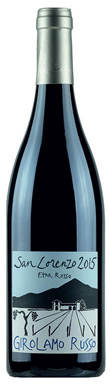
Giuseppe Russo is a former classical pianist, and his winemaking shows the same attention to detail. San Lorenzo is in Randazzo, with vines up to...
2015
Girolamo RussoEtna
Tenuta delle Terre Nere, San Lorenzo, Etna, Sicily, Italy, 2017
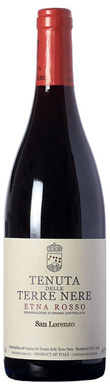
Merchant Marc de Grazia was one of the first outsiders to help revive the Etna vineyards. He favours a full-bodied style, and San Lorenzo comes...
2017
Tenuta delle Terre NereEtna
Bosco, Piano dei Daini, Etna, Sicily, Italy, 2016
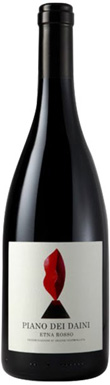
Engineer Concetto Bosco leased, then bought this property in 2011. This regular Etna Rosso has a fresh yet subtle raspberry nose, showing delicacy and elegance....
2016
BoscoEtna
Alberelli di Giodo, Alberelli di Giodo, Sicily, Italy, 2016
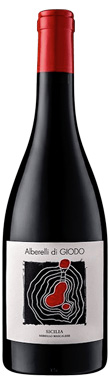
Carlo Ferrini, one of the best-known consultant winemakers in Italy, puts his reputation on the line to produce this red from just 1ha of old...
2016
Alberelli di Giodo
Graci, Rosso, Etna, Sicily, Italy, 2016
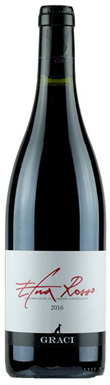
This excellent basic red by Alberto Aiello Graci is from younger vines. Packed with rich cherry and raspberry aromas, it’s suave and full-bodied, with fine...
2016
GraciEtna
Palmento Costanzo, Nero di Sei, Etna, Sicily, Italy, 2015
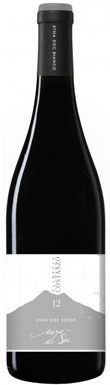
The Agosta family bought this estate in 2011 and have restored the traditional palmento gravity-fed winery. Comes from bush vines 80-100 years old. It’s wonderfully...
2015
Palmento CostanzoEtna
Alta Mora - Cusumano, Etna, Sicily, Italy, 2016
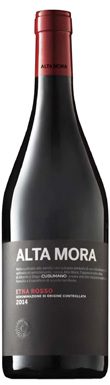
The Cusumano brothers have a well-respected, internationally distributed brand of Sicilian wines, and in 2013 began this venture on Etna, buying well-known single vineyards and...
2016
Alta Mora - CusumanoEtna
SRC, Alberello, Etna, Sicily, Italy, 2017
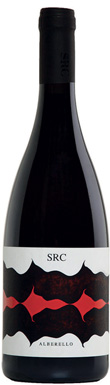
This top bottling comes from centenarian bush vines. It shows more amplitude and weightier red fruits than their other reds, but on the palate it’s...
2017
SRCEtna
Cottanera, Diciassettesalme, Etna, Sicily, Italy, 2017
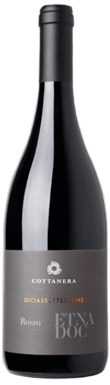
With its unpronounceable name, this is a single-vineyard red from relatively young vines. The nose is intense and direct, with raspberry aromas. Medium-bodied, it has...
2017
CottaneraEtna
Etnella, Kaos, Terre Siciliane, Sicily, Italy, 2016
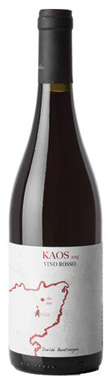
Davide Bentivegna gave up a job in industry to create this 17ha property, and this is one of several red wines he makes. Perfumed nose,...
2016
EtnellaTerre Siciliane
Frank Cornelissen, Munjebel CR, Terre Siciliane, Sicily, Italy, 2017
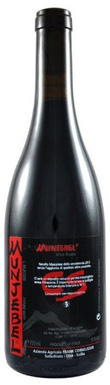
A single-vineyard wine from Campo Re, near Randazzo at 750m. There are hefty raspberry aromas and a hint of gaminess, while the palate is rich...
2017
Frank CornelissenTerre Siciliane
Tenuta Tascante, Ghiaia Nera, Etna, Sicily, Italy, 2016
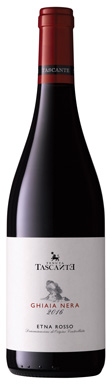
Young vines on various sites. Red-fruited nose is delicate and floral, great charm. Concentrated and quite tannic, but has bright acidity that gives fine length...
2016
Tenuta TascanteEtna
