
Expert’s Choice: 18 diverse and delicious Portuguese rosés
Portuguese rosé is showing a new confidence, building on tradition while exploring varietal diversity – and coming to terms with the success of Mateus Rosé.


Pink might not be the colour most associated with Portuguese wine, yet the country is a source of a perhaps surprising diversity of rosés, of very different hues and styles.
Produced in all of the country’s regions, from Vinho Verde in the north to Algarve in the south, by way of the Madeira and Azores archipelagos, the wealth of terroirs, mesoclimates, indigenous grape varieties and viticultural tradition is reflected in a particularly vibrant rosé category, setting it firmly apart from France’s arguably rather monotonal Provençal offering.
A blossoming category
The success of Provence no doubt played a key role in the resurgence of rosé as a whole, but Atlantic-cradled Portugal has a pink lineage very much of its own.
It’s along the parallel lines of international influence and traditional revival that Portuguese rosé has arrived at a newfound maturity in the last few years. While still enjoying, with some ambivalence, the ever-growing success of Mateus Rosé.
The unapologetically pink, softly sweet (15g/L of residual sugar), and relatively low-alcohol (11%) wine in its characteristic flask-shaped bottle, was, in many ways, a revolutionary product.
Now in its 80th year, it appealed to an expanding ‘global audience’ (owner Sogrape says it still sees yearly double-digit growth). This success, however, might lie at the root of the fact that many Portuguese producers still look suspiciously at the rosé category.
A broader palette

‘With the exception of Mateus Rosé, the category was somewhat dormant until the beginning of the 21st century,’ says Diogo Sepúlveda, who, as Sogrape’s head winemaker in charge of all but its Douro wines, oversees the production of the rosé colossus.
‘The success of Provence sparked a new interest. Now we are really looking at it from the point of view of our regions and varieties,’ explains Sepúlveda, referring to the other (premium) rosés he now produces at Sogrape’s estates.
A simultaneous reassessment of the appeal of traditional, rustic styles of lighter reds and palhetes (co-fermentions of red with up to 15% white grapes), opened new possibilities for Portuguese rosés with deeper colour, deeper fruit and more assertive tannic structure.
This explains why the beginning of the 21st century saw the category develop along two main axes: Provence doppelgangers; and natural-leaning oddities.
The category has since come a long way, recalibrating itself and finding its own identity at the crossroads of tradition and contemporary classicism.
The country’s wealth of grape varieties is a major factor driving the singularity of Portugal’s pinks. The multiple showings in this selection of Touriga Nacional – notably relevant in a wider, ongoing reassessment of the variety’s potential – are well worth exploring and comparing.
But lesser-known grapes such as Padeiro in Vinho Verde, Alfrocheiro and Jaen in the Dão, Negra Mole in the Algarve, Tinta Negra in Madeira or Moreto and Castelão in Tejo, make for a characterful palette of pinks, each with particular aromatic nuances and structural framework.
Rosé with a different accent

With greater confidence (and a sense of fun!) among producers, Portuguese rosé has become more itself, but also more ambitious.
Stainless steel is now one fermentation vessel of choice, though not the default, with clay, concrete and wood also skilfully used to tease out varietal character and sense of place.
And firmly contradicting those who argue that rosé must be drunk simple and young, some wines are released having spent time in the bottle – such as the unexpected, and brave, 2017 from Quinta do Montalto (see recommendations); or in the cellar, as in Niepoort’s Redoma Reserva 2019, bottled in 2024 after four and a half years in barrel.
Simplistic is something that Portuguese rosé certainly isn’t. The selection that follows is full of delicious, unexpected and idiosyncratic examples that tell a bigger story of rediscovery and authenticity.
See notes and scores for 18 charming Portuguese rosés
Related articles
- Decanter Cellar: 25 whites and rosés to see out the summer in style
- Rosé myths: Why most of what you think you know about pink wine – is probably wrong
- The 20 best rosés from beyond Provence this year
Niepoort, Redoma Reserva Rosé, Douro Valley, Portugal, 2019
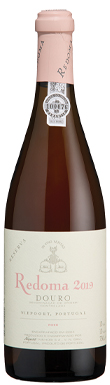

A remarkable rosé framed by notes of tobacco, cherry leaf and flint. Opens to a palate of crunchy sour cherry, pomegranate and cranberry fruit, followed...
2019
Niepoort

Hugo Mendes, Rosé, Tejo, Portugal, 2022
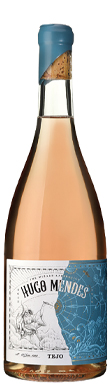
Showcasing Mendes' edgy, but never funky style, this pink 100% Touriga Nacional has a delightful Campari-like herbal bitterness that gives it such energy and nuance....
2022
Hugo Mendes
Profetas e Villões, Rosé dos Villões, Madeira, Portugal, 2024
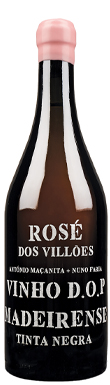
Profetas e Villões is the latest project of prolific and restless António Maçanita, in partnership with restaurateur Nuno Faria. It's a quintessentially Atlantic rosé, 100%...
2024
Profetas e Villões
Ramilo, Ramisco Rosé, Lisboa, Portugal, 2022
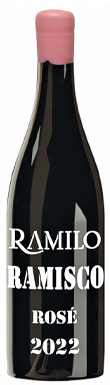
With only a handful of hectares in the storied village of Colares, by the coast near Lisbon, indigenous red grape Ramisco is being revived and...
2022
Ramilo
Adega da Penalva, Indigena Rosé, Dão, Portugal, 2024
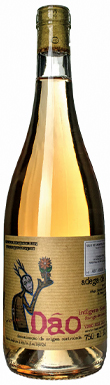
There's a distinct structure to this blend of Touriga Nacional and Tinto Roriz that sets it apart from its counterparts featured here: the tannins are...
2024
Adega da Penalva
Ode, Rosé, Tejo, Portugal, 2023
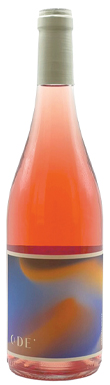
Equal parts of Touriga Nacional (fermented in stainless steel) and Pinot Gris (fermented in second-use French oak barrels) create a bright and textural rosé with...
2023
Ode
Quinta do Montalto, Vinha da Malhada Rosé, Lisboa, Portugal, 2017
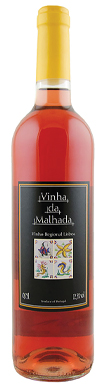
An outstanding example of the underestimated ageability of some rosés is seen in this 2017 that, while retaining vivid red fruit and a strong acid...
2017
Quinta do Montalto
Symington, Quinta da Fonte Souto Rosé, Alentejo-Portalegre, Alentejo, Portugal, 2023
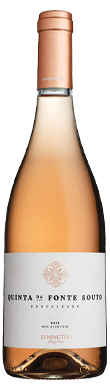
From the Symingtons' estate in northern Alentejo, there's a fleshy minerality in this dark-salmon Aragonez (Tempranillo), evocative of the schist escarpments of the mountains of...
2023
SymingtonAlentejo-Portalegre
Kopke, São Luiz Winemaker’s Collection Tinto Cão Rosé, Douro Valley, Portugal, 2022
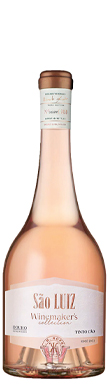
Kopke's winemaker in charge of still wines, Ricardo Macedo, chose Tinto Cão for this limited-edition rosé, making the most of its small, dense, thick-skinned berries....
2022
Kopke
Quinta da Pedragosa, Rosé, Lagos, Algarve, Portugal, 2024
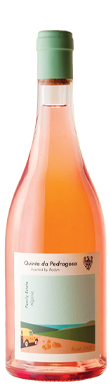
The Algarve is increasingly the source of some interesting wines, as seen in this blend of the indigenous Negra Mole and Aragonez (Tempranillo). Round and...
2024
Quinta da PedragosaLagos
Taboadella, Caementa Rosé, Dão, Portugal, 2023
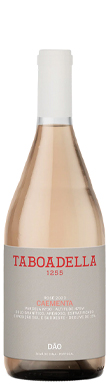
As the name suggests, this 100% Tinta Roriz, from Luisa Amorim's Dão project, was vinified in concrete tulips, after which it aged in French oak...
2023
Taboadella
Herdade da Malhadinha Nova, Monte da Peceguina Rosé, Alentejano, Alentejo, Portugal, 2023
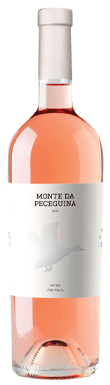
Really smart blend of Trincadeira, Aragonez and Baga with an elegant earthiness, fresh minerality and linear acidity. Wet clay dominates the nose, lifting the cranberry,...
2023
Herdade da Malhadinha NovaAlentejano
Quinta da Alorna, Touriga Nacional Rosé, Tejo, Portugal, 2024
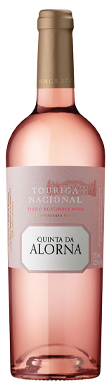
A great product of an exemplary wine program, very focused on Touriga Nacional, that winemaker Martta Reis Simões developed at Quinta da Alorna in the...
2024
Quinta da Alorna
Quinta da Pedra Alta, QPA Rosé, Douro Valley, Portugal, 2024
Provençal in colour but very Douro in style, this pink Touriga Nacional, produced and bottled especially for Quinta da Pedra Alta's co-owner Isabelle Woodward, glides...
2024
Quinta da Pedra Alta
Quinta da Raza, Single Vineyard Padeiro Rosé, Vinho Verde, Vinho Verde, Portugal, 2022
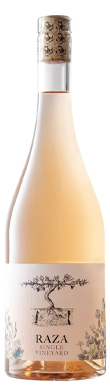
Lesser-known even than Vinhāo, Padeiro is a Vinho Verde red variety that Quinta da Raza has been eagerly – and nearly single-handedly – saving from...
2022
Quinta da RazaVinho Verde
Herdade do Rocim, Mariana Rosé, Alentejano, Alentejo, Portugal, 2024
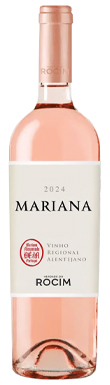
A tribute to Mariana Alcoforado (1640-1723), a cloistered nun thought to have written the famous (and infamous) Cartas Portuguesas ('Portuguese Letters') to her secret lover,...
2024
Herdade do RocimAlentejano
Quinta da Romaneira, Rosé, Douro Valley, Portugal, 2024
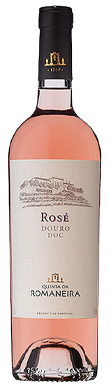
Tinta Roriz (Tempranillo) blended with Touriga Nacional for an elegant and lively Douro rosé that reflects Romaneira's exactness and laidback classicism. White pepper and aniseed...
2024
Quinta da Romaneira
Quinta das Murgas, Murgas Touriga Franca Rosé, Lisboa, Portugal, 2022
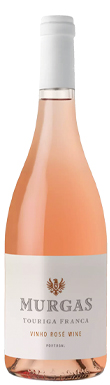
Using early-harvested Touriga Franca from the Arneiro vineyard, from which Quinta das Murgas gets the fruit for its red wine, this shows the variety in...
2022
Quinta das Murgas
