
Expert’s Choice: Northern Italy’s Schiava
Michael Garner finds charm and versatility in the fresh, light reds made from the Schiava (Vernatsch) grape in northern Italy. Find his 18 recommendations below.


The name Schiava denotes an ancient group of heterogeneous Alpine grape varieties, united originally by an innovative training system which used dedicated posts or poles for support rather than the branches of overhanging trees. Vines tied to these posts were thus ‘enslaved’: Schiava is Italian for slave.
Scroll down to see tasting notes and scores for 18 Schiava wines to try
Nowadays three main biotypes of Schiava (Vernatsch in German) are grown in the Alto Adige region of Italy, known by numerous Italian and German synonyms. While Schiava Grossa (‘large’ – the most commonly planted biotype, also known as Trollinger in Germany’s Württemburg, where it’s widely grown) and Schiava Gentile (‘fine’) share similarities and may in fact be related, the rarer Schiava Grigia has more distinctive characteristics.
Such detail can seem academic when DOC regulations refer only to ‘le schiave’ (plural) and not individual cultivars. The name has thus become a blanket term to cover the various options, and particular varieties are only rarely mentioned on labels.
Schiava invariably produces pale-coloured, light to medium-bodied, accessible reds with low levels of tannin and balanced acidity for immediate through to medium-term drinking. Though grown throughout the Alto Adige region, Schiava’s traditional strongholds of Santa Maddalena (St Magdalener) just above Bolzano (where up to 15% of local red grape Lagrein may be added), the Lago di Caldaro (Kalterersee) DOC further south, and the hills surrounding Merano over to the west, produce many of the finest bottles.
Schiava’s popularity peaked in the 1970s when tankers of its pale and, frankly anonymous, bulk red wines were sold at bargain basement prices to the region’s traditional markets of southern Germany and Austria. At the height of this ‘success’, Schiava covered around 68% of the region’s entire vineyard area.
Declining numbers
The Alto Adige’s much-heralded ‘Quality Revolution’ of the 1980s, in tandem with a shift in wine-drinking habits towards richer, fuller-bodied reds saw plantings of Schiava drop massively from over 3,500 at its peak, to just 479 hectares today (around 9% of total plantings). This translates to around 3.2 million bottles produced annually; numbers, sadly, continue to decline.
Unfashionable they may be, but Schiava wines have never been better: new clones, a better informed choice of site, and carefully controlled yields are major factors. Moreover, many of the remaining vines are now upwards of 40 years old (with a healthy number of centenarian vines, too) and produce very high quality fruit.
Versatility
Today’s Schiava is a perfect illustration of the elegant and supple, lighter-bodied red style that the Adige valley does so well (think of Bardolino and Valpolicella further down the river).
So what makes Schiava so special? The answer is its amazing versatility: it pairs well with almost any food, and thanks to its sheer drinkability even works well as an aperitif or social beverage.
Expect aromas of red fruits (cranberry, redcurrant, raspberry and strawberry) and plum with floral and toasted almond-like notes; a sleek and gently spicy (aniseed) palate with juicy freshness; and a lingering, savoury-toned and sometimes lightly smoky finish.
It’s difficult to resist Schiava’s youthful charms, but the finest examples can age for up to a decade.
18 Schiava wines to try:
Related articles
- Expert’s choice: Premium Pinot Grigio
- Expert’s choice: Alto Adige
- Cantina Tramin’s Epokale: No imitators
- Join Michael Garner for the Alto Adige Masterclass on 24 February
Pfannenstielhof, Der Pfannenstielhof, Alto Adige/Südtirol, St Magdalener Classico, Trentino-Alto Adige, Italy, 2018
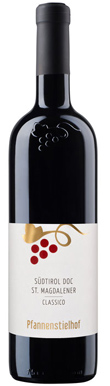

Johannes Pfeifer and family grow just two grape varieties on their small estate close to Bolzano: Schiava and Lagrein. Their super-premium cuvée, Der Pfannenstiel showcases...
2018
PfannenstielhofAlto Adige/Südtirol

Hartmann Donà, Liquid Stone Granit Vernatsch-Schiava, Mitterberg, Trentino-Alto Adige, Italy, 2021
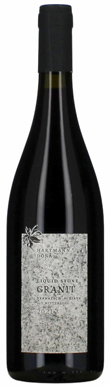
Hartmann Dona produces a wide range of wines including the ‘Liquid Stone’ series of Schiava which reflect the varied soil types of the region. Granit...
2021
Hartmann DonàMitterberg
Alois Lageder, Romigberg, Mitterberg, Trentino-Alto Adige, Italy, 2022
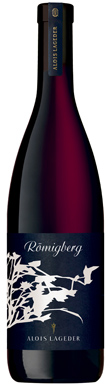
From the Lageder family’s 8ha Römigberg estate above Lake Caldaro, where pergola-trained Schiava grapes are farmed biodynamically. The fruit is fermented partly in large wooden...
2022
Alois LagederMitterberg
Fliederhof, Gran Marie, Alto Adige/Südtirol, St Magdalener Classico, Trentino-Alto Adige, Italy, 2022
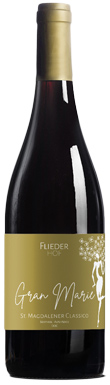
The Ramoser family farm has just 3ha of vines in the Classico area of the steeply sloping Santa Maddalena hillside. Gran Marie, containing just 4%...
2022
FliederhofAlto Adige/Südtirol
Franz Gojer, Alte Reben Vernatsch, Alto Adige/Südtirol, Trentino-Alto Adige, Italy, 2022
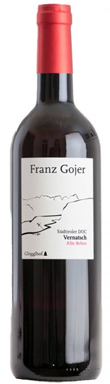
Grown on south-facing slopes at Karneid, above Bolzano at 550-600m, this individual and exciting example of Schiava is fermented and matured in stainless steel only....
2022
Franz GojerAlto Adige/Südtirol
Girlan, G'schleier Alte Reben, Alto Adige/Südtirol, Trentino-Alto Adige, Italy, 2021
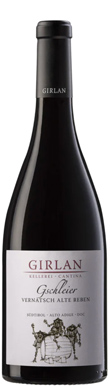
The first vintage of Gschleier was 1975. Sourced from four vineyards that snake along the hillside a few hundred metres from the winery, the vines...
2021
GirlanAlto Adige/Südtirol
Rohregger, Alte Reben, Lago di Caldaro / Kalterersee, Classico Superiore, Trentino-Alto Adige, Italy, 2021
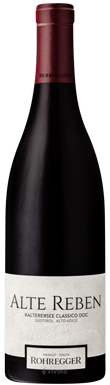
An excellent example of Lago di Caldaro from a tiny estate owned by Stephan Rohregger, former oenologist at Tiefenbrunner. Fewer than 2,000 bottles are produced...
2021
RohreggerLago di Caldaro / Kalterersee
Ansitz Waldgries, Antheos, Alto Adige/Südtirol, St Magdalener Classico, Trentino-Alto Adige, Italy, 2022
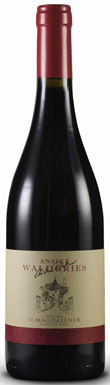
To produce Antheos, owner Christian Plattner replanted the existing field blend from his great-grandfather’s time with eight different Schiava biotypes as well as a small...
2022
Ansitz WaldgriesAlto Adige/Südtirol
Ignaz Niedrist, Lago di Caldaro / Kalterersee, Classico Superiore, Trentino-Alto Adige, Italy, 2022
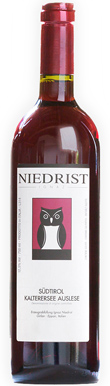
From 80- to 90-year-old pergola-trained vines, this individual interpretation of Schiava contains small proportions of both Lagrein and Teroldego. One of the region’s most hallowed...
2022
Ignaz NiedristLago di Caldaro / Kalterersee
Nals Magreid, Galea Vernatsch, Alto Adige/Südtirol, Trentino-Alto Adige, Italy, 2022
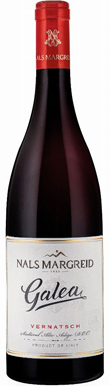
From old vines grown on gravel and porphyry soils. The fruit is fermented in stainless steel before ageing for a further six or seven months...
2022
Nals MagreidAlto Adige/Südtirol
Plonerhof, Alte Rebe, Alto Adige/Südtirol, St Magdalener Classico, Trentino-Alto Adige, Italy, 2022
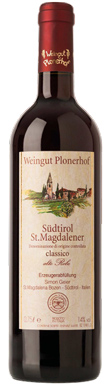
This small, family-run cellar produces a total of around 10,000 bottles annually, primarily Santa Maddalena. The Alte Reben cuvée is made from 60- to 80-year...
2022
PlonerhofAlto Adige/Südtirol
Untermoserhof, Hub, Alto Adige/Südtirol, St Magdalener Classico, Trentino-Alto Adige, Italy, 2021
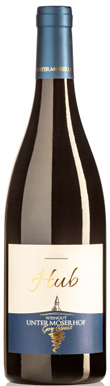
Specialising in local red grapes, Schiava and Lagrein, the Untermoserhof winery is based in Santa Maddalena. The Hub selection contains less than 5% Lagrein and...
2021
UntermoserhofAlto Adige/Südtirol
Wassererhof, Alto Adige/Südtirol, St Magdalener Classico, Trentino-Alto Adige, Italy, 2021
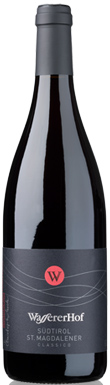
Winemaker Christian Mock believes in giving his red wines plenty of bottle age. Fermentation and maturation of the family’s Santa Maddalena is in stainless steel...
2021
WassererhofAlto Adige/Südtirol
Cantina Merano, Fürst, Alto Adige/Südtirol, Trentino-Alto Adige, Italy, 2021
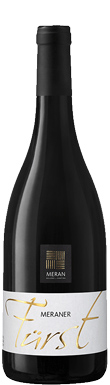
A single-vineyard Schiava from grapes grown at 550-600m above Lagundo, northwest of Merano, Fürst is fermented in stainless steel then matured for 12 months in...
2021
Cantina MeranoAlto Adige/Südtirol
Markus Prackwieser – Gump Hof, Mediaevum Vernatsch, Alto Adige/Südtirol, Trentino-Alto Adige, Italy, 2022
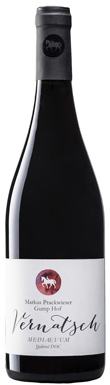
Markus Prackwieser makes exemplary wines at his Gump Hof estate in the Isarco Valley from vineyards on the steep slopes of the Sciliar mountainside at...
2022
Markus Prackwieser – Gump HofAlto Adige/Südtirol
Erste & Neue, Puntay, Lago di Caldaro / Kalterersee, Classico Superiore, Trentino-Alto Adige, Italy, 2021
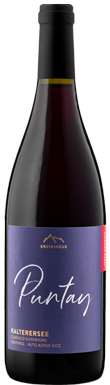
The Erste & Neue arm of the Cantina Kaltern co-operative is dedicated to producing premium wines, with pride of place going to the Puntay range....
2021
Erste & NeueLago di Caldaro / Kalterersee
Josef Brigl, Vigna Windegg, Lago di Caldaro / Kalterersee, Classico Superiore, Trentino-Alto Adige, Italy, 2022
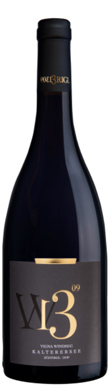
The Brigl family are important landowners in the region, with 50ha of vineyard spread over several estates. Their Windegg vineyard in the Lago di Caldaro...
2022
Josef BriglLago di Caldaro / Kalterersee
