
First Taste: Krug Grande Cuvée 172ème Édition
Tom Hewson tastes and rates the promising latest releases from Krug, a Champagne house that continues to blaze its own trail.


Krug does not make ‘entry-level’ Champagne. In fact, listening to Olivier Krug, sixth generation and director of the house, it appears that Krug does not make NV Champagne, or ‘multi-vintage’ Champagne, either.
So what is Krug Grande Cuvée, exactly?
Scroll down for tasting notes and scores for the latest Krug releases
The best of every year
‘Grande Cuvée is the dream of our founder, Joseph Krug,’ explains Olivier Krug, ‘it is to offer the best of every year’.
Not a single-vintage wine, therefore, but a unique creation blended by cellar master Julie Cavil each year.
Using Cavil’s obsession for precision, Grand Cuvée incorporates what, in the Krug universe, is not called a ‘base’ wine, but rather a ‘youngest’ wine.
Because a new blend is created every year, both Grande Cuvée and Grande Cuvée Rosé are assigned ‘edition’ numbers to help Krug lovers track their collection.
2024 sees the release of the 172nd edition of Krug Grande Cuvée and the 28th edition of Krug Rosé. The youngest wines in both cuvées are from the 2016 vintage.
‘We won’t see too many vintage wines from 2016,’ says Krug, noting the year’s small yields and extreme weather which saw frost, challenging flowering conditions and large amounts of rainfall in early summer leading to a difficult growing season.
Late-summer sun and heat waves pushed the ripeness of the small yields, although the year stops short of any hot-season character.
‘There is a backbone of freshness that is the signature of the year,’ Krug believes.
The wines are vinified in old, neutral oak, then quickly moved to stainless steel. The Grande Cuvée is blended with a sizeable quota of reserve wines that are specially selected for that blend and is always aged for at least seven years on lees before release.
Dancing to its own tune
The assemblage of the Grande Cuvée 172ème uses reserve wines going back to 1998, totalling 42% of the blend.
For the Grande Cuvée Rosé 28ème, reserve wines were sought out that would complement 2016, that weren’t ‘as deep as Grande Cuvée, but need to be expressive young,’ says Krug.
Between 10%-11% red wine is added into a bespoke blend for the Rosé – a point of difference over some other prestige rosés, which simply add red wine to the existing white blend. Krug describes the Rosé as ‘our red wine’ and is keen to promote its gastronomic credentials.
Not only can this house transcend the ups and downs of vintage character in Champagne, but it can make wines that truly excel, even when the youngest (and largest) element of the blend represents vintages that are not widely released as a standalone (such as the superb 167ème edition, based on 2011).
This is as fine a pair of editions as any, showing that Krug continues to play its own tune – even if we’re not quite sure what, if anything, to call it.
Krug’s latest editions
Related articles
- A peek inside Krug’s sleek and sophisticated new winery
- First Taste: Krug 2011 vintage release
- Slow and steady: Champagne’s 2004 vintage 20 years on
Krug, Grande Cuvée 172ème Édition, Champagne, France
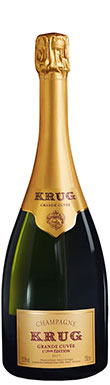

The youngest year (and largest component, at 58%) in this blend is 2016. Krug's 172ème edition casts the exuberance of that vintage in a typically...
Krug

Krug, Rosé 28ème Édition, Champagne, France
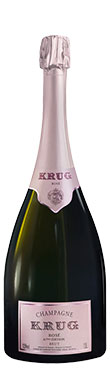
Krug's 28ème edition rosé is a relatively vibrant, succulent release, showing a lifting aromatic joyousness and a lightness of touch, alongside its gastronomic DNA. Rosy...
Krug
