
First taste: Krug’s 2006 releases
Yohan Castaing tastes the newly launched 2006 vintages of Krug and Clos du Mesnil as well as the Grande Cuvée 162ème Édition, Clos d'Ambonnay 2002 and Krug Collection 1988...


A new release of Clos du Mesnil is always a special moment for the House of Krug. And the latest release is all the more significant, as 2006 is the year that Julie Cavil – appointed as Krug’s new chef de caves, or winemaking director, in 2019 – first joined the production team at this venerable house.
On her arrival back then, she never imagined in her wildest dreams that one day she would be appointed to the pivotal position of cellarmaster and be the one to present this unique vintage some 14 years later.
Scroll down to see Yohan Castaing’s Krug 2006 tasting notes and scores
Cavil remembers 2006 as being ‘a very hot year in Champagne, with nearly 20 days marked by temperatures above 30°C. It was also a capricious year, because we had the equivalent of two months of rain in the span of 15 days during the month of August.’
But September brought more sun and heat, and a protracted harvest unfolded under ideal conditions. The criteria were therefore met for all the members of the tasting committee, including Éric Lebel, the chef de caves in 2006, Olivier Krug, the director of Maison Krug, Maggie Henriquez, President of Krug, but also Cavil herself, to decide to produce the famous Clos du Mesnil, which only happens in exceptional vintages.
Clos du Mesnil is a small vineyard plot of just 1.84ha, located in the heart of the village of Mesnil-sur-Oger. First belonging to an abbey, It dates back to 1698 and was surrounded for a long time by other vineyards.
Over the centuries, as the village expanded, houses sprang up all around the vines. Acquired by Krug in 1971, this prestigious enclosed parcel is planted entirely to Chardonnay.
‘Thanks to the houses that surround the vineyard,’ explains Cavil, ‘there is a microclimate that makes it one of the earliest-ripening plots, an exception being 2020, a very atypical year.’ Micro-parcels within the walled plot are harvested and vinified separately, so ‘we can thus make five or six different wines, before deciding whether or not we will produce a separate Clos du Mesnil cuvée. When we choose not to do this, the production is blended into the other Krug Champagnes.’
The first vintage of Clos du Mesnil was 1979 and this 2006 is Opus 19 of the series. It remained in the Krug cellars for nearly 13 years before being disgorged at the end of 2019 with a dosage of 4g/l.
From soloist to orchestra
Alongside the 2006 Clos du Mesnil, Krug has released its regular 2006 vintage cuvée. If you consider Clos du Mesnil a soloist – a Champagne produced from a single terroir, a single grape variety and from a single vintage – the 2006 Krug cuvée is more like an orchestra. Indeed, the three major grape varieties of Champagne are united, each coming from different terroirs.
‘What surprised and enchanted us was the fact that in 2006, all three of the classic Champagne grapes showed beautiful ripeness in all our selected plots,’ says Cavil. ‘It was a year in which the Pinot Meunier had remarkable balance, while the Chardonnay was so elegant with ample aromas. As for the Pinot Noir, from the start it revealed promising structure and great potential.’
This new cuvée is a blend of 48% Pinot Noir with a majority originating from the northern part of the Montagne de Reims but also from Les Riceys, while the Chardonnay, comprising 35% of the blend, comes from the Côte des Blancs sector. As for Pinot Meunier, it was sourced from the terroirs around the villages of Leuvrigny and Sainte-Gemme and makes up for 17% of the blend. This Champagne was aged for almost 12 years before disgorgement at the end of 2018.
In addition to these two Champagnes from the 2006 vintage, Krug also provided for this Decanter tasting the 162ème Édition of its flagship Grande Cuvée, made with a base wine from the same vintage, 2006, as well as the Clos d’Ambonnay 2002, the fifth vintage of this Champagne produced since 1995. An added rarity was the Krug Collection 1988 cuvée. Tasting notes for these three Champagnes are also provided below.
See Yohan Castaing’s Krug 2006 tasting notes and scores
You may also like
First taste: Bollinger PN VZ 15 – first new cuvée in over 10 yearsFirst taste: Dom Pérignon 2010First taste: Les Rendez-Vous de Billecart-Salmon No.1First taste: Charles Heidsieck Blanc des Millénaires 2006
Krug, Champagne, France, 2006
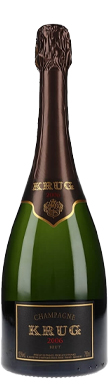

Veritably dripping with notes of rich buttery pastry and toasted brioche, honey and golden syrup-coated pineapple, this is the definition of indulgence. Fluffy pancakes and...
2006
Krug

Krug, Clos du Mesnil, Champagne, France, 2006
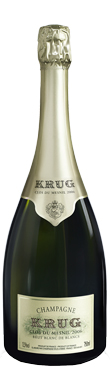
This delicious, youthful wine opens with notes of ripe apple, hawthorn, and cream suffused with a bright minerality. The texture is hedonistically creamy and supple,...
2006
Krug
Krug, Grande Cuvée 162ème Édition, Champagne, France
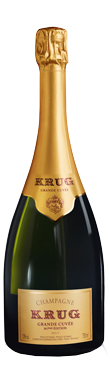
Another glimpse into 2006 (around which this Grande Cuvée is based), this offers up an incredibly nutty profile, combining grilled cashews, bitter walnut skin and...
Krug
Krug, Clos d'Ambonnay, Champagne, France, 2002
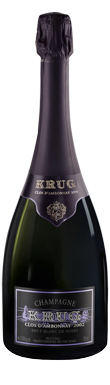
The bouquet has a magnificent classicism to it, comprising notes of yellow fruits, spices including white pepper, flowers and a mineral edge. With aeration, scents...
2002
Krug
Krug, Collection, Champagne, France, 1988
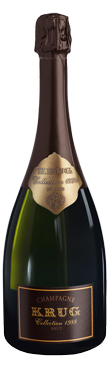
When Krug 1988 was first released, a few bottles remained stored in the Krug cellars to see how they aged. The result today is a...
1988
Krug
