
First taste: Veuve Clicquot La Grande Dame 2012
Simon Field MW tastes the new release of Veuve Clicquot’s top flagship cuvée, La Grande Dame, alongside previous releases including; 2006, 2004, 1995, 1989 and 1979.


The new chef de cave at Veuve Clicquot has an impressive CV, as one might expect. Didier Mariotti is a Burgundian, with a long-standing love, above all else, for Pinot Noir. Not only did he work with his predecessor at Veuve, Dominique Demarville, at Champagne Mumm, but he also introduced Mumm to its first Blanc de Noirs.
Scroll down for Simon Field MW’s Veuve Clicquot La Grande Dame tasting notes and scores
Dominique, having made the move from Mumm to Clicquot, surprised everyone by introducing a 2008 Grande Dame which was made up of 92% Pinot Noir (it was traditionally closer to 60%) and now Didier is in position to present the follow-on, the magisterial 2012, fashioned from the same cloth.
A widow’s legacy
So why the change and how does it affect the wine?
Veuve Clicquot has a reputation for being a Champagne house where Pinot Noir both dominates and excels, so this may seem to be the logical conclusion of such aptitude.
Introduced in 1972 with the 1962 vintage, the release coinciding with the bicentenary of the house, La Grande Dame, from the outset, has striven to fulfil the perfectionist ambitions of the eponymous Dame, the redoubtable Nicole de Ponsardin. A strong-willed entrepreneur, widowed at the age of 27, Nicole’s legacy is impressive indeed; she introduced the first known vintage Champagne in 1810, then the riddling table in 1816 and finally the first known blended rosé (by assemblage with red wine, this in 1818), all at a time of the turmoil of Napoleonic decline.
Second only to Moët and Chandon in terms of volume, La Maison Veuve Clicquot now has an enviable position in the Champagne world, its massive output and corporate muscle (it is part of the LVMH behemoth) seemingly careless of an innate quality which seldom fails to impress. And top of the tree, appropriately enough, is La Grande Dame herself, ornately dressed in 2012, courtesy of a revolving carousel of a box and a distinctive design of polka dots and flowers created by the Japanese artist Yayoi Kusama.
2012 release
The 2012 vintage in Champagne already has a superb reputation for its Pinot Noir, but that is a mere bonus in the light of an aspiration which now seeks to underline and formalise the difference between the styles of La Grande Dame and the straight Veuve Clicquot vintage, the latter maintaining its more traditional blend (65-75% Pinot Noir maximum).
Things, however, are far more subtle than that. Didier explains that his goal is to test the tension between power and finesse to its utmost with La Grande Dame, his ultimate aim to achieve a ‘vertical’ structure, which, almost paradoxically, plays on delicacy and finesse above all.
To succeed with this, he has realigned the palette of grand cru villages which contribute his Pinot Noir grapes. There is now appreciably less emphasis on the southerly (relatively speaking) villages of Ambonnay, Ay and Bouzy, and much more on the cooler, north-facing villages of Verzenay and Verzy.
The result does not lack power, for sure, but is subtle and has a textural integrity that is as deft as it is nuanced. The 10% of Chardonnay, he maintains, is required to add a touch of freshness to the assemblage, so it is unlikely that La Grande Dame will ever transform herself into a Blanc de Noirs. Unlike the vintage VC, which is aged in oak (foudre), this wine sees only stainless steel before its seven years of ageing on lees. The 2012 has a dosage of 6g/L; not, says Didier, ‘to hide anything’, rather to act as a ‘condiment’, adding gentle spice to the ensemble.
Weather conditions
2012 was a year of climatic vicissitude and small yields; despite the challenges of outbreaks of spring rain, late frost and even hail, the season finished under sunny skies and the harvest was brought in by 18 September.
Excitement was focused in particular on the Pinot Noir and there was, one would imagine, little hesitation in continuing the ‘experiment’ with the change in blend in this vintage especially.
Didier has stepped onto the stage late in the day, but is overjoyed at his bequest; he describes the wine as ‘precise, delicate, playful, lively and laughing’, almost making light of the underlying gravitas and depth of flavour which marks out La Grande Dame in all vintages, especially a triumphant outing such as this.
The Pinot Noir from the northern villages contributes a specific ‘bitterness’ to the finish, which, although it doesn’t sound immediately enticing, actually underpins the entire edifice by maintaining and highlighting that vital inherent tension which marks out all the very best Champagnes.
See Simon Field MW’s Veuve Clicquot La Grande Dame tasting notes and scores
You may also like
Relaunch: Charles Heidsieck Mis en Cave ChampagnesFirst taste: Krug’s 2006 releasesFirst taste: Brad Pitt and partners reveal rosé Champagne ‘Fleur de Miraval’
Veuve Clicquot, La Grande Dame, Champagne, France, 2012
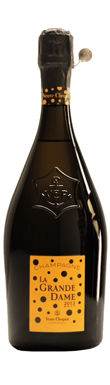

This feels a little more evolved than you might expect, aromas of crusty bread, honey, oatmeal, walnut and toasted seeds coming to the fore. It's...
2012
Veuve Clicquot

Veuve Clicquot, La Grande Dame, Champagne, France, 2006
The last in the sequence of Grandes Dames with a healthy slug of Chardonnay (47% in 2006), this is the child of a capricious and...
2006
Veuve Clicquot
Veuve Clicquot, La Grande Dame, Champagne, France, 2004
Subtle gold presages latent power, alchemy at work. Here we meet La Grande Dame at her most elegant, the wine’s architecture sturdy yet delicately ornate...
2004
Veuve Clicquot
Veuve Clicquot, La Grande Dame, Champagne, France, 1995
Most winemakers in Champagne agree that their finest wines require a decade or so on the lees, then another decade or so of cellaring before...
1995
Veuve Clicquot
Veuve Clicquot, La Grande Dame, Champagne, France, 1989
The power of 1989 demands long ageing both before and after disgorgement. In terms of the latter, the wine has now enjoyed over 20 years...
1989
Veuve Clicquot
Veuve Clicquot, La Grande Dame, Champagne, France, 1979
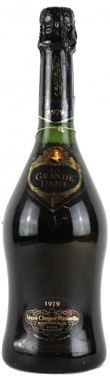
A lower dosage (4g/L), after a lengthy tirage (disgorged in May 2014). Inspirational in so many ways and it certainly makes one wonder 'when' rather...
1979
Veuve Clicquot
