
Francisco Barona: producer profile
The classic case of working for decades to become an overnight success, this rising star winemaker’s impressive CV lists some of the world’s most prestigious wineries, and his name now joins those of the best in Ribera del Duero.


My appointment with Francisco Barona sounded like something out of a Graham Greene novel. ‘Meet me in front of the bullring in Roa,’ he’d told me on the phone. I was intrigued. Did he want to share his love of the corrida before we talked and tasted? Would he arrive dressed as a matador? The answer was more prosaic.
Barona is in the process of building a bodega nearby and, for the time being, he presents his wines in a modest ground floor room in the centre of town. The bullring is the nearest landmark.
Scroll down to see tasting notes and scores for two Francisco Barona wines
The tasting itself was considerably more eventful.
It wasn’t just that Barona turned up with an armful of vine cuttings, harvested that morning to show me the varieties that make up his field blends. It was also the remarkable quality of his wines, as good as anything I’ve sampled in Ribera del Duero. But more than anything, it was Barona’s life story that inspired and enchanted me.
This young winemaker – he’s still only 37 – has packed more adventure into his three and a half decades than most of his contemporaries will manage in twice the time. Sit down and pour yourself a glass of red while I share the details.
The beginning
It all began mundanely enough. Barona was born into a family of what he calls ‘humble growers’ in Roa. A poor student, he found his inspiration working in vineyards. ‘I could drive a tractor by the time I was 12 and at weekends and during the holidays I helped my dad or worked at neighbouring Bodegas y Viñedos Robeal.’
He left school at 18, with grades in his Bachillerato (Spanish A-levels) that weren’t good enough for him to go to university to study winemaking. More hard graft in the vineyard beckoned.
Serendipity was about to change his circumstances for the better, however. Barona had become friends with Gonzalo Iturriaga, now the winemaker at Vega Sicilia but then at Alonso del Yerro, who suggested he go to France to gain some experience. ‘I don’t speak French,’ he said. ‘You’ll learn,’ replied Iturriaga, who offered to put him in contact with Château Pavie Macquin in St-Emilion. ‘I had no idea where St-Emilion was,’ admits Barona.
In July 2003, the 19-year-old Spaniard arrived in Bordeaux to take up a temporary post as a vineyard labourer. Within two weeks, his new employers were so impressed by his work ethic that they took him on full-time. Later the same year, they urged him to study for a BTS VO (Brevet de Technicien Supérieur), a further qualification in viticulture and oenology, and said that they would pay the fees. Barona was the only foreign student; when the course ended three years later, he’d come second out of 63 people. The top four graduates were guaranteed a place at Bordeaux University, so by 2008, Barona had added a prestigious Diplôme National d’Oenologue to his CV. This time, he finished top of his class. ‘At school in Spain, my teachers told me I was stupid,’ he says.
In the course of his studies, Barona worked at Château Malescot St-Exupéry in Margaux and, more importantly in terms of his future, Château Angélus in St-Emilion, where the family estate’s co-owner Hubert de Boüard became a mentor.
After graduation, the next stop was Hartwell Estate in the Napa Valley to improve his English. ‘I learned a lot about wine,’ Barona remembers, ‘but most of the workers were Mexicans, so my language skills didn’t progress much.’
Francisco Barona at a glance
Born 9 May 1984
Studied Lycée Agricole de Blanquefort (BTS); Université de Bordeaux (Diplôme National d’Oenologue)
Worked Bodegas y Viñedos Robeal, Château Malescot St-Exupéry, Château Angélus, Hartwell Estate, Klein Constantia, Dominio Basconcillos
First vintage of Francisco Barona 2014
Owns 30ha of old vines
Current production 16,000 bottles
Family Married to Beatríz; two children
A return to Spain
He thought about returning to Spain, but decided against it because the financial crisis was throttling the economy. De Boüard got him a job at Klein Constantia in the Cape instead. After six months in South Africa, it was finally time to head home to Ribera del Duero.
Barona’s first idea was to speak to his great uncle, Millán Cristóbal, who owned 3ha of old vines in Roa that were so good that Vega Sicilia bought most of the grapes. Would he consider selling some of the crop to a relative? ‘He told me to get stuffed.’
Barona needed work, so he circulated his CV to local wineries. Dominio Basconcillos in Gumiel de Izán was interested and offered him an interview. ‘José María Basconcillos asked me what score I’d give myself as an oenologist out of 10,’ remembers Barona with a smile, ‘so I said 10.’ He hired the self-confident young winemaker on the spot. Barona remained at Basconcillos until 2020, crafting some superb reds from this marginal, high-altitude site. But all the time he was there, he was developing his own project, too.
From the start in 2009, Barona was determined to acquire old vineyards. The problem was that growers didn’t want to sell them. Castilians are fiercely attached to their land and famously stubborn, to boot. His father had 14ha, but they were planted with higher-yielding Italian clones. ‘I wanted nectar, nectar, nectar,’ says Barona. There was only one solution – to buy abandoned parcels for a song and coax them back to life.
Barona purchased 4.5ha across five parcels in Anguix, La Aguilera and Roa, working evenings and weekends on their recuperation. It took him five years before they yielded a crop, but it was worth the toil. The grapes were very promising indeed – sweet, fresh and full of flavour. He was ready to make his first Francisco Barona wine.

Fulfilling ambitions
Most people would have been happy with those 8,000 bottles, especially if they had a demanding day job, but Barona’s ambitions went beyond that. Fate was about to lend a hand once more. In 2013, a family from Barcelona with 10ha of old vines in Anguix was looking for a buyer and got in touch. Could Barona help them out and take a commission on the sale? He could, but he had a much better idea. He’d buy them himself.
The only problem was that the family wanted €400,000 and Barona had no money. And then he remembered the €6,000 that he and his wife Beatríz had just been given as a wedding present to redo their kitchen. Without asking her, he offered that as a down payment on the vines and resolved to borrow the rest from the bank. ‘My wife nearly divorced me on the spot when she found out.’ The bank wasn’t impressed either, but this is one determined hombre. Eventually, he bought the vines for €200,000, accumulating debt that he was confident he could pay back in time. ‘It was the deal of the century,’ he says.
By 2017, Barona was just keeping his head above water. He owed the bank €45,000 in interest, his house was in danger of being repossessed and his wife still didn’t have a new kitchen. Those 8,000 bottles of 2014 were now on the market, but who would buy them? ‘People underestimate how hard it is to start a new project when you have no contacts,’ says Barona. But then he remembered a distributor from Galicia who’d expressed an interest in his project from the start. Barona invited him to come and taste the wine. It was so good that the Galician bought the lot.
The fledgling project was finally on its feet. Five years later, Barona has rapidly established himself as the best young winemaker in Ribera del Duero. He now makes two wines – both field blends of Tinto Fino (Tempranillo) with Albillo Mayor, Bobal, Garnacha and Jaén Blanca. The first comes from the 29ha he has accumulated since 2009, including the 3ha that his great uncle finally sold him just before he died in 2017; the second – Finca Las Dueñas – is from half a hectare of vines, planted in 1928, part of what he acquired with the help of the bank and that wedding gift.
Both are world-class wines, drawing on the experience that Barona has acquired in the 25 years since he started driving a tractor as a boy. ‘I’ve worked like a mule all my life,’ he says. ‘I’ve sweated blood.’ We wine drinkers should be grateful for his sacrifice. And so should Spain.
Natural touch: the wines of Francisco Barona
Related content
The wines that made Rioja famous: Panel tasting results
Expert’s choice: Ribera del Duero under £30
Francisco Barona, Finca Las Dueñas, Ribera del Duero, Castilla y Léon, Spain, 2017
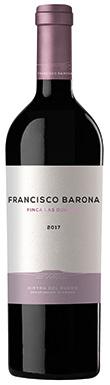

One of those wines that's so exciting that you want to tell the world about it, this is a brilliant, entirely whole bunch-fermented field blend...
2017
Francisco BaronaRibera del Duero

Francisco Barona, Ribera del Duero, Castilla y Léon, Spain, 2019
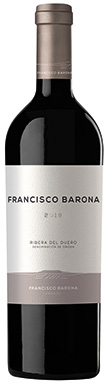
This hugely impressive red comes from high-altitude vineyards planted between 1908 and 1948 in Anguix, La Aguilera and Roa and is a blend of Tinto...
2019
Francisco BaronaRibera del Duero
Francisco Barona, Finca Las Dueñas, Ribera del Duero, Castilla y Léon, Spain, 2017
One of those wines that's so exciting that you want to tell the world about it, this is a brilliant, entirely whole bunch-fermented field blend...
2017
Francisco BaronaRibera del Duero
Francisco Barona, Ribera del Duero, Castilla y Léon, Spain, 2019
This hugely impressive red comes from high-altitude vineyards planted between 1908 and 1948 in Anguix, La Aguilera and Roa and is a blend of Tinto...
2019
Francisco BaronaRibera del Duero
