
From non-vintage to multi-vintage: Champagne rips up the rule book
NV and MV – only one letter different, but in the Champagne world the two signify daringly different conceptions of what a ‘house blend’ can or should be. Is it just a premium-end fad, or could non-vintage be about to change forever?


While non-vintage (NV) is formally recognised as the mainstay of Champagne, it may seem odd that there is no equivalent recognition, by the authorities at least, for its well-groomed sibling, ‘multi-vintage’ (MV).
The dominance of the NV category seems, if anything, to be hardening (see ‘Shipments by category’ table), with MV not getting a look in. At 78.5% of total shipments in 2020 for all NV, that’s a huge volume of bottles, each having a story to tell.
Scroll down to see tasting notes and scores for 10 top non-vintage / multi-vintage Champagnes
Recently, however, there has been a quiet revolution, in the top echelons at least, with the aim of recognising, promoting and celebrating the diversity on display.
Non-vintage, if one stares hard at the term, is something of an empty phrase – of course there has been a vintage involved in the process! What’s more, all growers will, by definition, use more than one vintage in their NV wine – multi-vintage, in other words.
It seems, at first blush, quite logical to give more recognition to this term.
Champagne, say its defenders, should be seen as more than a simple sparkling wine used to lubricate a thousand drinks receptions, and thus little different from so many fizzy wines around the world: Champagne is more complex; Champagne is different…

End/beginning of an era
The French term ‘brut sans année’ is maybe a little clearer, but only just. And it is against this term that Champagne Louis Roederer chef de cave Jean-Baptiste Lécaillon has launched his now oft-quoted broadside. ‘This is the end of the era for brut sans année,’ he has declared; ‘this is the new era of the multi-vintage.’
His comments were made at the July launch of Roederer’s Collection 242, a wine which replaces its long-established Brut Premier cuvée. A brave move? For sure… But also commercially adroit (at £52, the new wine is priced at £4 more than its forebear), and one which cements Lécaillon’s position as the most influential winemaker of his generation. The ‘premiumisation’ of the top end of a sprawling category? That appears to be the goal.
Two key questions need to be asked, however. Firstly, is this actually new; is the fanfare and the use of terms such as ‘revolution’ over-egging the pudding? Secondly, how has it been received in Champagne?
Canvassing opinion has thrown up diverse and fascinating views, not necessarily all singing in the same key, but generally, unsurprisingly, agreeing with the spirit of what is, in essence, an endorsement of the singular appeal of Champagne as a superior product.
Resting on laurels, especially in such testing times, is not an option. Champagne shipments fell by 17.6% in 2020 (see ‘Global shipments’, below), and although this year’s numbers are looking more promising, the Champenois are always keen to underline the difference between their product and all potential rivals. All the more so given the 2021 harvest looks set to be the shortest since 1981, with yields set to fall by a whopping 60%. It may just be that this ‘reappraisal’ is the way to cement the region’s reputation as primus inter pares…
Anything new? Well, in essence, no, because all NV Champagnes include more than one vintage in their blend and are therefore all multi-vintage. The key difference is one of emphasis, with far more stress on the older reserve wines and, possibly even more fundamentally, a shift away from the axiomatic stress on consistency, year-in-year-out, in the style of the flagship wines.

Complexity over correction
We have arrived at the heart of the matter. Should a house’s non-vintage standard bearer always taste fundamentally the same; a branded identity, a polished calling card; Laurent-Perrier tastes like this, but Taittinger tastes like that, and so on. We know where we are.
In this respect, Lécaillon really is being revolutionary and is taking quite a risk. His theory is that, historically, the notion of consistency has merely been a backstop, or, to use a less politically charged term, a safety net. Why? Because the weather in Champagne was, so often, unpredictable. Cross-vintage blending, the storage of reserve wines, not to mention the sugar additive (dosage), all fell under an umbrella term of ‘correctives’ – all serving to compensate for the inadequacies bestowed by nature.
Nature has been more benevolent of late, and ‘correction’ and ‘compensation’ have ceded to the far more satisfactory notion of ‘complexity’. There is no longer a requirement to tackle tart, underripe wines with various forms of maquillage (make-up) – now the main concern is to maintain freshness; to keep the pH levels in the soil low and to control nature’s more generous inclinations.
Grower-producer Rodolphe Péters is explicit: ‘Rather than trying to correct average vintages with reserves of a few good vintages, as previously, it is now possible to play with more consistently good quality and to build blends from a mosaic of good harvests, which all, to my mind, deserve to be called “multi- vintages”.’
From a maximum of two or three good vintages in a decade in Champagne, now we are seeing up to eight. A sea-change, but let’s hope that things don’t go the other way, and we end up with a new slew of corrective measures, this time to counter the balmy excesses of ongoing climate change.

Consistency plus individuality
MV, then, is everywhere and yet nowhere, with no formal recognition. At Henri Giraud, they don’t seem to mind. Giraud was early to the game, inscribing both the term MV and the base year into the nomenclature of its brut sans année as early as 2007, thus its product names MV07, MV Rosé and so on. The current manifestation is MV16; as with many others, Giraud applies its older wines by means of a ‘perpetual reserve’ – a solera-like trove of complexity. Export director Stéphane Barlerin draws a comparison between the application of the perpetual reserve to the MV cuvée and the art of the perfumer.
This echoes musical comparisons by Julie Cavil and Olivier Krug; their Krug Grande Cuvée has been rebranded since 2016 as an Edition series, similarly with its name changing every year to reflect subtle differences in the tirage (addition of a solution of yeast, wine and sugar to induce secondary fermentation in the bottle) in question. Krug Edition 169, the current release, is based on the late 2013 vintage, for example, and differs appreciably from Edition 168, which had the powerful 2012 at its core. Olivier compares the winemaker to a conductor; the 160 or so wines in the blend can indeed be likened to an orchestra, with no shortage of room for manoeuvre in terms of subtle style variations. Complexity is key. Champagne is special, or so they say.
Péters started his perpetual reserve in 1997 and it now makes up 50% of his brut réserve. Other examples can be found at Henriot and Selosse, Agrapart and, of course, Louis Roederer. Many divide the older contribution of their final assemblage between ‘réserve perpétuelle’ (RP) and individually kept reserve wines. Xavier Millard at Mailly Grand Cru, for example, started a RP in 2013 but also includes 10 years’ worth of reserve wines in his Brut Réserve NV, stored individually in both oak and stainless steel.
Rémi Vervier at Champagne Palmer & Co advises that his brut NV is made up of 35%-45% of reserve wine, itself split between blends of the previous four years’ worth of the Brut Réserve but also soleras of not only Chardonnay (more than 20 years old) but also Pinot Noir (11 years old). Music and perfume are replaced by the kitchen: ‘The production of brut NV is by no means a recipe that is repeated every year. The oenologists must work with what nature offers us, but also with the treasures in the winery, the reserve wines. It is illusory to think that we can produce the same wine every year. A bit like a great chef can never, it seems to me, reproduce his signature dish, completely identically.’
Brut NV is, Vervier maintains, the most complex of his portfolio to get completely right. And yet, for all that, he maintains that ‘the brut NV is above all the house signature, the DNA of Champagne Palmer, the fingerprint of which must be found in each bottle of brut NV’.
A signature, then – so therefore some degree of consistency. It is all a matter of degree, evidently. Each time one signs a cheque, the signature – supposedly a failsafe means of proof of identity – will differ a little…

Vintage character
Looking back, one can recognise how this discussion has been brewing for a long time. Laurent-Perrier has, after all, been making its differing ‘Iterations’ of the Grand Siècle since 1959, and although this wine falls under the aegis of the deluxe cuvée, the principle is the same. The recent Iteration 24, for example, uses wines from the vintages 2004, 2006 and 2007; veteran winemaker Michel Fauconnet maintains that this juxtaposition is the only way to defy nature and to achieve what he describes as a ‘trinity of freshness, finesse and elegance’.
In this century we have Jacquesson, which must be seen as the real pioneer; its 700 series launched with Cuvée 728, based on the 2000 vintage, the latest manifestation being the 744, built on 2016. ‘So, you have heard about the new revolution in Champagne,’ joint-owner Jean-Hervé Chiquet says to me, with a twinkle in his eye. ‘Our idea was and remains to get rid of the NV concept of consistency, but also to privilege the character of the base year. Therefore, we use our reserve wines moderately (around 30%) to add complexity to the wine without hiding the vintage character.’ The best of both worlds, maybe.
Composing in a different key?
The central paradox, therefore, seems to be that the emphasis on the complexity engendered by multi-vintage is achieved hand in hand with a renewed stress on the base year, which it seems is both given more significance, thereby challenging consistency; and less significance, highlighting complexity. Intellectually this is not the easiest of ideas to grasp, but it is an extremely important one. Monsieur Lécaillon may be stoking fires that have been burning a long time, but his influence is key to the reappraisal of what we may now be wary to call the non-vintage category.
It seems that some of the biggest names in Champagne are far from unreceptive here; Benoît Gouez at Moët et Chandon, for example, has subtly and gradually increased the percentage of reserve wine in the Moët & Chandon Brut Impérial. A similar approach has been adopted by Hervé Danton at Champagne Lanson.
Last word, however, should go to the always entertaining Eric Rodez, a cult grower in Ambonnay. ‘We are so used to listening to music, on demand, on our smartphones, that maybe we have forgotten the emotional core of what we are listening to. It is far more exciting to go to a live concert, with music that is never to be precisely repeated, than to listen to exactly the same thing over and over again through headphones. This is the emotional heart of what we are trying to achieve.’ Bravo to that, maestro!
Held in reserve: Simon’s pick of the best non-vintage / multi-vintage Champagnes
You may also like
First taste: Piper Heidsieck, Hors-Série 1971
Champagne Lanson Vintage Collection vertical: 1961 – 2004
Christophe Baron: from Cayuse back to Champagne
Eric Rodez, Cuvée des Grands Vintages Grand Cru, Champagne, France
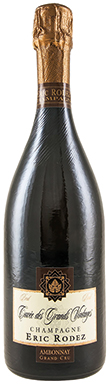

Behind the somewhat eccentric multilingual name and a paterfamilias (Eric) who always wears the most eccentric glasses, we have one of the great multi-vintage cuvées,...
Eric Rodez

Pierre Péters, Cuvée de Réserve Blanc de Blancs Grand Cru, Champagne, France
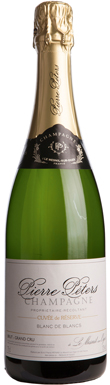
93
Made up, half and half, of base wine from the sunny 2018 harvest, and reserve wine from Rodolphe’s Perpetual Reserve which goes back to 1988, this is one of the most consistently excellent NV wines on the market. Its current iteration is especially impressive, floral, chalky, upstanding, and very complex; the palate sharing notes of dried apricot, plum and lemon pith with more developed intimations of sour honey and patisserie. An exemplary wine with real purity and precision on the finish.
Pierre Péters
Louis Roederer, Collection 242, Champagne, France
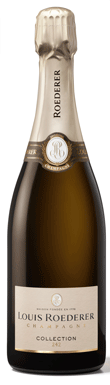
<p>Fresh, vibrant nose displaying aromas of orange, lime peel, almond, honey and brioche with ripe quince and sweet pear undertones. Great focus and length on...
Louis Roederer
Jacquesson, Cuvée 744, Champagne, France
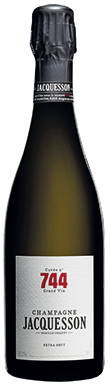
Despite its putative parentage of the balmy 2016 vintage, which makes up 70% of the blend, the Cuvée 744 bears all the Jacquesson hallmarks, namely...
Jacquesson
Henri Giraud, MV16 Aÿ Grand Cru Fût de Chêne, Champagne, France
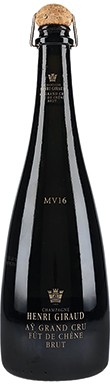
Claude Giraud now defers to his son-in-law Sébastien Le Golvet when it comes to winemaking, and maybe the grip of almost-austere Argonne oak has eased...
Henri Giraud
Agrapart, Les 7 Crus, Champagne, France
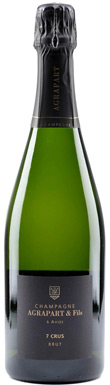
This is the entry level, Chardonnay-based cuvée from this very talented grower family. As the name suggests, the grapes come from seven different villages around...
Agrapart
Gaston Chiquet, Cuvée de Réserve 1er Cru, Champagne, France
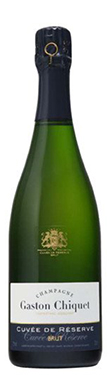
A terrific expression of a Pinot-dominated wine from sites around the village of Dizy, with Meunier in the ascendant, lending notes of brioche, soft red...
Gaston Chiquet
