
Gaja Barbaresco – A taste of the greats
Stephen Brook attended Decanter's Fine Wine Encounter Masterclass hosted by Gaia Gaja, where he was able to taste some of the finest vintages of the estate's esteemed Barbarescos...


It’s impossible to underestimate the contribution to the world of wine made by Angelo Gaja. And not just Italian wine, as producers the world over spontaneously pay homage to his intelligence, courage, and skill.
Angelo comes from a well known family based in Barbaresco. At a time when almost all growers sold their wines to negociants, the Gaja property developed its reputation in the early 20th century for its estate-grown wines.
Scroll down to see Stephen’s Gaja Barbaresco tasting notes
Pioneer
So Angelo Gaja was building on the sound foundations his family had already laid down. Nonetheless, he was soon acting like a human whirlwind. Shortly after he joined the family business in 1961, he purchased some vineyards which were later bottled as single-cru wines – Sorí San Lorenzo, Sorí Tildin and Costa Russi. Here, Gaja was a pioneer, although he wasn’t alone: Bruno Giacosa, Ratti, Vietti and a few others were also bottling single-vineyard wines, but Gaja was prominent among those singing the virtues of specific terroirs.
By the early 1980s he was producing a Graves-style Sauvignon Blanc, as well as two Chardonnays. A Cabernet Sauvignon would soon follow, despite the disapproval of his neighbours and family.
Gaja’s motive for making international varieties was more than curiosity or iconoclasm. In the 1980s, few outside Italy were interested in Barolo or Barbaresco. To gain an entry into markets elsewhere, he needed a portfolio of recognisable wines on the back of which he could sell his magnificent, and pricy, Barbarescos.
His use of barriques to age his wines was also controversial. Again, Gaja was not the only producer to start doing so in the 1980s: Elio Altare and Domenico Clerico were also using different vinification techniques for Nebbiolo, and profiting from their visits to France by introducing barrique-ageing.
In Gaja’s case it was never dogmatic, as he was well aware that Nebbiolo is an intrinsically tannic grape and one has to be very careful when adding wood tannins to a wine that is already powerfully structured. To this day, the Gaja estate ages its Barbarescos in about one-third new barriques as well as in larger casks.
Bravely, perhaps rashly, Angelo courted controversy when he decided to blend a small proportion of Barbera into his single-vineyard Barbarescos, downgrading them to the Langhe DOC with effect from the 1996 vintage. Despite his insistence that he was doing so in order to improve the quality of these wines, many were uneasy at the sight of Barbaresco’s most celebrated producer ceasing to validate his own wines. His daughter, Gaia Gaja, reversed that policy with the 2013 vintage, and the single-vineyard wines are once again pure Nebbiolos classified as Barbaresco.
Angelo’s charismatic daughter Gaia (or ‘double-Gaja’, as she jokingly refers to herself) has worked with her father for 15 years, and since 2013 has taken on a significant winemaking role. In recent years she has been joined by her sister Rossana and her younger brother Giovanni.
This tightly knit family has always worked closely together in the business, but whereas her mother remained in the background, Gaia travels widely to present the wines around the world. Angelo did the same, and those who attended his presentations won’t easily forget that when asked to say a few words, he would rise to his feet and speak impromptu for 30 minutes without ever repeating himself or uttering anything humdrum or banal. Gaia has inherited her father’s fluency, and is keen to demonstrate how the new generation is as keen to fine-tune and innovate as her father was.
She has commissioned research into practices such as ground cover between the rows to encourage biodiversity, introduced bees to function as pollinators, and produces the estate’s own compost. This is a renewed interest in exploring the concept of terroir in Barbaresco.
‘My father is an incorrigible optimist,’ she remarked at the Decanter Fine Wine Encounter Masterclass, ‘but he always says that however confident we are in our skills and experience, there is always room for doubt, for self-questioning. So that is what we are constantly doing. There is never a justification for complacency, for standing still, for not trying to do better.’
Angelo Gaja has not quite retreated to his pipe and slippers (it’s impossible to imagine him with either!). When I last visited the winery I spent a couple of hours tasting the wines with Gaia. Angelo stayed away until the last moment, when he marched in for a handshake and a chat.
He has plenty to occupy him anyway: in addition to the Barbaresco and Barolo wines, he also has estates in Montalcino and Bolgheri to keep an eye on, and has recently created a joint venture on Etna with the leading Sicilian producer, Alberto Graci. He may be 79 but he’s not slowing down, or not much. And with the fifth generation firmly in place, the name and reputation of Gaja is unlikely to fade away.
Decanter’s vintage ratings for the wines tasted:
Vintage: 2016
Rating: 4.5/5
Very warm weather in early September and October fully ripened the grapes, which remained healthy. Potentially excellent.
Vintage: 2001
Rating: 5/5
After a hot summer, a cool September slowed ripening. Those who waited made superbly structured wines with excellent balance.
Vintage: 1990
Rating: 5/5
A perfect September led to an easy and healthy harvest in early October. Superb wines.
Vintage: 1988
Rating: 4/5
October rains were a problem but the wines from this vintage finally turned out well
Vintage: 1982
Rating: 5/5
A tremendous vintage for big, rich and fruity Barolo and Barbaresco
Tasting the greatest vintages of Gaja Barbaresco (and more):
You may also like:
Gaja Barbaresco crus: Costa Russi & Sorì San Lorenzo verticals
Best Piedmont wines: Latest-release Barolo & Barbaresco
Italy in Australia: setting down roots
Don’t miss the Five Generations of Gaja Masterclass in June
Gaja, Barbaresco, Piedmont, Italy, 2016
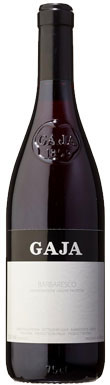

<p>The nose is poised, displaying very ripe raspberry and black berry aromas. The attack has intensity, partly thanks to its pungent acidity, but there's no...
2016
GajaBarbaresco

Gaja, Costa Russi, Barbaresco, Piedmont, Italy, 2016
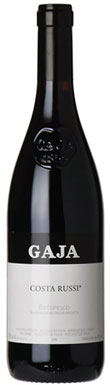
Costa Russi is an outlier for Nebbiolo sites in Barbaresco. Rather than sitting atop a hill, it is on a steep slope that spills from...
2016
GajaBarbaresco
Gaja, Sori Tildin, Barbaresco, Piedmont, Italy, 2016
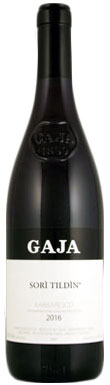
From one of Gaja's hilltop crus, the warmest being Sorì Tildìn. Here sandy and magnesium-flecked soils lend the wine a sense of salinity. There are...
2016
GajaBarbaresco
Gaja, Sori San Lorenzo, Barbaresco, Piedmont, Italy, 2016
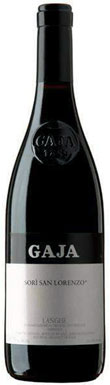
From west and south-facing sites sitting high above the Tanaro River. Cool and dewy mornings help the hot site moderate temperature. The signature of Sorì...
2016
GajaBarbaresco
Gaja, Costa Russi, Barbaresco, Piedmont, Italy, 1990
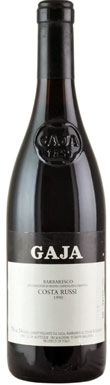
Of the trio of great vintages from 1988 to 1990, this is probably the most splendid and enduring. The nose is opulent but floral, with...
1990
GajaBarbaresco
Gaja, Sori Tildin, Barbaresco, Piedmont, Italy, 1990
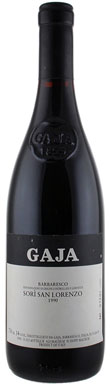
This 1990 is still dense on the nose, with aromas of blackberries, cherries, and mint. It has all the richness and concentration of the vintage...
1990
GajaBarbaresco
Gaja, Barbaresco, Piedmont, Italy, 1982
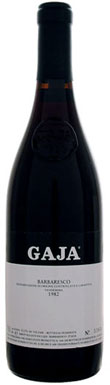
Most 1982 Barbarescos are over the hill now, but not Gaja's. Even the colour is scarcely evolved. The nose has great purity of fruit, with...
1982
GajaBarbaresco
Gaja, Ca' Marcanda, Bolgheri, Tuscany, Italy, 2001
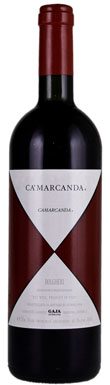
<p>The milder climate of Bolgheri, near the Tuscan coast, seems better suited to Cabernet-style wines than Piedmont. This deep-coloured wine has a sumptuous nose packed...
2001
GajaBolgheri
Gaja, Darmagi, Langhe, Piedmont, Italy, 2001
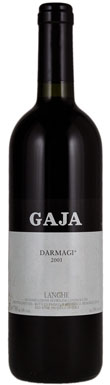
<p>The first vintage of this Cabernet-based wine was 1982, and Angelo's father's dismay at seeing a fine Barbaresco site planted with French varieties is reflected...
2001
GajaLanghe
