
Gaja masterclass: DFWE New York
A packed house welcomed Gaia Gaja to the 60th floor of Manhatta, looking down on the island of Manhattan for the Decanter Fine Wine Encounter masterclass: Five generations of Gaja. Hosted by Decanter’s US Editor Clive Pursehouse, Gaia led the room through a selection of wines that told the story of her family’s history and the terroirs of Piedmont and Tuscany.


Gaia credits New York and American wine writer Burton Anderson with pushing fine Italian wine to the forefront of the world’s awareness. The waves of Italian immigrants to the United States wanted a taste of their homeland that was not present in the bulk wines from Italy that dominated the market for much of the 1970s and 80s. Gaja has been importing its wines to the US for 45 years.
Scroll down to see tasting notes and scores for all 10 wines tasted at the Five Generations of Gaja masterclass in New York
Anderson’s 1980 book Vino: The Wines and Winemakers of Italy spotlighted the country’s fine wine producers. It was a catalyst for New York-based importers, restaurants and sommeliers seeking to learn more about the country’s top producers.
A family steeped in history

The Gaja family started making wines in 1859. Giovanni Gaja owned a tavern and started making wine to serve there. The quality of the wines raised the tavern’s popularity, and soon Giovanni decided to make wine his focus, eventually closing to focus on wines in 1902.
As pioneers for both the Barbaresco region and the country of Italy, they have led the way in terms of quality and conceptualising wines of place for 164 years.
In 1905, second-generation winemaker Angelo Gaja marked his business cards as a ‘producer of wines of luxury,’ a concept that would not have existed in the pastoral setting of the village and hills of Barbaresco. It announced the ambition he had for the wines of the Gaja family.
By 1937, Gaia’s grandfather and third-generation, Giovanni Gaja had begun producing Barbaresco of different quality classifications. This included Barbaresco normale, Barbaresco classico, Barbaresco fino and Barbaresco superiore, introducing an entirely new concept to wines of the region.
Additionally, Giovanni became known for not producing wine in bad vintages — a commitment to quality unheard of at the time.
Her father, Angelo, whom Gaia described as ‘rebellious’, would continue this tradition of innovation, becoming the first to make single-vineyard wines in Barbaresco and highlighting the family’s commitment to quality and the terroir of their estate vineyards. Angelo’s rebellious streak would see him plant Bordeaux varieties in Barbaresco, another first.
Gaia and her two siblings are all involved in the current iteration of Gaja. Rather than focus on one area of the business, they share responsibility equally across the brand, involving themselves in viticultural decisions, winemaking and marketing, and working collaboratively with their father, Angelo, spurred on by his spirit of innovation.
Gaja masterclass: The wines

The wines Gaia poured for the masterclass told a story of the Gaja estate vineyards, Italy’s ability to craft wines of the highest quality, and her father Angelo’s tendency to buck conventional ways of doing things.
Gaja, Barbaresco, Piedmont 2020
Ca’Marcanda Camarcanda, Bolgheri, Tuscany 2020
Pieve Santa Restituta Rennina, Brunello di Montalcino, Tuscany 2018
Gaja, Costa Russi, Barbaresco, Piedmont 2016
Gaja, Sorì Tildìn, Barbaresco, Piedmont 2016
Gaja, Sorì San Lorenzo, Barbaresco, Piedmont 2016
Gaja, Sperss, Barolo, Piedmont 1991
Gaja, Darmagi, Langhe, Piedmont 1982
Gaja, Gaia & Rey, Langhe, Piedmont 2002
Gaja, Alteni di Brassica, Langhe, Piedmont 1992
Scroll down to see tasting notes and scores for all the wines featured in this masterclass
Illustrations of tradition and innovation

We certainly saw examples of what Gaja is best known for in this selection. The flagship Barbaresco shows stylistic shifts, and the notion of needing to wait 10 years to approach the wines is a thing of the past. A juiciness belies Nebbiolo’s reputation as an austere, tannic wine unapproachable for years.
The two Tuscan wines demonstrated that Gaja is not only good at making timeless wines from Piedmont; there were some genuine surprises with the older vintages. Ca’Marcanda is an homage to the boulevard of Bolgheri, lined with 2,600 cypress trees planted over 150 years ago. The Brunello, Pieve Santa Restituta Rennina, has vineyards planted near the church it takes its name from, including a former cemetery from 1,400 years ago – as Gaia pointed out playfully, it’s not simply limestone that makes up the terroir here.
A trio of single-vineyard Barbaresco from the classic 2016 vintage showed the true heights that Gaja can reach in their historic appellation; a contrast in soils, aspect and temperature across their three most famous cru bottlings.
Sperss has become an iconic Barolo for Gaja. Angelo purchased the vineyard in 1988, an already well-known and historic vineyard in Serralunga. This example shows that even in the difficult-at-best 1991 vintage in Piedmont, the terroir and winemaking have created a wine that shines beautifully.
Darmagi shows the renowned rebellious nature of her father Angelo, who planted Cabernet Sauvignon below the house of the mayor of the village of Barbaresco – his father, Giovanni. The name Darmagi captured Giovanni’s reaction to the planting of Bordeaux varieties in his home region and translates to ‘what a shame.’
The 2002 Gaia & Rey may have been the surprise of the day. Planted in 1979, Angelo’s motivation was to show that great white wine could come from Piedmont. He then followed that with Sauvignon Blanc, for Alteni di Brassica. As climate change has impacted Piedmont, Gaja has looked to the Alta Langhe, planting Chardonnay and Sauvignon Blanc there as the original plantings have struggled in the face of rising temperatures.
The Gaja family has also begun an operation on Mount Etna, Sicily, in the last few years, working with Alberto Graci on their collaborative IDDA wines. Another demonstration that this family steeped in Piedmont tradition is always looking ahead.
Wines tasted at the Five Generations of Gaja masterclass in New York:
Related articles
- Gaja: A family portrait
- Gaja’s Ca’ Marcanda: Celebrating 20 vintages
- Decanter’s New York Fine Wine Encounter: No smoke, but red hot
Gaja, Gaia & Rey, Langhe, Piedmont, Italy, 2002
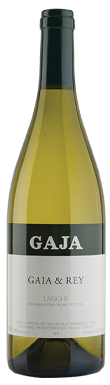

Mildly reductive notes of struck match introduce an aromatic profile that is classically cool climate Chardonnay. Delicate aromatics belie the fact that this wine is...
2002
GajaLanghe

Gaja, Sori San Lorenzo, Barbaresco, Piedmont, Italy, 2016
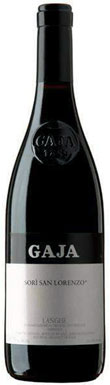
From west and south-facing sites sitting high above the Tanaro River. Cool and dewy mornings help the hot site moderate temperature. The signature of Sorì...
2016
GajaBarbaresco
Gaja, Costa Russi, Barbaresco, Piedmont, Italy, 2016
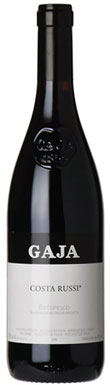
Costa Russi is an outlier for Nebbiolo sites in Barbaresco. Rather than sitting atop a hill, it is on a steep slope that spills from...
2016
GajaBarbaresco
Gaja, Barbaresco, Piedmont, Italy, 2020
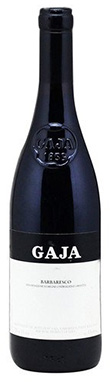
Depth, structure and complexity are the hallmarks of Nebbiolo, and this wine certainly delivers but also offers a juicy helping of fresh berry fruits. It...
2020
GajaBarbaresco
Gaja, Sperss, Barolo, Piedmont, Italy, 1991
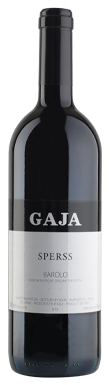
1991 is considered a poor vintage in Piedmont, crops were light, and wines were categorised as those that should be drunk young. In including this...
1991
GajaBarolo
Gaja, Sori Tildin, Barbaresco, Piedmont, Italy, 2016
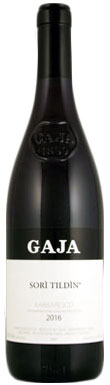
From one of Gaja's hilltop crus, the warmest being Sorì Tildìn. Here sandy and magnesium-flecked soils lend the wine a sense of salinity. There are...
2016
GajaBarbaresco
Gaja, Pieve Santa Restituta Rennina, Brunello di Montalcino, Tuscany, Italy, 2018
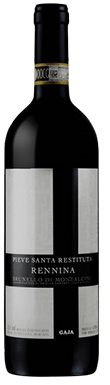
A cool and wet growing season in 2018 brings forth a Brunello that speaks with an accent of elegance. Sourced from three vineyard sites near...
2018
GajaBrunello di Montalcino
Gaja, Ca'Marcanda, Bolgheri, Tuscany, Italy, 2020
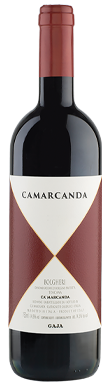
A challenging weather year in Bolgheri that included two spring frost events has resulted in perfectly ripe fruit for this superb Super Tuscan. This Cabernet...
2020
GajaBolgheri
Gaja, Darmagi, Langhe, Piedmont, Italy, 1982
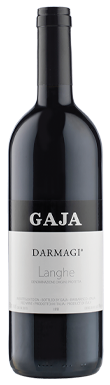
Angelo planted a vineyard of Cabernet at the foot of his father's home; upon seeing this, Giovanni exclaimed, ‘Darmagi’ or what a shame. The wine's...
1982
GajaLanghe
