
Garnacha Blanca: Panel tasting results
Garnacha Blanca may not be as well-known as Spain’s other native white grapes, but this tasting showed that, in the hands of talented winemakers, it can be a hidden gem. Sarah Jane Evans MW reports…


Pedro Ballesteros Torres MW, Sarah Jane Evans MW and Pierre Mansour tasted 54 wines with two outstanding and 15 highly recommended.
Entry criteria: Producers and UK agents were asked to submit their latest release of 100% Garnacha Blanca, or blends with 50% minimum, with availability in the UK or US markets
The verdict
Garnacha Blanca may not be as well-known as Spain’s other native white grapes, but for adventurous wine lovers, that’s undoubtedly part of its appeal. Not even our panel of expert judges were quite sure what to expect from this varied line-up of wines – though they were certainly keen to see how the grape is performing across different regions of Spain.
‘There was quite a variety of flavours and styles here,’ explained Pierre Mansour. ‘So trying to define exactly what Garnacha Blanca means for Decanter readers is quite tricky.’ Sarah Jane Evans MW agreed. ‘There are many more styles of Garnacha Blanca than you could guess. But they are all very interesting wines,’ she pointed out.
Scroll down to see top wine tasting notes & scores
‘The main thing is that Garnacha Blanca used to be very alcoholic, with low acidity – not a wine that you’d recommend,’ said Pedro Ballesteros Torres MW. ‘But this is not the case now. In this tasting we had at least 50 wines that were very well made, all with different qualities. And that is a very special thing.’
Despite the obvious stylistic diversity of the wines – which were a mixture of both single varietals and blends – the judges were able to identify some distinguishing characteristics of the new-generation of Garnacha Blanca wines. ‘In general you could say that Garnacha Blanca has a floral, white fruit character. The wines that I gave top marks to tended to have a lovely subtlety and delicacy about them, supported by a juicy fruit quality and a softness to the texture,’ said Mansour. ‘In fact I think texture’s really important with Garnacha Blanca.’ Evans agreed: ‘Those wines that had a really lovely smooth, round texture stood out for me.’
‘There are many more styles of Garnacha Blanca than you could guess’ – Sarah Jane Evans MW
Wines were tasted regionally and one region in particular was a highlight for the judges. ‘I think that the really magic place for Garnacha Blanca is Catalonia,’ said Ballesteros Torres. ‘There’s a clear difference of style between Catalonia and the rest of Spain,’ he added.
Evans picked out the Catalan sub-regions of Priorat and Terra Alta in particular. ‘A couple of wines from Priorat had a real sense of place. It was the first time I wrote “typicity” in my notes. Then Terra Alta was a step up. I think Terra Alta’s producers are right to be super-proud of what they have.’
That said, the judges agreed that viticultural and winemaking choices were bigger factors in determining the style and quality of Garnacha Blanca than where it is grown. ‘The influence of the winemaker is very important,’ said Ballesteros Torres. ‘The decisions on the timing for harvesting and then the decisions on style.’
‘There were oxidative styles, versus the fresher, earlier-picked ones – and it’s definitely down to the producer,’ agreed Mansour. So how can wine lovers get to grips with Garnacha Blanca?
‘It’s something that I’d like to be recommended to me by a merchant that I trust, or in a restaurant, because I think it’s a very gastronomic wine,’ said Evans. ‘A lot of these wines are not produced in very big quantities, but they have something really original. So it’s a speciality category and I think it needs recommendation.’
‘Follow the winemaker,’ added Mansour.’ Garnacha Blanca is a grape that, in the right hands, carefully managed in the vineyard, can make really wonderful wines,’ he explained.
‘People just need to taste the wine and discover how lovely it is!’ concluded Evans.
Discussion copy by Julie Sheppard.
See all wines from the panel tasting here
The scores
54 wines tasted
Exceptional 0
Outstanding 2
Highly Recommended 15
Recommended 35
Commended 1
Fair 1
Poor 0
Faulty 1
About Garnacha Blanca
Previously dismissed for producing high-alcohol, full-bodied wines, this native Spanish grape is undergoing a transformation thanks to innovative winemakers. Sarah Jane Evans MW reports…
What a transformation! Thirty years ago there were more than 16,000ha of Garnacha Blanca in Spain, the majority in Catalonia with lesser amounts in Aragón, and almost insignificant quantities in Rioja and Navarra. By 2010 that overall figure had plummeted to just over 2,000ha.
Thankfully today, Garnacha Blanca is fighting back against being substituted by more lucrative red varieties and whites with greater consumer appeal. It may still be relatively thin on the ground, but it adds a real point of difference to Spain’s portfolio of whites.
Spain’s aromatic unoaked whites have become well established, its Albariños and Verdejos, its Treixaduras and Godellos, most of them grown in the country’s west and northwest. Rioja’s most famous white variety is Viura, offered in several styles.
Garnacha Blanca is, in the main, proudly Catalan, often with a distinct Mediterranean profile in many cases. Where it flourishes is at higher altitudes, on appropriate soils, whether slate, clay, or the ‘panal’ soils of Terra Alta, which are fossilised sand dunes. Terra Alta’s other beneficial influences, alongside vineyards as high as 800m, are the Ebro river valley and the strong, cold El Cierzo wind.
Fresh look
Traditionally Garnacha Blanca was known for its full body, textured palate, for its lack of aromatics and of fruitiness, and its low acidity. Furthermore it laboured under the same characteristic as its relative Garnacha Tinta, that of generating too much alcohol. At a time when the world started to look for fresher, crisper whites, Garnacha Blanca seemed to be at a real disadvantage. What has made the difference is the all-round focus on soils, viticulture and winemaking.
When it comes to marketing, there’s no doubt that Garnacha Blanca has really benefited from the recent rise in prestige of (red) Garnacha, as have the latter’s relatives Garnacha Gris, Garnacha Peluda (‘hairy’ Garnacha) and Garnacha Tintorera (which is actually Alicante Bouschet and not Garnacha at all). The variety is a mutation of Garnacha Tinta, much as Tempranillo Blanco is a white mutation of red Tempranillo. The latest research, by Maite Rodríguez, proves that within Spain there are genetically different Garnacha Blancas. Navarra, for instance, has been found to have one clone; Rioja and the Bodegas Torres research vineyards have another.
Garnacha Blanca: The facts
Catalonia is where Garnacha Blanca flourishes and above all in Terra Alta, with lesser appearances in Priorat, Montsant, Alella, Empordà and Penedès.
Terra Alta: The heart of Garnacha Blanca – its 1,450ha here represent about 27% of the region’s vineyard. Terra Alta’s Garnacha Blanca accounts for 90% of Catalonia’s plantings, 75% of Spain’s and no less than one third of the world’s total supply.
Priorat: Some 60ha make Garnacha Blanca the leading white grape variety in this predominantly red-wine region, while in Montsant it makes up less than half the white varieties.
Aragón: About 250ha, across the Somontano and Cariñena DOs and Valdejalón.
Navarra: About 125ha, especially focused to the north of the DO.
Rioja: Just under 220ha: in 2018, 3.6% of white varieties planted and 0.33% of the total vineyard. Often found blended with Viura (Macabeo) and/or Malvasia.
Synonyms: Garnacha Blanca is also known in Spain variously as Alicante Blanca, Garnacha Gris, Garnacho Blanco (in Rioja), Lladoner Blanco, Lledoné, Silla Blanc, Sillina Blank, Vernatxa Blanca. In France it is Grenache Blanc.
Undoubtedly the wine it makes is fresher today. Growers are learning to manage that weightiness. It is certainly more aromatic than it used to be. If you have not tried Garnacha Blanca for a while, it’s time to go back and see the changes.
Some producers are blending with other varieties. Viognier is popular but not a great choice, as it too tends towards the weighty and alcoholic. More successful is the rare example of Chenin Blanc, which adds a necessary lift of acidity. Garnacha Blanca also turns up with success in the distinctive white blend created by Telmo Rodríguez at Remelluri in Rioja. The grape’s complexity suits it to a modicum of barrel-ageing. It often works well as an orange wine – made like a red. Some producers are also working with traditional amphorae.
In the end, origin is all. Garnacha Blanca is a vine that is undoubtedly sensitive to vintage variation and to terroir. In the right places, however, it delivers glorious complexity.
Top scoring Garnacha Blanca wines
See all wines from the panel tasting here
The judges
Pedro Ballesteros Torres MW
A DWWA joint Regional Chair for Spain, Ballesteros Torres is a regular contributor to Decanter and a widely published wine journalist, educator and judge. He is a member of the Gran Orden de Caballeros del Vino and on the governing board of the Spanish Tasters’ Union.
Sarah Jane Evans MW
One of our three DWWA Co-Chairs, Evans is a regular contributor to Decanter and an award-winning journalist and author, specialising in Spanish wines, food and culture. A member of the Gran Orden de Caballeros del Vino, her most recent book is The Wines of Northern Spain.
Pierre Mansour
Mansour has worked in the wine trade for his entire career, starting in 1995 with the Antique Wine Company. In 2000 he joined The Wine Society to oversee tastings and events, before taking on the role of buyer in 2004. He was made head of buying in 2017. Mansour has been a DWWA judge since 2006.
Herència Altés, La Serra Blanc, Terra Alta, Catalonia, Spain, 2017
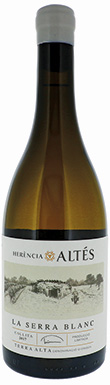

Established in 2010 by Núria Altés and Rafael De Haan, Herència Altés is located in the village of Batea in the Terra Alta DO. From...
2017
Herència AltésTerra Alta

Edetària, Selecció, Terra Alta, Catalonia, Spain, 2016
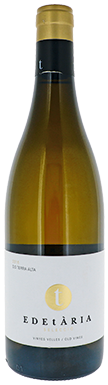
Saline and stoney, fresh and ripe. Ripe, fleshy, warm peachy fruit on the palate with fresh acidity to balance. Good freshness but also warmth and...
2016
EdetàriaTerra Alta
Scala Dei, Massipa, Priorat, Catalonia, Spain, 2017
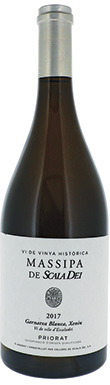
Aromatically delicate with a floral freshness. Full bodied, broad and rich on the palate, with alluring acidity and a long, memorable finish.
2017
Scala DeiPriorat
Herència Altés, Trementinaire Garnatxa Blanca, Terra Alta, Catalonia, Spain, 2016
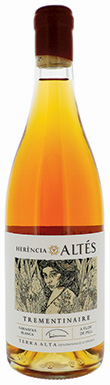
Bright amber, with notes of marmalade and some oxidative characters. Well made; salty and savoury with a long, honeyed finish.
2016
Herència AltésTerra Alta
Coca i Fitó, d'Or, Terra Alta, Catalonia, Spain, 2016
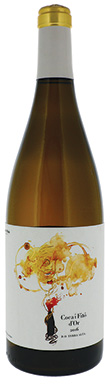
Lovely nose of attractive lemon, oak and white fruits. Layered and generous with good complexity, starting to show some development.
2016
Coca i FitóTerra Alta
Bodegas Frontonio, Botijo Blanco Garnacha Blanca, Valdejalón, Aragón, Spain, 2018
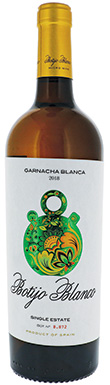
Alluring aromas of citrus and peach with some floral and herbal hints. Soft, well balanced and elegant, with a creamy, silky texture.
2018
Bodegas FrontonioValdejalón
Costers del Priorat, Blanc de Pissarres, Priorat, Catalonia, Spain, 2018
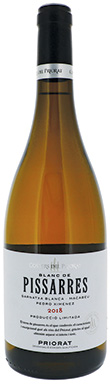
Fine interplay of oak and white fruits. Altogether complex, with lifted freshness, minerality, and some richness in the mid plate.
2018
Costers del PrioratPriorat
Herència Altés, Benufet, Terra Alta, Catalonia, Spain, 2018
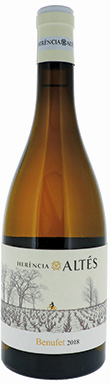
Classic ripe developed style, revealing a Mediterranean energy. Underneath there's a riot of fruits, together with a distinctive stony character.
2018
Herència AltésTerra Alta
Mas Doix, Murmuri, Priorat, Catalonia, Spain, 2018
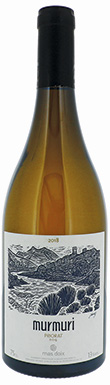
Attractive nose of herbs and apricot, continuing on the palate with some minerality. Really pure and clean, with a lovely finish.
2018
Mas DoixPriorat
Morlanda, Garnacha Blanca, Priorat, Catalonia, Spain, 2017
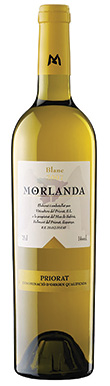
Wonderful nose of burnt sugar and vanilla oak. Fleshy, plump, ripe, with some savoury notes on the finish. Shows lots of personality.
2017
MorlandaPriorat
Coca i Fitó, Blanc, Montsant, Catalonia, Spain, 2018
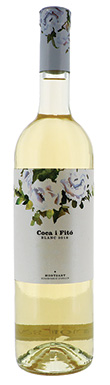
Rich and expressive, with notes of apple and some confected fruit. Straightforward and youthful, with a long, fruity finish.
2018
Coca i FitóMontsant
Costers del Priorat, Blanc de Closos, Priorat, Catalonia, Spain, 2017
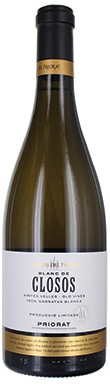
An orange style wine; plenty of complexity with notes of roasted oranges, saltiness, and wood smoke. Very unique and delicious.
2017
Costers del PrioratPriorat
Abel Mendoza, Garnacha Blanco, Rioja, Northern Spain, Spain, 2018
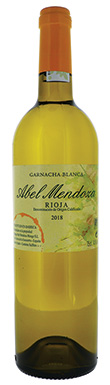
Vanilla oak overlaying citrus notes. Full body of the wine is a good counterpoint to the oak, and there's balancing freshness. Beautifully made.
2018
Abel MendozaRioja
Edetària, Finca La Terrenal, Terra Alta, Catalonia, Spain, 2016
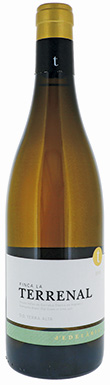
Intense, with indicators of oxidative development and barrel ageing. Characterful, with a long and lively finish. All about acidity.
2016
EdetàriaTerra Alta
Herència Altés, Garnatxa Blanca, Terra Alta, Catalonia, Spain, 2018
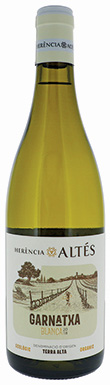
Exotic aromas, with some fresh citrus fruit. Nicely textured, balanced and expressive, with hints of minerality. Appealing and mouthwatering.
2018
Herència AltésTerra Alta
Izadi, Larrosa Garnacha Blanca, Rioja, Northern Spain, Spain, 2018
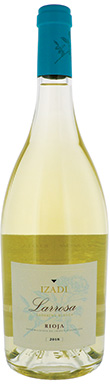
Aromas of citrus and dried herbs, with a lively freshness in the mouth. Nicely balanced, with freshness and fruit, open and expressive.
2018
IzadiRioja
Azul y Garanza, Naturaleza Salvaje, Navarra, Navarra, Spain, 2018
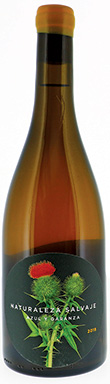
Light amber colour. Interesting nose with distinct orange peel characters. Bright and fresh on the palate, easy going and enjoyable.
2018
Azul y GaranzaNavarra
