
Grand-Puy Ducasse: The Pauillac estate turning a corner
An historic Pauillac property that has frequently failed to set pulses racing. Yet Andy Howard MW finds an estate that's making changes for the better.


Although designated a Fifth Growth in the 1855 Classification, Château Grand-Puy Ducasse is unlikely to feature high on a list of most desirable purchases for Pauillac fans.
Perhaps this is down to its location (the château is situated in ‘downtown’ Pauillac) so doesn’t conform to the classical image of names such as Château Latour, Château Lafite or Château Mouton-Rothschild, graced by elegant buildings and surrounded by glorious vineyards.
Scroll down to see notes and scores for Andy Howard MW’s picks of recent Grand-Puy Ducasse vintages
Work in progress
At a recent masterclass in London, Director and Winemaker Anne Le Naour led a group of sommeliers through the 10-year project which Grand-Puy Ducasse has named ‘Renaissance.’
The work started in 2011 and reached a significant point in 2023, with the first harvest vinified in the new winery.
Initial impressions are that the team seem to be on the right track, although this is more of a ‘work in progress’ rather than the finished article at this stage.
The estate originated in 1675 with the acquisition of a family home on the Left Bank of the Gironde River, followed by expansion of vineyards over the next century, culminating in 1820.
One hundred years after being classified a Fifth Growth, Grand-Puy Ducasse launched its second-wine, Prélude, in 1955.
But, despite many changes, the estate and vineyards fell into decline, leading to the sale in 1971 to Mestrezet-Preller (a wine merchant connected with Cordier).
It is fair to say that, in recent decades, the wines of Grand-Puy Ducasse have failed to excite writers and consumers.
In 2003, Hugh Johnson wrote that, ‘the wines here have often lacked flair.’
Things had not improved in 2012, when Stephen Brook commented that Grand-Puy Ducasse was, ‘a wine that plays safe and rarely sets the pulses racing.’
Renaissance
In 2005 Grand-Puy Ducasse was purchased by Crédit Agricole Grands Crus, leading to significant investment in both vineyards, vinification and the tourist experience.
In the same year Crédit Agricole acquired Château Meyney in Saint-Estèphe, transforming it into a property which today substantially over-delivers.
The team are aiming to weave this same magic at the Pauillac estate. The highly respected Le Naour (along with Estate Manager Benjamin Cassoulet) are clear that the key to the Renaissance project involves a dual approach.
Investments in new production facilities are allowing the team to fully express the differences of the diverse plots which make up Grand-Puy Ducasse’s vineyards.
The estate has five key sectors all, according to Le Naour, having different roles to play both now and in the future.
The northern sector (adjacent to Pontet-Canet and Mouton-Rothschild) lies on gravelly hilltops, with the classic Grand-Puy sector to the west of the Gironde being characterised by gravelly sandy soil over a clay base, with many outcrops of pebbles.
Further west, the Artigues terroir is dominated by Merlot, while younger Cabernet Sauvignon vines (planted in the Pichon sector to the south) point to the future.
Finally, south-west of Pauillac, the Batailley sector is home to Merlot, Cabernet Sauvignon and 6% Petit Verdot – a variety Le Naour has high hopes for.
The right direction
Work to completely change the château and winery took 10 years to gain planning permission, given its location in the centre of Pauillac.
The newly expanded vat room now hosts 46 double-skinned steel vats ranging from 30 hectolitres to 129hl, together with seven concrete vats for blending/ageing.
A focus on individual plot selection is seen as key, with Merlot still playing a key role in the distinctive style of Grand-Puy Ducasse.
The masterclass confirmed that the changes are moving the estate in the right direction.
And while Grand-Puy Ducasse remains ‘under the radar’ there should be potential for some smart buys over the next few years.
This is a Fifth Growth to keep a close eye on.
Grand-Puy Ducasse: Pick of recent vintages
Related articles
- Château La Mission Haut-Brion: Second to none
- Bordeaux 2014 revisited 1o years on
- The Bordeaux vintage guide to years ending in 4
Château Grand-Puy Ducasse, Prélude à Grand-Puy Ducasse, Pauillac, 5ème Cru Classé, Bordeaux, France, 2020
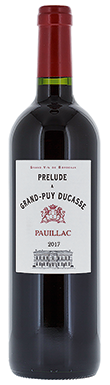

Medicinal notes on the nose. Lighter style, crisp acidity and leafy tannins. Certainly no blockbuster but an appealing, fresh introduction to the Grand-Puy Ducasse lineup....
2020
Château Grand-Puy DucassePauillac

Château Grand-Puy Ducasse, Prélude à Grand-Puy Ducasse, Pauillac, 5ème Cru Classé, Bordeaux, France, 2019
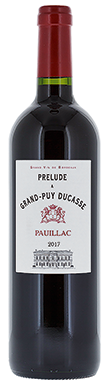
Showing much more plumpness in the mid-palate with a smooth and velvety character. Yet this still retains a classic Pauillac feel on the aftertaste. A...
2019
Château Grand-Puy DucassePauillac
Château Grand-Puy Ducasse, Prélude à Grand-Puy Ducasse, Pauillac, 5ème Cru Classé, Bordeaux, France, 2018
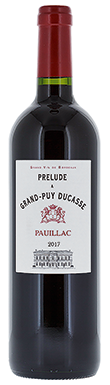
Dark raspberry fruit. Tannins a little firmer and not as fine. There is good volume, but the wine lacks a bit of mid-palate concentration. Quite...
2018
Château Grand-Puy DucassePauillac
Château Grand-Puy Ducasse, Pauillac, 5ème Cru Classé, Bordeaux, France, 2022
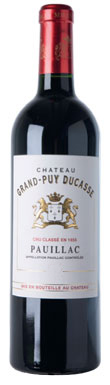
Very deep colour, dense, youthful appearance. Classic Pauillac nose with hints of leafiness, a touch of eucalyptus. Plenty of appeal on the palate with lovely...
2022
Château Grand-Puy DucassePauillac
Château Grand-Puy Ducasse, Pauillac, 5ème Cru Classé, Bordeaux, France, 2021
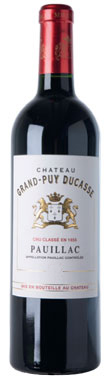
Lighter, skinnier, perhaps representative of 2021 but, even taking into account the vintage, lacks the power and concentration expected. Leafy edge to the tannins, not...
2021
Château Grand-Puy DucassePauillac
Château Grand-Puy Ducasse, Pauillac, 5ème Cru Classé, Bordeaux, France, 2020
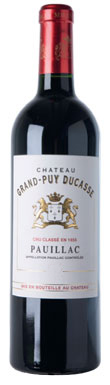
Nice confiture character – raspberry/blackberry fruit, concentrated and with layers of flavour. Already very attractive and appealing. Fine-grained, leafy tannins with subtle, complimentary use of...
2020
Château Grand-Puy DucassePauillac
Château Grand-Puy Ducasse, Pauillac, 5ème Cru Classé, Bordeaux, France, 2019
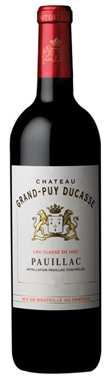
At the moment the 2019 is a little closed on the nose but, with swirling, soon reveals a very attractive blackberry and currant character. Typical...
2019
Château Grand-Puy DucassePauillac
Château Grand-Puy Ducasse, Pauillac, 5ème Cru Classé, Bordeaux, France, 2018
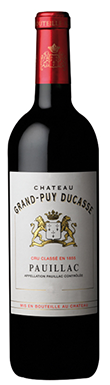
The 2018 Grand-Puy Ducasse has a deep, almost impenetrable colour, with plenty of intensity on the nose. Soft, ripe fruit on the palate – the...
2018
Château Grand-Puy DucassePauillac
Château Grand-Puy Ducasse, Pauillac, 5ème Cru Classé, Bordeaux, France, 2015
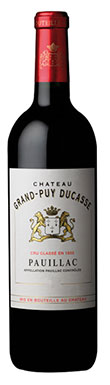
Feels like a wine from a very different era with a dry character on the palate, combined with pronounced leafy notes. There are certainly dark...
2015
Château Grand-Puy DucassePauillac
Château Grand-Puy Ducasse, Pauillac, 5ème Cru Classé, Bordeaux, France, 2011
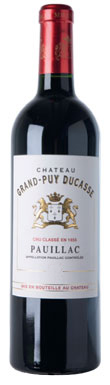
Intriguing. For a 'lesser' vintage this is drinking beautifully now. Has ripeness to the fruit, dark characters, some leafy notes and lovely tannins. The grand...
2011
Château Grand-Puy DucassePauillac
