
Grape spotlight: Malvasia de Sitges
The Malvasia de Sitges grape is enjoying something of a revival, and Catalan winemakers are finding that the variety can be used to make distinctive dry white wines as well as the more traditional sweet styles.


Found in the Penedès region of Catalonia, Malvasia de Sitges is just one of a much bigger Malvasia grape family. It may be relatively unfamiliar to wine lovers, but it does have the bonus of a fascinating and unusual back story.
Malvasija Dubrovačka, Malvasia di Lipari and Malvasía Aromática create wines that aren’t often found outside their home regions of Croatia, Italy and the Canary Islands, respectively, but mention Malmsey from Madeira and there may be more recognition.
In a quintessential moment in Shakespeare’s play Richard III, George Plantagenet is drowned in a butt of Malmsey. What’s Malmsey? Yet another name for the Malvasía grape.
Scroll down for a selection of seven Malvasia de Sitges wines to try
The word ‘Malvasía’ is thought to be derived from Monemvasia, a town at the very southern tip of Greece, but there is no genetic evidence for this link to the grape. Nonetheless, via its modern-day descendants, the variety has spread far and wide across the Mediterranean and out to mid-Atlantic outposts as well.
Historically, the reason for this was sugar content. Until the mid-20th century, Malvasía was used solely for the production of dessert wines. It’s a variety that would reliably reach higher sugar content back in an age when achieving that was still a problem. But times have changed.
While the variety travelled far, it was the phylloxera bug at the end of the 19th century – followed by powdery mildew – that played a large role in the diminishing narrative of this once- important variety. Marta Casas, the head winemaker at Parés Baltà in Penedès, has long been a believer in the variety, but she admits it can be difficult. ‘The very thin skin makes it prone to rot and you need to train it higher than other varieties to mitigate this,’ she says. ‘Its excessive vegetation means you have to work carefully. And then, of course, it has naturally low yields.’

A hospital by the sea
Given these issues, it’s no wonder that Malvasia de Sitges began to fade into the background in a post-phylloxera world. So why has there been a resurgence of the variety? The answer to this lies in an ancient sanatorium situated on the shores of the Mediterranean. Lying about 30km southwest of Barcelona, Sitges started its life as a small fishing village that was also home to the hospital of Sant Joan Baptista, which was founded in 1324 to take care of the sick, the poor and religious pilgrims. When the hospital was moved to its larger, purpose-built location away from the seafront in 1912, an American named Charles Deering bought the original site and converted it into a private residence.
Two decades later, a native of Sitges named Manel Llopis, who had a career as a lawyer and diplomat, died in Sofia, Bulgaria. Llopis had a great love for the unfortified Malvasia de Sitges wines of his birthplace, which were as famous as Madeira or Sherry during his lifetime. But he saw that the vineyards near to the town were disappearing due to the development of tourism.
So, in his will, he bequeathed all of his lands in Sitges to the hospital, with the stipulation that they carry on the cultivation of Malvasia de Sitges grapes. This started with a 1.5ha terraced vineyard in Aiguadolç at the eastern end of the town and continued with a 0.7ha vineyard replanted to Malvasia de Sitges 25 years ago.
This second site sits adjacent to the newer hospital building, and is one of very few urban vineyards to be found in Spain.
Finding a new path

In the 1980s, interest in Malvasia de Sitges began to revive. The Catalan Institute of Vines and Wines (INCAVI) took cuttings from Aiguadolç, which was one of the few remaining sources of original vine material. Local interest grew – at least among the winemaking crowd – following several years of viticultural experimentation, and in 2019 the owners of the hospital (now a retirement home) opened the Centre d’Interpretació Malvasia de Sitges (CIM). It is based in what had been the building’s original cellar before production was relocated to a modern facility deeper in Penedès, where the hospital makes its own Celler de l’Hospital wines.
The CIM is an interactive museum where people can learn about the history of the grape, tour the municipal vineyard next to the hospital and, of course, taste various Malvasia de Sitges wines produced under the Celler de l’Hospital label.
Small but mighty
This activity has led to greater interest in the grape itself, which has amazing acidity, leading to very crisp, refreshing wines. Aromatically, it’s able to hold a broad flavour palette of yellow apple, citric notes and orange blossom. It can also be used to produce dry, sweet, still and sparkling wines. Because of the acidity and weight on the palate, it is also able to age quite well.
As of 2020, DO Penedès only had 57ha of vineyards registered as Malvasia de Sitges, but even in these small amounts the variety is showing the potential to rival the well-established Xarel·lo grape. It could even compete with other varieties – for example, it could easily appeal to fans of Riesling interested in a similar wine with the warm kiss of the Mediterranean.
There is also great potential for the variety in the future, as growers face the challenges of climate change. Malvasia de Sitges ripens late, thus allowing it to mitigate harsh summer heat, while maintaining its acidity and lower alcohol. Various wineries are starting to plant it inland with impressive results.
The Can Feixes winery has planted 4ha of Malvasia de Sitges, split between two vineyards in upper Penedès at 400m. Owner Joan Huguet, also the current president of the Penedès DO, says that the current harvests have ‘truly remarkable and consistent acidity’.
Modern techniques are breathing new life into Malvasia de Sitges. It may seem like just one of many grape varieties found throughout the Mediterranean, but winemakers in Catalonia are showing that it can produce deliciously distinctive dry wines as well as traditional sweet classics.
Hudin’s selection: top Malvasia de Sitges wines to try
Related articles
- DO Penedès announces the first “Vi de Mas” wines
- Barcelona for wine lovers
- DO Penedès: new rules and aiming for Spanish wine’s top-tier
Clos Lentiscus, Greco di Subur, Penedès, Spain, 2017
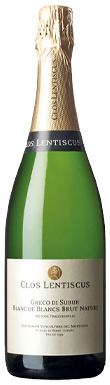

Zesty, pithy sparkling, a wealth of citric notes, green tea, light honeyed and resin notes, and overall quite herbal. Very acidity-driven with lively green fruit...
2017
Clos Lentiscus

Enric Soler, Istiu, Penedès, Spain, 2020
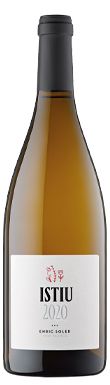
An equal blend of Malvasia de Sitges and Xarel. lo, this has very delicate orchard fruit with white peach on the nose, dried apricot, white...
2020
Enric Soler
Celler de l'Hospital, Blanc Subur, Penedès, Penedès, Spain, 2020
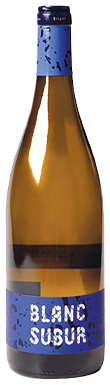
Clean and lively, with vibrant citric notes, honeyed and saline with a very delicate profile overall. Great definition on the palate, salinity coming out even...
2020
Celler de l'HospitalPenedès
Mas Vilella, Malvasia de Sitges, Penedès, Spain, 2019
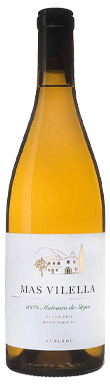
Light orchard fruits, dried apricot and yellow peach, subtle lemon peel, fennel and a white tea-leaf touch. Zesty and full on the palate, fresh, frizzy...
2019
Mas Vilella
Celler Credo, Mirabelles, Penedès, Penedès, Spain, 2018
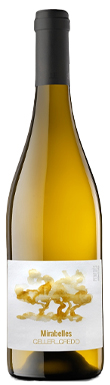
Lively yellow cherry and apple, a good deal of pithy citric notes, pink peppercorn and green tea. Chewy, engaging structure on the palate, with a...
2018
Celler CredoPenedès
Pepe Raventós, Vinya la Plana, Penedès, Spain, 2021
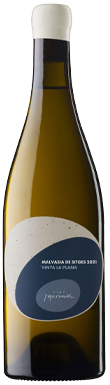
Lightly dried lemon peel, sweet red apple peel, toasted anise seed, and dried yellow cherry. Chewy and textured on the palate, good deal of quite...
2021
Pepe Raventós
Parés Baltà, Espígol, Penedès, Penedès, Spain, 2020
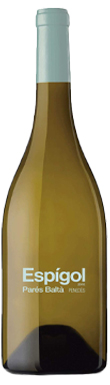
Very light, fresh citric notes on the nose, honeyed green tea leaf notes and a touch waxy. Showing a little subued at the moment, but...
2020
Parés BaltàPenedès
