
Harlan Estate masterclass: DFWE New York
Harlan Estate's Will Harlan and Decanter’s Napa Valley Correspondent Jonathan Cristaldi presented an ultra-rare lineup of wines in the Three Decades of Harlan Estate masterclass at the recent Decanter Fine Wine Encounter at Manhatta in New York City. Relive the tasting below with notes and scores on all seven wines.
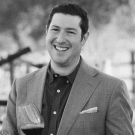

There was a palpable sense of excitement and suspense resonating throughout the audience at this Decanter Masterclass as Will Harlan, managing director at Domain H. William Harlan, and I prepared to present an extremely rare lineup of Harlan Estate wines, beginning with their fourth produced vintage, 1994, and culminating with the 2018.
Scroll down to see tasting notes and scores for all seven wines tasted at the Three Decades of Harlan Estate masterclass in New York
A special place
I led by offering up a visual perspective of the estate. I illustrated its two distinct ridges on the southern Mayacamas, overlooking Martha’s Vineyard and parts of To Kalon vineyards. The soft and old sandstone soils on its western ridges and the hard, younger volcanic soils on its eastern knolls.

Will talked of his father, Bill Harlan’s consequential trip to Bordeaux and Burgundy in the 1950s – a trip arranged by Robert Mondavi and how it cemented in Harlan’s mind the importance of finding the absolute best vineyard land in Napa. Land with the best character and potential for distinction. Harlan envisioned a 200-year plan that would see its inception with the purchase of 97ha of woodlands, which today comprises Harlan Estate and its 16.2 hectares of planted vines.
Our discussion centred on the land and the evolution of farming at Harlan. Vineyard blocks are monitored, and tended to, by the entire viticulture team while specific parcels are farmed by seven ‘vine masters’ year after year.
Will explained that the vintages he had chosen each represented ‘inflection points’ in their evolutionary process.
The lucky 50 attendees also learned that three vintages of Harlan had been produced and never released—1987, 1988, and 1989—and Will confessed, ‘We kept those. We still have them. We drink them from time to time,’ he said. But when the 1990 vintage came along, it was the first vintage that made Bill Harlan realise he ‘might actually have a piece of land that could someday be considered one of the finest sites in Napa.’ Adding that ‘it was the light bulb for us’.
Harlan masterclass: The wines

The wines Will poured for the masterclass told a story of the Harlan estate over the last 30 years. A confluence of commitment to place, a detailed approach to farming and undeniable ageability.
Harlan Estate, Napa Valley, California, USA 1994
Harlan Estate, Napa Valley, California, USA 1997
Harlan Estate, Napa Valley, California, USA 2001
Harlan Estate, Napa Valley, California, USA 2005
Harlan Estate, Napa Valley, California, USA 2013
Harlan Estate, Napa Valley, California, USA 2016
Harlan Estate, Napa Valley, California, USA 2018
Scroll down to see tasting notes and scores for all the wines featured in this masterclass
During the masterclass, Will described the lengths his father went to find a piece of land. Time was spent hiking in the hills for years before deciding on the property that is now Harlan Estate. He painted so vivid a picture of the place that it was easy to envision their stretch of pristine hills in Oakville and the vineyard nestled amidst dense forestland that had to be cleared before Bill could plant vines. The young Harlan explained that the character of the place is as essential to the style of wine as the aromas, flavours, and textures.
The tasting revealed wines of structure, ageability and, most notably, illustrated three separate phases of Harlan’s evolution. We could taste the building blocks of greatness in the 1994 and 1997, and could sense the vine maturity as we tasted 2001, 2005, and 2013, and above all, noticed the precision and freshness as a result of remarkably precise farming as we made our way to tasting the 2016 and 2018.

Three Decades of Harlan Estate: 7 wines across 30 years
1994
All the wines poured came from 75cl bottles, and had been opened and double decanted about an hour before guests arrived. We intentionally poured the 1994 and 1997 about 15-20 minutes into the masterclass. From a relatively cool year, which ended with warmer weather, it is a vintage for the estate that has been highly praised and did not disappoint. At 29 years of age, it was certainly the most delicate of the lineup and a spectacular example of how Napa Cabernet sheds its fruit weight to reveal a savoury wine, still imbued with texture, energy, and vitality.
1997
Jumping to 1997, having followed the 1994 this wine was surprising for its remarkably dense, intensely concentrated colour and profile. Will Harlan described it as ‘Probably the most controversial vintage we’d ever produced at the time.’ He went on to say that a cadre of critics found it too big a wine. After 25 years, it’s starting to find its groove.
2001
In the 2001 vintage, we begin to see an evolution in the Harlan style—‘inflection points,’ as Will Harlan puts it. The vines are maturing, and farming continues to inch the estate ever close to its goal of dry farming. In 2001, a warm early autumn meant harvest finished in October. The relatively cool season brought low yields of 1.5 tons per acre. The resulting wine was lauded as impressively Bordeaux in style, which I asked Will about. He replied that it was ‘very flattering’ but pointedly said, ‘On the other hand, this is not Old World, and it’s not trying to be Old World. There are elements that you can find—some small similarities—but, at the end of the day, this is its own animal.’
2005
Will explained that the 2005 embodied the kind of wine they are trying to make, which he described in complex details. ‘We try and make a wine that is not quite at the apex on a graph, but [our aim] is more toward the area under the graph. We want our wine to capture the greatest area under the graph. So, as the wine evolves in the bottle, some vintages will plateau. It’s going to take a longer time for them to peak. I don’t think that a wine can be considered a fine wine unless it can age.’
2013
With the 2013 vintage, we find the third inflection point, or era, in farming at Harlan Estate. The vines are quite mature now, and much of the estate is on its way to dry farming without using irrigation. Upon release, this wine was very structured and tightly wound. At the 10-year mark, it’s relaxing a little and offering up the kind of softness and intrigue that only comes with time in the bottle. It was also one of Will Harlan’s first vintages in which he participated in the blending sessions alongside his father and founder, Bill, director of wine growing Bob Levy, founding director Don Weaver and winemaker Cory Empting. I felt we caught this wine in a transitional moment—shedding its baby fat and, perhaps, getting ready for a long slumber. It will re-awaken in five-seven years and give off firework displays for the remainder of its life.
2016
Earlier in the masterclass, Will accidentally revealed the year of this wine which we had not listed on the guests tasting sheets. The intention was to talk about a finite realisation—a data point or definitive inflection point where mature vines, dry farming, and vine masters who tend to sections of the vineyards are beginning to produce what Harlan described as ‘clarity and wonderful precision’ in the wines. No question that 2016 was the top wine of the masterclass, with so much to give, such pointed complexity and balance of full-bodied Napa Cabernet with structure, tension, and a delineation of both flavours and textures.
2018
As we neared the close of the masterclass, one could sense that the natural flow of conversation was rewarding for those in attendance. Questions had been largely about varietal composition (Harlan can be notorious for skirting around specifics here), replanting, and when to drink wines. Some attendees had wines of Harlan Estate going back to 1990 in their cellar—the first release!
With 2018 in our glass, it was clear how far the estate had come since the 1994 bottling—and Will Harlan put it best as he spoke of the place and the sense of the Harlan estate in the glass. ‘Harlan estate has this element of the forest, surrounded by forest. There’s a certain warmth, a certain softness, like moss and walking in and through that dense forest. It has a tannin structure that tends to be almost spherical with a freshness and detail that’s not even of the physical realm.’
With that, our time was up. We raised our glasses in thanks for the bounty we had just experienced and toasted to the bright and long-lived future of the Harlan Estate.
Wines tasted at the Three Decades of Harlan masterclass in New York:
Related articles
- Harlan Estate: Secrets behind its vine-by-vine approach
- A chat with Bill Harlan – and six wines back to 1992
- Decanter’s New York Fine Wine Encounter: No smoke, but red hot
Harlan Estate, Napa Valley, California, USA, 1994
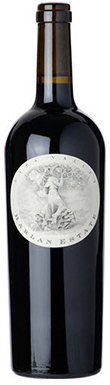

Only the fourth official release from Harlan, the vintage was mild with average winter rainfall and cool days with temperatures averaging just below 26°C. Budbreak...
1994
Harlan EstateNapa Valley

Harlan Estate, Napa Valley, California, USA, 1997
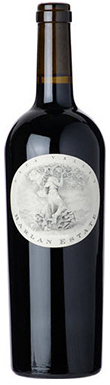
Ample rain fell during winter, leading to an early bud break in late March. From May through September, temperatures hovered between 26°C and 32°C, only...
1997
Harlan EstateNapa Valley
Harlan Estate, Napa Valley, California, USA, 2001
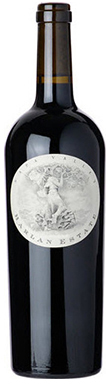
By the 2001 vintage, the vines at Harlan Estate were entering their 17th year of life and adapting to the method of dry farming that...
2001
Harlan EstateNapa Valley
Harlan Estate, Napa Valley, California, USA, 2005
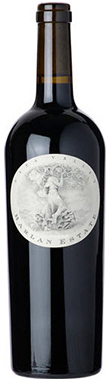
At Harlan Estate, ask Will Harlan himself what the aim is with each, and the answer he’ll give is simple and even expected from this...
2005
Harlan EstateNapa Valley
Harlan Estate, Napa Valley, California, USA, 2013
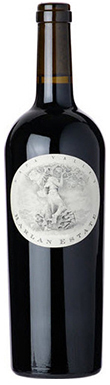
The second consecutive drought year for Napa, it ushered in a warm, dry spring with early bud break in the month of April. A warm,...
2013
Harlan EstateNapa Valley
Harlan Estate, Napa Valley, California, USA, 2016
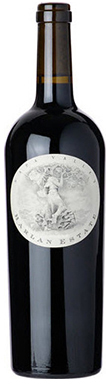
By all accounts, a spectacular and near-perfect vintage for Napa Valley. A wet, rainy winter marked the end of drought conditions, and the growing season...
2016
Harlan EstateNapa Valley
Harlan Estate, Napa Valley, California, USA, 2018
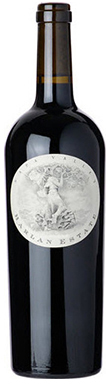
Half of all rain in 2018 came in March, April, and May. Budbreak was in early April, and the growing season was just idyllic, with...
2018
Harlan EstateNapa Valley
