
Has the Champagne price bubble burst?
We’ve been living in an era of bargain bubbly. Yet, despite ever-increasing costs, producers have for years kept a lid on the prices you pay. Change is on the horizon, says Tyson Stelzer, though your favourite celebratory tipple will remain a relative bargain in the immediate term


The writing is on the chalk cellar wall. Champagne vineyard prices are up more than five-fold in 25 years. Grape prices are up 80% in 15 years. The region boasts the highest cost of production in the wine world. Yet the price of a bottle of Champagne has risen just 13% in the past decade. Can Champagne continue to churn out the most affordable wines of the fine wine world?
Escalating costs
Did you know that Champagne pays its growers the highest grape price in the world, averaging more than €7 per kilogram, and more than €8 in top grands crus, and rising annually, more than 80% up on 15 years ago?
In the dismal 2017 harvest, Champagne’s largest player, LVMH – maker of Mercier, Moët & Chandon, Ruinart, Veuve Clicquot, Dom Pérignon and Krug – shocked everyone by offering its growers a premium of 6%-7% on the price of grapes, and in some crus as much as 15%, inflating prices across the region.
Even the big players are troubled. ‘This is a problem for us, as we need to follow the price rise, but we cannot increase our ex-cellar price,’ reveals Lanson chef de cave Hervé Dantan. ‘We expect the price of grapes to continue to rise for the next four or five years, and some brands are going to die.’
The average Champagne vineyard is now valued at more than €1.5 million per hectare, making Champagne the highest-value appellation viticultural land on earth, some 60 times the value (according to SAFER, 2018) of a typical Côtes de Bordeaux vineyard!
Champagne also ranks as the fastest inflating value of France’s wine appellations. Champagne’s top Côte des Blancs and Montagne de Reims grands crus are now fetching up to €4 million per hectare.
It takes 1.3kg of grapes to make a bottle of Champagne, not to mention a production process more complex, labour-intensive and time-consuming than any other in the wine world. Fortified aside, Champagne is the only wine style matured to its prime prior to release. Champagne currently has almost 1.5 billion bottles stockpiled, which will remain in waiting for an average of more than 4.5 years.

Laudable ambition
Champagne’s cost of production is rising for another reason. The harrowing extremes of climate change are taking their toll, and the region has suffered bitterly in recent vintages. The 2016 season saw catastrophic climatic events that decimated yields by almost one quarter, and 2017 was even worse, written off by many growers as their most challenging vintage ever.
Meanwhile, as Champagne slowly but increasingly turns to sustainable viticulture, vineyard management costs increase as yields decrease, further multiplying spiralling costs. One fifth of Champagne’s vineyards have now been certified sustainable, with a goal of 100% by 2030.
Organic and biodynamic viticulture are demanding and costly, and particularly so in Champagne’s erratic, wet and humid climate, in which disease is particularly challenging to manage without the fallback of systematic chemical sprays.
This creates a dilemma in terms of sustainability, because herbicides, fungicides and chemical fertilisers bolster yields, while the eco-friendly practice of cultivating grasses in-between rows creates competition and diminishes yields. ‘You lose in quantity but you win in quality,’ explains Jean-Baptiste Lécaillon, who manages Champagne’s biggest biodynamic vineyard at Louis Roederer. ‘It’s all about the discussion between quality and quantity. This has been the debate for 300 years.’
It’s a debate that intensified like never before after those harrowing harvests of 2016 and 2017. In response, Dantan established a new department at Lanson in early 2018, opening the way for growers to obtain sustainable certification, complete with a commitment to paying higher prices for their grapes. This is a radical move for Champagne, and all of its top négociant houses have followed.
Luxury bargain
The only Champagne houses capable of sustaining these rising costs are those able to pass on price increases in export markets. Yet, as sales within Europe continue to decline, Champagne remains one of the most price-sensitive luxuries in growing markets outside Europe. Big-brand discounting has accounted for the majority of sales growth in key markets in recent years.
Champagne is caught in the squeeze between having the most expensive (and rising) cost of materials and production in the wine world, and being the most price-competitive and frequently discounted premium wine category on the shelves.
In the midst of all this, Champagne remains the outright bargain of the luxury wine world, with prestige Champagne ranking far and away as the most affordable and most accessible of all flagship global benchmark wines. When was the last time you found a mature first growth Bordeaux or grand cru Burgundy for the same price as Krug Grande Cuvée, Louis Roederer Cristal or Veuve Clicquot La Grande Dame?
In 1904, Moët & Chandon Carte Bleue was being sold for the same price as Bordeaux’s Château Latour, Château Margaux and Château Haut-Brion. A 30-year-old Château Lafite was just double the price of a bottle of Louis Roederer, Mumm Cordon Rouge or Veuve Clicquot. Today, these Bordeaux icons are 20 times the price. Champagne does not rank even once among the top 20 most expensive wines in the world.

Bubbling over?
Can Champagne maintain its bargain prices? It can, and it will, but only until the moment demand picks up, shaking off the corona- induced blip of 2020 and achieving a record high in the years to come. Following crashes in the French and UK markets, Champagne sales in 2019 hit their lowest point since the post-global financial crisis of 2009, yet prices are on the rise, with record turnover of more than €5 billion for the first time.
‘The price of Champagne is going to increase, because there is more pressure on supply and demand,’ suggests Dom Pérignon chef de cave Vincent Chaperon.
‘Over the next 10 years, the price of Champagne will rise a little faster than in the past, because of the cost of producing sustainable grapes,’ forecasts former Veuve Clicquot chef de cave Dominique Demarville. He postulates that Champagne might inflate by 20%-30%, but adds that his La Grande Dame prestige cuvée will never be the price of first growth Bordeaux or grand cru Burgundy.
At the top end, prices are already fast on the move. In 2019, three Champagne houses ascended the rankings to achieve coveted positions in the top 10 most powerful brands in the fine wine market in the annual Liv-ex Power 100 (thanks to value and volume of trading), outranking every Bordeaux first growth. In 2018, not a single Champagne house reached the top 10.
Krug ranked fourth in 2019 (up from 30th in 2018), thanks to a jump of almost 10% in price performance, Louis Roederer fifth (up from 20th) and Moët & Chandon ninth (up from 12th). It was Salon that demonstrated the biggest leap of any brand in the Liv-ex top 100, however, rocketing from 79th to 13th, thanks to a jump of more than 30% in the value of wines traded. This is a trend that increasingly defines the prestige end of the market, and Louis Roederer’s performance is most certainly thanks largely to Cristal, Moët & Chandon’s to Dom Pérignon. Between them, Krug, Cristal and Dom Pérignon account for almost half of global prestige Champagne sales.
If you’re tempted to splurge on a bottle of Champagne Salon in the UK off-trade at the moment, you might be alarmed to discover prices up to a cool £650 or more for a recent-release vintage. Only two years ago, it was averaging ‘just’ £423. That’s a price hike of more than 50%.
Time to take stock
But don’t panic – your favourite Friday night fizz is not about to go through the roof. With a production of less than 60,000 bottles each vintage, and typically only two in five vintages released, Salon is an extreme case of rarity fuelling inflation. At the very top end, price will always be at the mercy of the tenuous relationship between supply and demand. This is more acute for Champagne than any table wine style, because its lead-time from production to market is longer than any other.
Krug reports that its multi-vintage Grande Cuvée has been on allocation worldwide since mid-2017, for the first time in Olivier Krug’s 30 years with the company. ‘We are paying today for some bad decisions in 2009 and 2010, when we produced less Grande Cuvée,’ he reports. At the other end of the market, the UK has seen a dramatic reduction in recent years in frequently discounted supermarket exclusive labels. This has helped to drive up the average cost of a bottle departing Champagne for the UK, now at €16 (excluding shipping and taxes), up from less than €13 in 2010, with the average shelf price per bottle rising to £23.88.
At the time of writing, at the height of the Covid-19 pandemic, it’s impossible to imagine just how extensive will be the impact on Champagne pricing of ‘the ceaseless showreel of calamity and disaster that now passes for everyday life’, as one independent wine merchant recently observed poignantly. With Champagne houses forecasting 2020 sales to be down at least 40%, this is not the year when they will be scurrying to inflate prices.
Yet the factors at play in Champagne’s vineyards and cellars and across its world markets, which have slowly begun to drive its prices upward, will continue to play out and indeed intensify for many years to come. Champagne prices will keep bubbling away, but they won’t gush over any time soon. There’s no need for panic buying – yet.
Bang for your buck: Stelzer’s top six to seek out
The best Champagnes of 2019 tasted by our experts
The best non-vintage Champagnes to buy
Krug, Grande Cuvée 166ème Édition, Champagne, France
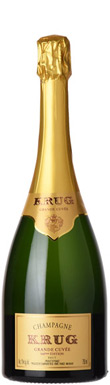

A biscuity reductive and toasty nose, but refined and not overdone. Flows nicely all the way through. A superior creamy and silky texture, substantial but...
Krug

Veuve Clicquot, La Grande Dame, Champagne, France, 2008
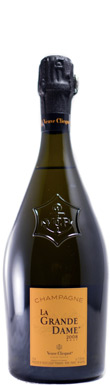
This 2008 is currently showing itself as a huge version of La Grande Dame, rushing forwards with verve and power. It's a generous wine and...
2008
Veuve Clicquot
Bollinger, Special Cuvée, Champagne, France
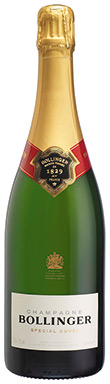
If it’s good enough for James Bond, it’s good enough for you. Bollinger Champagne has made a number of cameos in James Bond films over...
Bollinger
Louis Roederer, Brut Premier, Champagne, France
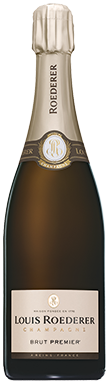
42% Pinot Noir, 40% Chardonnay, 18% Meunier from 55% estate vineyards; 16% fermented and matured in oak casks; 30% malolactic. The rise and evolution of...
Louis Roederer
Lanson, Black Label Brut, Champagne, France
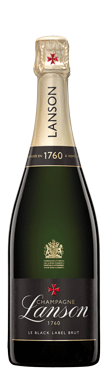
50% Pinot Noir, 35% Chardonnay and 15% Meunier from 100 villages in all, and including 30% reserves from 10 vintages back to 1995; a small...
Lanson
Pierre Gimonnet, Cuis 1er Cru Brut, Champagne, France
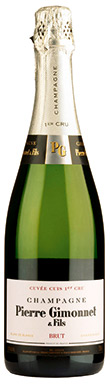
100% Chardonnay. Didier Gimonnet’s aspiration for his entry NV is a cuvée with attack on the front, roundness in the middle and crispness on the...
Pierre Gimonnet
