
Hawke’s Bay: Beyond Gimblett Gravels


There’s a lot more to Hawke’s Bay than Gimblett Gravels – but is further sub-regionality justified? Oliver Styles looks at the cases for and against...
Talk to almost any winemaker in New Zealand’s Hawke’s Bay and they are convinced that sub-regionality exists. As Mike Henley, chairman of Hawke’s Bay Winegrowers, points out, the Gimblett Gravels – the established sub-region par excellence – is better known than its parent area in some parts of the US. But the Gravels has several things going for it: the soil type is reasonably unique; it is easily delineated (more or less within two roads and a riverbank); and it has several heavyweight companies behind it, including Craggy Range and Villa Maria.
Scroll down for Olivier Style’s top 10 sub-regional stars from Hawke’s Bay
Yet the sub-regional story seems to have stopped there. Since the success of the Gimblett Gravels Association, only two other regions have been officially drawn up: the Bridge Pa Triangle and the Te Mata Special Character Zone. But is there a case to be made for examining sub-regionality across the whole region?
Hawke’s Bay: the facts
Area under vine: Over 4,700ha; New Zealand’s second largest wine region and its largest premium red wine producing region
Wineries: 76 wineries and 71 growers
Yield: Most wineries produce less than 200,000 litres per annum
Grape varieties: 28% Sauvignon Blanc, 25% Merlot- Cabernet, 21% Chardonnay, 12% Pinot Gris, 7% Pinot Noir, 4% Syrah
Hawke’s Bay: the sub-regions
This list is arranged alphabetically; see map above for geographical locations.

Bridge Pa Triangle
Often seen in the shadow of its more illustrious neighbour Gimblett Gravels, the Bridge Pa district produces plusher, more succulent and generally more approachable reds than the Gravels, often with just as much muscle. Villa Maria’s Keltern vineyard is counted as part of this region although it is further inland and cooler. Top producers: Paritua, Redmetal, Sileni, Church Road, Matua, Alpha Domus, Ash Ridge.
Coastal (Te Awanga, Bay View)
Heavily influenced by the sea with a cooler but moderated climate, longer growing season and later ripening. Most vineyards closest to the ocean will be planted with predominantly white varieties, although vineyards further inland can produce surprising reds, depending on aspect. Top producers on the coast: Clearview, Craggy Range (Kidnappers Chardonnay), Elephant Hill, Te Awanga Estate, Beach House. At Bay View: Crab Farm and Esk Valley (the latter’s Winemaker’s Reserve Chardonnay is regularly from here).
Esk Valley
Alluvial soils with a relatively coastal climate, Esk Valley is home to a handful of growers. Top producers include: Petane Station and Linden Estate.
Gimblett Gravels
Well-defined, heavily protected (it is a trademark) and with rigorous standards. Young alluvial soils; very hot in summer. Can be affected by late rains. Wines are generally well-structured (sometimes austere) Bordeaux blends and Syrah. Some whites. Top producers: Sacred Hill, Trinity Hill, Craggy Range, Villa Maria, Te Awa, Vidal, Esk Valley, Church Road, Mission Estate, Stonecroft, Element Wines, Beach House.
Hillside Hawke’s Bay
Some of the most interesting, if not profound, wines are produced on the hillside sites around the region. Bilancia’s La Collina S Ash Ridge yrah and Esk Valley’s The Terraces are reference points and are rightly sought after. Other great producers include Hopes Grove (excellent Syrah and Viognier in particular), Supernatural Wine Co (although this could be considered Coastal), De La Terre, Te Mata and Black Barn (the latter three have vineyards in the Te Mata Special Character Zone, itself a potential sub-region).
Mangatahi, Crownthorpe, Matapiro
One step further inland from Bridge Pa, although vineyards can be found on both sides of the river for some distance. Similar soils to Bridge Pa but with more elevation and significantly cooler. Fresh, classy whites and some good Pinot Noir. Top producers: Sileni, Easthope Family Winegrowers, Church Road, Rod McDonald Wines, Smith & Sheth (its CRU Chardonnay is worth seeking out).
Tukituki
Can overlap with Coastal as this river enters the sea just north of Te Awanga; most growers are situated between the Havelock Hills and the coast. Heavier soils due to the nature of the river, but a cooler aspect than more inland sites and varying terrace heights. Recent years of Church Road’s prestige Tom Chardonnay (the fantastic 2014 in particular) have come from this region. Other producers include Ant McKenzie Wines, Indevin, Akarangi, Askerne, Black Barn and Dolce Vista.
Tutaekuri Valley (Dartmoor, Woodthorpe)
Similar soils to the Ngaruroro and, depending on location, will also be either young alluvial or older terraced alluvial soils. However, the higher limestone content of the Tutaekuri river system will have some effect. Soil expert Keith Vincent draws some parallels with Marlborough’s Wairau Valley. Sacred Hill has extensive vineyard holdings in this area. Other top producers include Te Mata Estate and Matua.
NB: Central Hawke’s Bay is a separate Geographical Indicator to Hawke’s Bay. Its scattered producers fell outside the scope of this article.
Church Road winemaker Chris Scott certainly thinks so. ‘Put South Australia over a map of Hawke’s Bay,’ he says, ‘and Adelaide Hills, Eden Valley and Barossa Valley would fit into it. You can be in Gimblett Gravels or Bridge Pa and the temperature on a summer’s day is 30°-32°C, then drive out to Tukituki and it’s 26°C or 27°C. Added to which there’s the differences in soil type…’
Down to earth
What of those soils? Keith Vincent, an expert in soil science, is reluctant to generalise, but broadly speaking there are three soil types in the region: young alluvial (recently repurposed riverbed, such as the Gimblett Gravels); old alluvial (terraced riverbed with ‘ancient, well-developed sandy-silt’ build-up, such as Bridge Pa, Mangatahi and Crownthorpe); and hillside soils (sites are dotted around the Bay, but generally loess over limestone).
There are, of course, variations both between the different river systems and within zones. Alluvial soils around the Tukituki River, Vincent posits, would likely be heavier given a higher incidence of clay and silt in the watershed. This would potentially extend out to coastal vineyard sites at Te Awanga, although the winemakers I talked to there agree that soils vary quite significantly, from Gimblett-like gravel-shingle in sections of Clearview to heavier soils such as the clay-loam in Craggy Range’s Kidnappers Vineyard. Vincent would also expect more limestone content in sites around the Tutaekuri River (Dartmoor, Woodthorpe) due to the nature of the river.
But while soils play a role in sub-regionality, other factors are also involved. ‘Climate, elevation and distance from the ocean are determinate,’ explains Steve Smith MW. ‘Look at Bridge Pa and Mangatahi,’ he suggests, pointing out the proximity of these two areas and similarity in soil type. ‘Mangatahi is three weeks later [in the growing season] because it’s a much cooler site.’
Distilling all this leaves us with about eight sub-regions in Hawke’s Bay. From north to south these are: Esk Valley; Tutaekuri (Dartmoor, Woodthorpe and other sites on young and old alluvial soils); Gimblett Gravels (young alluvial Ngaruroro soils); Bridge Pa (old alluvial Ngaruroro soils); Upper Ngaruroro (old alluvial soils with greater elevation and cooler climates, encompassing Mangatahi, Crownthorpe and Matapiro); Tukituki Valley (heavier old and young alluvial soils); Te Awanga (coastal sites of varying aspect and soil type); plus hillside sites dotted throughout the region.
Help or hinder?
But how useful are these sub-regions in the broader context of taking the Hawke’s Bay story to the wider world? Indeed, is this a story the wineries even want to tell? Henley worries that the sub-regional story may ‘muddy the waters’ and most winemakers I spoke to – including Scott at Church Road and Damian Fischer at Trinity Hill – understand this.
What’s more, many Hawke’s Bay wines are blends across sub-regions. Vidal’s Legacy Chardonnay – a Decanter World Wine Awards International Trophy winner – is often a blend of three sites: Keltern, Ohiti (over the river from Bridge Pa Triangle) and Lyons (Gimblett Gravels). Furthermore, as Vidal winemaker Hugh Crichton points out: ‘It’s one thing having sub-regionality and another thing having the consumer – and even some trade – understand it.’
Minimal attention is given to sub-regionality in the main wine competition of Hawke’s Bay, the Agricultural & Pastoral Awards, which judges the best Chardonnay, Syrah and Pinot Noir of the region. ‘There was not one mention of sub-regionality,’ notes visiting judge and Marlborough winemaker Nat Christensen.
Story telling
To add further complexity, winemaker Rod McDonald points out that a significant proportion of plant material is currently planted in the wrong place. Futhermore, it’s clear that viticultural practices (sprays, yield, picking date and so on) as well as winemaking can often outweigh characteristics of terroir. Chardonnay is the prime example. Even single-vineyard wines such as Villa Maria’s Reserve Keltern Chardonnay can go from the sublime (2014) to the reductive (2016).
Such variations, and the range of wines made in the region, put Hawke’s Bay in a bit of a bind, foiling attempts to simplify the message. But for many, sub-regionality is still an issue worth talking about. Grant Edmonds at Redmetal Vineyards says: ‘Marlborough and Central Otago are a one-horse race… Hawke’s Bay has never made it to that. [Sub-regionality] is the only way we can tell our story.’
And how might it do that? Smith points to Oregon as a possible model for Hawke’s Bay. ‘When a lot of smaller AVAs split off from their parent body they found that for smaller, unknown AVAs it was always better to have both regions on the label. It won’t create confusion if the two names are together.’ Henley agrees: ‘It will assist the story.’
Oliver Styles is a wine writer and winemaker based in New Zealand
See Olivier Style’s top 10 sub-regional stars from Hawke’s Bay
You may also like
A wine lover’s guide to Hawke’s Bay, New ZealandNew Zealand whites: 2018 vintage reportBeyond Sauvignon: Top New Zealand white wines – Panel tasting resultsCentral Otago: Everything to know and wines to tryTravel: the ultimate New Zealand wine road trip
De la Terre, Te Mata Hillside Viognier, Hawke's Bay, New Zealand, 2014
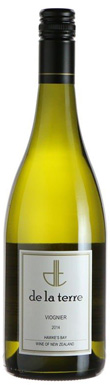

From the Te Mata Special Character Zone, winemaker Tony Pritchard says he is happy to sacrifice varietal definition in the pursuit of minerality. This unoaked...
2014
De la Terre

Sacred Hill, Riflemans Chardonnay, Hawke's Bay, New Zealand, 2016
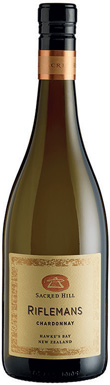
Hawke’s Bay Chardonnay is often more winemaker than the soil and, despite great pedigree, this golden, more developed style, is no exception. But this showcases...
2016
Sacred Hill
Supernatural Wine Co, Minus 220 Sauvignon Blanc, Hawke's Bay, New Zealand, 2018
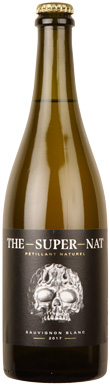
92
A combination of hillside soil and coastal aspect. No additions (220 is the code for sulphites) in this wine, which was tasted a week before going to bottle. Concentrated pineapple, supple, textured and fresh. Compelling and, if it holds together in bottle, a real flag-bearer for ‘living wine’.
2018
Supernatural Wine Co
Ant Mackenzie Wines, Tukituki Craft Farm Chardonnay, Hawke's Bay, New Zealand, 2016
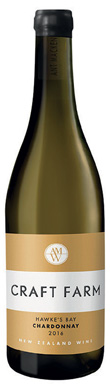
A bold, toasty Chardonnay showing Tukituki’s heavier soils albeit with cool-climate acidity. Winemaker Ant McKenzie has pedigree. Australian readers should also seek out Church Road’s...
2016
Ant Mackenzie Wines
Mission Estate Winery, Ohiti Riesling, Hawke's Bay, New Zealand, 2016
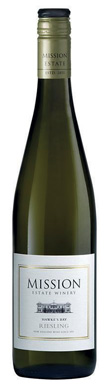
To represent Ohiti, it was a tough choice between Vidal’s driven Soler Chardonnay 2017 and this developed, kerosene-and-lime Riesling. No bird nets here; the grower...
2016
Mission Estate Winery
Bilancia, La Collina Syrah, Hawke's Bay, New Zealand, 2016
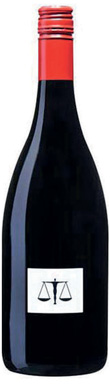
Sublime. A heady, aromatic perfume incorporating blackberry fruit and spice, then a seamless palate showing more juicy fruit with a fresh, lingering finish and a...
2016
Bilancia
Esk Valley, The Terraces, Hawke's Bay, New Zealand, 2016
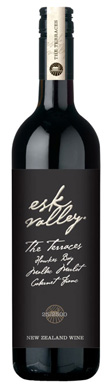
A blend of Malbec, Merlot and Cabernet Franc. Big and broody with savoury notes on the nose, this is intense, structured, complex, long and powerful,...
2016
Esk Valley
Te Mata, Bullnose Syrah, Bridge Pa, Hawke's Bay, New Zealand, 2016
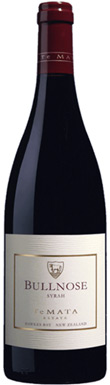
Very aromatic, with camphor and red and black fruits on the nose. A soft, pretty and structured wine with fine tannins. Supple, with a long...
2016
Te MataBridge Pa
Easthope Family Winegrowers, Mangatahi Gamay Noir, Hawke's Bay, New Zealand, 2016
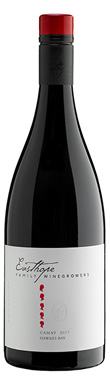
Whole-cluster ferment and nine months in oak. Pungent red fruit aromas pushing into cassis notes. A juicy, nice, mid-weight expression of the cooler Mangatahi climate,...
2016
Easthope Family Winegrowers
Paritua, Syrah, Bridge Pa, Hawke's Bay, New Zealand, 2015
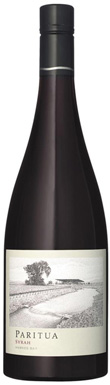
A toss-up between two styles of Bridge Pa, but this gutsy, developed, textural Paritua just edged out the lovely Te Awanga Estate Syrah 2017.
2015
ParituaBridge Pa
