
Identifying the best Burgundy vineyards
Andy Howard MW picks out his top climats in Burgundy, from villages through to grand cru...


For many ardent oenophiles, the wines of Burgundy represent the pinnacle of perfection. Here, the concept of terroir is expressed in its purest form. Underlying geology, exposition, erosion and soils combine with historical factors and the influence of modern winemaking methods to create some of the most scintillating and thought-provoking wines on the planet.
The most famous and highly prized vineyards lie in the Côte d’Or – a narrow strip of land 65km long and between 1-2km wide. Wines have been produced here since antiquity, with the Romans, the 6th century Burgondes, Emperor Charlemagne, Benedictine and Cistercian monks, and the Dukes of Bourgogne all leaving their mark.In recent years, the quality of Burgundy has reached new heights, with all levels of wine reaching previously unseen levels of refinement and complexity, but also showing a (vital) sense of place. At the same time, demand has risen and prices have rocketed: in 2017, Clos de Tart sold for an unconfirmed price in the region of €250m – over €30m per hectare. At the very top, Burgundy is out of reach of many.In addition to price, production of the top climats – e.g. La Romanée Conti, La Tâche, Le Montrachet – is miniscule, with the only route to acquiring such wines being through long-term allocations. Yet, within Burgundy, there are great vineyards (and wines) at many different levels – grand and premier cru, villages and generic Bourgogne. Knowing a winemaker’s style is important, along with an appreciation of a vineyard’s terroir.
See also: Best French wines: 100 point scores
This summary is my own personal view on the top climats in the Côte d’Or. Many more illustrious commentators may have differing views. I have tried to balance the (understandable) desire to only list the greatest vineyard sites, by highlighting some more affordable and accessible options too. La Romanée Conti, La Tâche and Le Montrachet are not included as a result, although these would undoubtedly head the list for all Burgundy lovers.
The vineyards are described on a journey from north to south through the Côte d’Or.
The best Burgundy vineyards:
Marsannay – Les Longeroies, AC (34ha)
An underrated appellation with the unusual distinction of being the only Burgundian AC classifying red, white and rosé. Although no premiers crus exist at the moment, this may change in future years.
Longeroies is a top climat with red marl interspersed with limestone, giving ageworthy wines with freshness, spice and energy.
Top producers include Sylvain Pataille, Bruno Clair, Jean Fournier and the separate Bouvier estates – Régis and René.
Fixin – Clos de La Perrière, Premier Cru (6.70ha)
Fixin has been overshadowed by neighbouring Gevrey-Chambertin for many years. In ‘Great Domaines of Burgundy’ Remington Norman noted that in the 17th century, Fixin wines were more revered than Gevrey’s. Fixin is now being recognised as a source of structured, tannic Pinot, yet with a delicacy belying its reputation for rusticity. Young winemaker Amélie Berthaut is crafting Fixin with finesse at Domaine Berthaut-Gerber – well worth seeking out.
The top climat is Clos de La Perrière, a Monopole reinvigorated by Bénigne Joliet. Full-bodied and robust in its youth, this will age extremely well, developing intriguing truffle and gamey characters.
Gevrey-Chambertin – Chambertin, Grand Cru (12.90ha)
Along with Clos de Bèze, this is the greatest site in Gevrey (possibly the Côte d’Or). Chambertin is a glorious wine full of power, with regal texture and colour once it has some age. As with Clos de Bèze, Chambertin lies on a slab of calcaire, with a thin layer of pebbles and chalky top-soil giving excellent drainage.
There are over 20 producers, with Armand Rousseau the most significant.
Gevrey-Chambertin – Clos de Bèze, Grand Cru (15.40ha)
Even more historical, Clos de Bèze matches Chambertin as a wine. Full-bodied, concentrated and extremely long-ageing, Clos de Bèze sits on pebbly, well-drained limestone soils, with a high proportion of clay. Situated north of Chambertin, Clos de Bèze is the earliest single-named clos (walled vineyard) in Burgundy, dating back to the 7th century. Slopes are slightly steeper than Chambertin with an extra nuance of finesse over power.
Gevrey-Chambertin – Clos St-Jacques, Premier Cru (6.70ha)
Clos St-Jacques lies at the mouth of the Combe de Lavaux, facing southeast. Cooling valley winds preserve freshness, making Clos St-Jacques a vineyard which ripens late. Soil is similar to Chambertin, and although far from cheap, this premier cru often surpasses Gevrey’s grands crus.
On this steeply sloping site, five owners hold strips of land running from top to bottom. Rousseau is the largest grower, with Jadot another notable example.
Morey St-Denis – Clos de La Roche Grand Cru (16.90ha)
Frequently overlooked, part due to its location between Gevrey and Chambolle, Morey can represent great value, albeit with characteristic firmness in many wines. Clos de La Roche is the most northerly of Morey’s grands crus. The size of the vineyard makes generalisations difficult but, when good, Clos de La Roche can match Gevrey’s best. Cherry, truffle and spice dominate the palate, with plenty of tannin for ageing.
Ponsot, Dujac and Rousseau are key producers.
Morey St-Denis – Clos de Tart, Grand Cru (7.53ha)
This Monopole has only had four owners over the past 900 years. The vineyard lies at the south of Morey, adjoining Bonnes Mares. Classic, well-drained marl soils over limestone lead to a wine with a wonderful balance of finesse and power. Tannic when young, this mellows into a beautifully nuanced, elegant wine with ageing. Prices have shot up with acquisition of the domaine by Château Latour owner Francois Pinault, but quality is likely to rise even further.
Chambolle-Musigny – Le Musigny, Grand Cru (10.85ha)
Perhaps Burgundy’s most regal wine, Musigny is a wine with a luxurious, silken texture wrapped around a core of power and precision. Clive Coates MW describes Musigny as ‘ravishing’ and all ‘silk and lace’. Musigny is divided into two parts – Les Musigny faces southeast with a predominance of limestone and pebbly soil, while Les Petits Musigny faces south with a little more clay and rocky outcrops.
Comte Georges de Vogüé own almost 70% of the grand cru. A wonderful wine to age for decades.
Chambolle-Musigny – Bonnes Mares, Grand Cru (15.06ha)
With over 20 different owners, Bonnes Mares is a significant vineyard which shows different characters depending on location. At the northern end, Bonnes Mares abuts Clos de Tart, with clay-influenced soils giving plenty of tannin and power. At the Chambolle end, there is less clay and the wines display a little more finesse. Either way, this is another great grand cru, capable of very long ageing.
The 2012 Bonnes Mares from Drouhin-Laroze, tasted in early 2019, was barely out of its shell yet all the structure is there.
Chambolle-Musigny – Les Amoureuses, Premier Cru (5.40ha)
A smaller climat sitting just below Musigny, Les Amoureuses is almost certainly the most expensive premier cru in Burgundy – but arguably the best. It combines the plushness of Musigny with fine, silky tannins, a beguiling fragrance and great finesse. The soil here is lighter, with chalk and rocks over the limestone subsoil.
Comte Georges de Vogüé and Georges Roumier are leading producers.
Vosne-Romanée – Richebourg, Grand Cru (8.0ha)
Deep in colour, powerful and full-bodied, many bottles of Richebourg exhibit an earthier character than the delicate, lace-like wines of Chambolle. Richebourg lies on the same slope (and shares similar terroir) as Romanée-Conti, with pebbly clay and sand over a limestone base. With a pronounced easterly exposition, this is a sumptuous Pinot showing more savoury, meaty characters.
Vosne-Romanée – Aux Malconsorts, Premier Cru (5.8ha)
Another contender for the Côte d’Or’s leading premier cru, Malconsorts lies next to La Tâche on well-drained soils with less soil depth and higher limestone content than other Vosne premiers crus.
Bichot is a leading owner, producing a fine-grained, approachable example which can be enjoyed relatively young. Recent tastings of the 2014, 2015 and 2016 vintages showed pronounced floral notes, spiciness and elegant tannins. However, Sylvain Cathiard produces perhaps the finest example of Aux Malconsorts.
Vosne-Romanée – Les Suchots, Premier Cru (13ha)
Vying with Malconsorts as the leading Vosne premier cru, this large climat is sited on the border of the commune, sandwiched between Romanée St-Vivant to the south and Echézeaux to the north. It’s often lush and full-bodied on entry, retreating to leave refined, haunting textures on the palate.
Sylvain Cathiard produces exemplary Suchots, with other fine examples from Jadot, Grivot and Robert Arnoux.
Pommard – Les Rugiens, Premier Cru (12.6ha)
In the past characterised as ‘foursquare’, Pommard had a tendency to produce sturdy, earthy wines, partly down to soils dominated by clay with a high iron content. Today, a gentler side of Pommard is apparent with finesse and fine-grained tannins. Les Rugiens is the leading climat with red, irony soil colours inspiring the name. Lots of concentration here, with some great value and longevity to be found.
Volnay – Cailleret, Premier Cru (14.3ha)
Volnay is generally described as feminine, floral and elegant. Although highly simplistic, there is plenty to support the view that Volnay (with Chambolle) produces the most refined and ethereal Côte d’Or Pinot. Les Caillerets (‘small pebbles’) is a well-drained climat with lots of stones, high limestone content and thin soil. Don’t expect Pommard weight or Côte de Nuit power – this is all about grace.
La Pousse d’Or and Marquis d’Angerville produce top examples.
Meursault – Perrières, Premier Cru (13.7ha)
This world-famous village is home to many wonderful vineyards, headed by Genevrières, Charmes and Perrières. Of these three, the latter is commonly accepted as the best. Steely, intense, yet rich and elegant, the best Perrières marry the richness of Meursault with the precision of Puligny. It is hard to generalise here as the vineyard is made up of distinct sub-areas – Clos des Perrières, Perrières-Dessus and Perrières-Dessous – but thin, rocky, soils and marly limestone add to the freshness and purity.
Top-producers read like a roll-call of the world’s greatest white winemakers: Coche-Dury, Guy Roulot, Comtes Lafon and others.
Puligny-Montrachet – Chevalier-Montrachet, Grand Cru (7ha)
Second only to Montrachet, Chevalier-Montrachet provides an insight into the former at a slightly lower cost. The climat lies entirely within Puligny, so it is no surprise to find elegance, raciness and purity on the palate. In addition, Chevalier-Montrachet provides extra layers of richness, depth and concentration. Situated at a slightly higher elevation than Montrachet, and on stony ground, wines are intense and long-lived.
Puligny-Montrachet – Le Cailleret, Premier Cru (3.9ha)
Sharing a boundary with Le Montrachet and Chevalier-Montrachet, Le Cailleret has the best site of all the Puligny premiers crus. Stylistically there are many similarities, with power and concentration characterising the best examples. The Cailleret climat faces slightly to the east, giving the wines a boost of freshness and great acidity to balance the powerful, mineral-driven palate.
De Montille is a top producer.
Puligny-Montrachet – Les Pucelles, Premier Cru (6.7ha)
Sitting beneath Cailleret and next to Bâtard, Pucelles has a glorious position. Compared to Cailleret, the wines are more floral and less intensely mineral. Given age, Pucelles blossoms into a Chardonnay balancing sumptuousness, concentration and freshness. This is a great premier cru to contrast with Cailleret and appreciate the difference a few yards makes in Burgundy.
Domaine Leflaive produces the greatest example of Pucelles.
St-Aubin – En Remilly, Premier Cru (29.7ha)
St-Aubin has become the go-to village for great value Chardonnay in Burgundy, competing with the best of Puligny and Chassagne. Premier cru wines here represent great value for money, and in terms of position, the En Remilly climat is unsurpassed, with the vineyard on the same steep slope as Le Montrachet. Poor, thin soils give En Remilly a steely precision and mineral edge that is highly distinctive.
Pierre-Yves Colin-Morey, Hubert Lamy and Ramonet all make wonderful, laser-like examples.
Top Burgundy wines from these climats, tasted by Decanter experts
You may also like:
Best Burgundy premier cru wines from 2017
Burgundy: Premier cru status, grand cru quality
From the archive: Vosne superstars: Tasting Grivot and Méo-Camuzet
Domaine René Bouvier, Longeroies, Marsannay, Burgundy, France, 2015
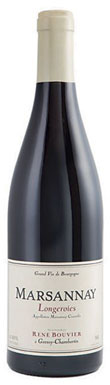

The fleshiness of the vintage shines through, with ripe, sweet red fruits and a pronounced floral note. Hard not to like now but, with fine...
2015
Domaine René BouvierMarsannay

Domaine Joliet, Fixin, 1er Cru Clos de la Perrière, Burgundy, France, 2013
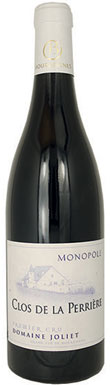
Fixin’s leading cru: a very refined and serious example of Côte de Nuits Pinot: richness, velvet tannins, finesse, classic aromas. Intriguing notes of spice evident...
2013
Domaine JolietFixin
Domaine Armand Rousseau, Chambertin Grand Cru, Burgundy, France, 2005
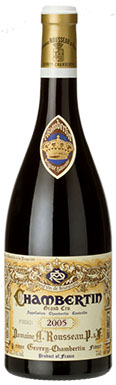
Medium-full colour. Closed-in but rich, concentrated nose. Good grip here. Medium-full body. Ripe, balanced, fresh and very profound and elegant. Exceptionally fine, complex fruit. Good...
2005
Domaine Armand RousseauChambertin Grand Cru
Domaine Armand Rousseau, Chambertin-Clos de Bèze Grand Cru, Burgundy, France, 2015
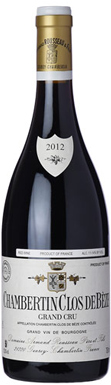
Brooding dark fruits on the nose, super-ripe without any jamminess or overt oakiness. Splendid attack, with power and tension. The firm tannins are much more...
2015
Domaine Armand RousseauChambertin-Clos de Bèze Grand Cru
Domaine Armand Rousseau, Gevrey-Chambertin, 1er Cru Clos St-Jacques, Burgundy, France, 1999
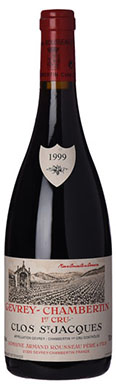
Full colour. Intense, youthful, pure, harmonious and very elegant. No obvious oak. Just about à point. Fullish body, long and complex. Great finesse. This is...
1999
Domaine Armand RousseauGevrey-Chambertin
Domaine Dujac, Clos de la Roche Grand Cru, Burgundy, France, 2017
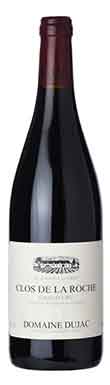
The average age of the Seysses' 1.95ha holdings in the Clos de la Roche are slightly older than those of neighbouring Clos St-Denis. Using fruit...
2017
Domaine DujacClos de la Roche Grand Cru
Clos de Tart, Clos de Tart Grand Cru Monopole, Burgundy, France, 2015
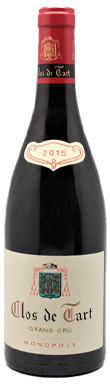
The hot, dry growing season in 2015 produced small grapes with a high ratio of skin to juice, but despite the concentration this young Clos...
2015
Clos de TartClos de Tart Grand Cru Monopole
Domaine Comte Georges de Vogüé, Vieilles Vignes, Musigny Grand Cru, Burgundy, France, 2015
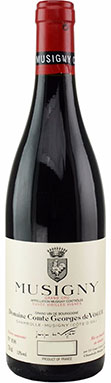
Subtle cherry nose with black fruits. More brooding and restrained than Bonnes Mares, becoming more heady with aeration. Sleek attack, again less forthright than Bonnes...
2015
Domaine Comte Georges de VogüéMusigny Grand Cru
Domaine Georges Roumier, Bonnes-Mares Grand Cru, Burgundy, France, 1995
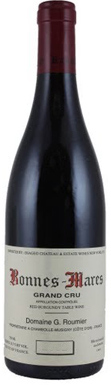
Full, immature colour. This is a brilliant wine. Full, rich and concentrated on the nose. Still fresh and youthful. Splendid fruit. Real depth, vigour and...
1995
Domaine Georges RoumierBonnes-Mares Grand Cru
Domaine Georges Roumier, Chambolle-Musigny, 1er Cru Les Amoureuses, Burgundy, France, 2005
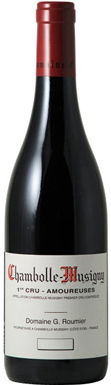
40 ares, planted 1947. 15 percent of the stems retained. A few days natural cold-soaking. 33-40 percent new wood. Bottled after 16-18 months. Full colour....
2005
Domaine Georges RoumierChambolle-Musigny
Domaine Leroy, Richebourg Grand Cru, Burgundy, France, 1999
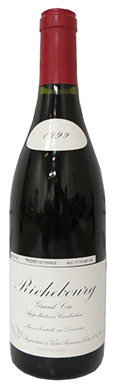
Medium-full mature but vigorous colour. Ripe, rich meaty nose, slightly clunky at first, lacking high tones. Full bodied, earthy and opulent on the palate. Improved...
1999
Domaine LeroyRichebourg Grand Cru
Domaine Sylvain Cathiard, Vosne-Romanée, 1er Cru Malconsorts, Burgundy, France, 2017
This cuvée, sourced from a 0.75ha parcel of 46-year-old vines completed its malolactic fermentation late, so was a little more backward than the other releases...
2017
Domaine Sylvain CathiardVosne-Romanée
Domaine Jean Grivot, Vosne-Romanée, 1er Cru Les Suchots, Burgundy, France, 2017
Always one of my favourite Vosne premiers crus from Mathilde and Etienne Grivot, this textured, stylish, deftly oaked red has all the most appealing features...
2017
Domaine Jean GrivotVosne-Romanée
Thierry Violot-Guillemard, Pommard, 1er Cru Rugiens, Burgundy, France, 2015
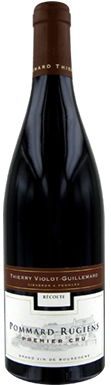
Aromas of red and black cherry, violets, typical Rugiens spice, roast squab and orange zest are the prelude to a complete, three-dimensional palate framed by...
2015
Thierry Violot-GuillemardPommard
Domaine Marquis d'Angerville, Volnay, 1er Cru Les Caillerets, Burgundy, France, 2017
Deeper in colour than some of the d'Angerville wines in 2017, although that is no indication of quality, this comes from the high part of...
2017
Domaine Marquis d'AngervilleVolnay
Domaine Roulot, Meursault, 1er Cru Perrières, Burgundy, France, 2017
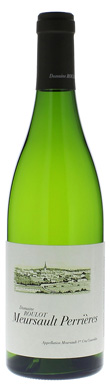
The Roulots' 0.26ha parcel is entirely located in Perrières Dessous, so is better positioned than their Charmes. This is a correspondingly superb wine, right up...
2017
Domaine RoulotMeursault
Domaine Leflaive, Chevalier-Montrachet Grand Cru, Burgundy, France, 2014
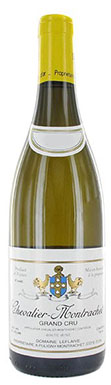
My wine of the vintage. It has a huge, intense nose of lime, pears and apricot with aromatic tension and complexity. A fine, assertive and...
2014
Domaine LeflaiveChevalier-Montrachet Grand Cru
Domaine de Montille, Puligny-Montrachet, 1er Cru Caillerets, Burgundy, France, 2017
The pick of the de Montille whites in 2017, this comes from the same slope as Montrachet and it shows in the quality and sheer...
2017
Domaine de MontillePuligny-Montrachet
Domaine Leflaive, Puligny-Montrachet, 1er Cru Les Pucelles, Burgundy, France, 2015
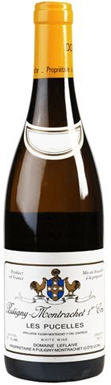
Another contender for the queen of the Puligny premier crus, opening with a beautiful bouquet of white peach, citrus, orange blossom and a subtle framing...
2015
Domaine LeflaivePuligny-Montrachet
Pierre-Yves Colin-Morey, St-Aubin, 1er Cru En Remilly, Burgundy, France, 2017
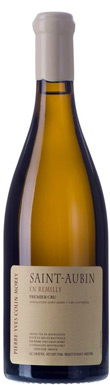
One of my favourite St-Aubin whites, this has wonderful intensity, precision and sizzling minerality. The palate is lean and focused with fresh herbs, pear and...
2017
Pierre-Yves Colin-MoreySt-Aubin
