
Investing in Californian wine: top Napa labels still reign
Beyond the big-name high points, gains have been steady if unexciting – though potential remains.


It’s been a mixed picture for Napa Valley’s top names on the secondary market in recent months, even if there are plenty of developments for collectors to track.
Matthew O’Connell, CEO of LiveTrade at Bordeaux Index, said the merchant had ‘sold a bit more California wine than last year’, but also that trading activity was higher elsewhere. Liv-ex, a global marketplace for the trade, said in October that California’s share of trades by value year-to-date was lower than it was in 2021 and 2020.

On top Napa labels, ‘there are examples of some decent price gains’, said O’Connell. ‘Dominus is up 15% year-to-date on average.’ There’s a broad range within that. He said Dominus 2015 was up about 25%, but the 2009 vintage has barely moved – although the latter was fairly strong last year. O’Connell also reported strong secondary market activity for Opus One.
Liv-ex’s California 50 index, featuring Napa Valley’s Screaming Eagle, Harlan Estate, Opus One and Dominus, plus Santa Cruz Mountains-based Ridge Monte Bello, rose by 9.5% in the first nine months of 2022, outperforming the Bordeaux 500 index.
The broader Liv-ex 1000 index rose more quickly, by 14.1%, although a longer-term view shows that both this index and the California 50 were up more than 50% over five years.
O’Connell said that, for several producers, the 2013 vintage has been one of the best price performers over the past 12 months (see chart, below).
On younger vintages, he suggested some wineries’ strategies of increasing release prices year-on-year, along with a strong dollar currency, may have been headwinds for buyers outside the US.
O’Connell said of the scarcer, ‘cult’ Napa names, a group broadly priced at £600 per bottle and upwards: ‘It’s a segment that is moving along but not in the same dynamic way as [other] parts of the market, like Burgundy and Champagne.’
He also noted: ‘Given ultra-high net worth is very significant to the onward movement in the wine market, it’s interesting that this hasn’t really benefited Napa wines hugely.’
There is no questioning the quality, he added. Indeed, several Napa Cabernet Sauvignon 2019 wines scored 100 and 99 points in Decanter’s recent vintage review.
California’s position on the global market continues to evolve, too. LVMH’s recent acquisition of Joseph Phelps could be one development to watch. Phelps’ Insignia is one of several US wines released internationally via the Place de Bordeaux, and Insignia 2019 made its debut in September 2022.
UK merchant Goedhuis & Co, meanwhile, recently announced a direct partnership with the Harlan family’s The Mascot. It began by offering the 2018 vintage. Georgina Crawley, business development director at Goedhuis, reiterated how distribution changes have made California wines more available outside the US in the past decade. ‘It has enabled people to experience some of the wines and buy older vintages to see how they mature, how they soften, how they age so gracefully.’
Crawley described California as an exciting ‘melting pot’, still full of opportunity for producers to make a name for themselves. She said it’s quite possible that more California wines, such as The Mascot and others, will develop a prominent secondary market presence over the next 10-15 years. But it’s ‘an organic process’ that begins with connecting to drinkers, Crawley said.
‘In the early days of these things, it’s always going to be the passionate collector and the drinker who start that buzz.’
Monitor: latest sales activity – California
The chart opposite shows key price movements on 2013-vintage California wines, a top performing segment, according to Bordeaux Index.
At auction, Zachys’ ‘New World Only’ online sale in September included mature California wines. Eleven bottles of Mayacamas, Cabernet Sauvignon 1997 had a final price of $2,490 (£2,252 at time of sale), including buyer’s premium (high estimate: $1,700). Twelve bottles of Dunn Vineyards, Howell Mountain Cabernet Sauvignon 1999 sold for $2,366 (high e: $1,500). Going further back, a six-bottle lot of Joseph Phelps, Insignia 1986 and three bottles of Ridge, Monte Bello 1977 each fetched $1,619 (high e: $1,600 and $1,500 respectively). Charles Antin, Zachys’ head of auction sales, said US buyers tend to dominate demand for California wines, but many global bidders come in for labels such as Screaming Eagle or Harlan Estate.
‘I would say more of our clients are realising that mature California wines present great value – the wines are phenomenal and can often be had for a fraction of the price of Bordeaux.’ In New York, Zachys also recently sold an 18-litre melchior of Schrader, CCS Beckstoffer To Kalon Vineyard Cabernet Sauvignon 2007 for $29,880 (high e: $36,000).

Tasted & rated for Decanter Premium
Favia, Cerro Sur, Coombsville, Napa Valley 2019
Viticulturist Annie Favia and winemaker Andy Erickson are the husband and wife duo behind this ‘stunning’ Cabernet Franc-led wine. Rated 100 points by Decanter’s Georgina Hindle, it recently joined the roster of US labels released internationally via the Place de Bordeaux.
‘I just love the sense of wildness, a smoked touch with blue fruits, Asian spices and slightly angular tannins, but with ripe fruit giving body and cool acidity giving the freshness,’ Hindle wrote. Liv-ex said 3,000 bottles were allocated to the Place de Bordeaux. The wine was priced at £585 per 3x75cl in bond (Justerini & Brooks).
The Bordeaux Index view
Fine wine & spirits specialist Bordeaux Index kindly sponsors this section of Decanter, and provides its view on the market here every issue. It can be found at bordeauxindex.com
Over the last year California has remained at a relatively subdued activity level and certainly remains down on its peak activity from 2018. There have been upwards price movements, but not outsized as has been seen in, for example, Burgundy. Vintages with a little age – like the strong 2013 – have performed best. This is not surprising, as the intentionally progressive nature of new-release pricing (especially for the super-premium Napa wines) means that older vintages can quickly start to look cheap as well as being on a nearer-term path to drinkability.
Price movements have been reasonably consistent across names and also between the super-premium Napa wines and Ridge/Dominus, whereas the latter had substantially outperformed over recent years. We see no particular near-term catalyst for an increase in activity in California wines, though we think they should be a larger part of market activity given rarity and quality levels.

Related articles
- Prices rising for top California wines
- Napa ‘library’ auction has rare Screaming Eagle and Harlan magnums
- Premiere Napa Valley 2022 auction sales top $2m
Favia, Cerro Sur, Napa Valley, Coombsville, California, USA, 2019
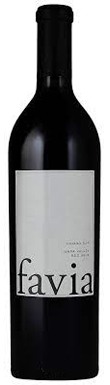

A new addition to the Place de Bordeaux this year - the eponymous project of husband and wife duo; viticulturist Annie Favia and winemaker Andy...
2019
FaviaNapa Valley

