
Jefford – Grés de Montpellier: Stones by the Sea
Andrew Jefford explores his own backyard...


What’s in an accent? Quite a lot, as I discovered to my shame recently. The chance came to look closely at the wines of my local wine appellation, Grés de Montpellier.
Fans of French vineyard geology (and there are plenty of us) are very familiar with the term grès: it means ‘sandstone’. Or at least it does when its ‘e’ is marked with a grave accent, as I had assumed was the case with this appellation name. That’s how I had written it in The New France.
Closer inspection, though, reveals that the modest little ‘e’ of Grés de Montpellier, by contrast, carries not a grave but an acute accent. This has nothing at all to do with sandstone, of which there is very little hereabouts. It is, instead, an old Occitan word meaning ‘stony ground’. That makes a lot more sense, as the blunted spade in my garage testifies.The stones here have many different origins, though most are either derived from local limestone bedrock or are rolled pebbles dumped in previous times by the Rhône (which, between three and one million years ago, met the sea close to Montpellier) and by other local rivers.Stones underlain by red clay is the one soil point in common shared by all the vineyards in this otherwise large and heterogeneous zone of 46 villages and 4,165ha of potential vineyard. Of this potential land, around 1,000ha is planted for appellation wine at present. Local producers initially considered using the name ‘Graves de Montpellier’, which would mean ‘gravels of Montpellier’, but concluded that it would mean a tussle with Bordeaux which they were unlikely to win.
The fact that the appellation follows the coast distinguishes it from most other Languedoc appellations. These tend to be set well back from the sea, in the foothills which lead up to the Cévennes or the Causses, the upland limestone plateaux typical of the loneliest parts of the South of France. This coastal situation means moderate altitudes (100m to 200m in general), and heat dissipated by sea breezes rather than cool nights.
Languedoc’s other two key coastal appellations are Picpoul de Pinet (unique seafood whites) and La Clape. Grés de Montpellier would seem, at first glance, to have much in common with La Clape (whose name also refers to an Occitan word for a pile of stones, clapas, and whose boundaries are articulated around a single limestone massif). Grés de Montpellier wines, though, tend to be less voluptuous and luscious than those of La Clape. They also seem to have more inner tension and sinew, perhaps because we are further east and further north here, or perhaps for some other reason altogether. (For the record, three of the Muscat appellations of Languedoc — Frontignan, Mireval and Lunel — are also coastal zones.)
The Grés de Montpellier AOP isn’t yet a ‘stand-alone’ or cru appellation, as La Clape is, but appears in conjunction with the overall Languedoc appellation. There is, though, a project lodged with the INAO, and parcel definitions exist for a stand-alone cru AOP. Both terroir and potential cru are defined for red wines only at present, though whites can be striking and characterful here in Grés de Montpellier, as they can in its inland counterpart, Pic St Loup (also a red-only AOP at present).
This being Languedoc, there are further complications. Grés de Montpellier contains four historical zones, all former VDQS areas and all lying on former Rhône riverbeds — St Georges d’Orques, la Méjanelle, St Drézery and St Christol — which are unlikely to become crus in their own right.
These historic names are still used by some producers. Indeed if you have a parcel of vines hereabouts, you have a wide choice of legal frameworks under which to bring it to market — Vin de France, IGP Oc and its new alternative Terres du Midi, IGP Hérault, the zonal IGPs of Vicomté d’Aumélas or St Guilhem le Désert, the Languedoc appellation alone, one of the four historical appellations, or Grés de Montpellier itself (each, of course, has different rules and regulations).
This is a comprehensive contrast to the situation prevailing in older established French vineyard regions; “too much choice” of framework handicaps, I feel, the development of Languedoc’s key appellations. (The celebrated vineyards of Marlène Soria at Peyre Rose, for example, lie on land classified as Grés de Montpellier, but have never been declared as such.)
At present, around 300 ha are declared as Grés de Montpellier, and a further 300 ha is declared under the four historical appellations. That ex-VDQS quartet, though, is under pressure from the urban expansion of Montpellier (which is, with Toulouse, one of France’s two fastest growing cities), whereas there is plenty of unused vineyard land more generally in the Grés de Montpellier zone.
The following notes are drawn from both an October 2018 competitive blind tasting organised every year by the appellation to find its Top 10 wines of the most recently bottled vintage (the very attractive 2016) as well as a day’s visits within the appellation in January 2019. During the latter, I was surprised to discover just how much truly wild and rugged land lay so close to the city near which I have lived for the last nine years, especially in the zone to the west of the city (the plateau d’Aumélas). The more you look within Languedoc, as always, the more you will find. The potential of this area remains enormous — and has been barely tapped as yet.
Château St Martin de la Garrigue, Grés de Montpellier, Languedoc-Roussillon, France, 2016

This 170ha domain, with 60ha of planted vineyards, produces 15,000 bottles a year of Gres de Montpellier, but larger quantities still of AOP Languedoc, IGP...
2016
Château St Martin de la GarrigueGrés de Montpellier

Domaine de Roquemale, Les Grés, Grés de Montpellier, Languedoc-Roussillon, France, 2016
Dominique and Valérie Ibanez's 12ha domain at Villeveyrac is sited on bauxite-derived soils, hence the name of the domain, which means 'bad rocks' in reference...
2016
Domaine de RoquemaleGrés de Montpellier
Domaine de Roquemale, Le Mâle, Grés de Montpellier, Languedoc-Roussillon, France, 2016
This super-showy Syrah (again with just a tiny seasoning of Grenache) isn't quite testosterone-fuelled, but it's deliciously assertive. Its name means 'the male', though it’s...
2016
Domaine de RoquemaleGrés de Montpellier
Château de Flaugergues, Les Galets, Grés de Montpellier, Languedoc-Roussillon, France, 2016
If Montpellier has an equivalent to Bordeaux's Haut-Brion - in other words, a leading wine-growing property surrounded by the city itself - it would be...
2016
Château de FlaugerguesGrés de Montpellier
Château de Flaugergues, Sommelière, Grés de Montpellier, Languedoc-Roussillon, France, 2016
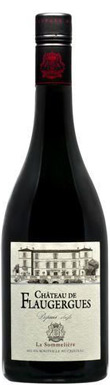
The Sommelière differs from Les Galets in that it has a higher percentage of Syrah (65%), balanced by 30% Grenache and just 5% Mourvèdre. It's...
2016
Château de FlaugerguesGrés de Montpellier
Clos de l'Amandaie, Grés de Montpellier, Languedoc-Roussillon, France, 2016
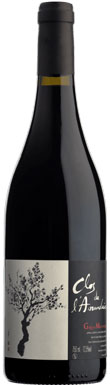
This 27ha domain, beautifully sited on the lonely plateau of Aumélas, is the property of the Peytavy family, with the wines being made with evident...
2016
Clos de l'AmandaieGrés de Montpellier
Clos de l'Amandaie, Huis Clos, Grés de Montpellier, Languedoc-Roussillon, France, 2015
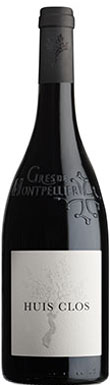
Described by Philippe Peytavy as 'the essence' of the domain, this older-vine cuvée blends equal quantities of Syrah and Grenache, vinified using a submerged cap...
2015
Clos de l'AmandaieGrés de Montpellier
Clos de l'Amandaie, Huis Clos, Grés de Montpellier, Languedoc-Roussillon, France, 2002
Philippe Peytavy showed me this 16-year-old version of the Huis Clos partly to prove how well his wines can age, but partly since Decanter picked...
2002
Clos de l'AmandaieGrés de Montpellier
Domaine Cour St-Vincent, Mille Pierres, Grés de Montpellier, Languedoc-Roussillon, France, 2016
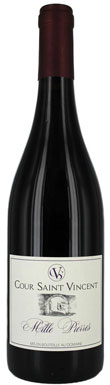
This long-established family domain is sited in the hilltop village of St Vincent de Barbeyrargues, with a stunning view of Pic St Loup. Mille Pierres...
2016
Domaine Cour St-VincentGrés de Montpellier
Abbaye de Valmagne, Cuvée Turenne, Grés de Montpellier, Languedoc-Roussillon, France, 2016
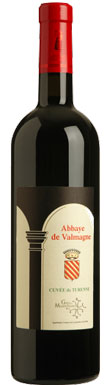
This significant Abbey property, once one of Southern France's richest and home to 300 monks, fell into an early decline around the time of the...
2016
Abbaye de ValmagneGrés de Montpellier
