
Rare 1940s Ports: tasting through time with Kopke
Port house Kopke hosts a historic vertical tasting to celebrate the launch of limited-edition 1940 colheitas


It’s extremely unusual to taste Ports from the 1940s. Production virtually stopped in the Douro Valley during World War II, as the main markets for Port closed up. This makes the latest launch from Portuguese shipper Kopke something very special: a duo of 1940 colheitas.
Kopke Colheita Tawny 1940 and Kopke Colheita White 1940 make a fascinating contrast of styles from a Port house that specialises in older vintages aged in oak. To celebrate the launch, Kopke hosted an online vertical tasting, including other colheitas from 2003, 1980 and 1960.
Founded in 1638, Kopke ages its colheitas (a white or tawny Port from a single vintage) in the Port lodges of Vila Nova de Gaia. While English shippers developed bottle-matured styles of vintage Port, Portuguese producers preferred putting their best wines in barrel to age slowly.
All colheitas must be aged for a minimum of seven years in wood, but are usually aged much longer, allowing controlled oxidation over time. As a result the wines develop evolved, mellow notes of dried fruit, nuts and spice.
The cooler temperatures of Vila Nova de Gaia ensure freshness in the colheitas; as opposed to styles aged in the warmer Douro Valley, which are characterised by baked, caramelised flavours known as ‘Douro bake’.
With barrels going back to 1935, Kopke has ‘an incredibly valuable wine heritage that has been passed down by generations’, according to João Belo, international business manager at Sogevinus, owner of Kopke and other Port houses Barros, Burmester and Calem. Kopke colheitas are bottled to order and released in limited amounts, meaning it pays to check the back label for a bottling date.
Tasting through time
The tasting began with the youngest vintage: Kopke White Colheita 2003. ‘Kopke has a unique range of old white Ports,’ said winemaker Carlos Alves, who explained that good acidity is a key factor in creating wines to age. ‘We try to balance the acidity by using different grape varieties and grapes from different altitudes,’ he added.
This blend of Viosinho (50%), Malvasia Fina (50%), Gouveio (15%) and Rabigato (15%) was balanced, offering ‘intense waves of flavour, vigour, richness and elegance’ according to consultant and DWWA judge Dirceau Vianna Junior MW.
Jumping back two decades, Kopke Tawny Colheita 1980 came from a year with ‘a variable growing season, with a late harvest, delayed until the end of September’, according to Alves. Nonetheless, this blend of equal parts Touriga Nacional, Tinta Roriz, Touriga Franca and Tinta Barroca has evolved into a classic 40-year-old tawny.
Kopke Tawny Colheita 1960 took us back in time another 20 years. ‘This was an extremely hot year, with harvest in the second week of September,’ noted Alvares. ‘Quality was excellent, giving elegant, sweet wines.’
‘1960 was declared as a vintage, though it was overshadowed by 1963,’ noted Richard Mayson, DWWA Regional Chair for Port. ‘This tawny colheita is standing up magnificently – it’s in very, very good condition – and it’s no mean feat to keep a wine that long,’ he added.

The 1940s
Rewinding another two decades brought the tasting to 1940: the year that Kopke was officially recognised as the oldest Port house. Kopke Colheita Tawny 1940 and Kopke Colheita White 1940 are being released together in a special limited-edition Day & Night set. Only 300 bottles of each wine will be available.
‘1940 is recalled for being very wet, both in winter and spring, and very hot in the summer, causing several damaging fires in the vineyards,’ noted Alves. ‘The harvest of 1940 is a rarity and it is extraordinary that these wines have survived the passage of time, wars and revolutions to be released to the market.’
‘As is the case with many of the houses in the Douro and in the history of Port, many facts, figures and documents have, unfortunately, been lost over time. However, it is likely that the 1940 White Colheita is made from Viosinho, Gouveio, Rabigato, Malvasia Fina grapes, a true “field blend”,’ noted Belo.
Also a traditional field mix, the tawny blend includes Touriga Nacional, Tinta Roriz, Touriga Franca and Tinta Barroca grapes. Both of these wartime wines showed marked freshness for their age: an impressive testament to the work done by Kopke through the decades.
Day & Night: Kopke Colheita Tawny 1940 and Kopke Colheita White 1940, costs £1,399, available from Harrods, Hedonism
The wines and scores
See also:
Decanter’s guide to anniversary wines 2020
Bordeaux anniversary buys: From 10 – 60 years
Rare museum wines from Portguese icons
Kopke, Colheita Tawny, Port, Douro Valley, Portugal, 1940
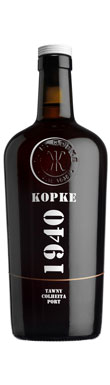

Released in limited quantities alongside a 1940 white colheita, this demonstrates the meticulous work done by Kopke to preserve historical wines in oak at its...
1940
KopkePort

Kopke, Colheita White, Port, Douro Valley, Portugal, 1940
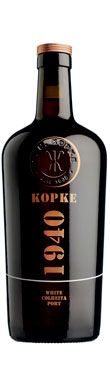
Ports from the 1940s are very rare – and this style of white colheita even more so. Released in limited quantities alongside a 1940 tawny colheita,...
1940
KopkePort
Kopke, Colheita Tawny, Port, Douro Valley, Portugal, 1960
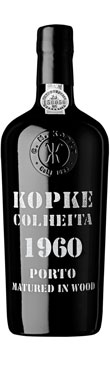
Declared as a vintage year for bottled Ports, 1960 was extremely hot, with high quality. This blend of equal parts Touriga Nacional, Tinta Roriz, Touriga...
1960
KopkePort
Kopke, Colheita Tawny, Port, Douro Valley, Portugal, 1980
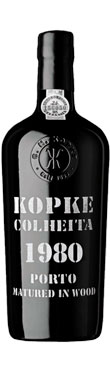
Although 1980 was a variable growing season, with below-average volumes, careful storage in oak has produced a classic 40-year-old tawny Port. Seductive nose of figgy...
1980
KopkePort
Kopke, Colheita White, Port, Douro Valley, Portugal, 2003
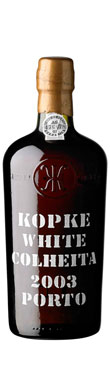
Founded in 1638, Kopke has a unique range of old white Ports. Aged in wood (not bottle like vintage Ports) this is one of their...
2003
KopkePort
