
Krug Grande Cuvée: New reviews on latest releases
Simon Field MW reports exclusively for , Premium subscribers after a fresh tasting of the latest Grande Cuvée releases - plus remind yourself of Krug's 2004 vintage Champagnes, and other recent Grande Cuvée releases...


The 167th manifestation of Krug’s celebrated multi-vintage Grande Cuvée is based on the challenging 2011 vintage, with 42% of Reserve Wine added from a further twelve years, the oldest dated 1995. Nothing if not complex, in other words, and the art of blending is, as always with Krug, absolutely key to the process.
The wine is symphonic in scope; no fewer than 250 manifestations of the base year have been blended with a further 150 versions of the Reserve Wine (all kept separately in stainless steel tanks of varying sizes) to create this latest expression of Grande Cuvée. A large orchestra, to borrow Krug’s preferred metaphor, or a choir with many different voices.
A lengthy orchestration too; Eric Lebel, the Chef de Caves, stresses the need for patience during the ageing on cork, with this latest release disgorged in January 2018 and then given further post-disgorgement ageing to ensure a perfect integration of its wonderfully diverse components. The result is rich and powerful yet does not lack for focus or precision on the palate.
Equally impressive is the Rosé, now in its 23rd Edition, rosé having for a long time been shunned at Krug for not being ‘serious’. Nothing could be further from the case here, an astonishingly robust and savoury wine, its pedigree oozing from every pore, its indulgent price point fully earned. It is also based on 2011, but with over half of the final blend (56%) from Reserve Wine, this time dating back to 2000.
Olivier Krug does not believe in hierarchy in wine ranges – Krug has long since postulated the ‘first among equals’ role of its celebrated Grande Cuvée, and was way ahead of the game in its advocacy for the multi-vintage blend, now modish.
Indeed, non-vintage Champagne has, over the last decade or so, seen a gradual rise in the percentage of reserve wines in its blends.
Krug has now taken this a step further, underlining inherent complexity and the inevitability of chronological releases by re-naming the wines as numerical ‘Editions’, essentially in deference to forebear Joseph Krug who, in 1847, advocated the concept as a matter of philosophy. Only the best would do for each release. Cheers to that.
Krug Grande Cuvée, 160th Edition
So here we are, just over a century-and-a-half later, with the 160th manifestation of this magnificently complex blend, taken from 12 vintages ranging from 2004 back to 1990.
Non-vintage Champagne should be consistent, but also consistently different, and herein lies the paradox: using a musical analogy, the same instruments and musicians will produce varying performances every time.
Exotic Chardonnay traits are perfectly emboldened by Pinot power and the balm of a generous proportion of reserve wines to add depth and wisdom to the 2004 kernel.
Krug Grande Cuvée, 166th Edition
It’s instructive to compare the 160 to the current release, 166th Edition Grande Cuvée, composed around the 2010 harvest. The latter is more focused on finesse and pinpoint purity, while the 160th Edition based on the 2004 vintage is assertive with a generous, ripe profile.
Krug Grande Cuvée Rosé, 22nd Edition
There was also a glimpse of the latest release of the Rosé, now on its 22nd outing, or ‘Edition’. Olivier describes it as ‘unconventional’, his main aim betraying almost vinous aspirations, with gastronomic potential the key.
To this end, the two plots for the red wine in Aÿ are fundamental and will contribute anything from 8-12% of the final blend. There’s a discrete power here, the fruit character anything but confected, and almost Burgundian in stature. Its 45 different wines go back to 2002 and underwrite an unparalleled complexity.
Krug 2004
After the bizarre conditions of 2003, with its challenges from frost and then hydric stress, the vines regrouped and produced a late, large crop of a very high quality in 2004, with Chardonnay the most successful of the varietals.
The Indian summer with its cool nights nurtured wines of great complexity and agility, their character described by Krug’s chef des caves Eric Lebel in terms of a ‘luminous freshness’. The wines from 2004 share honest aromatics, finely etched acidity and a harmonious fruit profile. Here, citric rigour combines with indulgent power.
Michael Edwards, who first reviewed the Krug 2004 vintage for Decanter said of the year:
‘Autumnal early morning mists were ideal conditions in which to make particularly fine Chardonnays and fragrant Pinot Meuniers, as the vineyards regenerated themselves after the devastating spring frost and summer heatwave of 2003.’
Krug Clos du Mesnil Blanc de Blancs 2004
The 100% Chardonnay Clos du Mesnil 2004 is typically enigmatic; its smoky stone-fruit character evolving magically and majestically in the glass.
Dosage has not changed much over the years, and here again the Krugs have been ahead of the pack; the main development of late has been the introduction of many more smaller tanks for the reserve wines. Complexity just got more complex. A most impressive feat for this consistently impressive house.
Latest Krug tasting notes:
Grande Cuvée 167th Edition and Grande Cuvée Rose 23rd Edition were tasted 18th June 2019
Releases from October 2018
You might also like:
Krug’s Clos du Mesnil: 1979 to 2003
Best white Burgundy: Top-rated & top value
View all Decanter Premium content
Krug, Grande Cuvée 167ème Édition, Champagne, France
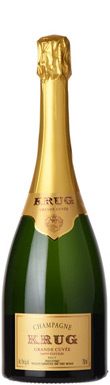

Showing complex notes of seaweed and dried mushroom on the nose, savoury and iodine. It's a soft and silky rendition of Grande Cuvée, drinking beautifully...
Krug

Krug, Grande Cuvée Rosé 23ème Édition, Champagne, France
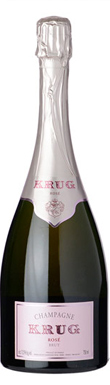
Krug Rosé has got darker over the years, a statement of intent perhaps, its significant 13% of macerated Pinot Noir sourced from a special plot...
Krug
Krug, Clos du Mesnil, Champagne, France, 2004
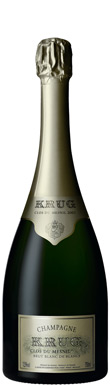
2004 was a fantastic Chardonnay vintage in Champagne, and there's no more definitive statement of its grace and beauty than this 1.84ha walled vineyard dating...
2004
Krug
Krug, Champagne, France, 2004
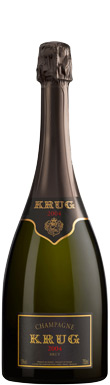
This is Krug’s top vintage release of recent times. This is a more developed, outgoing bottle than was tasted earlier in 2024, a little more...
2004
Krug
Krug, Grande Cuvée 160ème Édition, Champagne, France
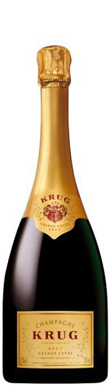
A rich gold hue of maturity, showing roasted buttery apricot and a vellum note like open book pages. Development showing from quite long on the...
Krug
Krug, Grande Cuvée 166ème Édition, Champagne, France
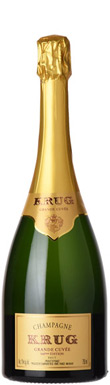
A biscuity reductive and toasty nose, but refined and not overdone. Flows nicely all the way through. A superior creamy and silky texture, substantial but...
Krug
Krug, Grande Cuvée 22ème Édition Rosé, Champagne, France
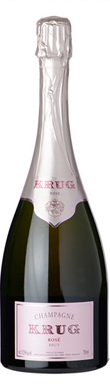
Krug Rosé has come a long way since Henri and Remi rather bashfully introduced it to their father Paul in 1983. Now in its 22nd...
Krug
