
Discover Kvarner: Croatia’s hidden gem for wine and food enthusiasts
The Kvarner region, tucked away along the Croatian coast, is producing compelling wines from local varieties. Decanter's North American Editor, Clive Pursehouse visited the region earlier this year and was impressed by the wine and its celebrated cuisine.

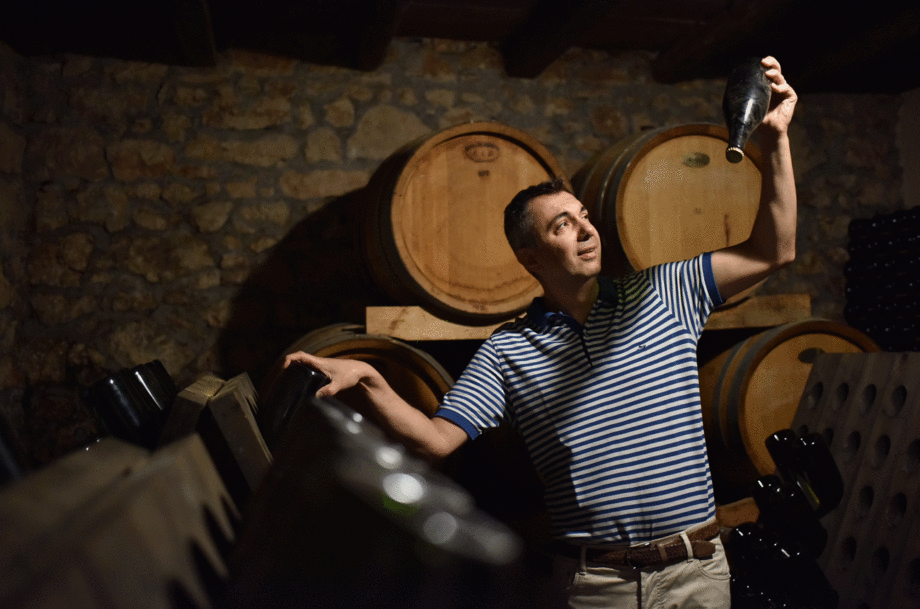
While Croatia’s coastal wine regions of Dalmatia and Istria get plenty of attention, the under-the-radar region of Kvarner boasts not only a fascinating history, but a fantastic, burgeoning wine industry and world-class cuisine which leans heavily into Croatia’s maritime bounty.
In the deep Adriatic waters of the Gulf of Kvarner, an archipelago of islands supports both fishing and vine-growing industries and is home to many of the region’s wineries.
At the northern end of the gulf lies the city of Rijeka which is Croatia’s main port. Its naturally deep harbour has seen it serve as a maritime hub for countless cultures and rulers since the late Neolithic period.
A selection of wines from Kvarner listed below
Its history is nothing if not eventful.
With powerful defences to protect the harbour, Riejka has borne the brunt of numerous assaults over the centuries. It was burnt to the ground by Attila the Hun and later besieged by Charlemagne.
By the 16th century it rivalled Venice as an Adriatic power which led the latter to attack it jealously, and it was a bastion against the high tide of Ottoman incursions into the Balkans.
Ruled by the Habsburgs from the 15th century to 1918, from 1919-1920 the city was seized by Italian nationalist poet Gabriele d’Annunzio and run as an independent statelet until, in a welter of contradictions, d’Annunzio declared war on Italy and was deposed after the city was besieged and bombarded by Italian warships.
The city was then annexed by Italy until it became part of Yugoslavia in 1945 and finally Croatia in 1991.
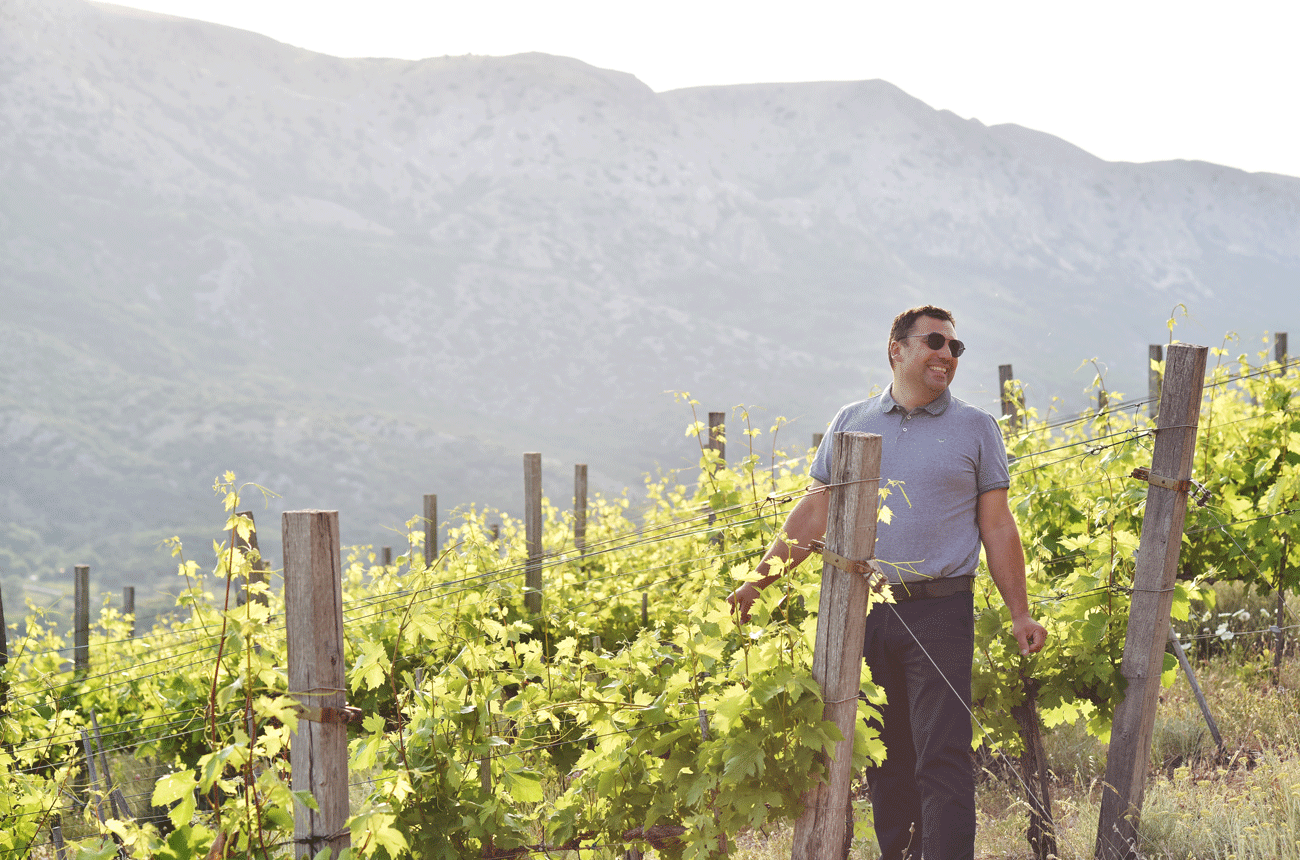
Deep waters and deep wine roots
Rooted in indigenous varieties, the winemaking islands of Kvarner have a long vinous history, probably pre-dating the arrival of the Romans.
The region is largely housed within the Croatian county of Primorje-Gorski Kotar. On the mainland, this centres around the city of Rijeka and then extends across the main islands of the Kvarner Gulf archipelago – Krk, Pag, Rab and a cluster of islands around Cres and Lošinj.
But while it extends over a large geographic area, the land dedicated to vines is much smaller.
‘Kvarner is a small, specific boutique wine region, where mostly autochthonous grape varieties are planted,’ says Żarko Stilin, director of the Kvarner Wines regional entity.
‘Today, the entire Kvarner has about 200 hectares of vineyards, while historical documents indicate that there were [once] several thousand hectares of vineyards on the island of Krk alone.’
The island of Krk is the largest of Croatia’s many islands, and the largest in the entire Adriatic Sea. These days, the northern end is largely forested, while the southern parts of the island are characterised by white karst rock, fully exposed due to the strong bora winds, which can reach 100 km/h.
These winds blow into the Adriatic from the north/north-west. Today, tourists are drawn to the sleepy towns, the historic walled city of Krk, and the ample beaches, as well as the incredible fishing.
The decline
However, at one point, Krk was a hotbed for Croatian viticulture.
‘In some records from the 18th and 19th centuries, it is noted that more than half of the arable land on Krk was used for vineyards,’ says Egle Katunar, proprietor of the winery, Ivan Katunar.
‘Monasteries and noble families maintained vineyards, and wine was a major source of income for both the poor labourers and wealthy landowners.’
Krk and Kvarner generally were decimated, like much of Europe, by phylloxera towards the very end of the 1890s. Tourism eventually became the primary driver of the local economy, as Europeans – and eventually Americans – were drawn to the country’s hospitality, affordability and pristine beaches along the Adriatic.
‘While towns like Vrbnik became known for their Žlahtina and other local varieties, often cultivated on steep hillsides and seemingly on every available patch of land,’ says Katunar, ‘beginning in the 1960s, tourism boomed on Krk.
‘Land once used for vineyards was converted into apartments and tourist accommodations. Generational change also played a role as younger generations left agriculture, leading to further vineyard abandonment.’
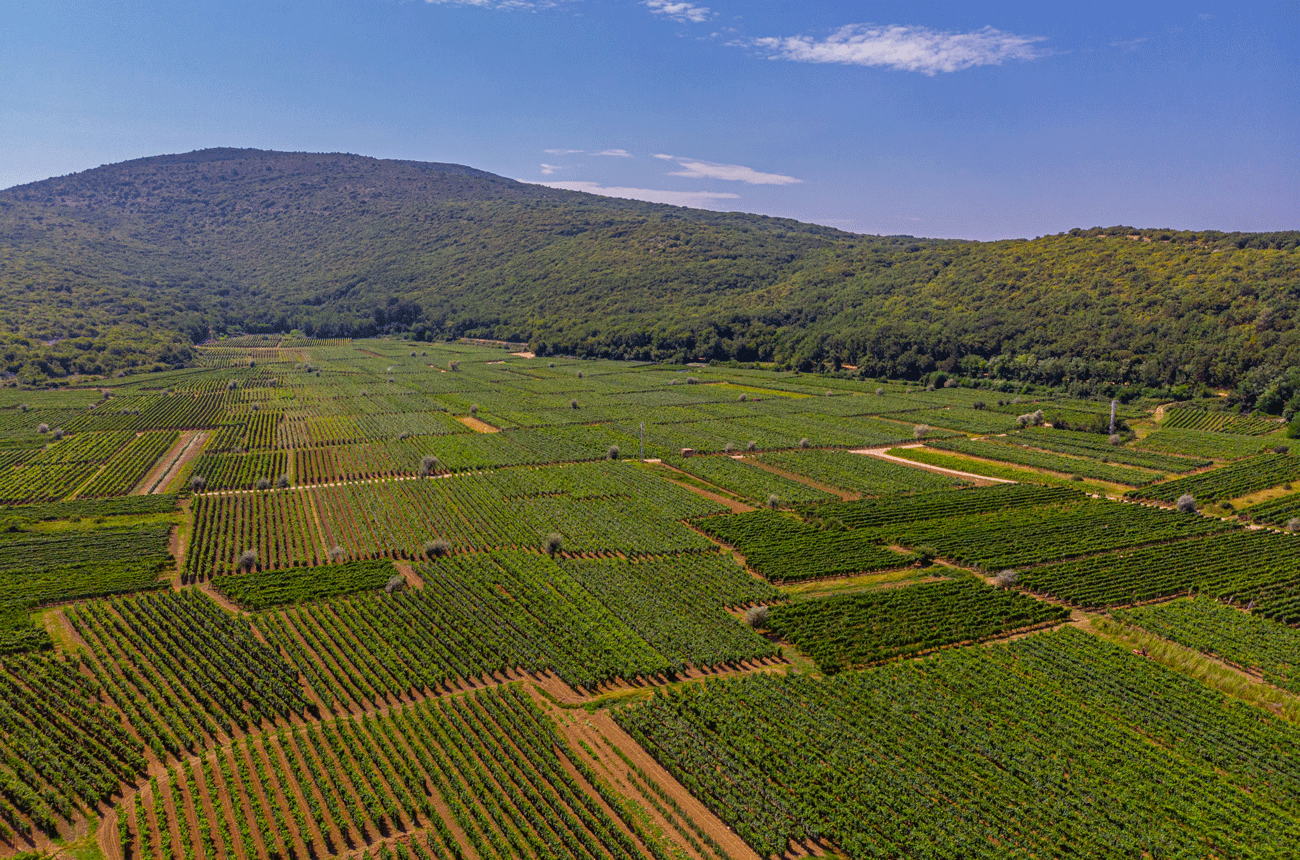
A Kvarner wine revival
As Croatia has become one of the world’s top tourist destinations, people are starting to see beyond the beautiful beaches and blue Adriatic waters. Gastronomy, and with it, the local wines are leading the way in Kvarner.
‘The 1980s and 1990s saw a revival of local winemaking,’ explains Katunar. On Krk, this centres around the town of Vrbnik, on the northern side of the island, almost directly across from the historical city of Krk.
Infrastructure and organisation around viticulture and wine have also driven quality and recognition. In 2025, the Kvarner Wineries Association entries at DWWA received 12 medals.
Meanwhile, as tourists seek to escape the busier beaches of Dalmatia, Kvarner is becoming a region that is gaining major attention.
The seafood and accommodation in towns like Opatija, combined with great dining, including the Michelin-starred Nebo in the regional capital of Rijeka, have given Kvarner a reputation as a world-class destination.
Kvarner was designated by the International Institute for Gastronomy, Culture, Art, and Tourism as the ‘European Region of Gastronomy’ for 2026.
With a rising tide lifting all the region’s boats, the main focus has been on the natural pairing between local seafood and Kvarner’s most popular wine made from the white grape Žlahtina.
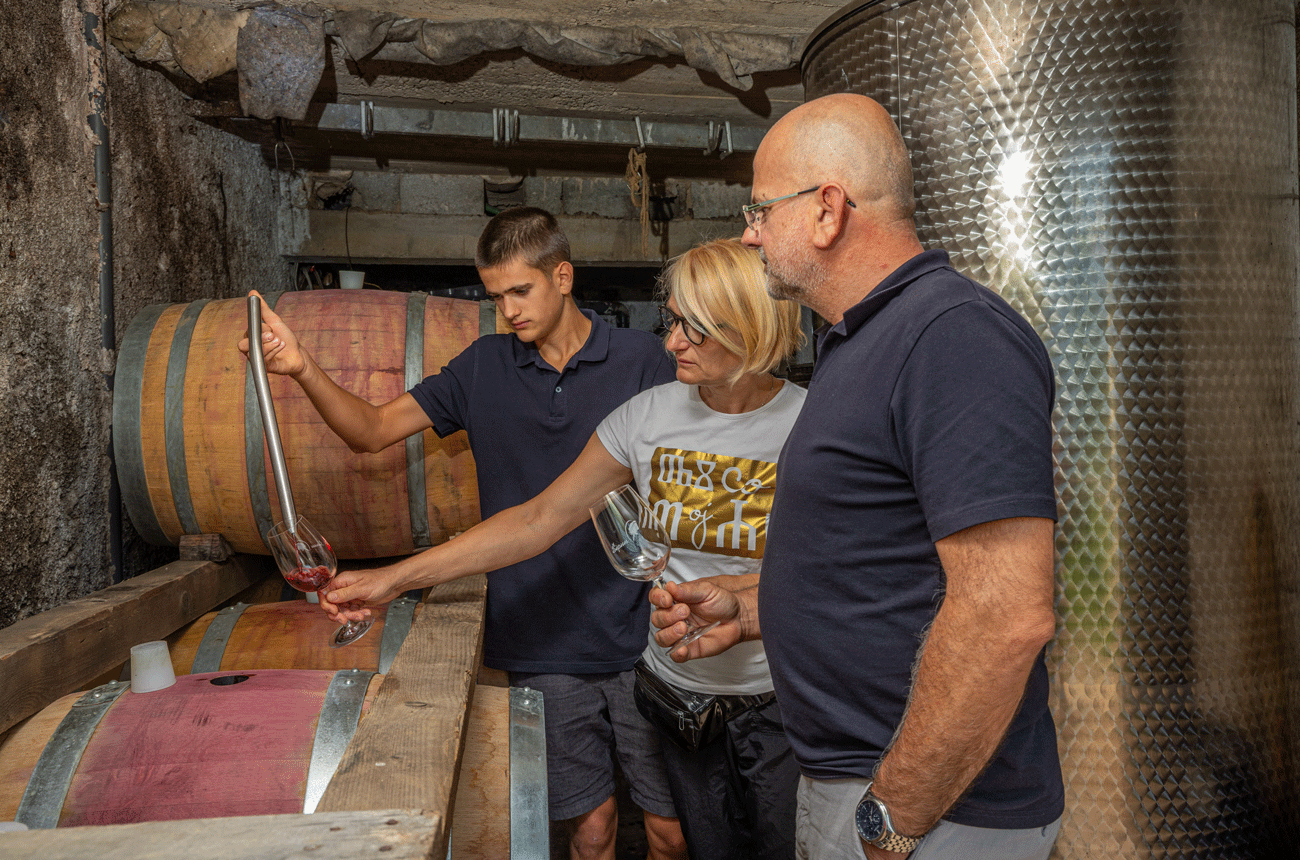
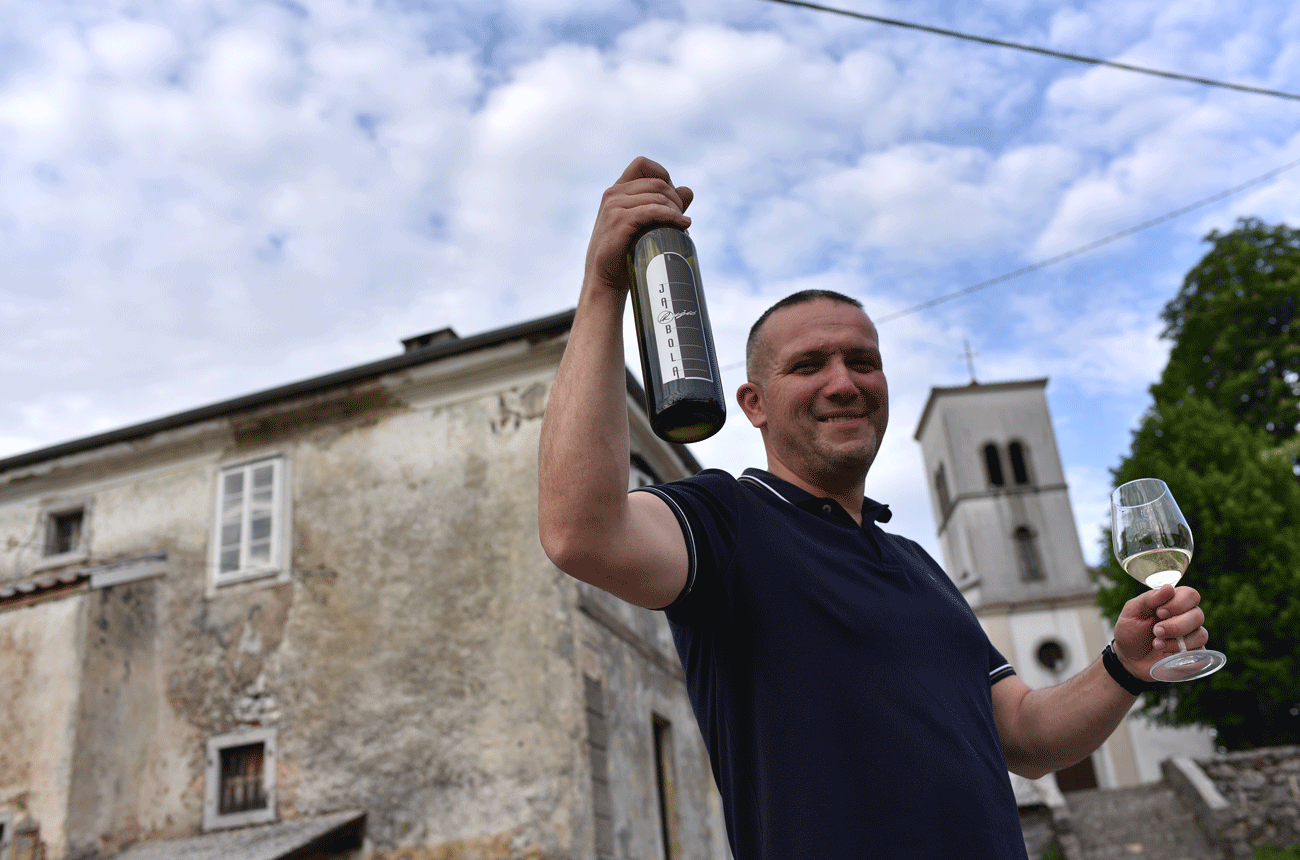
Ivica Dobrinčić and family, of the Šipun winery. Credit: Vedran Gašparović
Kvarner’s indigenous ‘queen’
Croatia is a land of indigenous varieties, boasting a reputed 130, one of the highest in Europe. In Kvarner, however, one reigns supreme.
‘Of the 37 indigenous varieties in Kvarner, we like to call Žlahtina the regional “queen” as it accounts for almost 90% of the wine produced here,’ says Żarko Stilin.
‘There are more than 40 labels produced from Žlahtina – from pet nat and frizzante sparkling wines to traditional method sparkling wines,’ he adds.
‘You can find fresher styles of Žlahtina, those fermented in barrel, as well as orange wines and the regional wine Prošek, traditionally produced from dried berries.’
The variety sets up well to create wines of complexity and nuance, perfect for the intricate flavours of the local seafood.
In terms of red wine, Sansigot, an ancient indigenous variety that was originally found on the island of Susak. No one is bottling a wine from Sansigot that’s grown there anymore, though it can be found on Krk.
Sadly, while Žlahtina accounts for approximately 95% of local plantings, Sansigot is nearing extinction; however, Krk winegrowers, particularly Ivica Dobrinčić of Sípun, are committed to its preservation.
‘Kvarner as a whole is witnessing a winemaking renaissance,’ says Egle Katunar. ‘There are now more wineries, better quality and creativity from a new generation of producers. Globally, wine enthusiasts, particularly Millennials and Gen Z, are exploring lesser-known regions, indigenous varieties, and natural wines. These are all areas where Kvarner has its strengths.’
Kvarner wines to try:
Related articles
- Croatian winemakers celebrate record-breaking performance at the Decanter World Wine Awards
- Dalmatia Rising: A wine renaissance on the Croatian coast
- The Dalmatian Islands for wine lovers
Nada, Soubze Brut, Kvarner, Coastal, Croatia

Aromas of candied lemons and toasted almonds, it's full on the palate with ripe apples and cinnamon spice baked tart. Kvarner is the third largest...
NadaKvarner

Gospoja, Žlahtina, Kvarner, Coastal, Croatia, 2022
Has a wonderful full set of aromatics, with honeysuckle florals, fleshy ripe nectarines, On the palate macerated peaches are framed by nutty almond character, and...
2022
GospojaKvarner
Sípun, Hlam 9, Kvarner, Coastal, Croatia, 2021
A collaborative project between Sípun winemaker Ivica Dobrinčić and Klaudio Juričić a Croatian Master Sommelier. Žlahtina sourced from a high elevation site at 225m with...
2021
SípunKvarner
Katunar Estate Winery, Imolata, Kvarner, Coastal, Croatia, 2021
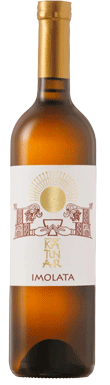
Effusively aromatic with sweet orange blossom, and wonderful, warm, exotic, honeyed spice. The palate is generous, sweet mandarin, candied melon fruit and sweet peach ring...
2021
Katunar Estate WineryKvarner
Katunar Estate Winery, Kurykta Reserva, Kvarner, Coastal, Croatia, 2018
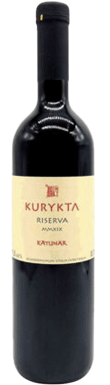
A blend of indigenous varieties, 40% Sansigot, Debejan and Kamenina. Tasted in spring of 2025 at eight years old. This wine shows incredible elegance balanced...
2018
Katunar Estate WineryKvarner
Ivan Katunar, Sansigot, Kvarner, Coastal, Croatia, 2021
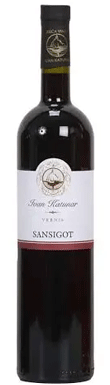
On the nose it shows ripe red and black bramble fruits, and smoky rose petals. This is a Sansigot from Ivan Katunar, which sees ample...
2021
Ivan KatunarKvarner
Sípun, Kapital, Kvarner, Coastal, Croatia, 2017
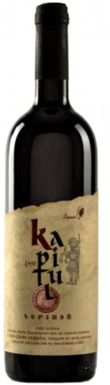
Sípun winemaker Ivica Dobrinčić set out to make a Krk island-grown Bordeaux blend. Pretty red fruits, ripe strawberries, sweet earth and potpourri on the nose....
2017
SípunKvarner
Ivan Katunar, Prosek Sv. Ivan, Kvarner, Coastal, Croatia, 2017
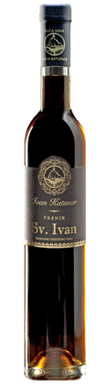
Beguiling aromas of marizpan, dates and toasted almonds. The palate is unctious and honeyed. With flavours of ripe fig, and honeyed apricot. Prosek is the...
2017
Ivan KatunarKvarner
