
Lady May: A taste of Bordeaux in South Africa
Lady May – the flagship wine of Glenelly Estate in Stellenbosch – is only in its eighth vintage, but a recent vertical shows the huge potential of this Bordeaux blend, named after its owner: the grande dame of Pichon Longueville Comtesse De Lalande.


You can understand the mix of excitement and dread going through winemaker Luke O’Cuinneagain’s head when he was told that the ‘benchmark’ for Glenelly Estate’s new Lady May flagship Bordeaux blend was Château Lafite Rothschild 1873.
Scroll down for tasting notes and scores from a six-vintage vertical of Lady May
If that weren’t intimidating enough, the person giving him that directive was Lady May herself – May-Eliane de Lencquesaing, owner and managing director of Pauillac second-growth Château Pichon Longueville Comtesse de Lalande.
In 2003, at the age of 78, De Lencquesaing bought Glenelly Estate in Stellenbosch, believing it the ideal place to realise her vision of creating ‘the finest Cabernet Sauvignon blend outside of France’, as it says on the back label of her Lady May cuvée.
A year later, winemaker O’Cuinneagain was invited to Bordeaux to visit De Lencquesaing to discuss her ‘legacy’.
‘She served me this wine and, I tell you, it was a religious moment,’ recalls O’Cuinneagain. ‘I didn’t know what it was but I knew it was very old and very special. It had such texture, finesse and life.’

That historic 1873 vintage from Château Lafite Rothschild became the benchmark for Glenelly’s flagship red, to be named Lady May in honour of its owner. ‘I was determined to make an equally elegant wine that rewarded patience,’ says O’Cuinneagain.
Vines – predominantly Cabernet Sauvignon – were planted in 2005 atop an east-facing slope, the coolest point of the estate.
‘We don’t aim to copy Bordeaux but we have Bordeaux grapes; it’s our own stylistic interpretation,’ says O’Cuinneagain.
‘Lady May is the expression of what Glenelly can produce in a given year – a clear footprint of the terroir.’
A changeable blend
O’Cuinneagain hadn’t intended the first vintage of Lady May to be 2008 as the vines were only three years old. But ‘I was so excited by the potential of that first crop of fruit!’
In subsequent vintages the proportion of Cabernet Sauvignon has dropped from 91% in 2008 to 69% in 2015. Petit Verdot has also decreased, while the amounts of both Merlot and Cabernet Franc have risen.
‘But in 2017 you’ll see Cabernet Sauvignon come back strongly,’ notes O’Cuinneagain.
‘We play around with the blend every year but the general trend is that Merlot and Cabernet Franc will continue to play a bigger role.
‘Our Merlot is very structured and robust. Both Cabernets tend to be quite fleshy here too, though the Franc has that underlying freshness and vibrancy we love.’

O’Cuinneagain had intended to introduce Cabernet Franc to the Lady May blend from the 2010 vintage. ‘But the young vines, planted in 2007, were damaged by these crazy 100km/hr winds so we didn’t get a crop until 2012.’
Parcels of fruit are vinified separately and then the winemaking team blind tastes each to select the final blend. The wine is then matured for 20 to 24 months in new French oak barrels.
‘We take a middle-of-the-road approach on the barrel toasting – mainly because we have no choice,’ explains O’Cuinneagain.
‘In Bordeaux you have the luxury of ordering your barrels after the wine is vinified, but in the southern hemisphere you have to order them before the grapes have even gone through veraison!’
Lady May: a six-vintage vertical from 2008 to 2015
You might also like…
South African Cabernet Sauvignon: 40 wines to buy
Syrah vs Shiraz: 30 great buys from South Africa
Cape Winemakers Guild 2020 auction wines: the first taste
Glenelly, Lady May, Stellenbosch, South Africa, 2008
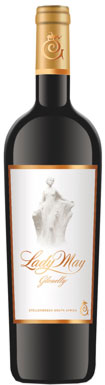

The first vintage of Lady May, whose label features the sculpture of a 23-year-old May-Eliane de Lencquesaing by the artist Maxime Real de Sartre. While...
2008
Glenelly

Glenelly, Lady May, Stellenbosch, South Africa, 2010
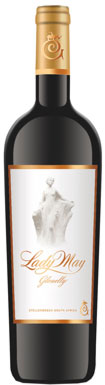
The same blend as 2009, this is markedly more mature with some developed notes of liquorice and cured meats complemented by expressive aromatics of dried...
2010
Glenelly
Glenelly, Lady May, Stellenbosch, South Africa, 2012
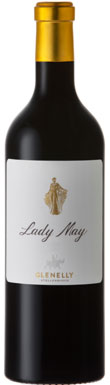
From this vintage the current label and capsule was introduced, to better reflect the grand vin at May-Eliane de Lencquesaing's home estate of Château Pichon...
2012
Glenelly
Glenelly, Lady May, Stellenbosch, South Africa, 2013
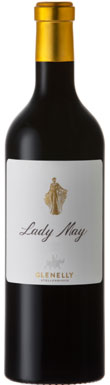
Cabernet Sauvignon is now down to 85% in this wine, joined by 7% Cabernet Franc and 4% each of Petit Verdot and Merlot. As opposed...
2013
Glenelly
Glenelly, Lady May, Stellenbosch, South Africa, 2014

This wine hasn't long been released to the UK market and is well worth seeking out for laying down over the next decade or so....
2014
Glenelly
Glenelly, Lady May, Stellenbosch, South Africa, 2015
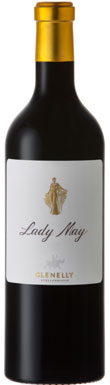
Exuberantly perfumed and still packed with vibrant fruit, winemaker Dirk van Zyl describes this as ‘the vintage that brought the spotlight onto Lady May'. A...
2015
Glenelly
