
Le Piane: producer profile and six wines tasted
Although a relatively unheralded region, Alto Piemonte is undergoing something of a renaissance, and Tom Hyland discovers that Le Piane is at its vanguard.


Alto Piemonte, an east-west wine territory in northern Piedmont, has attracted a good deal of critical attention over the past decade, especially with its Nebbiolo-based wines such as Gattinara, Ghemme and Lessona.
While quality is impressive with the best examples, there have been too many inconsistent releases, despite many favourable vintages in recent years; new plantings that are still a bit young along with a lack of experience with many winemakers are two important factors at play here.
If Alto Piemonte is to garner more acceptance among the trade as well as consumers, it needs an individual who combines excellent wines with a strong personality; given that, Christoph Künzli could be the area’s saviour.
Scroll down to see tasting notes and scores for six Le Piane wines
Künzli, a Swiss native, is the proprietor of Le Piane, a small estate in the Boca zone, situated in eastern Alto Piemonte, slightly north of the Gattinara district.
While Künzli was working in the wine business in his native land back in the 1980s, he had the opportunity to taste wines made by Antonio Cerri at his estate near the town of Boca.
The most important wine here was Campo delle Piane, a blend of primarily Nebbiolo and Vespolina, along with small percentages of other local red varieties. Künzli had seen viticulture become less important over the years in Alto Piemonte, but realised the outstanding quality of the area’s wines, based on tasting examples from the 1960s and 1970s of this one remarkable red.

Künzli decided he would move to Alto Piemonte, with his sights set on purchasing Cerri’s estate, as he (Cerri) was going to let the estate come to its natural end upon the time of his death; he was in his eighties at the time and had no plans to sell.
After meeting numerous times with Cerri’s family, Künzli was able in 1998 to purchase the 0.8ha (two acre) vineyard at Boca, along with Cerri’s cellar and older vintages. Künzli set out to enlarge and update the estate; today, Le Piane consists of 8ha (20 acres) of vines and a small cellar in the town of Boca.
Künzli loves Alto Piemonte and notes its viticultural history. He points out that in the 1930s there were over 16,000ha (40,000 acres) of vines spread across this territory, making it one of the most densely planted in all of Italy.
But when the economy changed in the 1950s, and production costs dramatically increased, many locals either moved elsewhere or simply took up another occupation. ‘The self-confidence of the people in this region was lost,’ explains Künzli.
Künzli currently produces six wines, all but one red, from indigenous varietals, and while Boca is his signature wine, his other offerings are intriguing, displaying the restrained philosophy of his winemaking.
His Nebbiolo Colline Novaresi – the current vintage is 2021, a year that he is highly enthused about – is Nebbiolo at its purest and most charismatic, as it spends no time in wood.
The wine offers lovely bing cherry, peppermint and cranberry aromatics, with light tannins and alluring freshness. Produced from 30-year-old vines, this is a prime example of the simple charms that Alto Piemonte can deliver and Künzli loves to highlight.

Three of his red wines are simply labelled as vino rosso, as they fall outside the DOC regulations. Maggiorina is named for an ancient system of organising a vineyard with large chestnut poles that are inserted outwards, serving as a counterweight to the grape vines.
These poles that were planted in the 1910s and 1920s, and are still in use today, reach as high as five to six feet above the ground, giving these vineyards a look similar to an open cage; you’ve never seen anything like it.
Künzli has planted 15 different varietals in this system, ranging from Nebbiolo, Croatina and Vespolina, to Bonarda, Tinturie and the rare Dolcetto di Boca.
Piane, another vino rosso, gives Boca a run for its money as Künzli’s finest wine. Produced entirely from the oldest Croatina vines at the estate – some more than a century old – the wine is aged in a combination of tonneau and larger oak casks, and offers bright, juicy fruit characterised by notes of red plum and black cherry; the 2020 version will drink well for another six to eight years.
As for Boca, a blend of 85% Nebbiolo and 15% Vespolina, this is Künzli’s most heartfelt wine, one that has been rated not only as one of Alto Piemonte’s finest, but also one of the best red wines of Italy.
Impressively rich and with lively acidity, here is a Nebbiolo-based wine with a distinct spiciness that showcases the elegant tannins and gracefulness of the best examples in Piedmont.

Künzli recalls tasting his Boca with industry professionals during the first few vintages. ‘People would say, “Oh, it’s a new Nebbiolo.” But I would tell them it’s not a new Nebbiolo, this is a very old Nebbiolo with a lot of history and a lot of ageing.
‘Now, when I open my wines in a blind tasting, someone will say it’s like Burgundy. Somehow it’s true; when they get older, they get very silky, very elegant and very aromatic. Balsamic notes, red berries. It is something that goes a little bit towards Burgundy.’
Künzli recommends waiting at least 10 years to drink Boca, while proclaiming that the optimal consumption period is from 10-20 years, although some vintages keep even longer.
The 2019 is the newest version and was released to the market before the 2018, which Künzli declares to be ‘the best Boca I have ever made’. Noting the lengthy ageing potential of the 2018, Künzli will release this wine in the second half of 2023 or early 2024.
Künzli recently added a white wine simply labelled as Bianko, produced entirely from Erbaluce. His version offers a creaminess and intensity lacking in most examples made in Alto Piemonte.
It’s just one more illustration of the care and attention to detail that makes Le Piane one of the most vibrant properties in this area, something that the vintner wishes there were more of today.
‘There are very few top wineries, and too many medium-quality and mediocre wines,’ says Künzli. ‘Maybe 10 estates are successful like ours, while the rest will lower the awareness of Alto Piemonte as a great region, and so the hype of Alto Piemonte today is more in the mind than in the glass.’
Le Piane: tasting notes and scores for six wines from an Alto Piemonte great
Related content
Alto Piemonte Nebbiolo report and top picks
Alto Piemonte revival plus 12 wines to try
Barbaresco: panel tasting results
Le Piane, Bianko, Piedmont, Italy, 2021
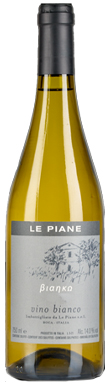

Beautiful, medium-deep yellow, with appealing aromas of cantaloupe, honeysuckle and elderflowers. Rich mid-palate, this offers impressive brightness and freshness with very good acidity and excellent...
2021
Le Piane

Le Piane, Boca, Piedmont, Italy, 2019
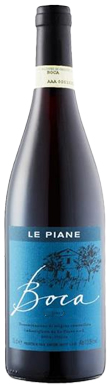
Künzli has released the 2019 vintage of his signature wine before the 2018, as the latter needs more time. Alluring aromas of nutmeg, morello cherry...
2019
Le PianeBoca
Le Piane, Plinius III, Boca, Piedmont, Italy, 2017
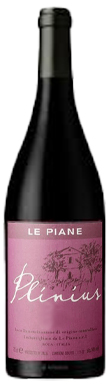
For Plinius (named for Pliny the Elder, who wrote about the wines of Alto Piemonte), a Boca DOC. Künzli uses a hotter fermentation, which fuses...
2017
Le PianeBoca
Le Piane, Mimmo, Piedmont, Italy, 2019
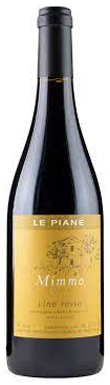
Here is a great example of the Le Piane style in terms of complexity via blending, along with notable finesse and immediate drinkability. Aromas of...
2019
Le Piane
Le Piane, Piane, Piedmont, Italy, 2020
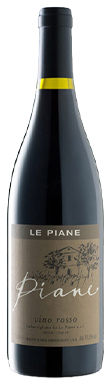
100% Croatina with a bright purple colour, and hearty aromas of myrtle, red plum and black cherry. There is excellent persistence and bright, juicy fruit...
2020
Le Piane
Le Piane, Maggiorina, Piedmont, Italy, 2021
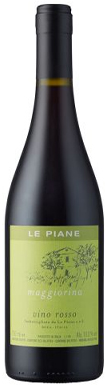
Aromas of marasca cherry, red plum and violets. Medium-bodied, with lively acidity, round tannins and very good persistence. Lovely blend of more than a dozen...
2021
Le Piane
