
Making a mark in Le Marche
This eastern Italian region, most famously the home of Verdicchio, has dragged its heels compared with nearby Tuscany and Umbria. But improvements in quality and a boom in organic viticulture mean it is now enjoying better times, says Simon Woolf...


Every year, 18 million bottles of Verdicchio from Le Marche are sold – a global commercial success that’s possibly both blessing and curse. For many, this is the only touch-point with the most easterly region in Italy’s central bulge. Never mind that Verdicchio’s popularity obscures a substantial proportion of the region’s output; it also leads to some wrong assumptions. Does Marche only produce white wine? Is it dominated by large cooperatives producing simple quaffers?
Scroll down to see Simon Woolf’s top eight wines from Le Marche
The answer to both questions is an emphatic no – you’ll find some of the Adriatic coastline’s only red grapes here, as well as Montepulciano in its most northerly excursion, and increasing numbers of ambitious producers.
With one of the highest allowed yields of any DOC wine in Italy, quality has been an issue over past decades. The ubiquitous amphora-shaped bottle for Verdicchio also did its perception few favours. Thankfully, this image is fast disappearing, but Le Marche took its time to undergo the drive to higher quality, dragging its heels when compared with westerly neighbours Umbria and Tuscany.
That the region is a relative newcomer to the modern wine world is very apparent when you visit. you’ll find sfuso (bulk wine refills) offered at even the most prestigious estates. Federico Pignati from Aurora winery pointed out that ‘Sharecropping survived here until the 1970s – and the average size of estates is very small.’
Indeed, the average holding across the region’s 15,000 wineries is a mere 1.24ha, giving a clue that most operations are centred around domestic production and little more.
Decanter contributor Walter Speller reasons in The Oxford Companion to Wine that ‘the region is off Italy’s main commercial axis of Milan–Bologna–Florence–Rome–Naples’, also citing ‘the lack of any urban centre more important than Ancona’. Le Marche certainly feels slightly off the beaten track, but that has probably helped retain a sense of tradition. American Dwight Stanford, a former surgeon who now co-owns and runs the Paolini & Stanford winery in Offida, jokes: ‘Everyone here still has a pig, two geese, four rows of vines, a house and a garden.’
That sense of tradition has created a powerful ‘back to the roots’ ethic among many of the younger wineries and producers. Organic viticulture has taken off in a big way, thanks to incentives by Le Marche’s local government in the 1990s, with many estates now partially or wholly certified. A specialist consortium, Terroir Marche, includes 11 of the most dynamic organic producers from across the region.
Verdicchio’s starring role
Verdicchio’s high quality is not up for debate; with a firm structure, generous fruit, lemony acidity and a nutty, appealingly bitter note on the finish, the appeal is clear. Verdicchio dei Castelli di Jesi is the dominant sub-zone, with a bewildering number of permutations for the wines: two classico areas, a superiore designation, and rarely seen passito and spumante options.
Le Marche’s only north-south valley contains a hidden gem: Verdicchio di Matelica produces only a tenth of the volume of its better known neighbour, but results can be spectacular. A more mineral-rich soil and better hillside elevations bring greater lift and precision. Top Verdicchio di Matelica riserva wines are the longest lived of the region, ageing gracefully for up to 20 years.
Although the once-dominant large co-ops and négociants remain, wine lovers should look to a clutch of more recently established smaller producers for more excitement.
Take Riccardo Baldi, who scaled up his father’s 2ha of vines into a business when he was only 19 years old. Baldi’s La Staffa estate has established itself after only five vintages, due to the exceptional quality of the wines.
Baldi cites Verdicchio’s tendency to clonal variation as important: ‘I find a very particular character in some of my older clones.’ The estate (now 10ha) is farmed biodynamically. Baldi feels this is crucial to achieve higher quality, noting that it increases the amount of calcium carbonate in the soil, which in turn gives the wines a salty, mineral edge.
Biodynamics may still be quite outré in Marche, but Baldi is bang on trend with his use of concrete tanks in lieu of stainless steel. Producers are rediscovering concrete as a more sympathetic vessel for ageing Verdicchio. ‘In my opinion,’ Baldi says, ‘wines age too quickly in stainless steel. In concrete, we can mature them more slowly.’ He’s critical of many modern production methods: ‘A lot of wines from this area smell like Sauvignon Blanc. People get a lot of aromatics out of the grapes by using oxygen-free presses and selected yeasts, but for me these are not the aromas of Verdicchio.’
Pievalta, another biodynamic estate in the Castelli di Jesi area, is also achieving excellent results. Others such as Cantina di Tavignano and Fattoria Coroncino are hitting high notes using more conventional farming methods.
The other white
Heading south from Ancona brings you to Offida, a rocky spur that’s home to a very on-trend white wine. Although fashion feels like a strange term to use when talking about a grape variety, Pecorino is undoubtedly hip. Confusingly sharing a name with one of the region’s best-known cheeses, the rediscovered Marche variety likely originated in the wild.
The romantic notion of Offida’s many sheep eating gnarled wild vines has probably boosted Pecorino’s popularity, but Stanford is also enthusiastic about its potential: ‘Pecorino is our most important white. If it’s done well, it can be really complex, like a “red” white wine. I call it the Chardonnay of our area. It’s trendy because there just aren’t that many producers and the volumes available are limited.’
Like Verdicchio, Pecorino is broad and capable of plenty of texture, but it adds a racy acidity and more assertive fruit character that is compelling when vinified well. The grape also seems tolerant of a range of production standards – it’s rare to find an example that’s less than enjoyable. Stand-out Pecorinos, such as those from Aurora, Fiorano or Pantaleone need a year or two in bottle to show their best.
Offida’s other local white variety, Passerina, holds little interest apart from decent acidity and bountiful yields. Italy’s appellation system has many anomalies, and the inclusion of this decidedly inferior variety in the Offida DOCG has to be one of them.
A tale of two rossos
Le Marche’s red wines aren’t yet well known outside Italy, even though they form about 40% of the region’s total output. Sangiovese and Montepulciano are the main varieties, though it’s increasingly felt that the latter ought to be prioritised in Marche’s climate. Antonio Terni, of Conero estate Fattoria Le Terrazze, explains: ‘Our Montepulciano isn’t as powerful or concentrated as Montepulciano d’Abruzzo, but it’s more elegant. Sangiovese, on the other hand, just doesn’t seem to do well here.’ Examples I tried tended to support Terni’s view, with dry, dusty tannins and a lack of charm. Recent DOC regulations have sensibly lowered the maximum amount of Sangiovese allowed in Conero blends to 15%.
The Conero DOC and DOCG area hugs the coast around Ancona, and can produce wines of considerable finesse and ageing potential. Wines cover a lot of stylistic bases, from light, easy-drinking fare to oak-dominated bruisers that age in the style of a Barolo – and at about the same glacial speed.
Rosso Piceno DOC is Offida’s answer to Conero, but currently of more variable quality, due to higher permitted yields and more Sangiovese. That said, producers such as P&S Winery, Vigneti Vallorani and Ciù Ciù are leading the charge for generous, fruit-endowed Montepulciano that retains elegance.
As demonstrated by the changing flux of regulations, Le Marche’s producers are still fine-tuning, to get the best out of their terroir. Red wine production has nonetheless evolved a great deal over the past 20 years, moving away from non-native varieties such as Cabernet Sauvignon and Sangiovese. Too few of these wines are yet on our shelves, yet it’s clear that Marche is far from a one-trick Verdicchio pony.
See Simon Woolf’s top eight wines from Le Marche
You may also like
Le Marche wineries to visit
Etna: A rising force
Italy’s best white wines with food
Pinot Bianco: Italy’s northern star plus 12 top wines to try
La Staffa, Verdicchio dei Castelli di Jesi, Classico, Marche, Le Marche, Italy, 2013
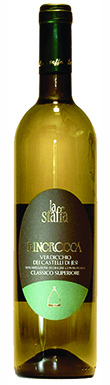
90
Impressive varietal focus, but this wine shies away from simple fruit, offering flavours of mint and herbal tea with distinct minerality.
2013
La StaffaVerdicchio dei Castelli di Jesi
Cambrugiano, Belisario, Verdicchio di Matelica, Le Marche, Italy, 2012
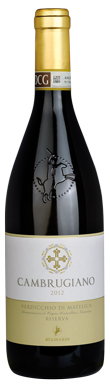

A perfect example of Matelica’s refinement and precision, this has hints of angelica, honey and almond on the nose, with poised, restrained peach fruit. It...
2012
CambrugianoVerdicchio di Matelica

Tenuta di Fiorano, Donna Orgilla Pecorino, Offida, Le Marche, Italy, 2014
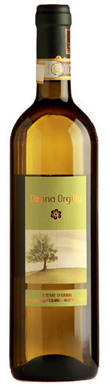
From one of the Terroir Marche producers, this organic wine is aged in concrete tanks and shows how much concentration and drive the Pecorino grape...
2014
Tenuta di FioranoOffida
La Distesa, Terre Silvata, Le Marche, Italy, 2014
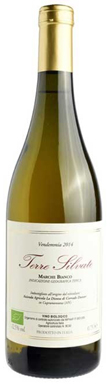
A ‘back to the roots’ style winery that farms organically and seeks to use very minimal intervention. A great example of Verdicchio as it used...
2014
La Distesa
Aurora, Fiobbo Pecorino, Offida, Le Marche, Italy, 2014
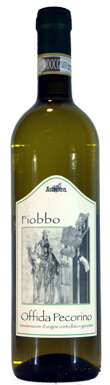
A very pretty Pecorino from the estate that spearheaded Marche’s organic movement back in 1980, and formed Terroir Marche. Delicate aromas of fresh herbs and...
2014
AuroraOffida
Moroder, Dorico, Conero, Le Marche, Italy, 2010
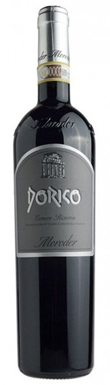
Top Montepulciano, just starting to come into its stride, with leather, smoke and truffle on the nose. Hefty, complex and structured, but there’s plenty of...
2010
MoroderConero
Fattoria Le Terrazze, Rosso, Conero, Le Marche, Italy, 2012
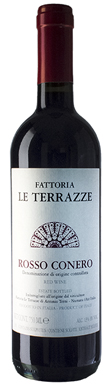
100% Montepulciano, with cassis, violet and a burst of heat on the nose. There’s a wonderful lightness and salinity to the fruit, along with a...
2012
Fattoria Le TerrazzeConero
Paolini & Stanford Winery, Bacco Fino, Rosso, Offida, Le Marche, Italy, 2011
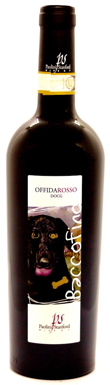
Shows the true potential of Montepulciano in Offida. Very complex nose with truffle, blackcurrant, maraschino cherry and balsamic. Seriously grippy, but with enough fruit to...
2011
Paolini & Stanford WineryOffida
